Whose problem is the front tint once the car is yours?
Yours. MVAR s. 7.05(8) is aimed at the person who will “drive or operate” the vehicle “on a highway” with film where it isn’t allowed, so the offence is driving with the film, not putting it there. Who installed it, when, and whether the car was sold to you that way doesn’t enter into it.
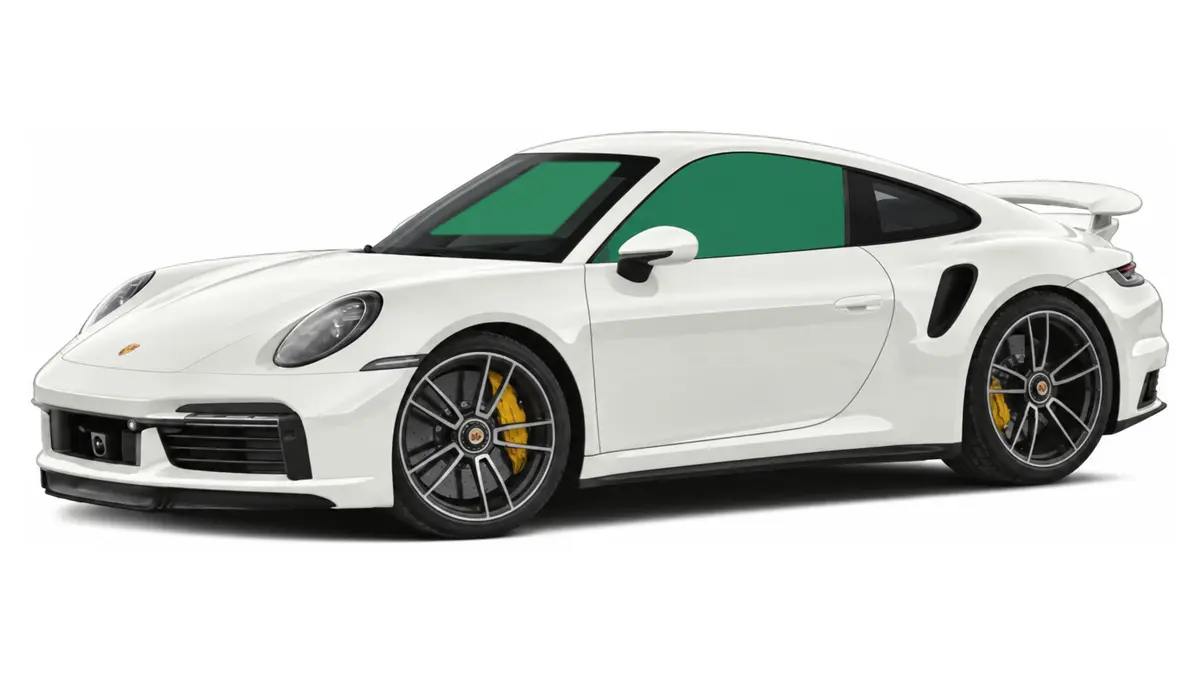
The paperwork points the same way. CVSE describes a Notice & Order as a document addressed to “the driver or registered owner”, and after the sale you are usually both. In BC, the front door glass, and any small pane ahead of the driver’s seat back, has to be bare however light the film; the reasons are set out in the answer on tinting front windows in BC.
Did the seller break the rules by selling it with front tint?
Possibly, and the rule on sales isn’t limited to dealers. Under s. 222 of the Motor Vehicle Act, “A person must not sell” a vehicle “that is not in accordance with this Act and the regulations”, and the same section covers offering, displaying and handing one over to a buyer. Its first two words are “A person”, so private sellers are included.
Dealers carry an extra duty. MVAR s. 8.01 says no one “engaged in the business of selling motor vehicles” may sell a new or used vehicle “unless the motor vehicle is equipped as required by these regulations.” The Vehicle Sales Authority of BC lists “windshield and windows” among the standards a vehicle sold for road use must meet, and says that if a dealer sells a vehicle that isn’t suitable for transportation, “this must be written in a purchase agreement.”
| Bought from | Rule on the seller | Where to take it |
|---|---|---|
| Licensed dealer | MVA s. 222 and MVAR s. 8.01; an unsuitable vehicle must be declared in the purchase agreement | The VSA, which says a failure to declare “may be misrepresentation” |
| Private seller | MVA s. 222 | Not the VSA: its buying privately page says “You will have to go through the courts” |
Raise it with the seller first, and weigh any claim against the fix, a removal priced per window.
What else should you check on a car that came with front tint?
The other glass and lamps an inspector or officer looks at, and any order the last owner left open.
- The windshield. Under item 12e of BC’s 2025 inspection manual, windshield film reaching past the top 75 mm fails, so a full-windshield film comes off too.
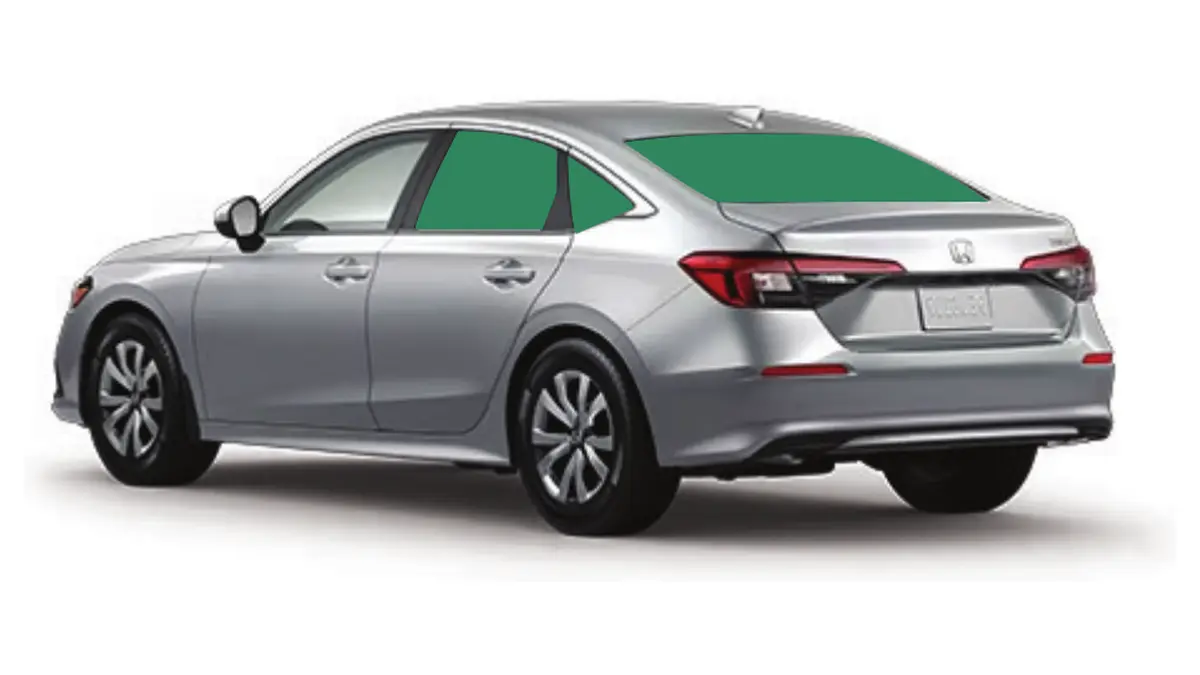
- The back glass. It may keep film of any shade, but item 14c fails it if both side mirrors aren’t in place, if the film is reflective or isn’t to the ANSI/SAE Z26.1 standard, or if the “driver’s normal vision is materially impaired”.
- The lamps. Smoked or yellow light film runs into Section 6, item 1.0(a), which fails lamps whose lenses are dimmed or covered. The rear-lamp rules are in the smoked taillight answer.
- Film or factory glass. Dark glass with no film on it is factory tint, judged under s. 7.05(9) rather than the film rule; how to tell the two apart is on tinting over factory tint.
- An open order. CVSE says the registered owner “should inform any new owner” of an outstanding Box 1 or Box 2 order. Those orders sit on ICBC’s Vehicle Information Database, and while one is unsatisfied, CVSE says the car can’t be licensed and insured through ICBC. A Box 3 order isn’t on that database; the officer’s own agency may keep it.
How do you get only the front windows stripped?
Book a front-two removal, the shop’s inspection-compliance option. Most take 1 to 3 hours.
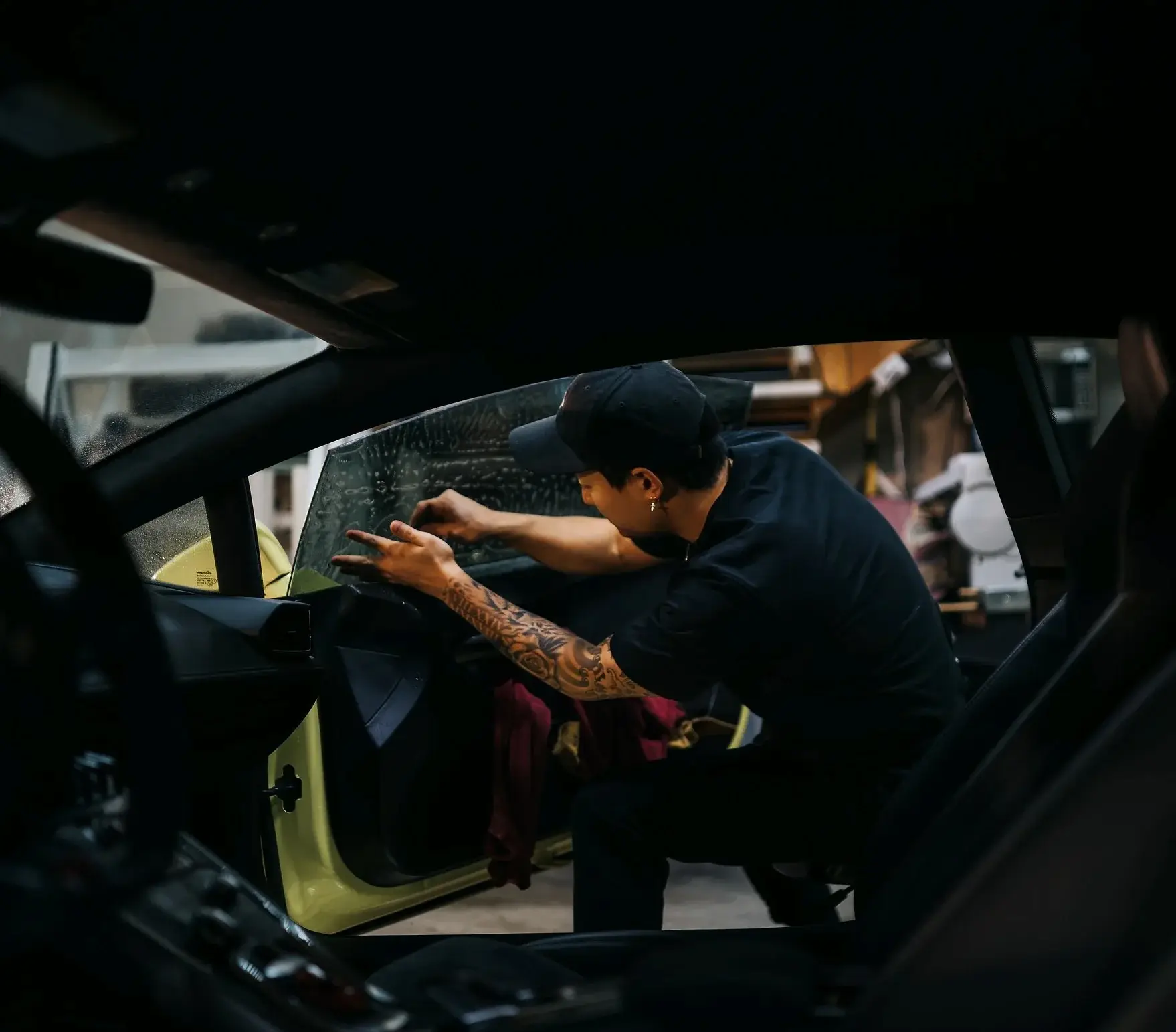
Mention any rear film when you book, so keeping or redoing it is decided once. On the day, steam softens the old adhesive so the film peels away in sheets, and the leftover glue is dissolved rather than smeared. Old film sometimes hides chips or scratches in the glass; the shop shows you anything it finds. The full service is described on window tint removal.
Removal is charged window by window, at a lower rate when the rear is re-tinted the same day. If the rear film has gone purple or is bubbling, strip and redo it at once: rear packages in LLumar ATC begin at $240 on a sedan or pickup, and the new film and labour are covered for life.
What if a Notice & Order arrives before the film is off?
Then the film comes off promptly, and the whole car, not just the glass, has to pass a full inspection at a designated facility inside 30 days. That’s the Box 2 order Mission RCMP describes for tint, and CVSE sets the stakes: a $598 fine for the driver if the order isn’t satisfied in time.
On a used car, the complete inspection is the part to plan for. The facility works through the whole vehicle, so worn brakes, tires or lamps that the seller didn’t mention are checked there too, and each has to be fixed before the car passes. Mission RCMP says inspection fees “generally range from $150 to $250”. A Box 3 order is lighter: it names the part to fix and a deadline, with no inspection, though you may have to report back. Deadlines and costs are broken down on tint removal after a Notice & Order, and the ticket amounts on the fine for illegal tint in BC.
Was the car last registered outside BC?
Then it has to pass an inspection at a designated facility before ICBC registers it, under MVAR 25.24 and 25.25, and front film fails that inspection under item 13d. Some recent private vehicles from Alberta, Saskatchewan and Manitoba are exempt from the inspection but not from the tint rule. Get the front glass bare before the inspection slot; the process is on removal before an out-of-province inspection.
Booking the front-window removal in Langley
Tell the shop the vehicle and which windows carry film through the tint removal request, or by phone or text on 604 534 6433. You’ll find it at Unit 312, 20560 Langley Bypass, from 9:00 to 17:00 every day but Sunday, and most removals are finished the day the car comes in. If you want the rear glass redone while it’s in, the packages are on window tint pricing.