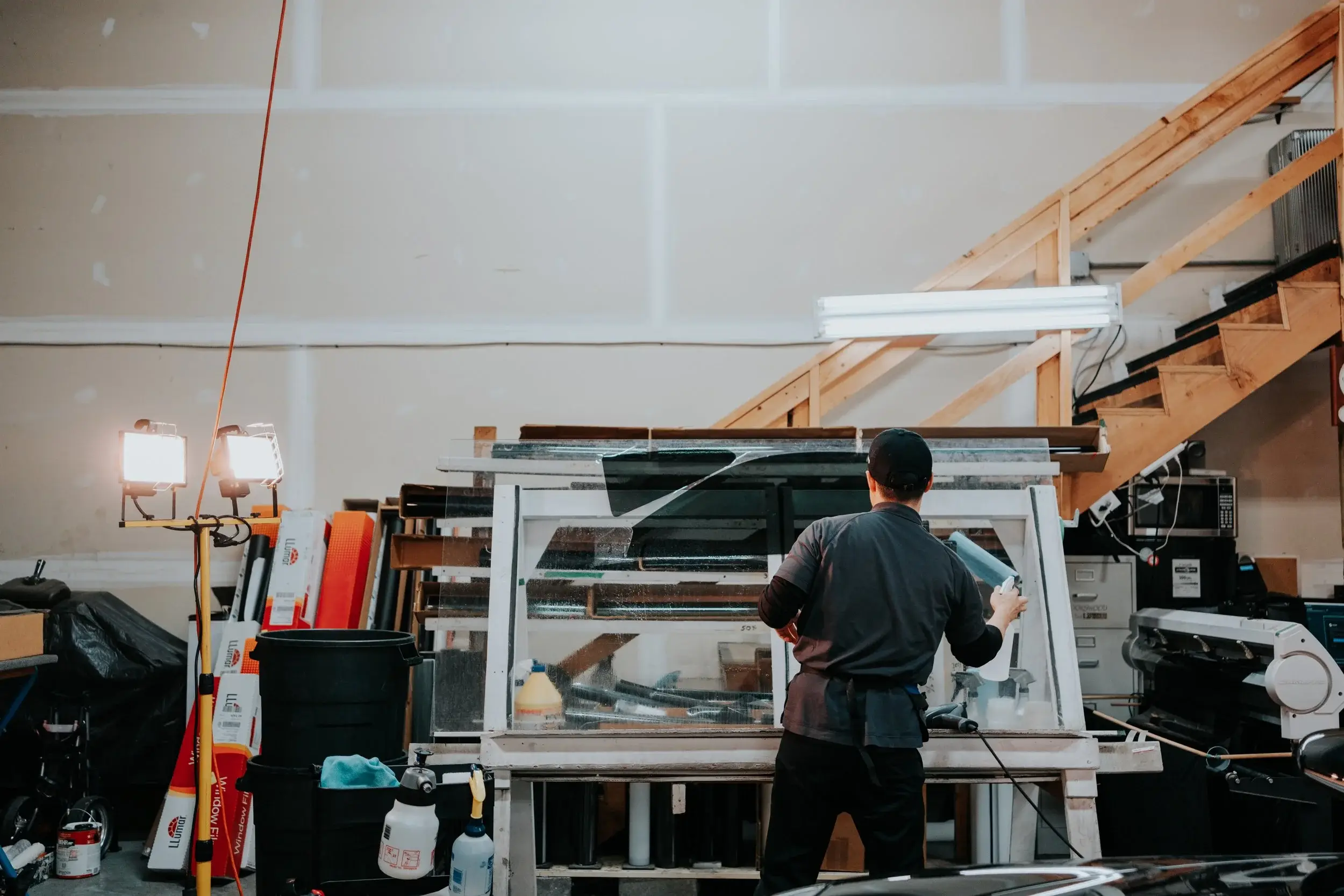
How does a window tint job run at Brookswood Tint?
It runs in five steps, always in this order: pick the film and the windows, strip any old tint, plot the pattern, shape and fit each piece, then let the film cure. On most cars the whole thing fits inside one day.
1. Choose the film, the shade and the windows
Three LLumar films are on the menu. ATC is the dyed charcoal film behind every starting price; IRX (nano-ceramic) and AIR (clear ceramic) are priced as upgrades on the same packages:
| Package | From |
|---|---|
| Sports coupe, 3 windows behind the driver | $220 |
| Sedan or pickup, 5 windows behind the driver | $240 |
| Full-size SUV or wagon, 7 windows behind the driver | $260 |
| Front doors, sedan, coupe or wagon | $140 |
| Front doors, full-size SUV or pickup | $160 |
| Full windshield, from the inside | $200 |
BC law belongs in this first conversation. Under MVAR s. 7.05(8), the two front door windows take no film and the windshield takes it only along its top 75 mm. We will tint front doors or a whole windshield if you ask, after explaining that neither is road-legal here and either can lead to a ticket or a removal order.
2. Take off old film, if there is any
On rear glass, we steam old film off rather than razor it, which protects the defroster lines. Every trace of the old glue is dissolved, giving the new film bare glass to grip. Expect one to three hours; removal is charged per window, at a lower rate when we’re re-tinting the car. Details are on tint removal.
3. Cut the pattern on the plotter
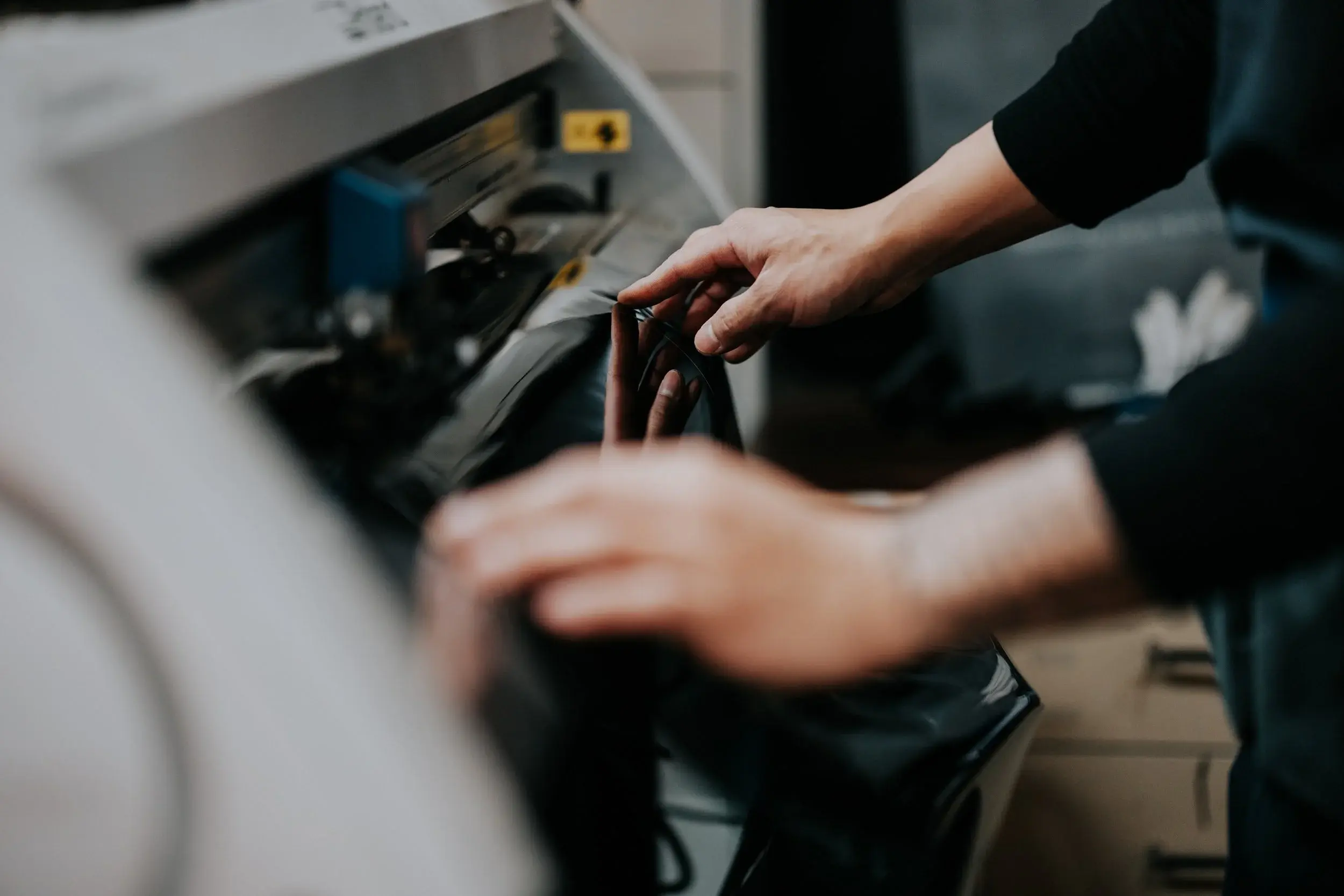
The plotter cuts each window’s piece from a stored pattern matched to your car’s year, make and model. Because the trimming happens on the cutting table, not on the car, seals, trim and glass never see a blade. How that compares with cutting by hand is set out on plotter-cut vs hand-cut tint.
4. Heat-shrink and fit each piece by hand
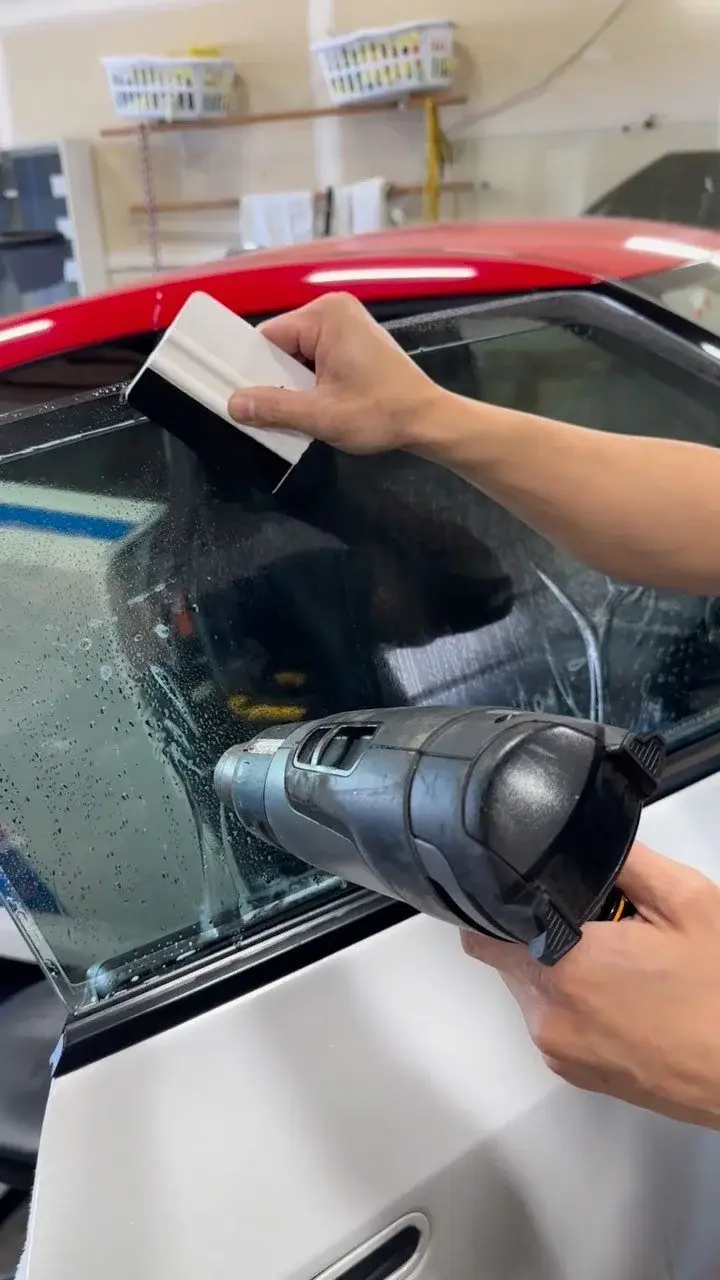
Car glass curves, and flat film doesn’t, so every piece is heat-shrunk until it matches its window, then fitted by hand on the inside. A full windshield gets the same treatment from inside the car. Exterior windshield protection film isn’t something we install.
5. Let the film cure
Doing all the glass on a sedan or SUV generally keeps us busy for two to four hours, longer for vans, tricky back glass or cars that needed old film stripped. Once you drive away, leave those windows closed for three to five days. Some haze, or a few small pockets of water, can show in week one; both dry out by themselves. For cleaning after that, use microfibre with a cleaner that has no ammonia, and keep scrapers away from the film.
How does a PPF install run at Brookswood Tint?
PPF follows five steps of its own: pick the coverage, get the paint ready, cut the film, fit and wrap each panel, then give the film time before it’s washed. We use LLumar Platinum, a self-healing film, in gloss or, on request, matte.
1. Choose the coverage
| Package | Covers | From | Typical time |
|---|---|---|---|
| Partial Front | Whole bumper; part of the hood and fenders; headlights; side mirrors | $850 | Usually one day |
| Full Front | Full hood, fenders and bumper, headlights, mirrors | $1,550 | 1–2 days |
| Track Package | Everything in Full Front, plus A-pillars, rocker panels and part of the roof | $1,900 | 1–2 days |
| Full Vehicle | All painted surfaces, headlights | $4,000 | 3–5 days |
Those are starting prices, and a bigger car, intricate panels or paint needing correction will raise them.
2. Decontaminate and, if needed, correct the paint
The paint is decontaminated first. If it has swirls or marks, it is corrected before any film goes on, with paint thickness measured before polishing. An enhancement polish adds about a day, two-stage correction one to two days.
3. Cut the film from software templates
Templates in the cutting software match your vehicle panel by panel, so each piece reaches the car already shaped.
4. Fit each panel and wrap the edges
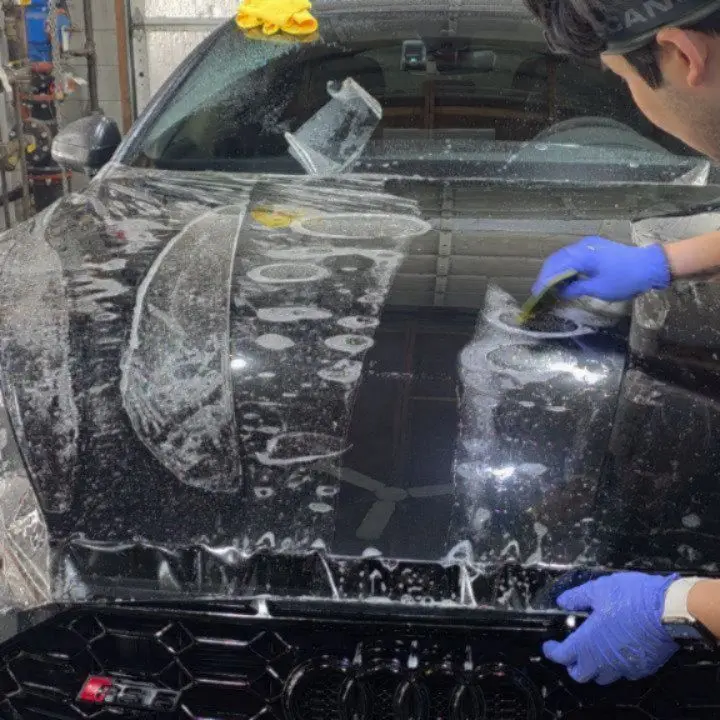
The film is laid, positioned and squeegeed down by hand, with edges wrapped around the panel wherever the panel allows. Some bumpers are too complex to wrap in one piece and need a relief cut; if yours is one, you’ll be shown where it goes before anything is fitted.
5. Leave it a week before the first wash
We ask for a week before the first wash, although LLumar’s own PPF FAQ sets three days as its minimum. From then on, wash by hand or go touchless, aim pressure-washer nozzles away from the film’s edges, and avoid brush washes altogether.
How long will we have your car?
Most tint jobs are finished the same day. PPF ranges from about one day (Partial Front) up to three to five (Full Vehicle), with any paint correction added on top. The step-by-step timing for each service is broken down on how long window tinting takes and how long PPF installation takes.
What happens if something isn’t right after pickup?
Get in touch with your invoice handy: 604 534 6433 takes calls and texts. Our tint warranty runs for life and covers both the film and our labour. LLumar backs Platinum PPF with a 10-year limited warranty, and our published terms name yellowing, cracking, bubbling and peeling. The warranty page explains each one and how to claim, and the quote form is where a new job starts.