How do plotter-cut and hand-cut tint compare?
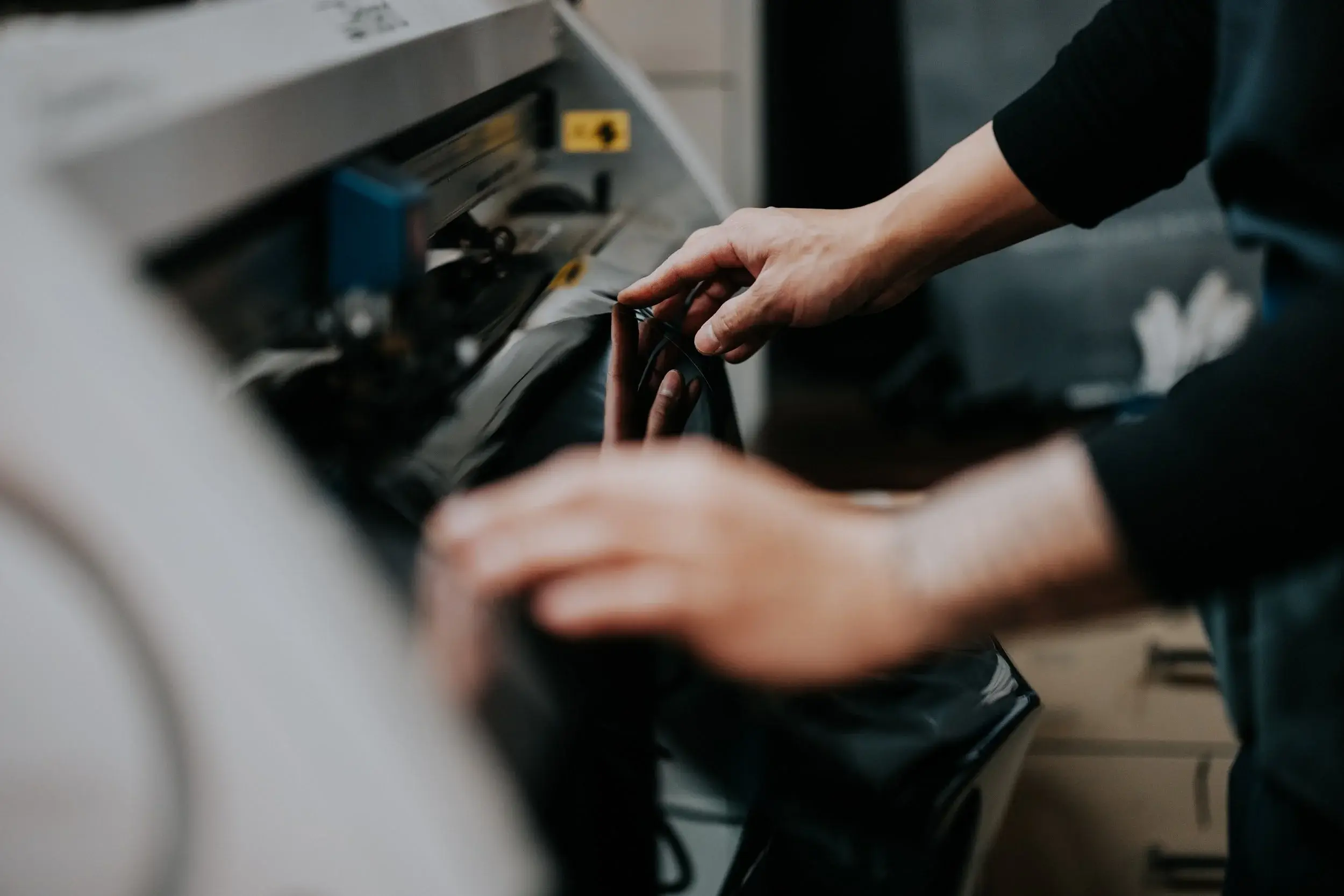
The film can be the same roll either way. What differs is where the outline of each piece comes from: a stored pattern cut on a machine, or the installer’s knife following the glass on the car.
| Plotter-cut | Hand-cut | |
|---|---|---|
| Where the outline comes from | A pattern for the year, make and model | The window itself, traced by hand |
| Knife on the vehicle | None for the outline | Usually, unless the outline is marked and cut off the car |
| Same car, two jobs | Same pattern both times | Depends on the hand on the day |
| Glass with no pattern | Can’t be cut until there is one | Can follow any shape |
| Compound curves | Still heat-shrunk by hand | Heat-shrunk by hand |
| Who does it here | Every job at Brookswood Tint | Not the shop’s method |
Neither column promises good work on its own: a careless installer can ruin a perfect plotter cut, and a patient hand-cutter can do lovely work. The plotter’s case is narrower and simpler. It removes the one step where a blade and your car meet.
How is window tint cut by hand on the car?
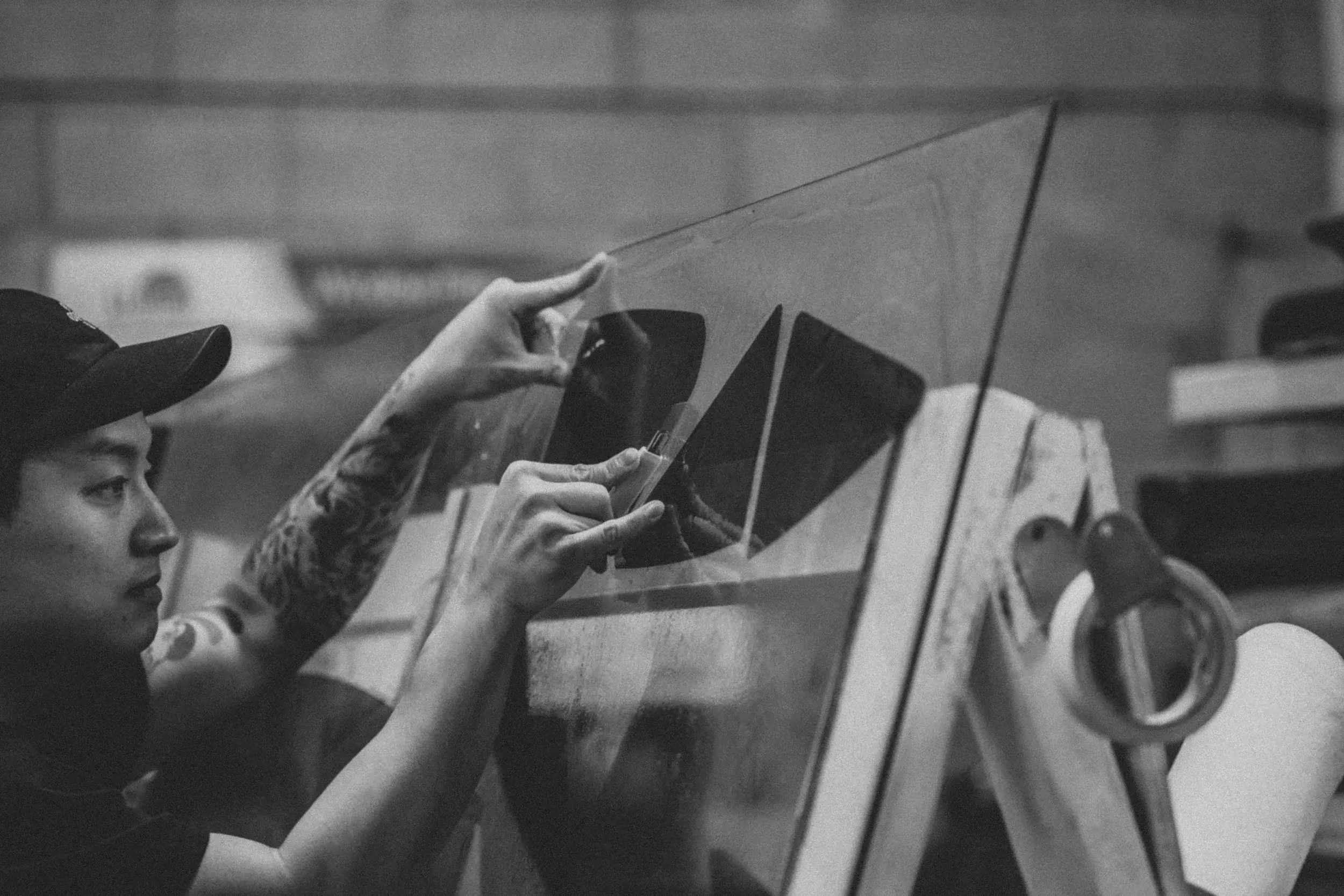
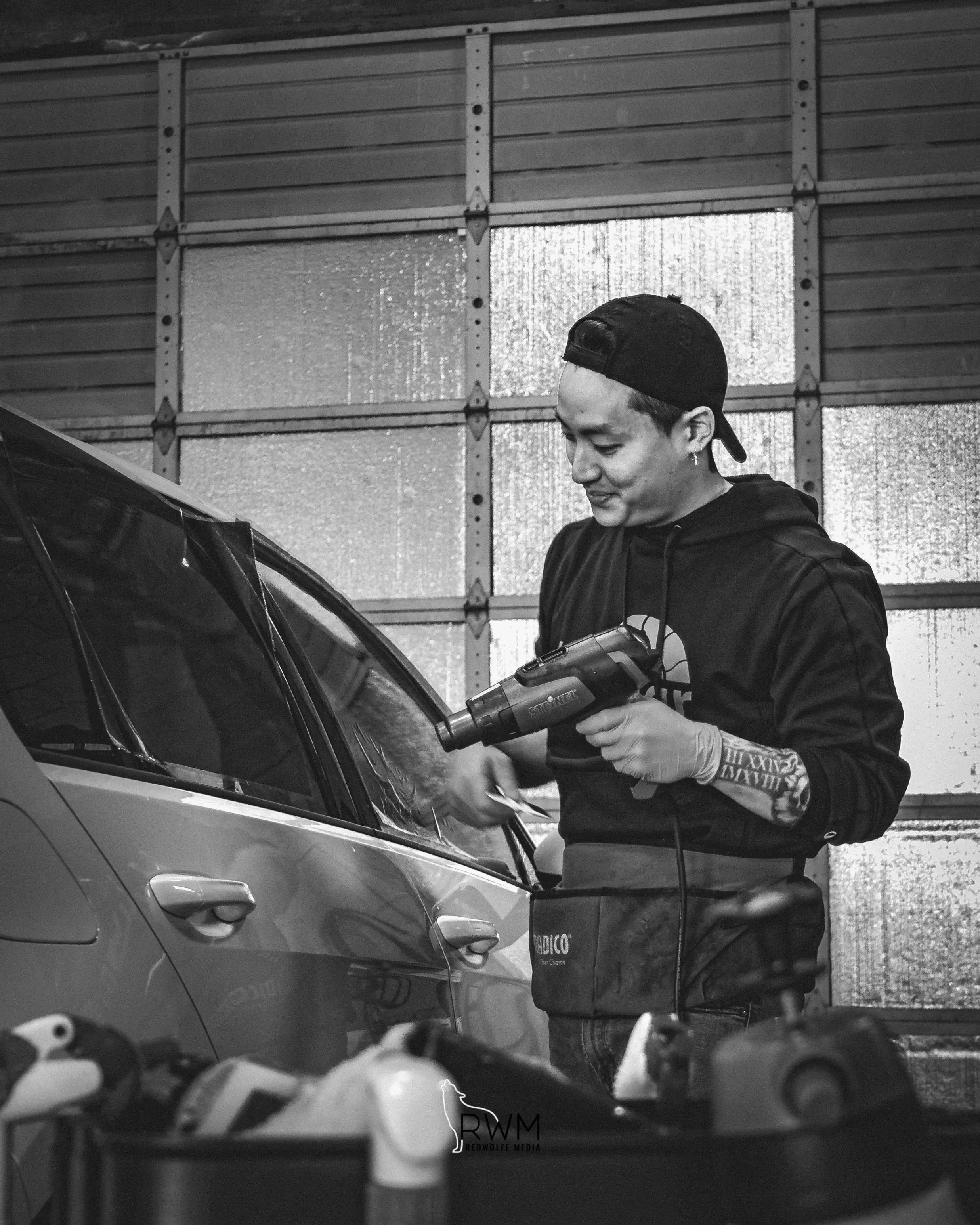
The installer rough-sizes the film against the outside face of the window, shrinks it to the curve, and then trims it to the window’s edge with a knife before it goes on the inside. Film makers publish this as a standard procedure, so hand-cutting isn’t a shortcut in itself.
Avery Dennison’s Technical Bulletin 5.0 on fitting its car window film spells out the steps:
- Rough size. Position the film on the wet outside of the glass and trim it to “approximately 5 mm over the window size”.
- Shrink. Heat the film so it takes the window’s shape, squeegeeing out the channels that form.
- Trim fixed glass. Cut to the exact shape, ideally by drawing the window’s contour on the film with a permanent marker and cutting it off the glass.
- Trim roll-down glass. Drop the glass by a few centimetres, align the film with the window’s upper edge and trim off what’s left over.
- Trim rear glass. Cut the film so it overlaps the solid black edge of the dotted band by just 2 to 3 mm.
Step 3 is the telling one. The maker’s own advice is to mark the outline so the knife doesn’t have to run along the window, which is exactly the problem a plotter solves by cutting the outline before the film reaches the car. What that dotted band is and why film stops where it does is covered in the black dots around car windows.
What can a blade near the glass damage?
The things a knife can catch are the glass surface, the rubber seals around it, interior trim, and on rear windows the defroster lines. Careful hand-cutters avoid all of them; the risk lies in the slip, not in the method.
Carmakers spell out the rear-glass risk in their manuals. Mazda’s CX-5 owner’s manual warns: “Do not use sharp instruments or window cleaners with abrasives to clean the inside of the rear window surface,” because they can harm the heating grid, per its rear window defogger page. Avery’s bulletin gives installers the same caution in its own words, telling them not to use scrapers on the heat wires during prep.
A broken grid line leaves a strip of rear glass that won’t clear of fog or frost, and on a Fraser Valley winter morning that matters. Brookswood Tint’s answer is to keep blades off the glass entirely: the plotter cuts the outline, and the same thinking applies when old film comes off rear glass, which the shop removes with steam rather than a blade. Whether new film can go over a defroster grid at all is answered in tinting over rear defroster lines.
Does plotter-cut tint fit better?
It fits more consistently, because every piece follows a pattern made for that model. It doesn’t fit on its own: the installer still has to shrink, place and squeegee each piece, and those steps show in the finished job as much as the cut does.
Three things decide whether a plotter-cut job looks right on your car:
- The right pattern. The pattern has to match the glass actually in the car, which is why the quote starts with the exact year, make and model.
- Heat work on curved glass. The shop’s own description of large single-piece rear glass, such as a Tesla’s, and of curved hatch windows is that they’re heat-shrunk and fitted by hand after the plotter cut. The machine handles the outline; the curve is still handwork.
- Placement. On a roll-down window, the top edge of the film has to sit just right against the top of the glass. Why many tint jobs leave a small gap there is explained in why tinted windows have a gap along the top.
The film’s measured performance doesn’t change with the cut. LLumar’s Window Film Performance Data sheet lists every film at over 99% UV rejection, and that number belongs to the film, whichever way it was shaped.
When does hand-cutting still make sense?
When there’s no pattern that matches the glass. A plotter can only cut a shape someone has already patterned, so very rare cars, replacement glass shaped differently from the original, and one-off custom panels may need an installer who works from the glass itself.
Hand-cutting is also what a DIY kit asks of you, without a trained installer’s practice behind the knife. If you’re weighing a kit against a shop, DIY tint kit vs professional tint sets out what changes.
Where a pattern does exist for your car, the choice comes down to whether you’d rather the outline be cut on a table or on your car.
What should you ask a shop about how it cuts tint?
Ask how the outline of each piece is made and what tool, if any, touches the car. A good shop answers both in a sentence.
- Is the film cut on a plotter from a pattern for my exact model, or trimmed on the car?
- If any trimming happens on the car, where: outside the glass, along the seals, or inside?
- How are curved rear windows shaped, and what keeps the defroster lines safe?
- Which film line and shade is it, and who stands behind the warranty?
Signs of a poor install to check for at pickup are listed under how to spot a bad tint job, while the case for working in a closed bay rather than a driveway is on mobile tint vs shop tint.
How do you book plotter-cut tint in Langley?
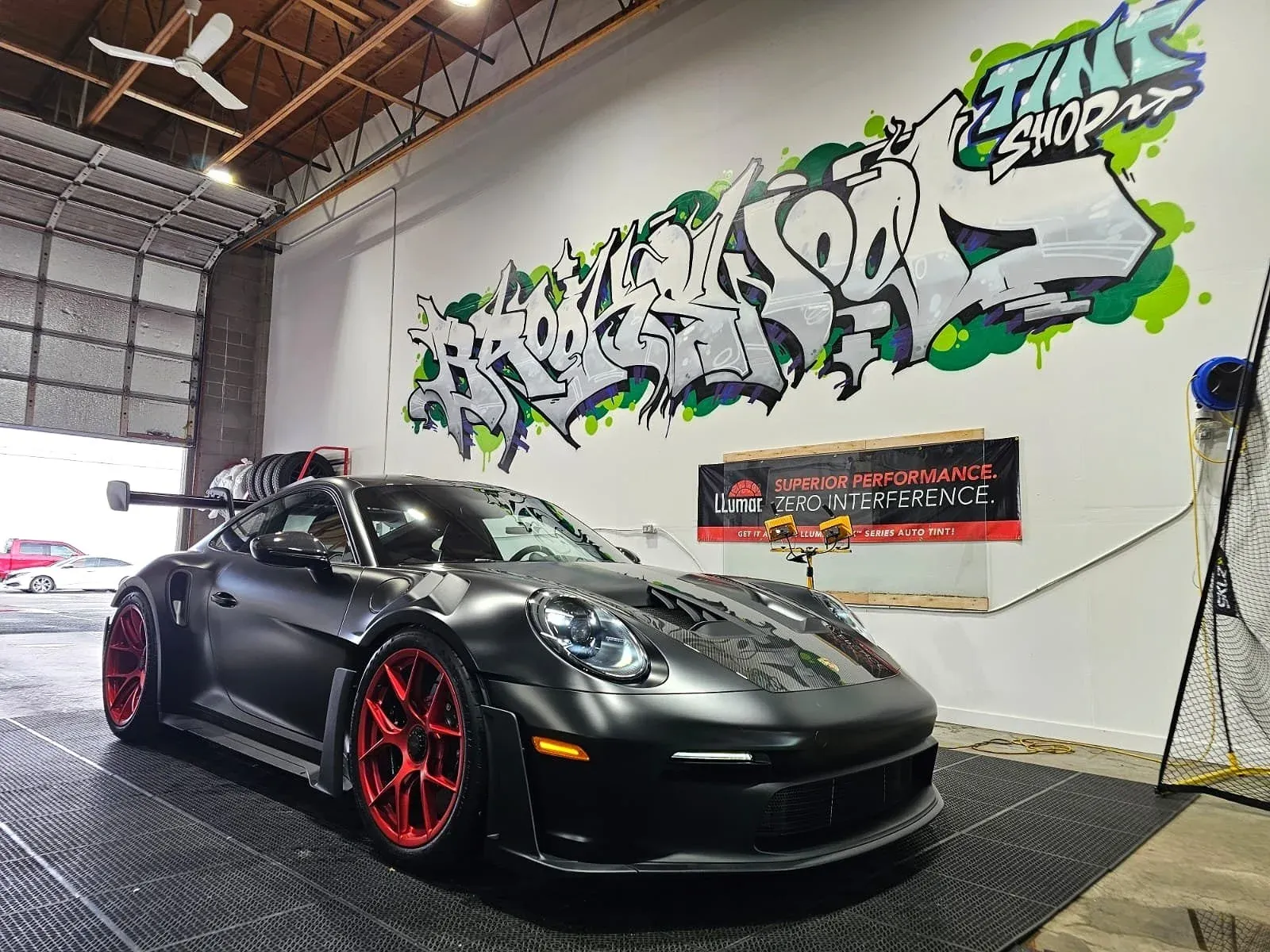
Start with the tint quote form, giving the car’s year, make and model, or message 604 534 6433 by text. Each package uses LLumar film cut on the plotter and shrunk and fitted by hand, and both the film and the labour carry lifetime warranties.
| Body style, rear glass in LLumar ATC | Panes in the package | From |
|---|---|---|
| Two-door sports coupe | Three panes: each rear quarter and the back window | $220 |
| Sedan, or pickup with a slider | Up to five: both rear door glasses, quarters where fitted, and the rear window or slider | $240 |
| Big SUV or wagon | Seven: rear door glass, quarter and extended side windows, and the hatch glass | $260 |
Upgrading to IRX or to clear AIR ceramic is priced per package. A typical car goes home the same day, while vans, tricky rear glass or old film to strip add time. Keep the freshly filmed windows shut for three to five days after pickup, and see every shade and package on window tint prices.