How do mobile tint and shop tint compare side by side?
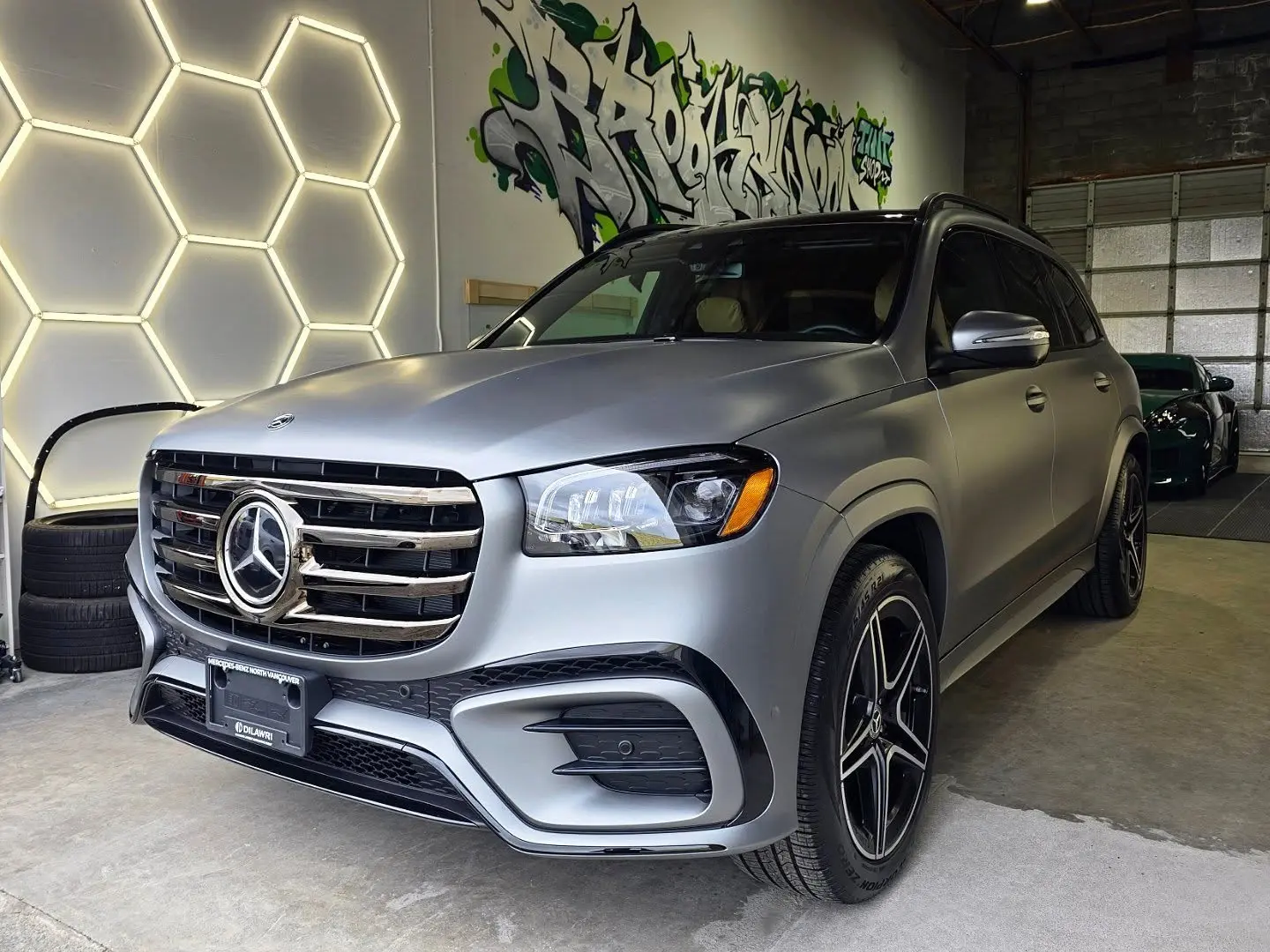
The film can be identical; what changes is where it goes on. A mobile installer works wherever your car is parked, and a shop works in a space built for the job, with the trade-off being convenience against control.
| Mobile tint | Shop tint at Brookswood | |
|---|---|---|
| Where the film goes on | Your driveway, parking spot or garage | An enclosed bay on the Langley Bypass |
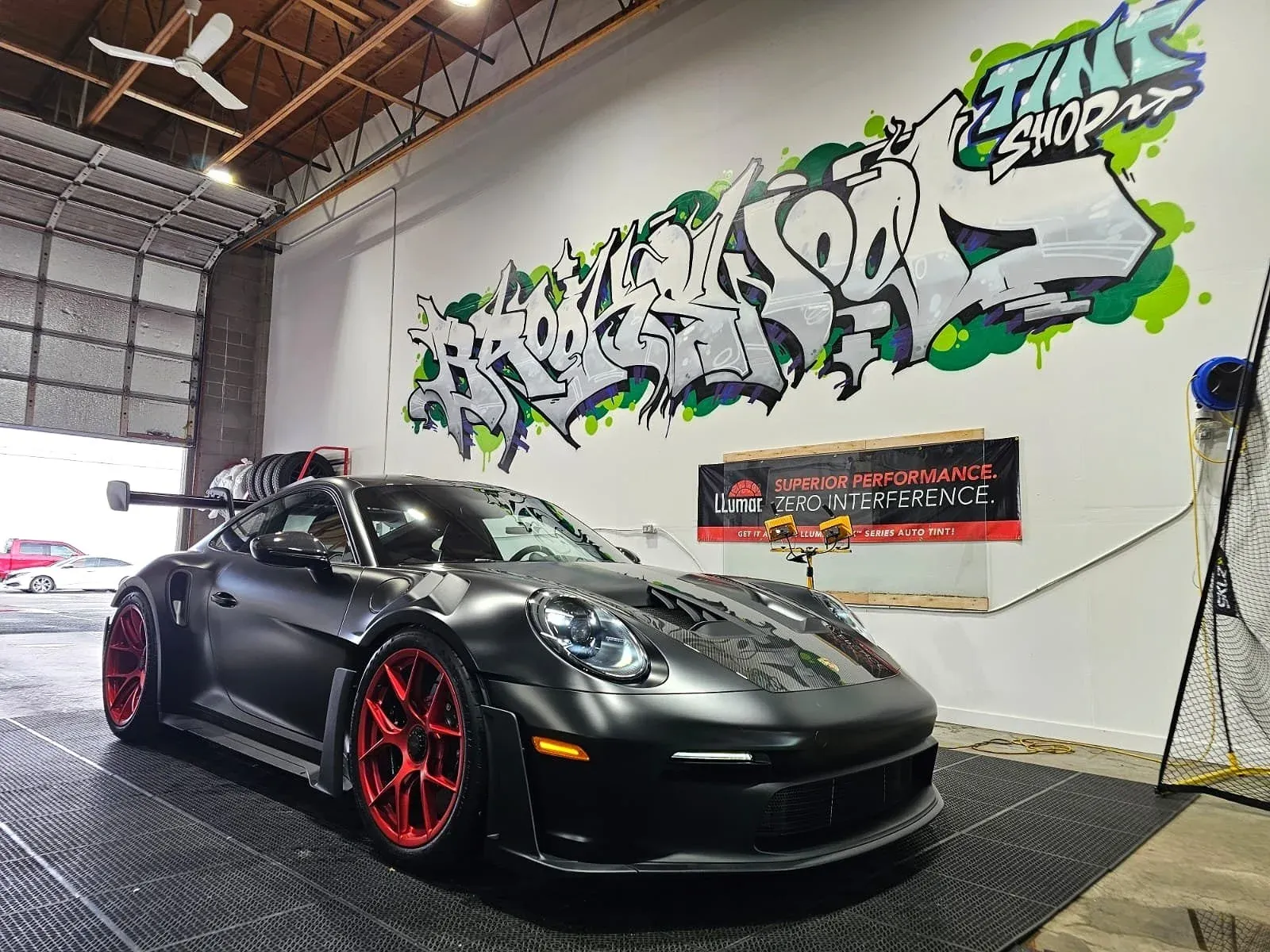
| Dust and grit | Depends on the spot and the day | Indoors, with the door shut |
| Wind | Depends on the weather | None indoors |
| Rain and cold | Depends on the season | Out of the weather |
| Light for checking the film | Whatever light the spot has | Fixed shop lighting |
| How the film is cut | Ask the installer | Computer plotter, cut to the year, make and model |
| Your time | The installer comes to you | Drop off; most cars are done the same day |
| Curing afterwards | Windows up 3 to 5 days | Windows up 3 to 5 days |
| Warranty follow-up | Ask who handles it and where | LLumar’s lifetime limited cover on the film, and the shop’s lifetime cover on labour |
| Price | Varies by installer | Published, from $220 (coupe rear glass) |
Neither column decides on its own whether the work is good: a skilled installer in a tidy garage beats a careless one in any bay. What the shop column offers is that the conditions don’t change with the forecast.
Why does the work environment matter for window tint?
Window film goes on wet, and anything that lands on the glass or the adhesive before the film is squeegeed down stays trapped under it. Dust, hair, grit and insects don’t dry out the way water does.
Film makers write that into their instructions. Avery Dennison’s application bulletin for automotive window film opens its preparation step with “Place the vehicle to be tinted in a clean, dust-free and well lit environment,” and later adds that “it is very important to work in a clean environment to avoid any dust/dirt entrapment in the film adhesive.” Brookswood Tint puts its own view more bluntly: tint is a controlled-environment job, and dust, wind and cold ruin an install.
Car tint is also worked from inside the vehicle. LLumar’s tint FAQ notes that auto film is “typically” applied “to interior glass surfaces”, so the installer works inside the car, usually with a door open, and whatever the air is carrying can drift in.
What does Fraser Valley weather mean for a driveway install?
On most days of the year, an open driveway in Langley is wet, damp, windy or cold at some point. Environment and Climate Change Canada’s 1981–2010 normals for Abbotsford, just east of Langley, show how often:
| Abbotsford A, average year | Value |
|---|---|
| Days with precipitation | 179.5 |
| Relative humidity at 6 a.m. | About 85% |
| Days the overnight low reaches 0 °C or below | 52.9 |
| Days with at least one hourly wind reading over 20 km/h | 119 |
| Days with fog | 26.6 |
Source: ECCC climate normals, Abbotsford A. A good mobile installer works around this by picking the day, or by working in your closed garage. A bay doesn’t need to: the car goes in, the door comes down, and the work goes ahead in November as it does in July. Winter timing on its own is covered in whether you can tint car windows in winter.
How is the film cut and fitted in each case?
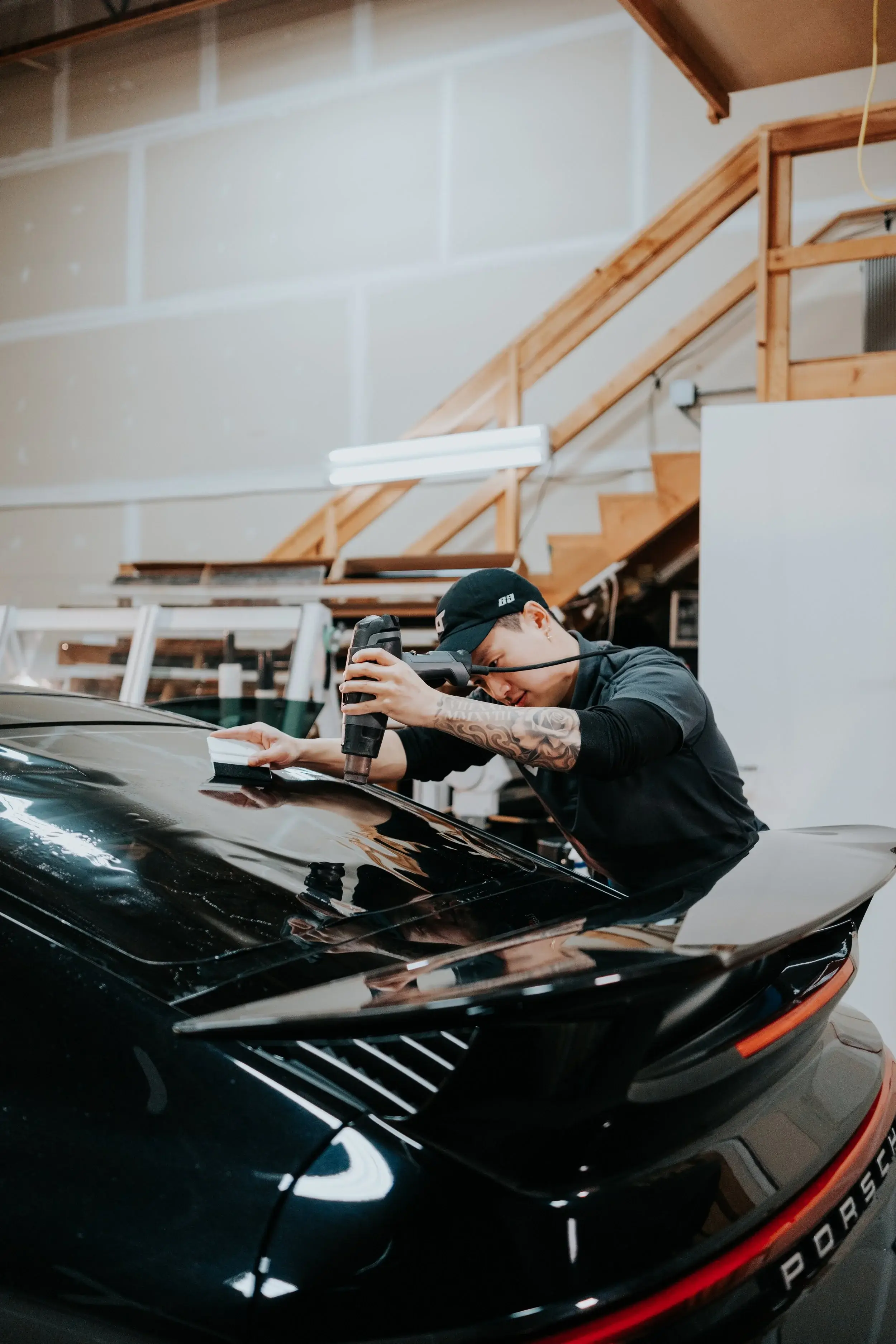
At Brookswood Tint, a computerized plotter cuts each piece from a pattern for your year, make and model, which keeps blades off the glass and trim altogether, and the installer then heat-shrinks and fits every piece by hand. A mobile installer may work the same way or trim film on the car, so ask.
Hand-trimming on the vehicle is a recognized method, and film makers write instructions for it. Avery Dennison’s bulletin, for example, suggests marking the window’s outline with a permanent marker “in order not to cut directly on the car window”. Whoever you choose, two questions sort it out: is the film plotter-cut or trimmed on the car, and if it’s trimmed, what touches the glass?
Curved rear glass is where wind matters most. The film is shaped on the outside of the glass with a heat gun before it goes inside, and that step is easier to control out of the wind. The shop’s rear-glass packages are listed on window tint prices.
Does a mobile install cure any differently?
No. Curing is the water under the film drying out, and it takes the same three to five days with the windows up wherever the film went on. Cold, damp weather slows it down for every car.
What the setting changes is what’s left once the water has gone. A faint haze and little pockets of water during the first week are part of curing, and they fade on their own. A speck of grit trapped under the film doesn’t clear, because it was never water. If you’re looking at new tint and wondering which you have, how to spot a bad tint job walks through the signs.
What happens if the tint has a problem later?
You go back to whoever installed it, so before you book, know who that is and where they’ll be. That applies to a mobile installer and a shop alike.
LLumar’s own words for its tint cover are a “manufacturer’s lifetime limited warranty”, and its FAQ adds: “Certain restrictions apply; see dealer for warranty details.” LLumar sends warranty questions to the dealer, in other words. Brookswood Tint is a LLumar dealer with a fixed address and adds its own lifetime warranty on workmanship. A mobile installer can be an authorized dealer for the film they use too; ask, and check the name on the film maker’s dealer locator. Why that matters is set out on LLumar dealer in Langley, and the terms on the warranty page.
Mobile tint or shop tint: which should you choose?
Choose mobile when convenience matters most and the installer can work in a clean, sheltered space; choose a shop when you want the conditions controlled no matter the season.
Mobile tint can suit you if
- You can’t be without the car for a few hours.
- You have a closed, clean garage the installer can use.
- The job is simple glass on a mild, dry day.
- The installer names the film, the shade and who handles the warranty.
A shop install suits you if
- It’s the wet or cold half of the year.
- The car has large or deeply curved rear glass.
- You want plotter-cut film with no blade on the glass.
- You want a fixed address to come back to if anything goes wrong.
Where Brookswood Tint stands on mobile tinting
We don’t tint in driveways, and that’s a choice about conditions, not a knock on mobile installers. Some do careful work. Our view is simply that wet film and open air are a gamble in the Fraser Valley for much of the year, and we’d rather control the room than hope for the weather. How to judge any installer, mobile or not, is the subject of how to choose a tint or PPF shop.
Booking a tint in the Langley bay
Expect two to four hours for a complete tint on a sedan or SUV, with the car back the same day in most cases. The smallest posted rear-glass package, a sports coupe in LLumar ATC, is $220, and the largest, for a full-size SUV or wagon, is $260. Put the vehicle and the windows you want on the tint quote form, or text 604 534 6433. Running a fleet? Block bookings are covered on fleet tinting.