
Can window tint be installed when it’s cold outside?
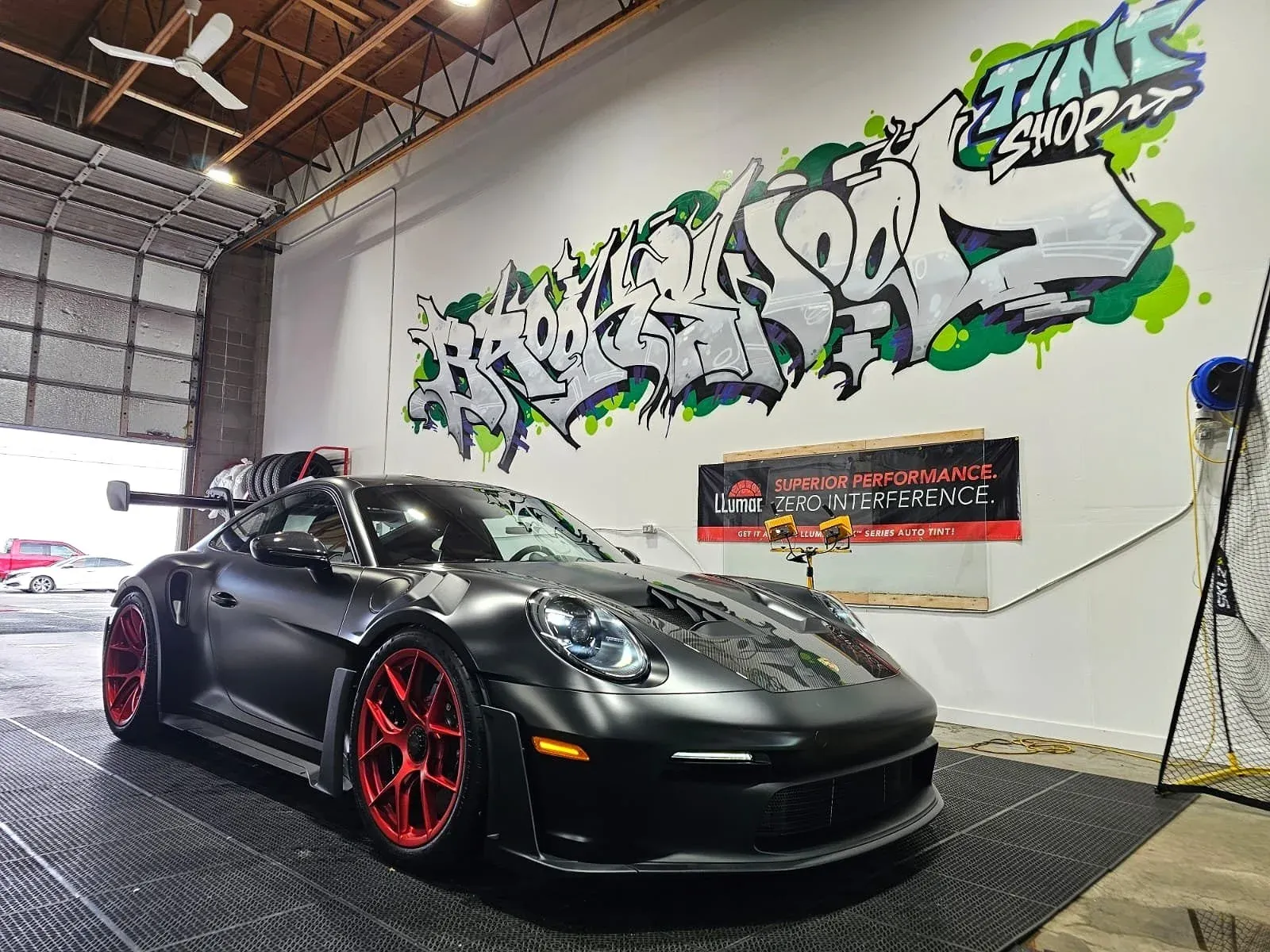
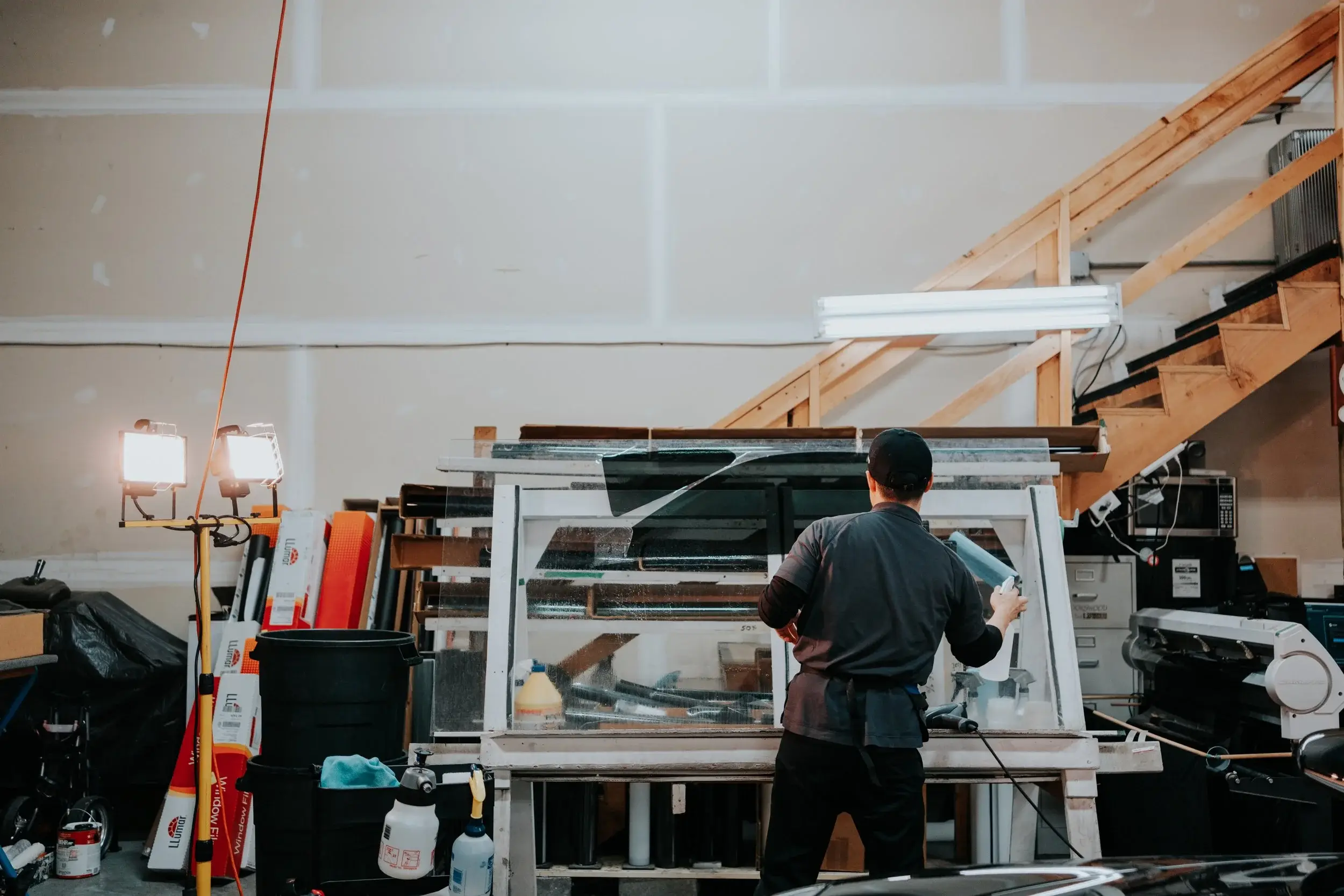
Yes, because the install happens in a bay, not in a driveway. Brookswood Tint calls tint “a controlled-environment job” and does even fleet vans and trucks in the shop, since dust, wind and cold are what ruin an install.
So the season makes no difference to the steps themselves. The glass is cleaned on the inside, each piece is plotter-cut to match your exact vehicle, and the film is laid on wet, heat-shrunk to the curve and finished by hand, all indoors. A car that rolls in wet and salty from the Langley Bypass gets the same install as one that arrives on a dry July afternoon. Driveway and mobile installs are a different story, compared on mobile tint vs shop tint.
What do Fraser Valley winters do to the cure?
They slow it. New film is laid on with a slip solution, and the water left behind it has to dry out before the film is fully bonded; cold, wet, sunless weeks are the slowest drying weather there is.
The 1981–2010 normals Environment and Climate Change Canada publishes for Abbotsford Airport, the closest station with sunshine records, about 20 km east of the shop, show what a car parked outside goes through:
| Abbotsford A, 1981–2010 normals | November | December | January |
|---|---|---|---|
| Mean daily high | 9.3 °C | 5.9 °C | 6.7 °C |
| Mean daily low | 2.7 °C | −0.1 °C | 0.4 °C |
| Nights at or below 0 °C | 7.2 | 13.8 | 12.4 |
| Rainfall | 241.5 mm | 170.9 mm | 193.6 mm |
| Snowfall | 6.7 cm | 16.5 cm | 18.5 cm |
| Hours of bright sunshine | 64.7 | 64.9 | 68.2 |
The same normals put the average first fall frost at about November 1 and the last spring frost at about April 7. Anything tinted between those dates cures through frosty nights and short, grey days, and that’s the case for planning on the long end of the cure.
How long should windows stay up after a winter tint?
The full 5 days. The shop’s range runs from three to five days, and in a cold, damp month the top of it is the number to plan around.
Don’t judge the cure by the haze. Some cloudiness, or a few small pockets of water, is expected through the first week and dries out by itself, and in winter it can outlast the 5 days. That’s still drying, not a fault. Call the shop if anything still looks off after it has fully dried. The cloudiness is explained on why new window tint looks hazy, and every first-week rule is on when you can roll down tinted windows.
A garage at night helps more in winter than at any other time of year. Warmer air around the car means faster drying, and a car parked indoors doesn’t start each morning under frost.
Can you use the heater and defroster on new tint?
Yes, use the heater and the windshield defroster as normal. The windshield usually has no film, and warm, dry air in the cabin helps rather than hurts the drying behind the film on the side and back glass.
The rear defroster works through heating lines on the cabin side of the back glass, and that’s the side the film covers. If you’d like to know whether to leave it off for the first few days, ask at pickup and follow what the installer tells you for your car.
Inside fog is part of a wet Langley winter, and the heater with the air conditioning on is the tool for it while the film is curing. Carmakers take the same approach at the camera: Toyota’s 2025 Tacoma manual says that if the glass in front of the front camera fogs or ices up, use the windshield defogger to clear it.
Should you scrape ice off tinted windows?
On the outside, yes, exactly as before. LLumar’s tint FAQ notes that car film typically goes on the interior surfaces of the glass, so a scraper on the outside never touches it.
On the inside, never. Frost sometimes forms on the inside of the glass on a cold, damp night, and on a tinted window that frost is sitting on the film. Melt it with the heater and defroster. Keep every tool well away from the film’s edges, especially around the back glass, where an edge is the first place a scraper or a fingernail catches and lifts the film, and where a blade can cut the defroster lines underneath.
Is winter a good time to get windows tinted?
It’s a practical one. The appointment takes as long in January as in June: a full sedan or SUV needs two to four hours, and most cars leave the same day, and the film is long cured before summer.
Summer is when the film earns its keep: Abbotsford’s July highs average 24.0 °C, with 8.7 days a year above 30 °C. Winter has its own reason too. Low sun at commuting time is glare you notice, and LLumar’s spec sheet lists ATC 35 at 57% glare reduction and IRX 35 at 56%. Every film on the sheet blocks over 99% of UV, whatever the season.
Booking a winter tint appointment
Choose a week when the car can live with its tinted windows closed for five days, ideally with a garage at night. Then book the work. In LLumar ATC, a full-size SUV’s rear glass is $260, a sedan’s or pickup’s $240 and a sports coupe’s $220, with IRX or AIR ceramic quoted per package; every package is listed on window tint prices.
For timing on your vehicle, see how long window tinting takes, and once the film is on, the window tint aftercare guide covers the months after the cure. Ring 604 534 6433 or request a winter booking online.