Polish and seal
About an hour
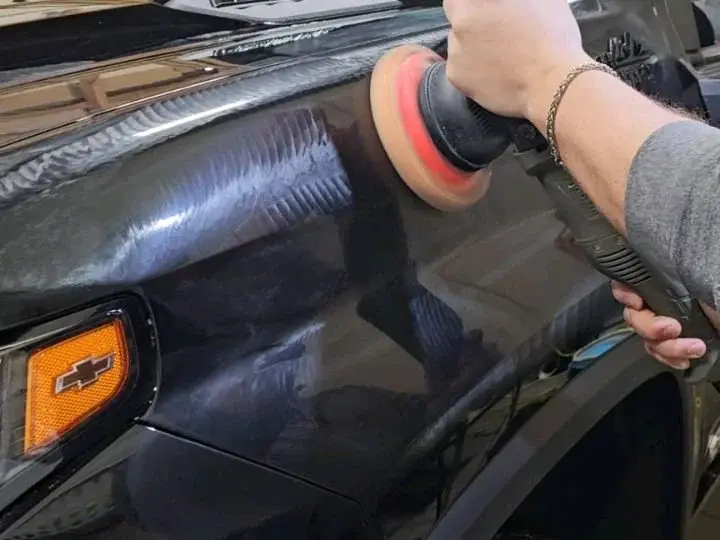
For lenses with light haze and no yellowing. Machine polish, then a ceramic sealant.
Style · Headlight Restoration
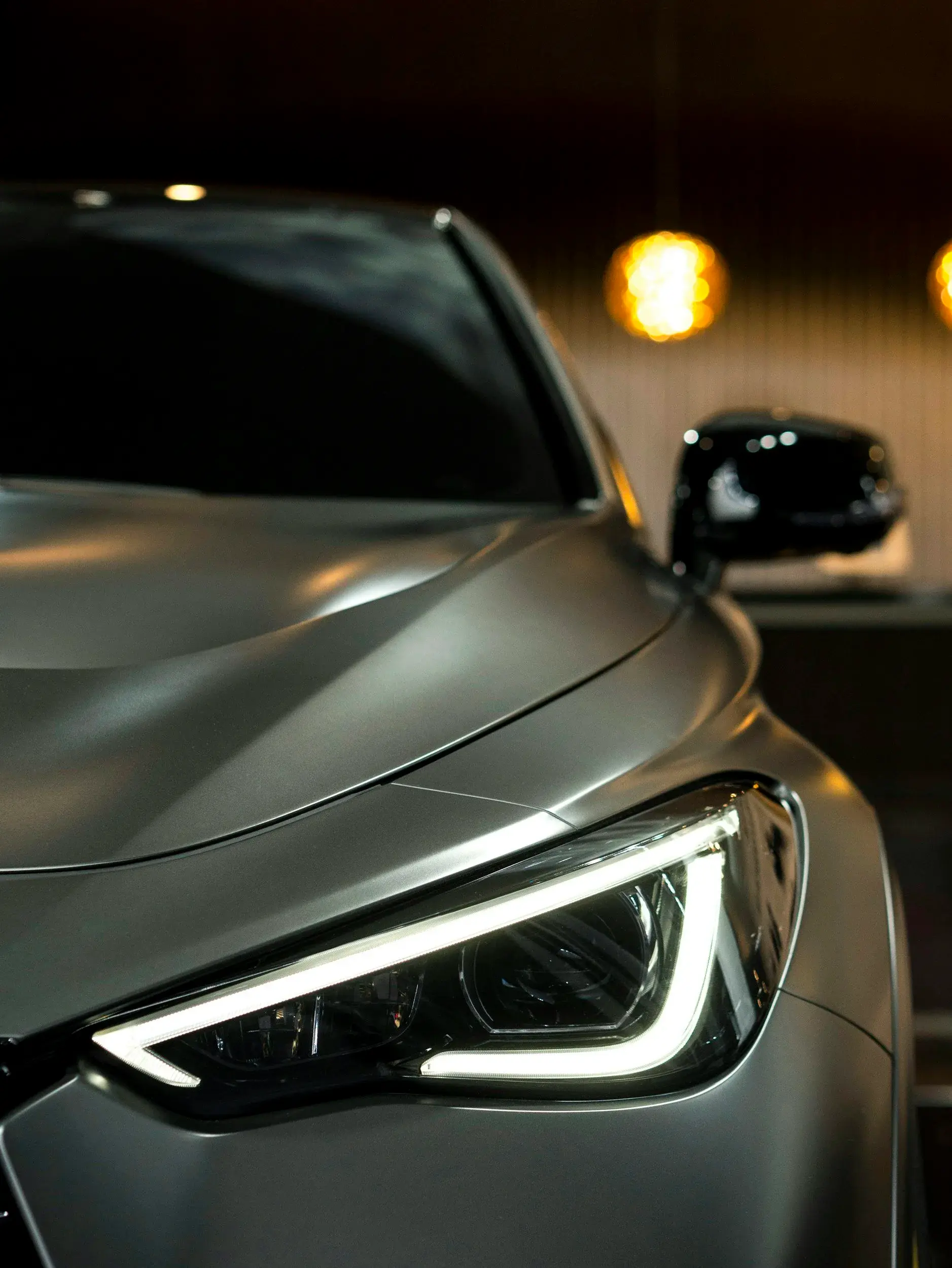
Oxidized headlights sanded back to clear, polished, and sealed under film so they stay that way.
Headlight Restoration
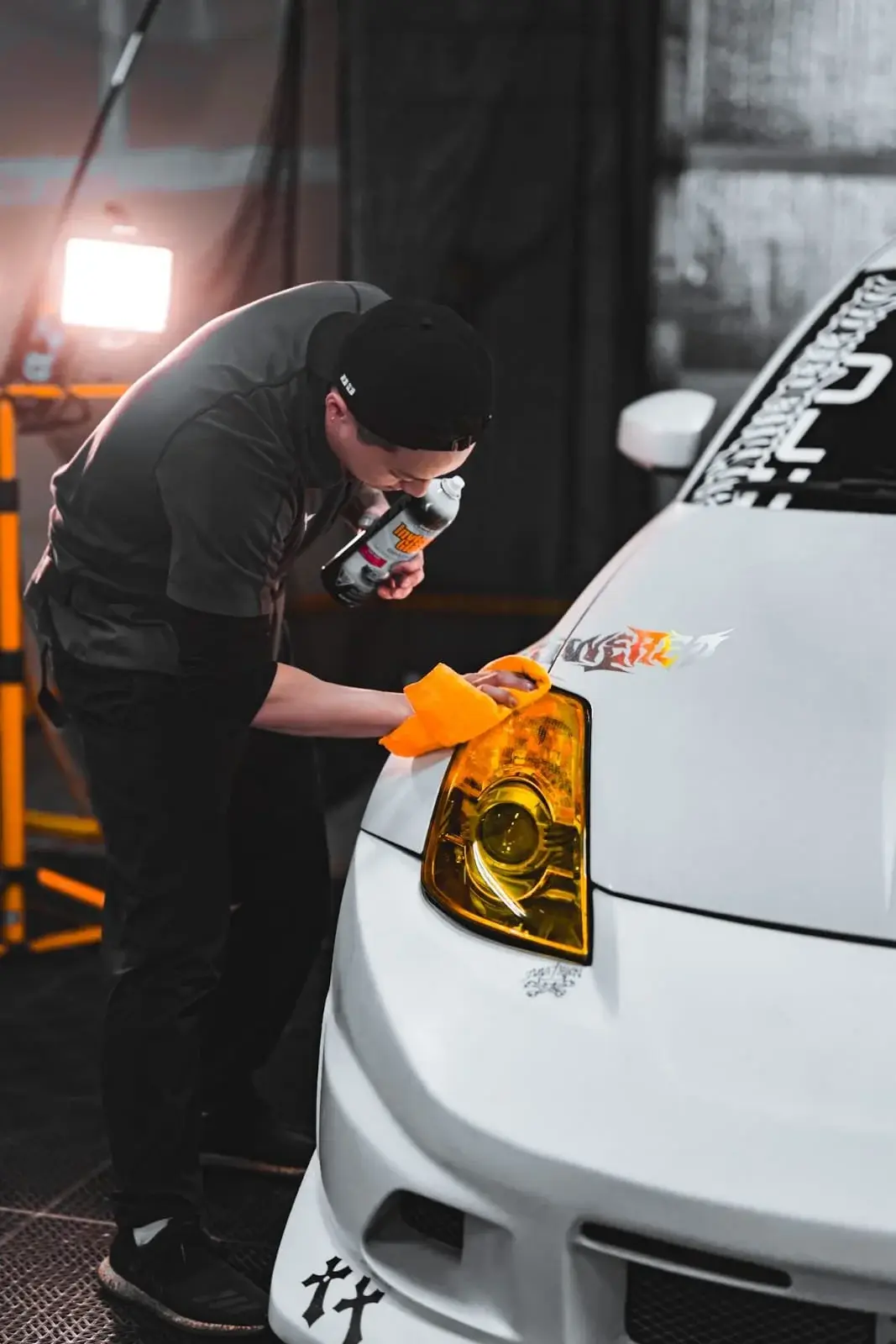
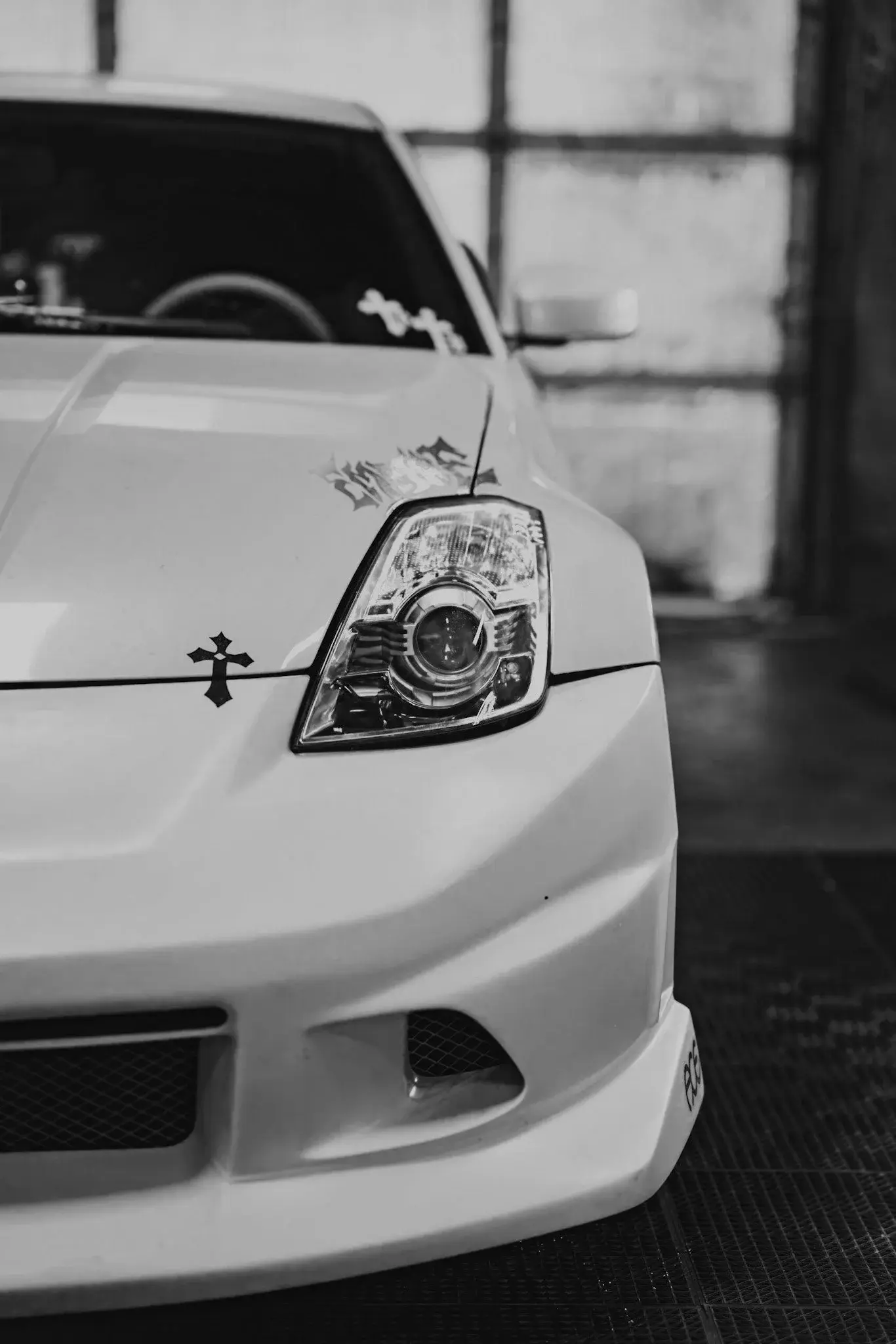
Polycarbonate headlights leave the factory with a UV-resistant hard coat. Once it fails, the lens yellows, hazes and scatters light. Restoration removes the failed coat and the oxidation beneath it, polishes the lens back to optical clarity and seals it.
The difference is more than looks: a hazy lens can cut light output dramatically, which matters on unlit Fraser Valley roads in November.
Levels
About an hour
For lenses with light haze and no yellowing. Machine polish, then a ceramic sealant.
Two to three hours
Progressive wet sanding to remove the failed hard coat and oxidation, compounding and polishing to clear, then sealing.
Half a day
Full restoration finished with clear or smoked STEK light film. The film replaces the factory hard coat with a warranted one.
What it does
Clear lenses put the beam where it was designed to go instead of scattering it into the fog.
The oxidized layer is physically removed, not covered up with a temporary polish.
Cloudy lenses are a common inspection fail; restored ones aren't.
OEM headlight assemblies on modern cars are often four figures each. Restoration is a fraction of that.
Bare polished polycarbonate re-yellows within months. Sealing it, or better, filming it, keeps it clear.
Why we stand out
Wet sanding and machine polishing plastic without heat-marking it is exactly what our correction technicians do on clear coat.
Surrounding paint and trim are masked; nothing gets sanded that shouldn't.
Internal fogging, cracked lenses or failed seals are replacement jobs. We'll tell you before we start.
Adding light film after restoration is the only way to give a restored lens a warranty. We offer both in one visit.
Questions
Straight answers about headlight restoration. Anything else, call or text the shop.
Polished and sealed, a year or two before light haze returns. Restored and covered with protection film, as long as the film lasts, which is seven years under warranty.
No. Internal condensation means a failed seal or a cracked housing, and the fix is resealing or replacing the assembly.
UV light breaks down the factory hard coat and then the polycarbonate under it. Cars that live outside, especially facing south, yellow fastest.
Briefly. Most kits polish the oxidation without properly removing the failed coat or sealing the lens, so it comes back in months.
Google reviews
Call or text 604.534.6433, email us, or send the form and we'll come back with a price and a date.