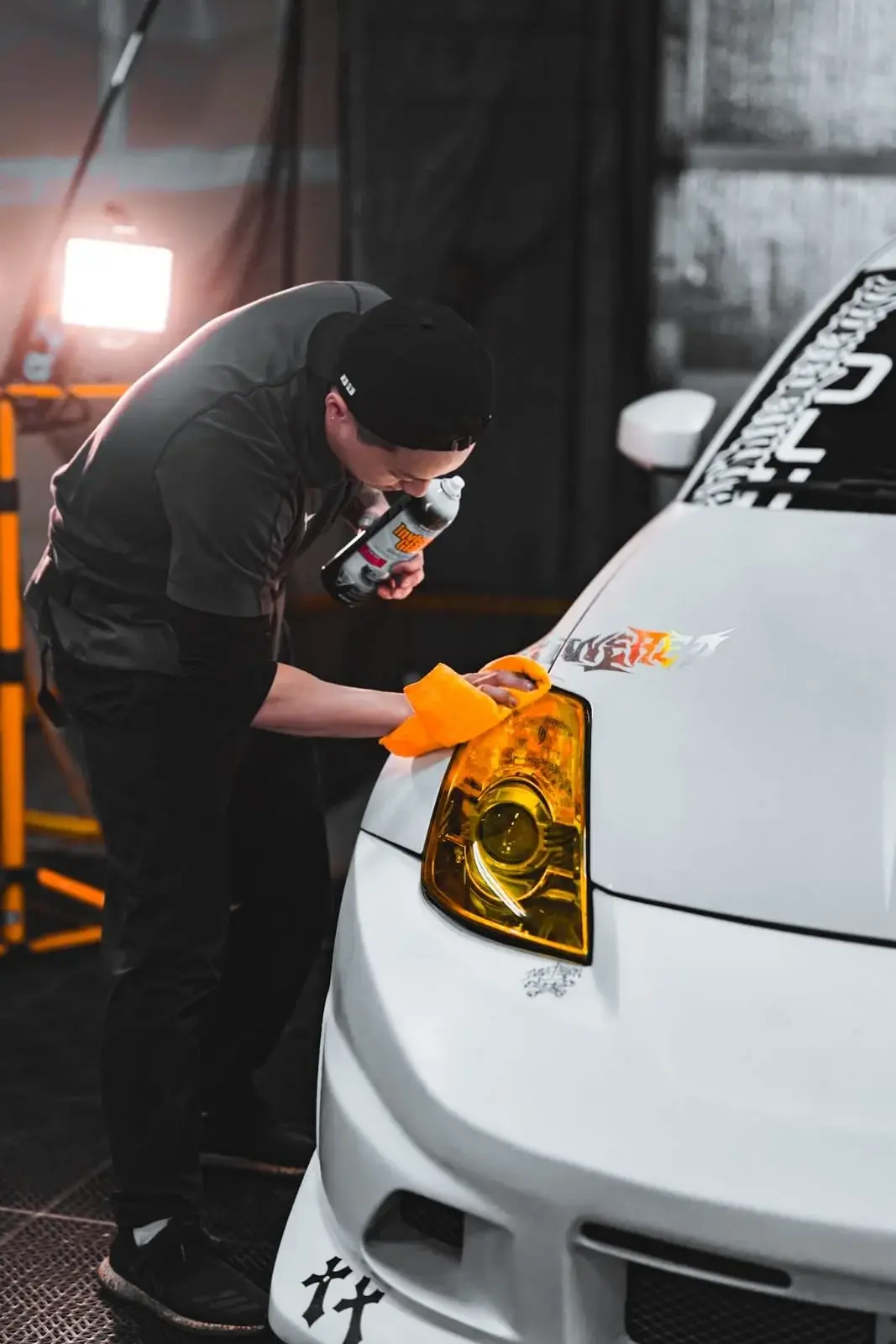
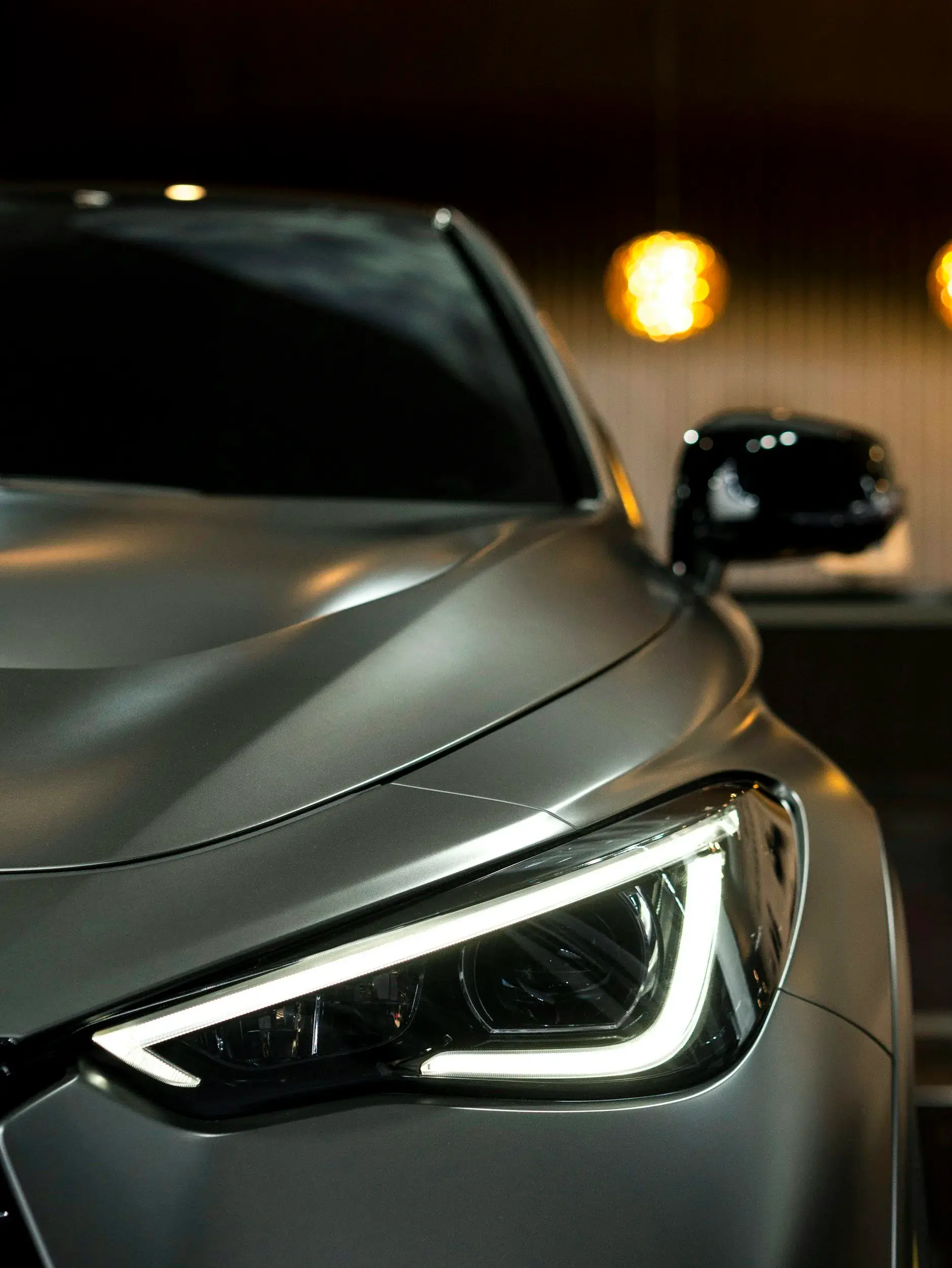
Why doesn’t a restored headlight stay clear by itself?
Because restoration removes the very layer that was protecting it. The yellowed surface is the factory hard coat breaking down, and wet sanding takes off what’s left of that coat along with the oxidized plastic beneath it.
What’s underneath is polycarbonate, and polycarbonate doesn’t handle sun well on its own. Researchers at the coating maker Momentive wrote in a 2008 RadTech paper that it “tends to haze or discolor” under UV, and that in a headlamp the plastic only keeps its optical performance with a protective coat on top. A freshly polished lens with nothing on it has lost that protection. The clock on yellowing simply starts again, which is why no restoration at Brookswood Tint ends with bare plastic.
How long does each restoration finish protect the lens?
The finish, not the sanding, sets the lifespan. The shop offers three levels, and only one comes with a written term.
| Level | What protects the lens afterwards | Time in the shop | Written term |
|---|---|---|---|
| Polish and seal | A sealant over lightly polished plastic | About an hour | None published |
| Full restoration | A sealant over fully wet-sanded and polished plastic | 2 to 3 hours | None published |
| Restoration plus STEK film | Clear or smoked STEK light film | Half a day | 7 years against yellowing, cracking and peeling |
The film’s term is the shop’s published warranty on STEK light film; the STEK light film page has the product details. A sealant is a thinner, simpler layer, and how long it holds depends on sun, washing and where the car is parked, so no honest number can be put on it.
How does that compare with the factory coat?
The coat that came on the car was built to a test, not a lifespan. Under the US lamp standard, FMVSS No. 108, lens plastics, coated and uncoated, spend three years mounted outdoors in Florida and Arizona, tilted at 45° and facing south, before they’re judged.
Real lenses can start to go soon after. AAA’s 2018 headlight research warns that lenses may start showing their age within three to five years. That’s the useful yardstick for a restored lens: the original coat bought a few years, and the protection you add now is what buys the next stretch. A film with a seven-year term is the only finish here that puts a number on it.
What shortens the life of a restored headlight?
The same things that wore out the factory coat: sun, abrasion and harsh chemicals. You control two of the three.
- Sun on the top edge. The Momentive researchers found coating damage on lenses from Florida cars kept beginning along the upper edge, where the surface lies closest to horizontal. Expect any new haze to show there first.
- Parking. A car that sleeps outside gives its lenses more sun every day than a garaged one.
- Abrasive cleaning. Gritty cloths, dry wiping, snow brushes and brush washes all wear a thin sealant down.
- Solvents. Keep tar removers and strong cleaners off the lens unless the product says it’s safe for plastic.
Why the original lens failed is covered in more depth in why do headlights turn yellow?
Can headlights be restored more than once?
Yes, if the lens is still sound. Each restoration sands away a thin layer of plastic, so catching haze early and using the lightest level that clears it is kinder to the lens than waiting for heavy yellowing.
Restoration has hard limits, though. Fog or water inside the lamp, a cracked lens or a cracked housing can’t be fixed from the outside, and the shop treats those as replacement jobs. If you’d rather not repeat the work, film over a clear lens is the longer-term answer, which is the subject of does headlight PPF stop yellowing?
Is film on a restored headlight a problem at a BC inspection?
It can be. The lamp section of BC’s 2025 Vehicle Inspection Manual gives two reasons under item 1.0(a) that matter here: a lens that reduces the light passing through, and a lens “covered in any manner”.
Smoked STEK film darkens the lens by design, so it can fail. A clear film is still a covering, and the manual makes no exception for clear material, so an inspector may question it. If the car is due for an out-of-province inspection or a Notice and Order inspection, mention the date when booking so the lens gets a sealant finish rather than film. Whether a hazy lens fails on its own is answered in can cloudy headlights fail a BC inspection?
Choosing the finish that lasts for your car
Pick the finish by how long you’re keeping the car and whether an inspection is coming. A sealant suits a lens you’ll keep an eye on, or a car heading for inspection; film suits a car that’s staying in the family for years.
A daylight photo of each lens, plus the vehicle details, is all the headlight restoration quote form needs; add which finish you’re leaning towards. Restoration is quoted per vehicle, and headlight restoration cost explains what moves the price.