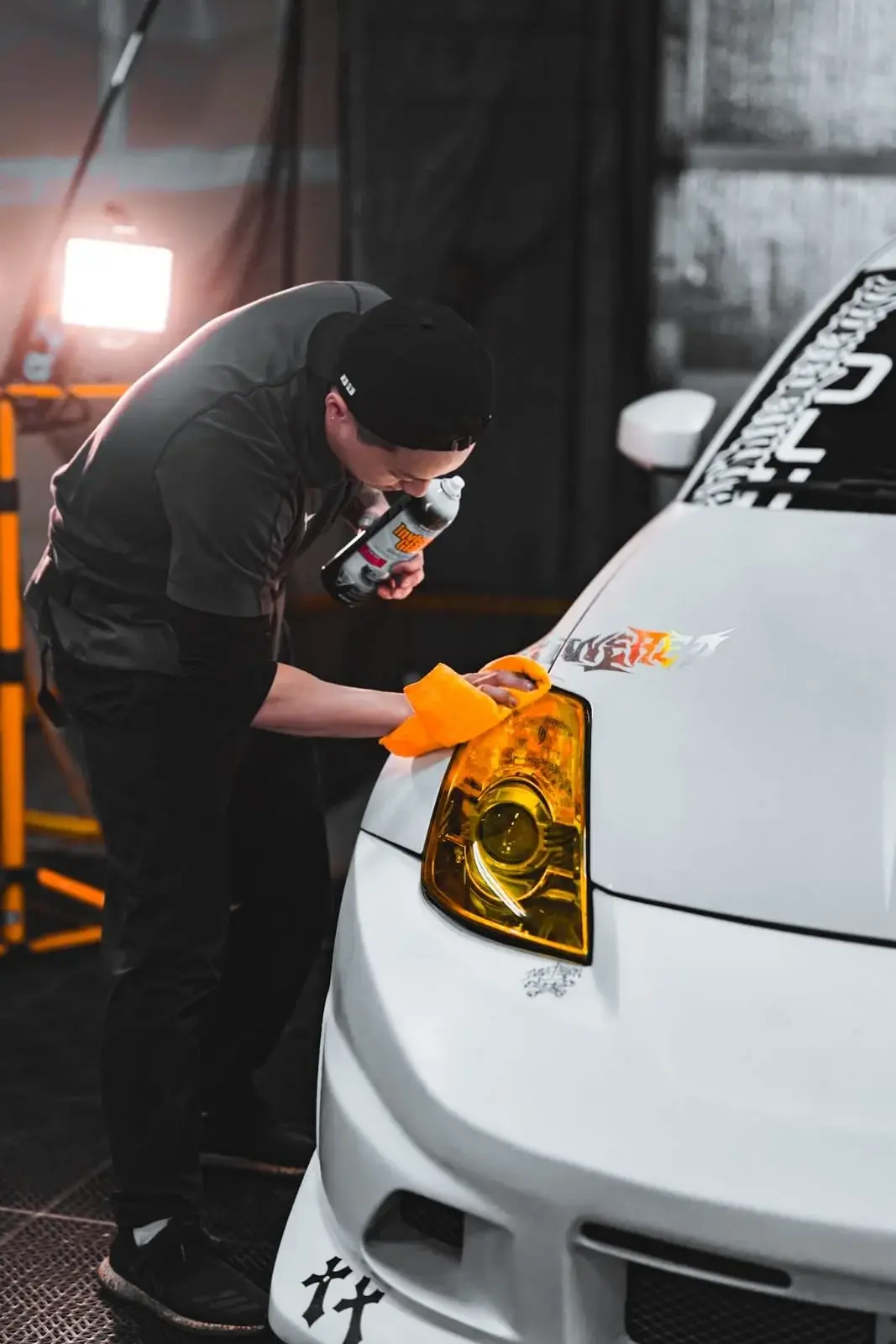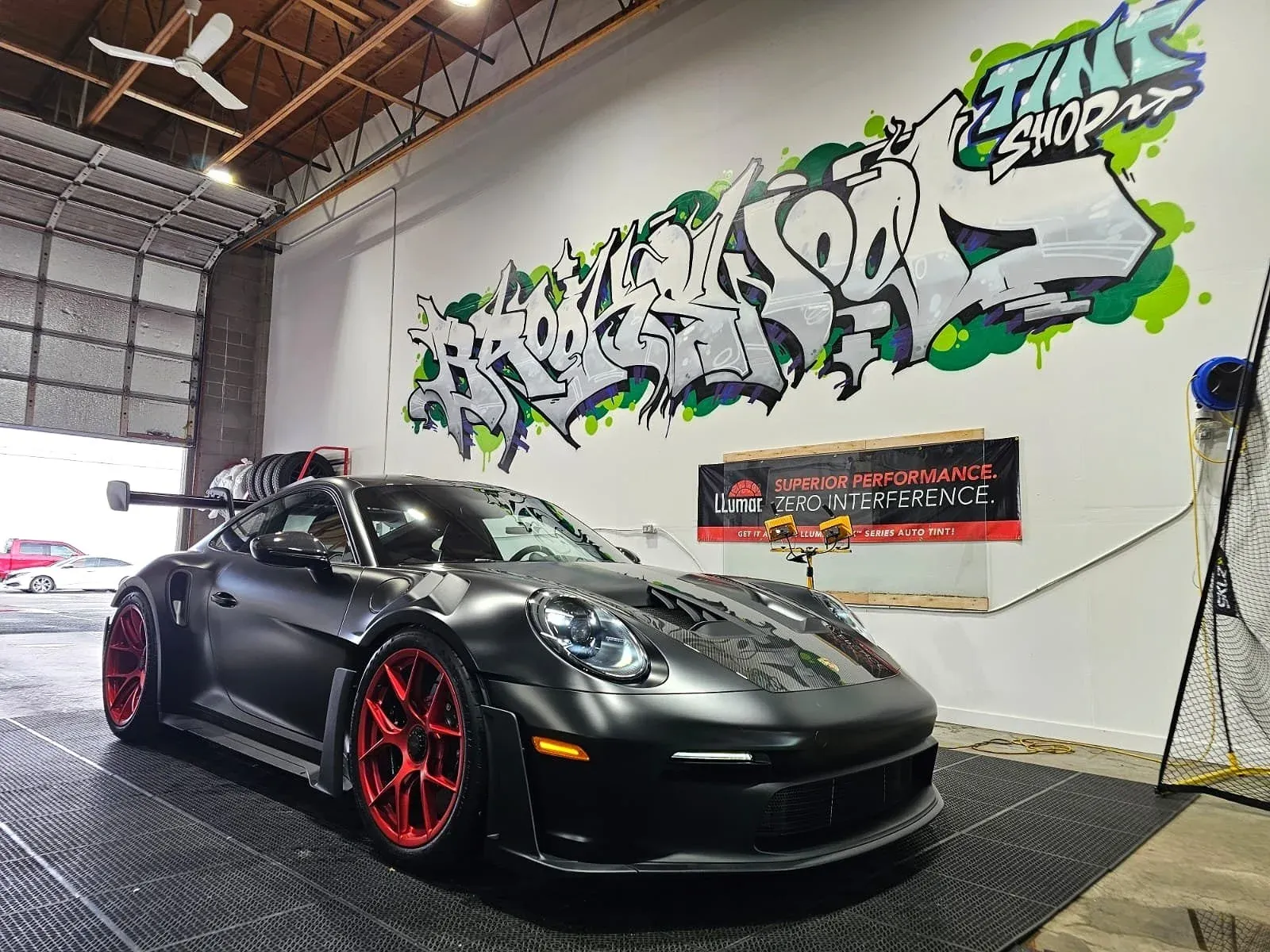
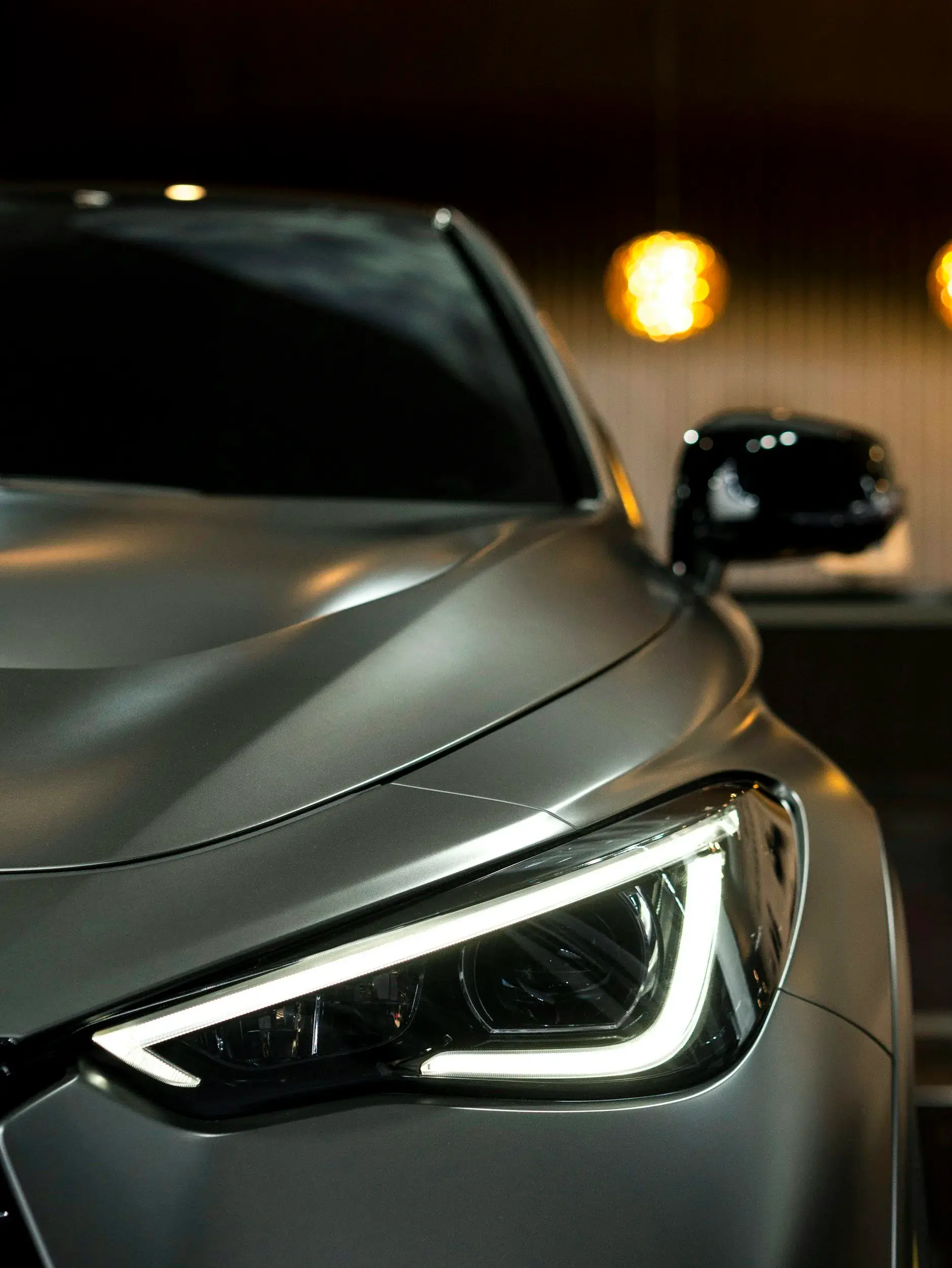
How does film keep a headlight lens from yellowing?
Film keeps a clear lens clear by taking the wear itself. The factory puts a thin protective coat on the outside of a plastic headlight lens; once sun, road grit and years of washing break through it, the plastic underneath turns yellow and cloudy. A layer of film over the lens means that wear lands on the film instead.
STEK, the maker of the light film Brookswood Tint fits, describes its light films as TPU-based and says they give protection against “rock chips and cracks, scratches, delamination, oxidation”. The shop sells the film to guard lenses against yellowing from sun exposure. The difference from the factory coat is that film can be peeled off and replaced, while a worn factory coat can only be sanded away.
Sun exposure adds up in the Fraser Valley. Abbotsford averages 1,886.7 hours of bright sunshine a year in Environment Canada’s climate normals, and a car parked outside at work and at home puts its headlights in most of them.
How long is a headlight’s factory coating built to last?
The lighting standard tests lens plastic for three years of sun and asks nothing about the years after. Under the US federal lamp standard, FMVSS No. 108, samples of every plastic used for lamp optics, coated and uncoated, go through a three-year outdoor exposure test in Florida and Arizona.
| What FMVSS 108 checks after 3 years outdoors | Limit |
|---|---|
| Headlamp lens materials | “Must show no deterioration” |
| Haze and loss of lustre, outer lenses | No more than 30% |
| Change in luminous transmittance, all materials | No more than 25% |
| Physical changes | No colour bleeding, delamination, crazing or cracking |
That is a pass mark for year three, not a promise for year eight. The standard says nothing about how a lens looks after its test ends, and a car parked outside keeps aging its lenses every sunny day. Film added while the lens is still clear gives the factory coat a cover for those later years.
Can film fix a headlight that has already turned yellow?
No. Film is clear, so it shows whatever is underneath, and yellowing sealed under film stays yellow. The yellow on an aging lens is the outer surface breaking down, and it has to be removed before any film goes on.
| Lens condition | What to book | Time |
|---|---|---|
| Clear, new or nearly new | Film only | 2–3 hours a pair |
| Light haze, no yellow | Polish and seal, then film if wanted | About an hour, plus fitting |
| Yellow or chalky outside | Full restoration with progressive wet sanding, then film | Half a day for restoration plus film |
| Fog inside, or cracked housing | Replacement, not film | Quoted on the car |
The restoration side of the job, and why a yellow lens needs sanding rather than a polish, is laid out on yellow headlight restoration. The cause in more depth is covered in why headlights turn yellow.
Which film goes on headlights, and what does its warranty cover?
Two films do this job at Brookswood Tint, and both name yellowing in their written terms. Which one your lenses get depends on whether they’re part of a paint protection package or a light film job on their own.
| Film | Where it’s used | Written term |
|---|---|---|
| STEK light film, clear (also sold in 30% and 50% smoke and yellow) | Headlight and taillight film jobs, heat-formed to each lens | The shop publishes a 7-year warranty against yellowing, cracking and peeling |
| LLumar Platinum PPF | The headlights in all four paint protection film packages | LLumar’s 10-year manufacturer’s limited warranty; the shop lists yellowing, cracking, bubbling and peeling as covered |
STEK’s own page gives its DYNO-series light films a 7-year warranty “against delaminating, yellowing, bubbling and cracking”. The film is plastic and ages too, which is why yellowing is written into those terms; if film yellows, it’s the film that comes off, not the lens. The clear option on its own is described on clear headlight PPF, and the film’s specs on STEK light film.
Does clear headlight film affect a BC inspection?
It can. No film over a headlight is clearly inspection-safe in BC, clear film included, and an inspector may question it.
BC’s lamp rules in Division 4 of the Motor Vehicle Act Regulations say required lamps must not be “shielded, covered or obscured” by “dirt or other material”. The 2025 Vehicle Inspection Manual, Section 6 item 1.0(a), rejects a lens that “reduces transmission of light” or “is covered in any manner”.
Before an inspection: if the car is going to a designated inspection facility, out-of-province or under a Notice & Order, tell the shop when you book. Light film lifts off with heat, and a restored lens can be finished with a sealant instead of film. Smoked and yellow films carry more risk again; the rules for those are in are tinted headlights legal in BC.
How do you protect headlights from yellowing in Langley?
Match the job to the lens you have today. On a new or clear lens, book film and you’re done in an afternoon; on a yellowed lens, book the restoration first and add film in the same visit.
- New car getting PPF: the headlights come with every LLumar Platinum package, from $850 for the Partial Front.
- Clear lenses, no PPF planned: clear STEK film on its own takes 2–3 hours a pair and is quoted for your model.
- Yellowed lenses: restoration plus film takes about half a day, quoted after the shop sees a photo or the car.
Send your year, make and model, and a photo of the lenses if they’re already hazy, through the light film request, or send them by text to 604 534 6433. Lenses can also be looked at in person at Unit 312, 20560 Langley Bypass, Monday to Saturday between 9:00 and 17:00.