What are the signs of a bad tint job?
Look for flaws at the edges, flaws under the film, and damage the installer left behind.
Gaps and uneven edges
A good edge follows the glass at the same small distance all the way round. A poor one wanders: wide slivers of bare glass in one corner, film almost touching the frame in another, or a jagged line where it was trimmed freehand. On a roll-down window, lower the glass a few centimetres and look along the top edge, where an uneven cut is easiest to see.
Dirt, hair and specks under the film
Grit, lint or a hair trapped under the film shows as a small raised point. It isn’t water, so it never dries out; it means the glass wasn’t clean when the film went on.
Bubbles that outlast the cure
Haze, and small soft pockets of water, are expected during the first week and dry out. Pockets that haven’t shrunk once the film is fully dry, or bubbles that turn up later, are not part of curing.
Lifting or peeling corners
An edge or corner that lifts within weeks wasn’t bonded properly, unless a window was lowered during the cure. Don’t press it back down; show it to the installer as it is.
Creases on curved glass
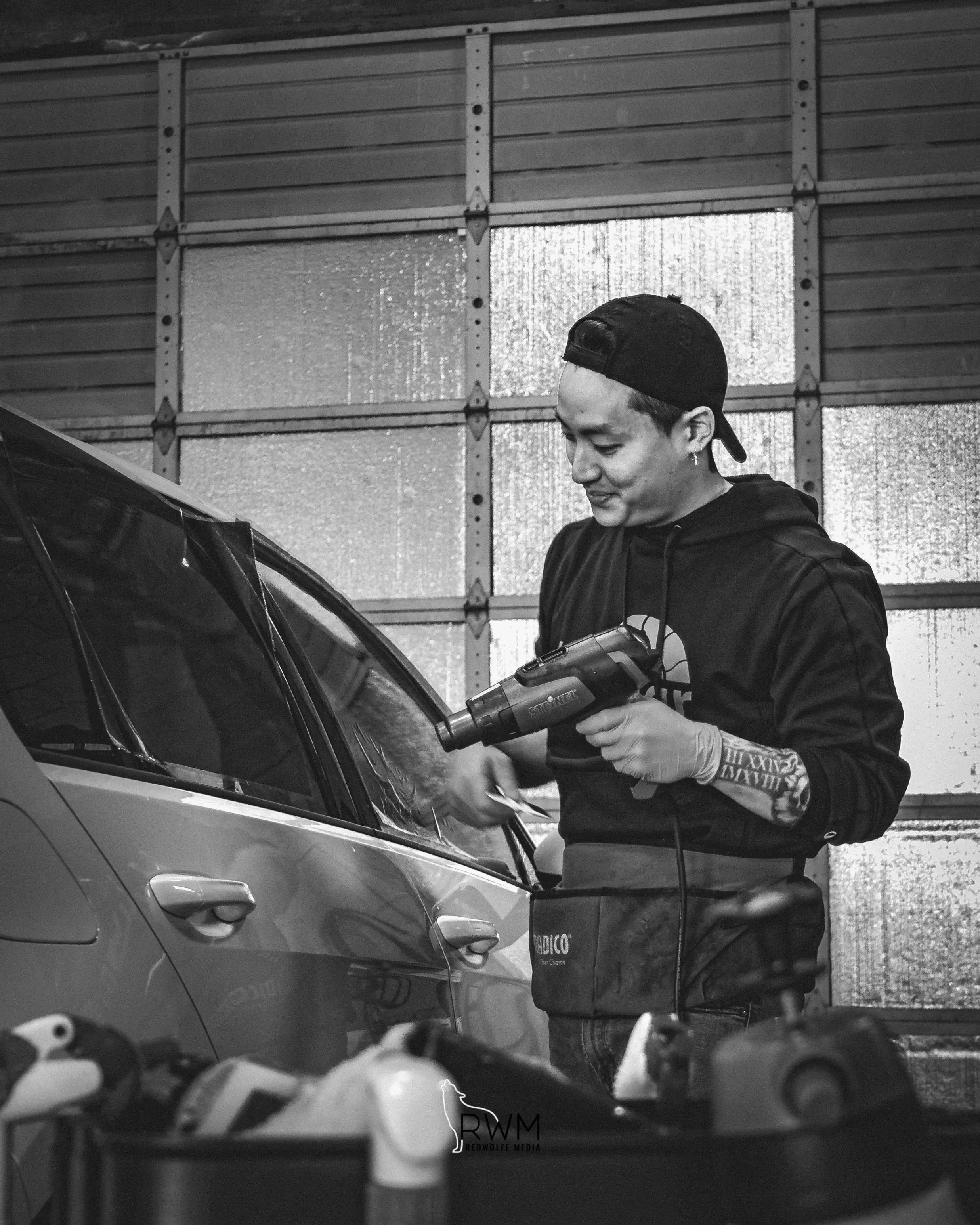
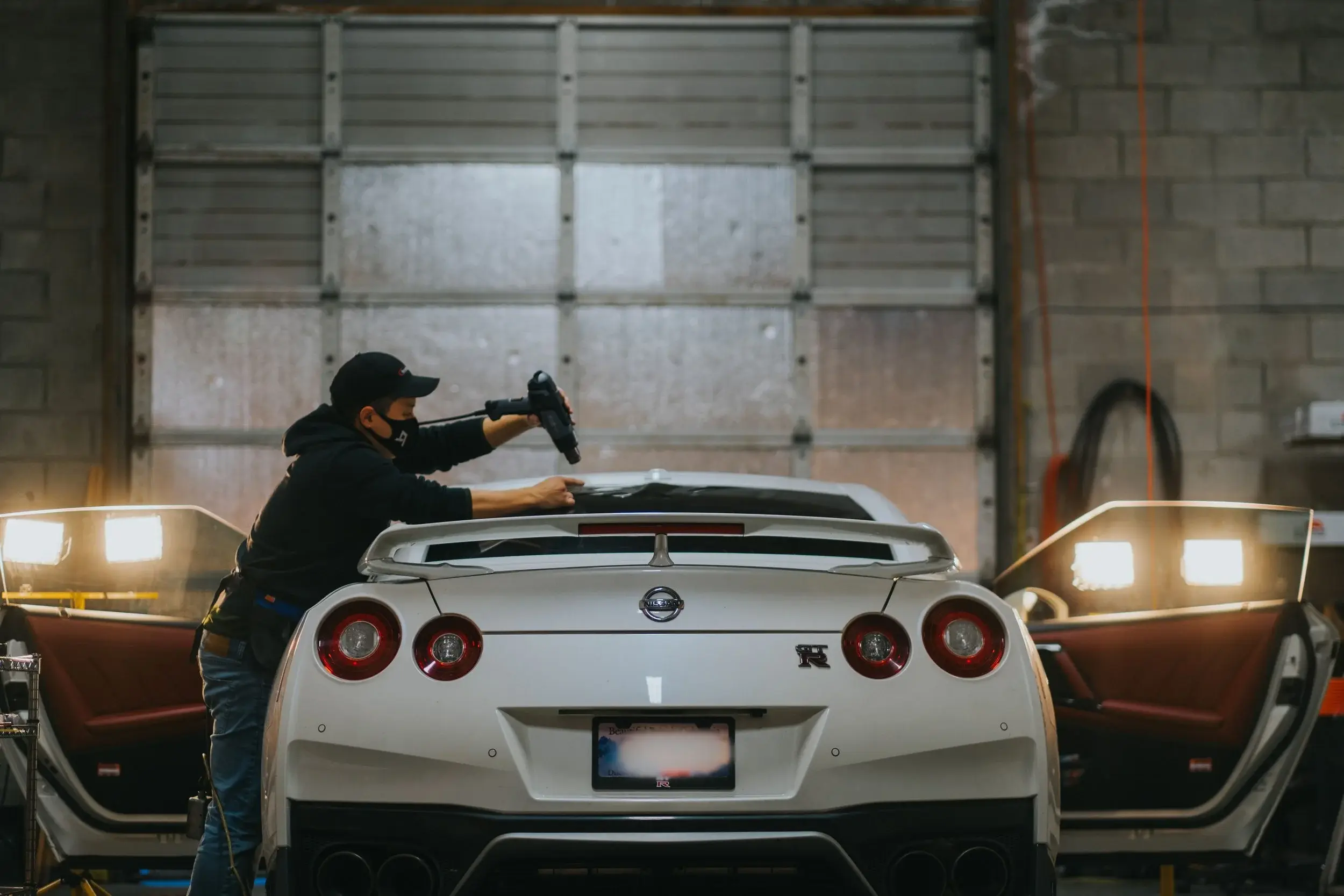
Back glass and many quarter windows curve two ways, so flat film has to be heat-shrunk to the shape. Skip or rush that step and you get creases or ripples, usually near the edges.
Knife marks and broken defroster lines
Scratches in the glass, nicks in rubber seals or cut trim are the marks of film trimmed on the car with a blade. On the back glass a blade can also cut the defroster grid: if part of the window no longer clears when the rear defroster is on, check those lines.
Mismatched shades
Windows meant to match shouldn’t vary from door to door. One exception isn’t a fault: film over factory privacy glass ends up darker than the same film on clear glass, as explained on tinting over factory tint.
Which flaws are normal in the first week, and which aren’t?
Water flaws in the first week are normal; anything else, or anything that outlasts the cure, isn’t:
| What you see | When | Normal? | What to do |
|---|---|---|---|
| Light haze | First week | Yes | Wait; it clears slower in cold, damp weather |
| Small, soft water pockets that shrink | First week | Yes | Leave them alone |
| Pockets that haven’t changed after the cure | Weeks later | No | Show the installer |
| Grit, lint or hair under the film | Any time | No | Show the installer |
| Lifted edge or corner | Any time | No | Don’t press it; call |
| Creases or ripples on curved glass | Any time | No | Show the installer |
| Scratched glass, cut seals or grid lines | From day one | No | Photograph it and call |
Haze is explained on why new tint looks hazy. Bubbling in film that’s several years old is a different problem, adhesive giving out with age, covered on bubbling tint removal.
What does a properly installed tint job look like?
Edges that sit evenly inside the glass, nothing trapped underneath, curved glass with no creases, and no marks on the glass, seals or trim. You should also leave knowing which film and shade went on, and what’s legal.
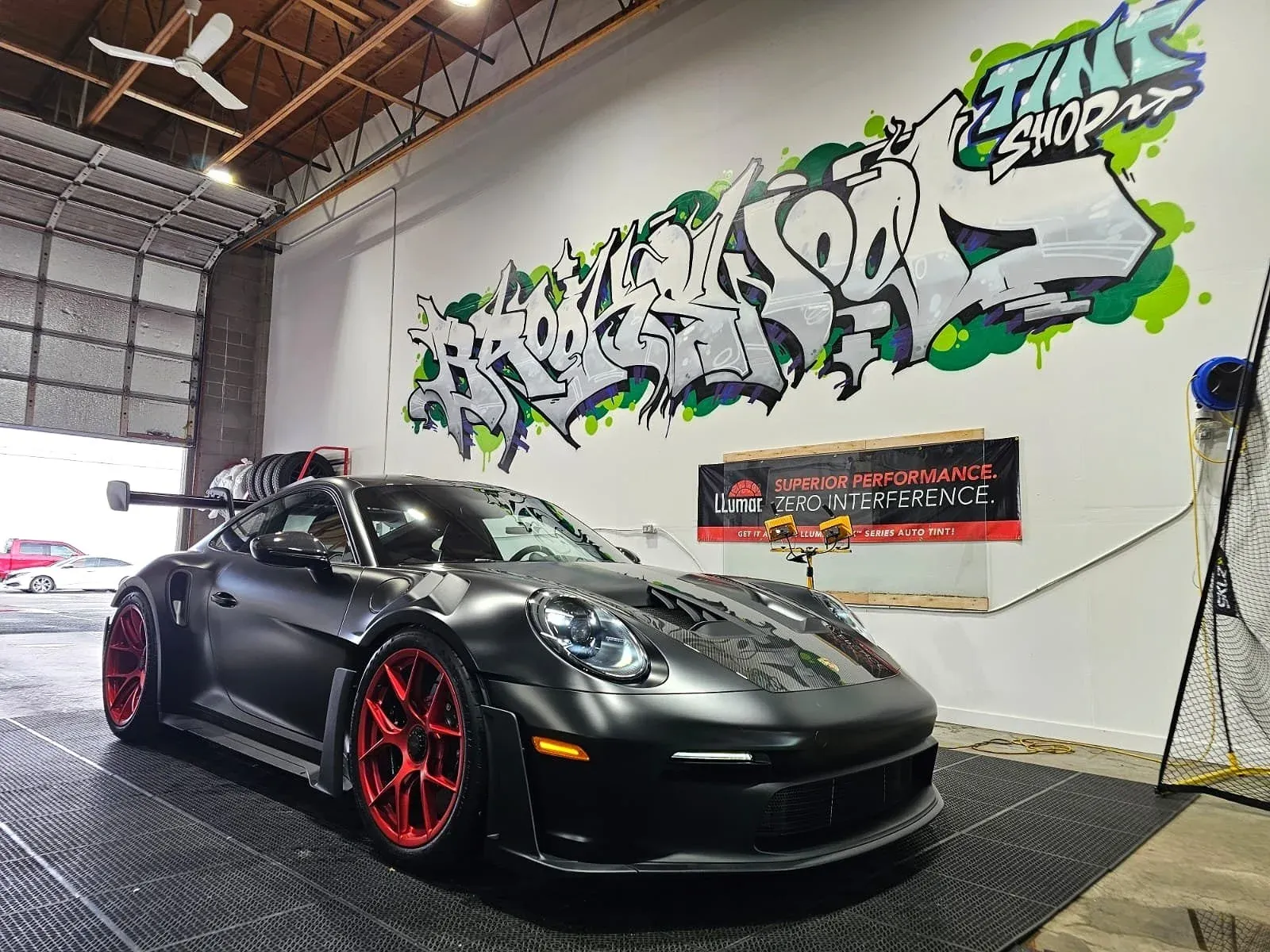
At Brookswood Tint a computerized plotter cuts every piece to the year, make and model, so there’s never a blade on the glass or the trim. After cutting, every piece is shaped with heat and fitted by hand, which is how curved back glass ends up flat. The film is LLumar, with a lifetime warranty on the film and on the shop’s workmanship; wherever you go, make sure the invoice names the film, the shade and the windows. Installs are done inside the shop rather than in a driveway, which keeps dust off the glass; mobile tint vs shop tint looks at that trade-off, and choosing a tint or PPF shop covers what else to ask.
Can a bad tint job be a legal problem in BC?
Yes, in two ways: film on glass BC keeps clear, and film so bad the driver can’t see properly.
Front door film, or windshield film reaching lower than 75 mm from the top, isn’t road-legal in BC at any shade under MVAR s. 7.05(8), and inspectors fail it under items 13d and 12e of the 2025 Vehicle Inspection Manual. Mission RCMP says a ticket is typically $109, and a Notice & Order can add the job of stripping the film and passing an inspection. Brookswood Tint will only fit front film when a customer asks, and explains all of that first. An installer who put it on without a word left you carrying a risk you didn’t choose.
Badly failed film is the second problem. Section 7.05(1) bars driving a vehicle whose windshield or any window is “in such condition that the vision of the driver is impaired”, and inspection item 14a fails back glass so clouded the driver can’t see clearly 60 m behind the car.
What can you do about a bad tint job?
Go back to the installer first, with photos and your invoice, while the job is fresh. If the film is faulty or the work is poor, it’s theirs to put right under whatever warranty they gave you. LLumar points owners back to the installer: its FAQ ends its lifetime warranty line with “see dealer for warranty details” (LLumar FAQ).
If that isn’t an option, the fix is removal and a re-tint. Trapped grit and badly cut edges are part of the film that’s on the glass, so the window needs new film rather than a touch-up.
How the removal works
Brookswood Tint steams the old film off rather than cutting it, dissolves the adhesive completely and tests the rear defroster grid before and after. Steam protects the grid lines that are still intact; it can’t repair a line a blade has already cut, which is why the test beforehand matters. The back glass is covered on rear window tint removal.
Getting a bad tint job redone in Langley
Send photos of the problem windows with the year, make and model. Removal usually takes 1 to 3 hours, is priced per window, and costs less if you re-tint in the same appointment; on most cars both are finished the same day.
The replacement is LLumar ATC, IRX or AIR, with the lifetime warranty on film and workmanship. Start with the tint removal service, read the warranty terms, or ask for a price on the removal quote form.