Why does the installer matter more than the film brand?
Because the film’s numbers are fixed at the factory, and everything you look at afterwards is decided in the bay. A good film fitted badly shows dust, crooked edges and lifting; the same film fitted well disappears.
That’s the point buyers in Lower Mainland forums, from RedFlagDeals and RevScene to Tesla Motors Club, make again and again when someone asks where to go: the person doing the install counts for more than the logo on the box. Their other advice follows from it. Buy from an authorized dealer so the maker’s warranty applies, get the film line in writing, find out who will actually do the work, and look for a shop that publishes its prices.
The spec sheet backs them up. LLumar’s figures come from a single sheet of clear 6 mm test glass measured to NFRC methods, and a car’s own glass reads differently. The sheet tells you what a film can do; how cleanly it’s cut, shaped and fitted to your glass decides whether you get it. Paint protection film is the same: the film’s warranty covers the film, and the edges, seams and relief cuts are the installer’s work.
None of that makes the brand irrelevant. It means you choose the shop first, then hold its film line up against another shop’s on the makers’ own data. LLumar vs XPEL window tint shows how to do that without being misled by headline numbers.
What should you ask a tint or PPF shop?
Eight questions cover what matters. A good shop answers each one without hesitating, and puts the important ones in writing. Here is the list, with what to listen for and how Brookswood Tint answers.
| Ask | A good answer | Brookswood Tint’s answer |
|---|---|---|
| How long have you been fitting film, and can I see your work? | Years in business and real cars, not stock photos | Tinting in Langley since 1989; real customer cars in the gallery |
| Are you an authorized dealer, and for which film line? | A brand and a line by name, checkable on the maker’s site | LLumar dealer: ATC, IRX and AIR window film, Platinum PPF |
| What’s the warranty, and who covers what? | Film and workmanship named separately, in writing | Tint: LLumar lifetime limited on film, shop lifetime on workmanship. PPF: LLumar 10-year limited |
| What exactly does the price cover? | Windows or panels listed, film named, tax stated | Published starting prices before tax, with each package’s windows or panels listed |
| Who will do the work? | A straight answer | Family-run; Johnny, the third owner, took over in 2020. Ask at booking who will fit your film |
| How is the film cut? | Plotter or software templates for your model | Tint plotter-cut to year, make and model; PPF from software templates |
| Where is it installed? | Indoors, in a clean bay | In the shop’s bay on the Langley Bypass |
| Is this legal on my car in BC? | The rule, plainly, before you pay | No film on front side windows at any shade; the risk explained before anyone decides |
How do you check a shop’s dealer status and film line?
Look the shop up on the manufacturer’s own website, then make sure the film line and shade are written on your quote and invoice. A shop’s claim to be a dealer is easy to check, and a film name on paper is what a warranty claim later depends on.
Use the maker’s dealer locator
LLumar’s FAQ tells buyers to open its dealer locator and select “Automotive Tint”; the Find a Dealer page is linked from the main menu of llumar.com. Other film makers run their own lists. If a shop says it’s a dealer and doesn’t appear, ask why before you book.
Dealer status matters because the warranty runs through it. LLumar’s warranty statements for tint and Platinum PPF both end the same way: “see dealer for warranty details.” Brookswood Tint is a LLumar dealer, and what that means in practice is set out on authorized LLumar dealer in Langley.
Get the film line and shade in writing
“Ceramic tint” is a category, not a product. A quote should name the line and shade, such as LLumar IRX 35 or ATC 15, so you can look up exactly what you’re buying. At Brookswood the lines are ATC, a colour-stable dyed film in 5, 15, 35 and 50%; IRX, an infrared-rejecting nano-ceramic in the same four shades; and AIR, a clear ceramic listed at 70, 80 and 90%.
Ask for the spec sheet, not the sales number
The number in a film’s name is often a product code, not a measurement. On LLumar’s performance data sheet, ATC 50 measures 60% visible light transmission and IRX 05 measures 6%. Heat claims vary in the same way: LLumar publishes SIRR, selective infrared rejection, which reads higher, alongside IRER, infrared energy rejection, which also counts heat the film soaks up and re-radiates. A shop quoting “88% infrared” should be able to tell you which measure it means and show you the sheet.
Ask about PPF thickness the right way
Forum buyers often say to ask how thick a paint protection film is. That only helps if the maker publishes the figure, and LLumar doesn’t publish thickness for its Platinum films. What it does say is that Platinum Extra is its thickest PPF. So ask which film line is on the quote, and if you drive gravel roads or take the car on track, ask about the heavier option by name. The LLumar Platinum PPF page explains the family.
What should a written tint or PPF warranty say?
It should name who covers the film, who covers the labour, for how long, and how you make a claim. “Lifetime warranty” on its own is a slogan; the document behind it is the warranty.
Film warranty and workmanship warranty
These are two different promises. The manufacturer warrants the film against failing on its own. The shop warrants its own work: the cut, the fit, the edges. A good shop tells you both terms and which one applies to what.
| Film at Brookswood Tint | Film warranty | Workmanship |
|---|---|---|
| LLumar ATC, IRX, AIR window tint | LLumar manufacturer’s lifetime limited warranty | Shop’s lifetime warranty, while you own the car |
| LLumar Platinum PPF, gloss or matte | LLumar 10-year manufacturer’s limited warranty; the shop’s published list of covered defects is yellowing, cracking, bubbling and peeling | Ask at booking |
| STEK headlight and taillight film | 7 years, the shop’s published term | Ask at booking |
| 3M and Avery Dennison vinyl | 5 years on the vinyl, the shop’s published term | Ask at booking |
LLumar’s own pages keep their wording short. The tint FAQ calls its cover a lifetime limited warranty and adds a footnote that restrictions apply. The defect list on the PPF row is the shop’s published wording, not LLumar’s.
What warranties usually leave out
A film warranty covers the film breaking down on its own, not something done to it, and the exclusions are where terms differ. LLumar’s own wording says only that “certain restrictions apply”, so ask each shop to show you what its terms leave out, such as impact damage, scratches or work done by another installer. Whether a warranty follows the car to a new owner is another question to ask in writing; for LLumar, the shop can’t confirm that it does.
How a claim works
Ask where a claim starts. At Brookswood it starts at the counter: call or text with your invoice and photos, and the shop looks at the film before anything else. The full terms are on the warranty page.
What should a tint or PPF quote include?
Everything you’d need to compare it with another shop’s: the windows or panels covered, the film line and shade, any removal or paint work, and whether tax is in the number. A shop that publishes its prices makes that comparison easy before you even call.
A window tint quote
It should list every window by name and say what happens to film already on the car. Brookswood’s window tint price list does the first part in public. Its starting prices are for LLumar ATC and are stated before tax:
| Package | From | What’s covered |
|---|---|---|
| Rear glass, sports coupe | $220 | 3 windows: the two quarters and the back glass |
| Rear glass, sedan or pickup | $240 | 5 windows: rear door glass, any quarter glass, and the back glass or the truck’s slider |
| Rear glass, full-size SUV or wagon | $260 | 7 windows: rear doors, quarters, extended side glass and the hatch |
| Front doors, sedan, coupe or wagon | $140 | The 2 front door windows |
| Front doors, full-size SUV or pickup | $160 | The 2 front door windows |
| Full windshield, fitted from inside | $200 | 1 windshield |
The two ceramics, IRX and AIR, are priced per package above those figures. Doing the whole car at once normally costs less than adding up the list, and that bundle is quoted for the specific vehicle. Old film is its own line: each window is priced separately, with a discount if fresh film follows straight away.
A PPF quote
It should list every panel, because “full front” doesn’t mean the same thing at every shop. Ask whether the hood and fenders are covered in full or in part, whether headlights and mirrors are included, and whether paint correction is in the price.
| LLumar Platinum package | From | Panels |
|---|---|---|
| Partial Front | $850 | Full bumper, headlights and side mirrors; hood and fenders in part |
| Full Front | $1,550 | Headlights, mirrors, and the hood, fenders and bumper in full |
| Track Package | $1,900 | Full Front coverage with the A-pillars, rocker panels and a section of the roof added |
| Full Vehicle | $4,000 | Every painted surface, plus headlights |
Those are starting prices. The final figure depends on how big the vehicle is, how complicated its panels are and what state the paint is in, and correction is quoted separately when the paint needs it. The full breakdown, with the tax position spelled out, is on what PPF costs in Langley.
Tax and the things that aren’t on the list
Ask whether a quote includes tax, and get the answer in writing. Brookswood’s published prices are before tax. Ceramic coating, vinyl and chrome delete have no published prices at the shop; those are quoted per vehicle, so ask for the same level of detail.
Who does the work, and where is it done?
The person and the place matter as much as the film. Ask who will fit your film, how it will be cut, and whether the car stays indoors for the install.
Who fits your film
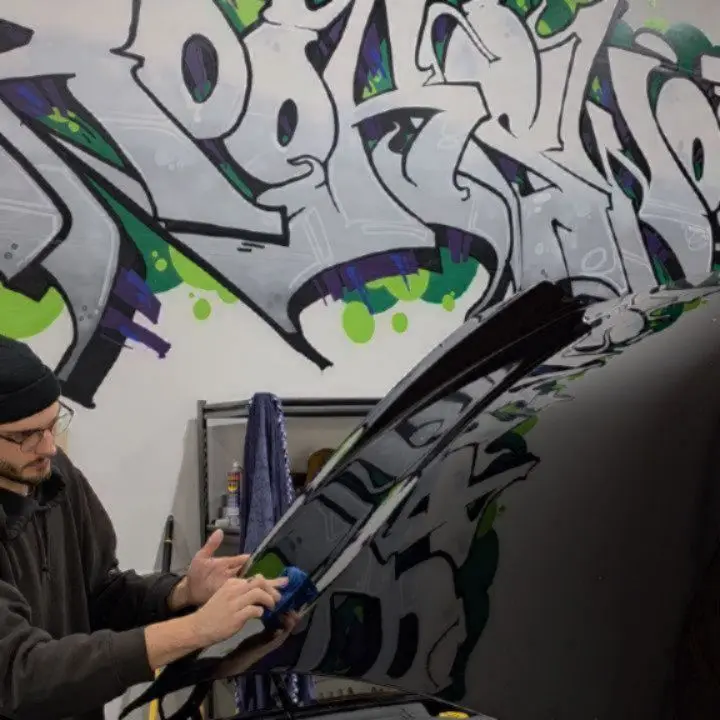
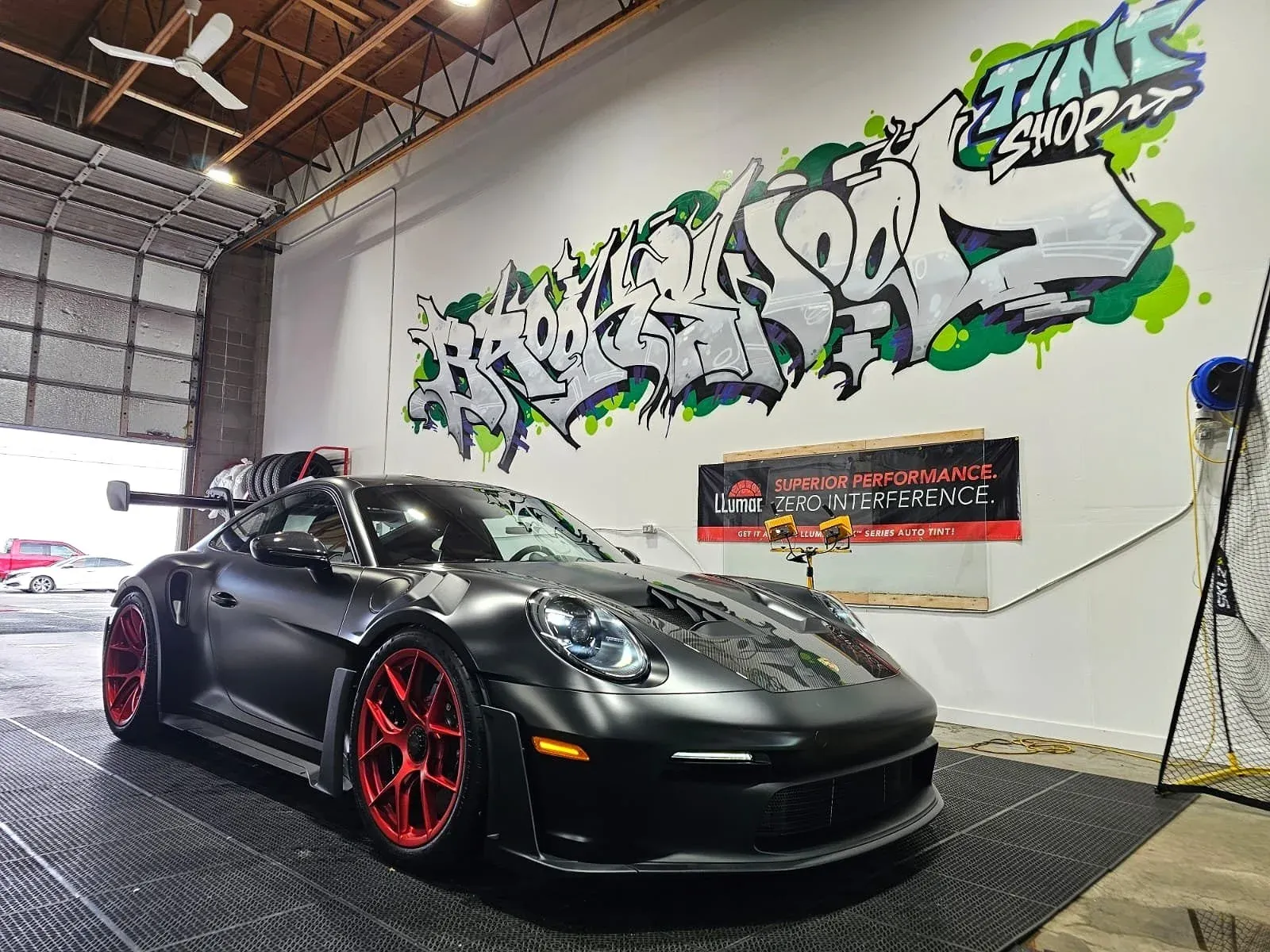
Forum complaints about cheap jobs often put the blame on a trainee, so it’s a fair question. Brookswood Tint, established in 1989, is family-run and describes itself as third-generation; its third owner, Johnny, took over in 2020. Ask at booking who will be fitting your film. The cars in the gallery are the shop’s own work, from a Porsche 911 GT3 with every window in LLumar AIR and IRX to a satin 911 GT3 RS under full PPF, and the shop’s story is on the about page.
Trust shows up in who sends their cars, too. One RevScene member mentioned that dealerships send their new cars to Brookswood; the shop’s work for dealers is described on dealership services.
Patterns cut by plotter or software
Ask whether the film is cut to a pattern before it reaches the car, or trimmed on the glass with a blade. At Brookswood a computerized plotter cuts window film for the exact year, make and model, which keeps blades away from the glass and trim; the pieces are then heat-shrunk and fitted by hand. PPF pieces come from software templates made for the vehicle.
Edges and relief cuts on PPF
Ask how the edges are finished. Wrapped edges hide the film’s line; a film that stops short of the edge shows it. Brookswood wraps edges wherever the panel allows. On some bumpers a relief cut can’t be avoided, and the shop shows you where it will go before the work starts. Before any film goes on, the paint is decontaminated and, where it needs it, corrected; film seals in whatever is underneath.
An indoor bay
Ask where the car will be while the film goes on. Brookswood won’t tint at a customer’s site, fleets included; in the shop’s words, “dust, wind and cold ruin an install.” Its bay has the height for vans like the Sprinter, Transit and ProMaster. The trade-offs of a driveway install are set out in mobile tint vs shop tint.
Will the shop tell you the truth about BC law?
A good one will, before you pay. BC allows no aftermarket film on the front side windows, at any shade, and none on the windshield below its top 75 mm. A shop that tells you clear film is fine on the front doors, or that a light shade passes, is selling you a problem.
Under MVAR s. 7.05(8), film belongs only on the side windows to the rear of the driver’s seat, on a back window that has mirrors outside on the left and right, and on the windshield’s top 75 mm. Near-clear films like LLumar AIR are no exception. The consequences are real: a tint ticket is typically $109, according to Mission RCMP, and a Notice & Order can force removal and an inspection.
Brookswood Tint will put film on front doors or a full windshield if you ask for it. That film isn’t road-legal here, and you hear about the ticket, the Notice & Order and the inspection before you decide. That conversation is what you should expect from any shop; a waiver to sign is not a substitute for it. The full set of rules is in the 2026 BC window tint law guide.
The same honesty applies to lights. Under the 2025 Vehicle Inspection Manual, a lamp fails when its lens “is covered in any manner” or lets less light out, so tinted or yellow lens film, front or rear, can fail an inspection, and even clear film may be questioned. A shop selling headlight and taillight film should tell you that up front.
How to compare tint and PPF shops and book
Shortlist two or three shops whose work you can see, ask each the eight questions, and line up the written answers. Then compare the quotes only where they match: the same film line, the same windows or panels, the same warranty terms and the same tax treatment.
Signs to keep looking
- The film is described only as “ceramic” or “premium”, with no line or shade named.
- The warranty is a word on a sign, not a document.
- The price has no list of windows or panels behind it.
- The film will be trimmed with a blade on the car, or fitted outdoors.
- You’re told front-window film is legal if it’s light enough.
How a finished install should look, and what gives a poor one away, is covered on how to spot a bad tint job.
Booking at Brookswood Tint
Send the year, make and model and what you want done, window tint, PPF or both, and the shop replies with a price during shop hours. You’ll find it on the Langley Bypass (Unit 312, 20560), open 9:00 to 17:00 from Monday to Saturday. Start with the PPF quote request or the window tint quote request, or text or call 604 534 6433.