Which side of the back glass are the defroster lines on?
The inside, the same side the film goes on. The grid is printed on the face of the glass that looks into the cabin.
Toyota’s owner’s manual for the 2025 Tacoma shows where they are: its advice on cleaning the inside of the back window warns that glass cleaner can harm the defogger wires and antenna on that surface. Car film belongs on the same face, and LLumar’s tint FAQ confirms that auto tint normally goes on interior surfaces. So on any tinted back window with a defroster, the film covers the grid.
Does the rear defroster still work with tint over it?
Yes. The grid heats the glass itself, and frost and fog clear because the glass warms up; a film lying over the lines doesn’t break the circuit.
What stops a defroster is a cut line. Around tint, the risks are a razor blade used to trim or strip film on the glass, and a scraper or hard edge dragged across the inside of the back window. New film fitted without blades leaves the grid as it was.
How is film fitted over the grid without damaging it?
By cutting the film away from the car and keeping sharp tools off the glass. Every piece is plotter-cut from the car’s year, make and model data before it comes near the window, so no knife is ever used on the grid.
Shaping the film to the curve
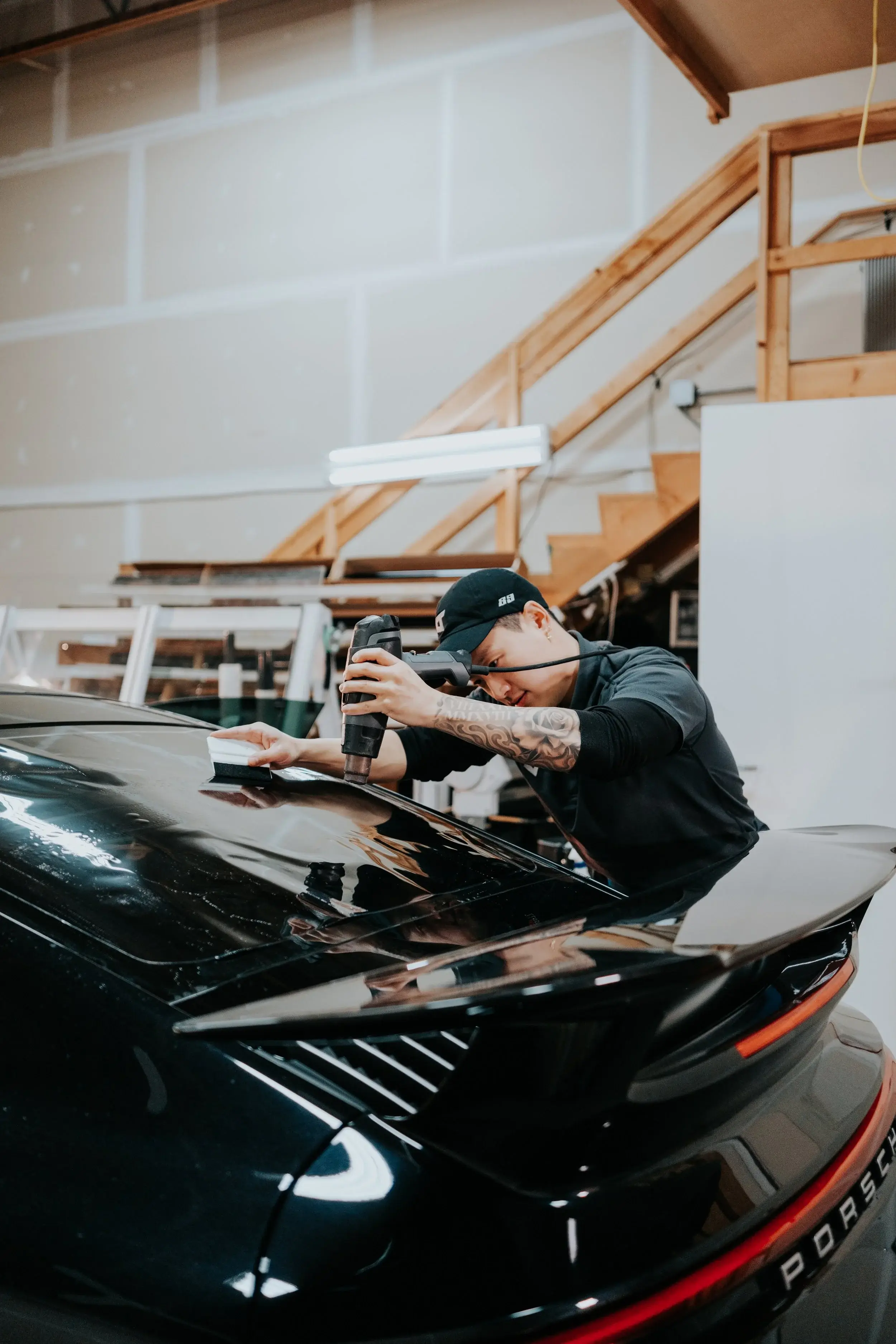
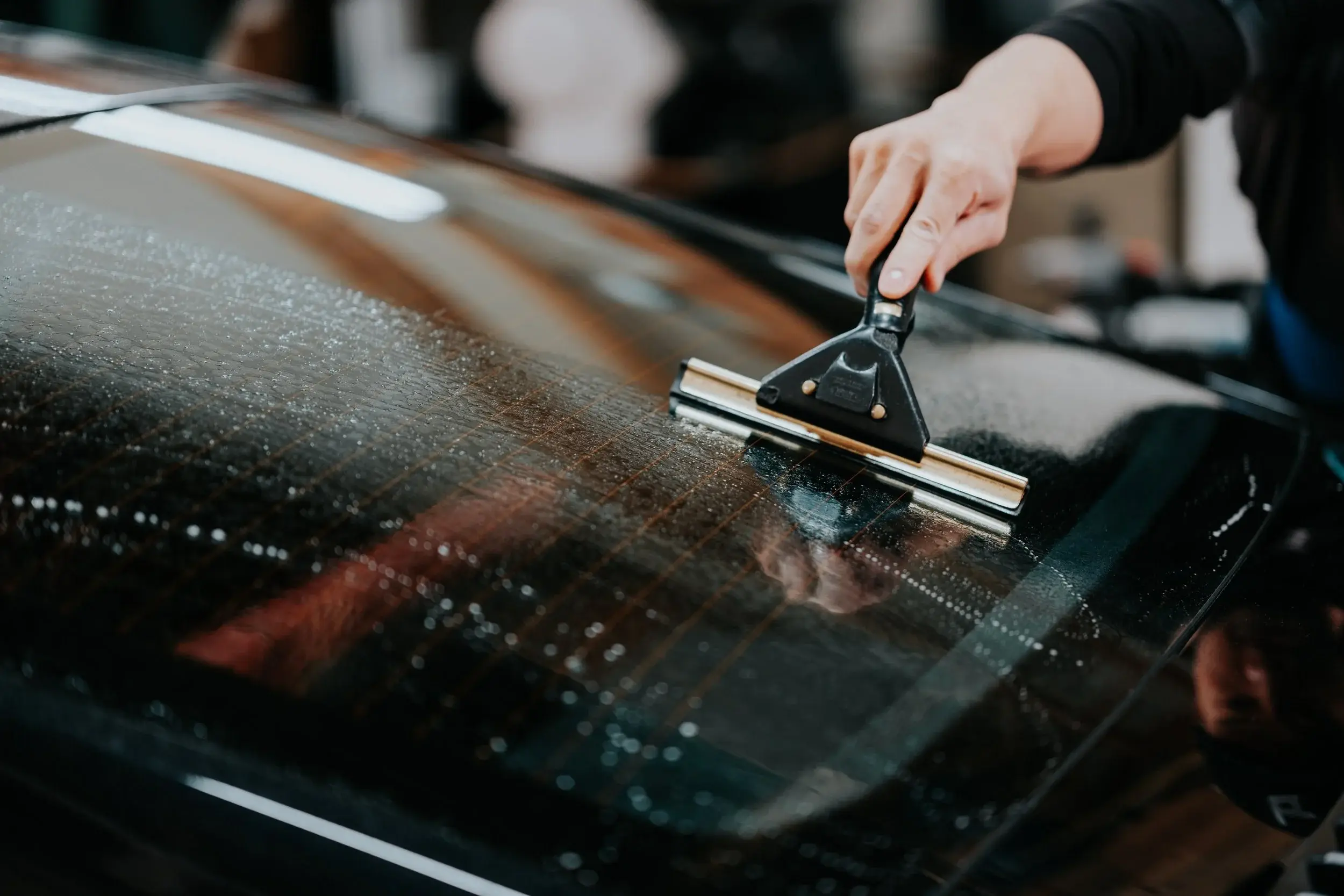
Back glass curves in two directions, so a flat sheet won’t lie down on it. The film is laid on the outside of the glass and heat-shrunk to the curve, which is the step in the shop’s photos of a back window covered in wet film under a heat gun.
Laying it over the lines
The shaped film then goes on the inside, wet, and is squeegeed down across the grid. Water and slip solution let it settle over the printed lines before the adhesive grips.
Leaving it to cure
Like any tint, the film needs 3 to 5 days for the water behind it to dry out, and a little haze in that first week is normal. Ask at pickup whether to hold off on the rear defroster while that happens.
What about antennas printed in the back glass?
They’re treated the same way as the grid, with one extra rule: no metal in the film. Some carmakers print antenna lines into the glass alongside the heater lines.
AGC, a large car glassmaker, builds on-glass antennas from printed conductive lines or fine wire set into the glass, covering radio bands and remote keyless entry, and the rear window is one of the places it puts them. Polestar’s Polestar 2 manual warns owners off metallised film on the back window, since that’s where the radio antenna is built in. The films the shop installs, ATC, IRX and AIR, aren’t metallized. Whether tint blocks phone or GPS signals covers the signal side in full.
What if the back glass already has old film on it?
It comes off first, with steam rather than a blade. Steam loosens the glue until the old film lifts off with nothing scraping the grid, and every trace of adhesive is cleared before new film goes on.
Plan on 1 to 3 extra hours; removal is billed per window, with a lower price when new film follows in the same appointment. The step-by-step, including how the grid is checked before and after, is on rear window tint removal. If a line already fails before anyone starts, film won’t revive it; a dead strip of the grid stays dead under new tint.
Is it legal to tint the back glass in BC?
Yes, at any darkness, provided there’s a mirror outside on each side of the vehicle. MVAR s. 7.05(8)(c) allows film on the rear window on that condition, and BC’s 2025 Vehicle Inspection Manual fails rear-window tint without mirrors on both sides under item 14c.
A missing or broken mirror needs sorting out before booking. The details are on whether you need side mirrors to tint a rear window.
Looking after tinted back glass over the grid
Clean it gently and in the direction of the lines. Toyota’s manual skips glass cleaner on that window altogether in favour of a cloth dampened with lukewarm water, wiped along the wires rather than across them.
That habit protects the film and the grid together. Keep cargo, sports gear and anything with a hard edge from rubbing against the inside of the glass. The full routine for every window is in how to clean tinted car windows.
Booking tint for the back glass
The back glass is part of every rear package. The coupe set, two quarters plus the back glass, is $220 in ATC; sedans and pickups pay $240 for five panes; full-size SUVs and wagons pay $260 for seven, liftgate glass included. Add IRX or AIR and the package is quoted for the upgrade.
It’s normally a same-day job. Mention old film or a dead defroster strip when you ask for a price on the quote request or by texting 604 534 6433; back window tint lists the panes in each package.