
What are defroster lines, and where do they sit?
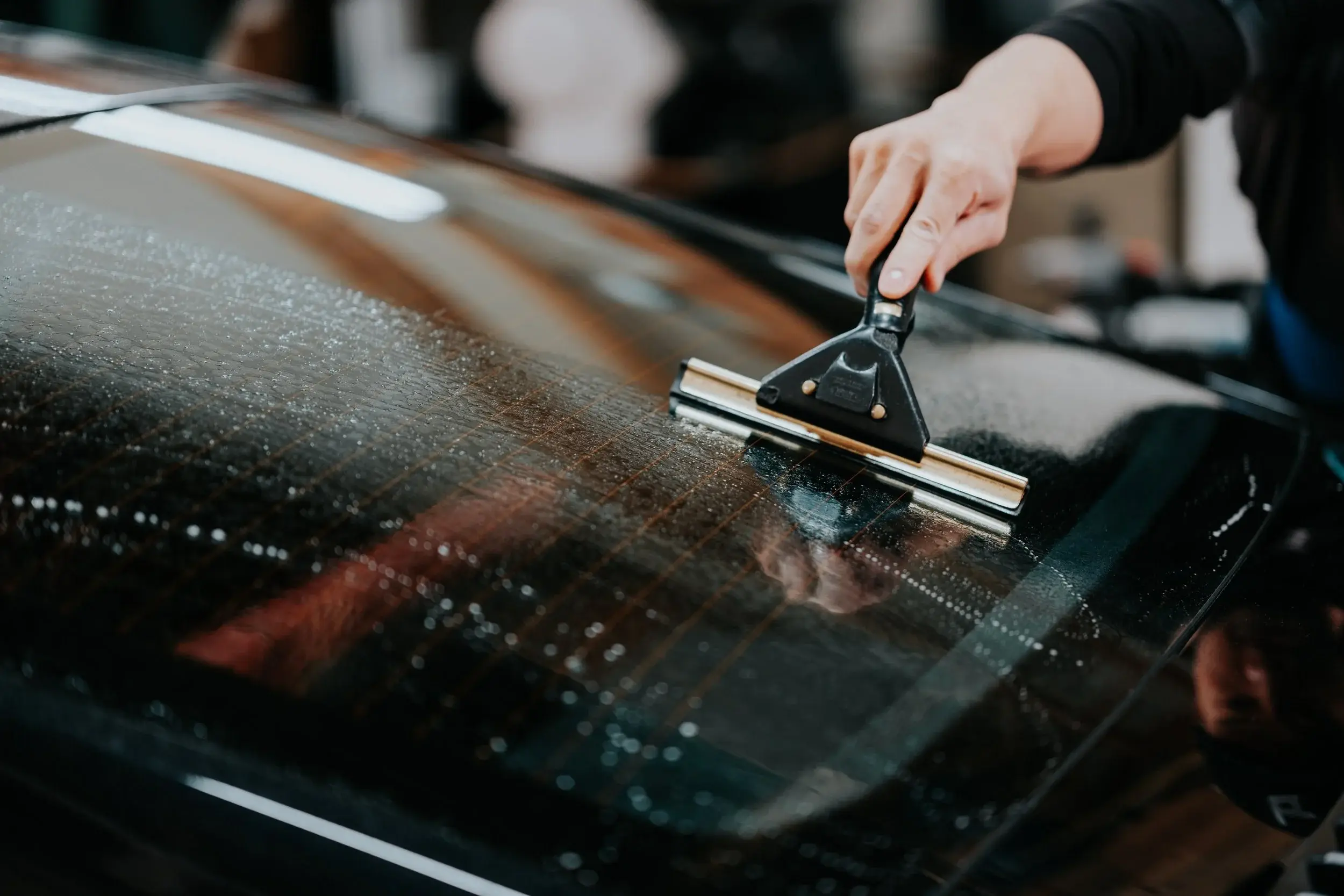
They’re a thin heating circuit on the cabin side of the rear window. Kia’s Canadian owner’s manual calls them conductors “bonded to the inside surface” of that glass, and says the defroster heats the window to shift frost, fog and thin ice while the engine runs.
The ends of the grid usually vanish into the black enamel band at the edge of the glass. Vibrantz, which supplies enamels to glassmakers, says that band lets carmakers hide “heat and sensor connections”, and it lists conductive silver pastes for automotive glass among its products. The band itself is the frit. Mazda’s CX-5 manual calls the same lines the “defogger grid”, so expect either name.
Why do sharp tools matter around the grid?
Because the lines sit exposed on the inner face, and a cut line stops carrying current, leaving its strip of glass cold. Both carmakers warn about it.
Kia says to “never use sharp instruments or window cleaners containing abrasives” on that window, and Mazda warns that such tools can harm “the defogger grid”. Film makers give installers the same warning: Avery Dennison’s automotive film bulletin says not to use scrapers on heat wires while cleaning rear glass, and to take “particular care” removing film from the window heating wires.
How does window tint work with defroster lines?
Film goes straight over them. Tint is bonded to the inside of the glass, the grid’s face, so every tinted back window with a defroster has film lying across its lines; the film covers the grid without cutting it.
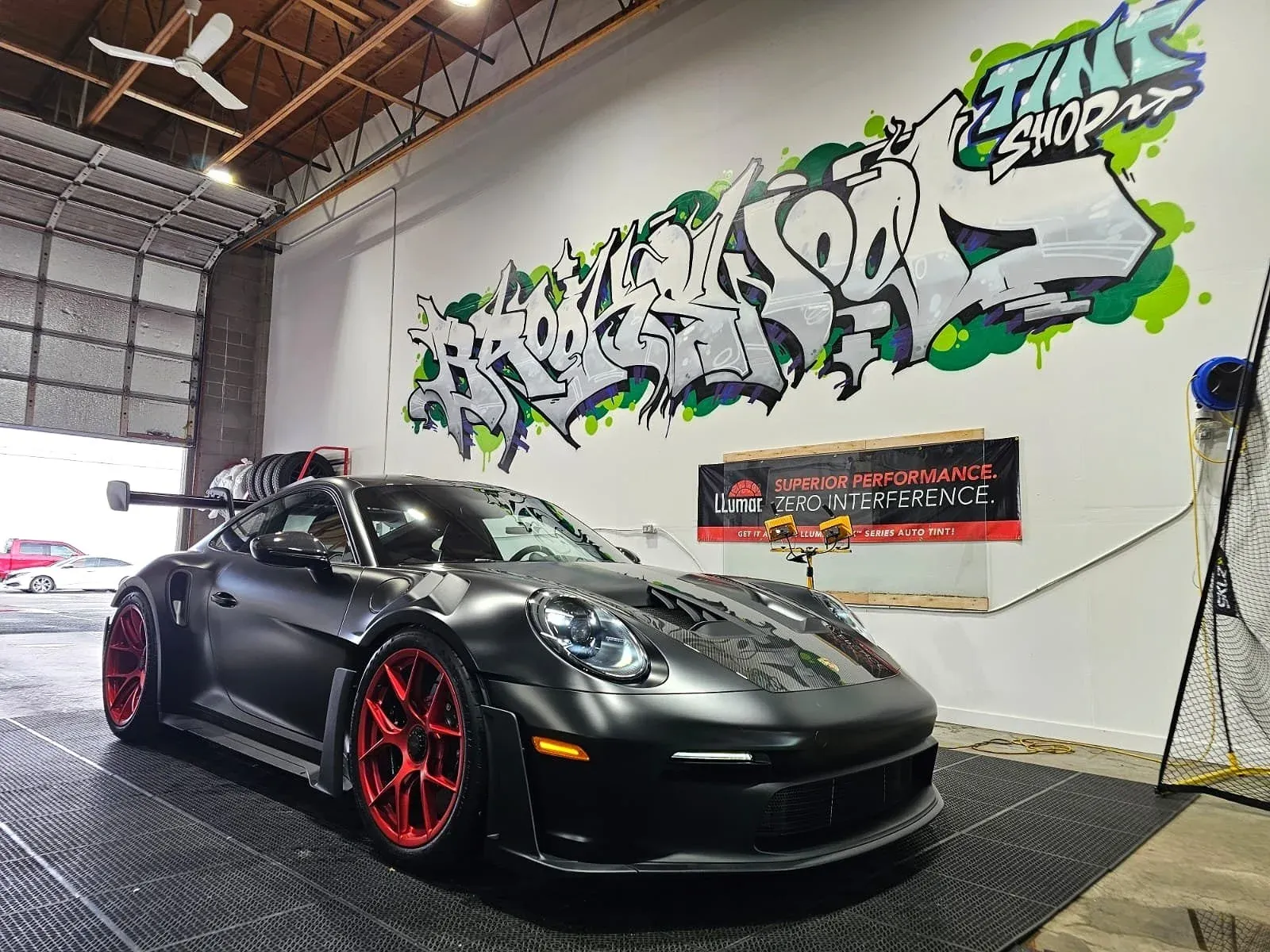
At Brookswood Tint every piece comes off the shop’s plotter already shaped for the car’s year, make and model, so no knife crosses the grid. When old film has to come off a back window, it’s softened with steam instead of scraped with blades, and the shop tests the grid, plus any antenna printed in the glass, once before the job and once after it; the full job is on rear window tint removal. For the fitting itself, read tinting over rear defroster lines.
Where defroster lines come up when you book tint
Any rear glass package includes the window with the grid. Under MVAR s. 7.05(8)(c), a rear window in BC may carry film of any shade if the car has exterior mirrors left and right; the side mirror rule explains what counts.
Rear glass in LLumar ATC is priced by body: a sports coupe’s three panes from $220, a sedan or pickup’s five from $240, a full-size SUV or wagon’s seven from $260. Switch the defroster on a few days ahead, and if a strip stays fogged, say so when you book: film won’t revive a broken line. The panes in each package are listed on back window tint.