What happens during heat shrinking?
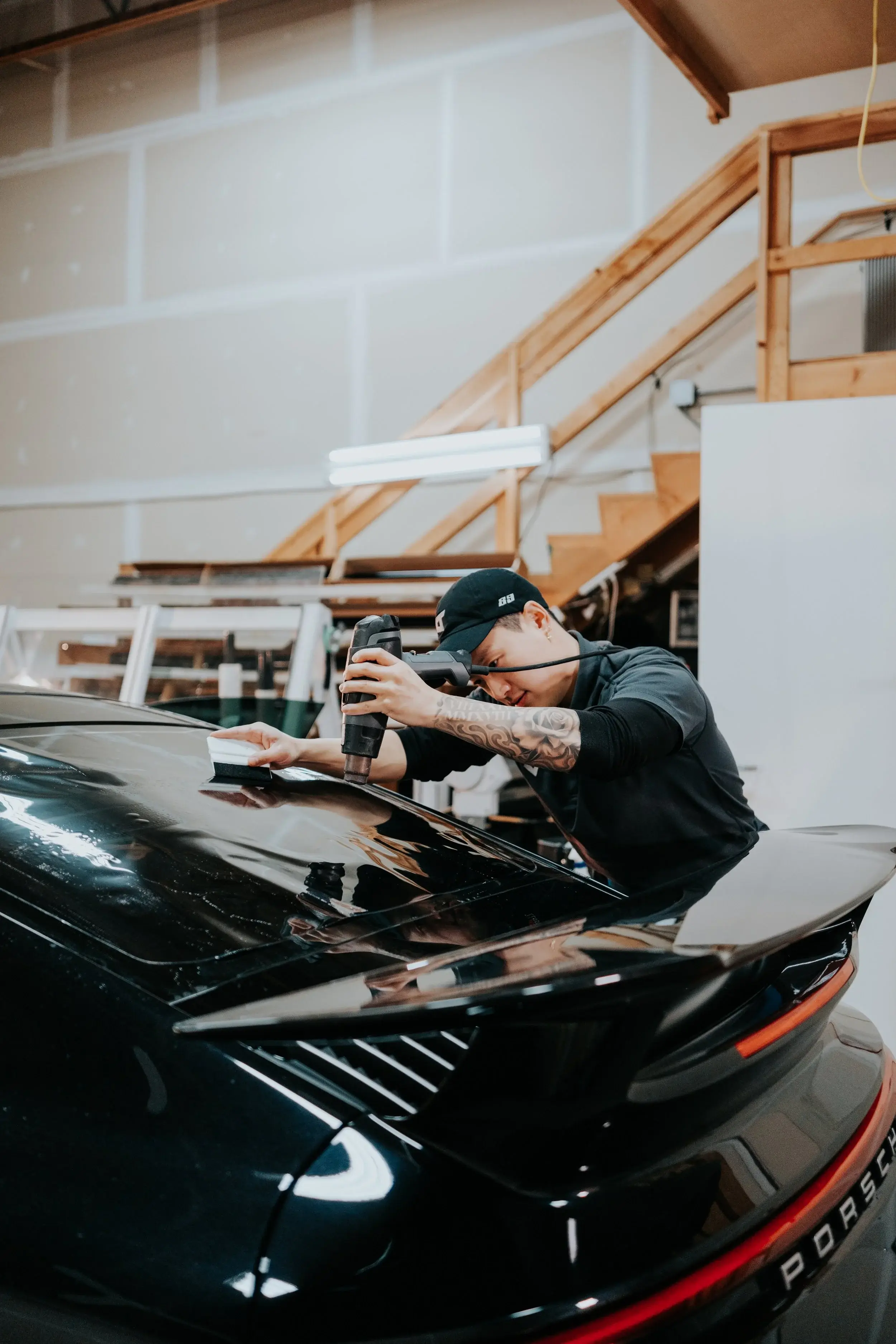
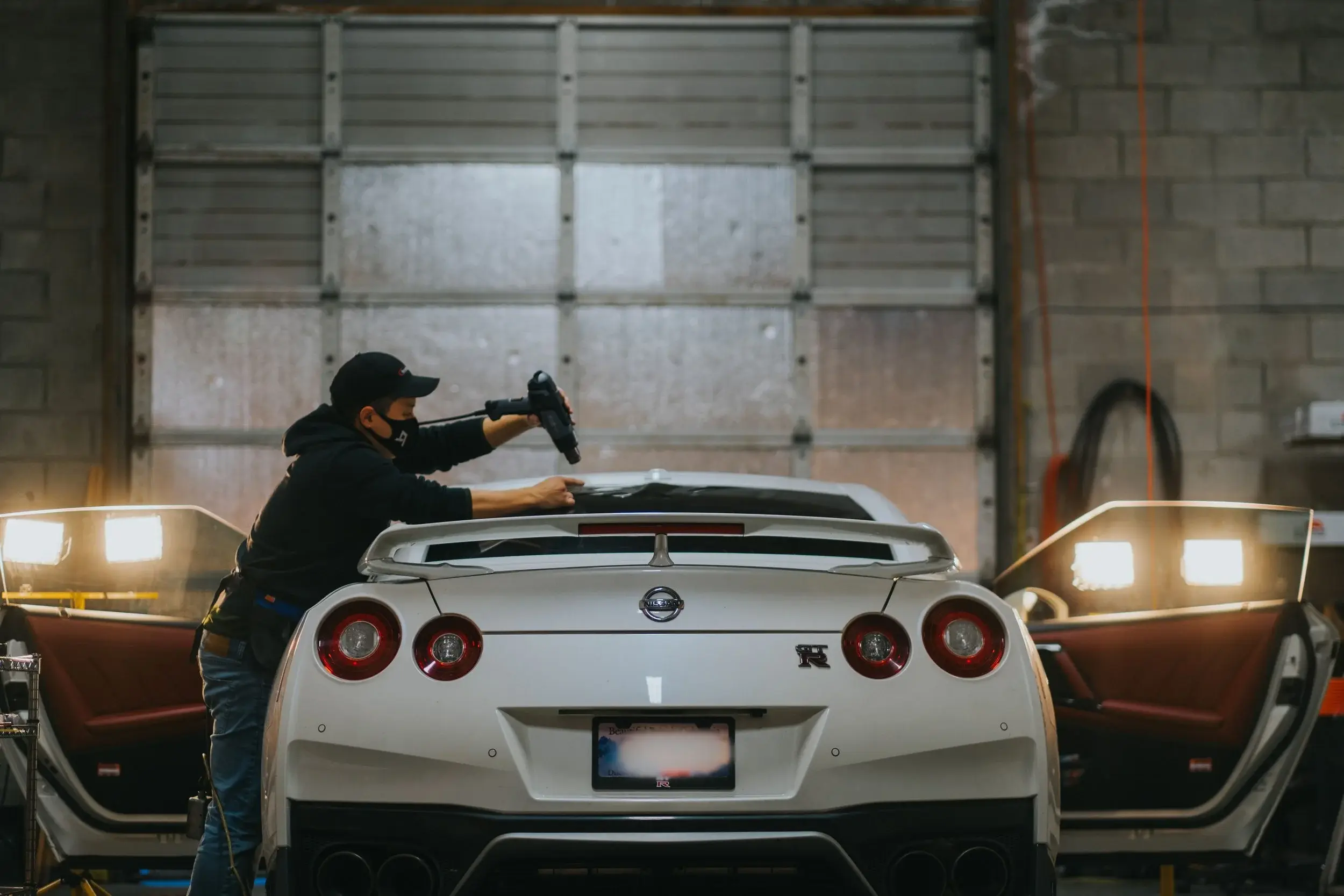
Shaping happens on the exterior face, long before the film meets the inside of the glass. Avery Dennison’s Technical Bulletin 5.0 on window film sets out the order:
- Wet the outside of the glass and lay the film on it with the liner and adhesive facing out, the roll’s machine direction running horizontally.
- Size it roughly 5 mm larger than the window.
- Heat the film evenly, without holding the gun so close that one spot overheats.
- Squeegee out the small “tunnels/channels” that rise as it heats, working from the centre to the edges.
- On curved rear glass, shrink the lower half first, then the upper half.
Once no tunnels remain, the sheet is trimmed, its liner peeled off, and it goes onto the inner face over a spray of slip solution.
Why does curved glass need it?
Film comes off the roll flat, and rear glass is often curved. As the heat works, small raised channels form in the sheet, and Avery’s instruction is to keep heating and pressing until no tunnels are left anywhere on it.
Brookswood Tint names panoramic roofs, one-piece Tesla rear glass and curved hatch windows as pieces it heat-shrinks and fits by hand after the plotter cut; the sunroof tint page covers the glass overhead. Shaping film to a curve is also one of the steps weighed in DIY kits versus professional tint.
Is it the same as heating vinyl wrap or PPF?
No. Window film is shrunk to a shape off the glass; wrap and paint protection film are heated on the panel for different reasons.
| Film | What the heat does | Temperatures given |
|---|---|---|
| Window tint | Shrinks the sheet to the glass’s curve before it goes inside | Not given; heat evenly, no hot spots |
| 3M 2080 wrap vinyl | Softens the film to conform, then relieves stress afterwards | 40 to 50 °C to conform; 80 to 95 °C post-heat |
| 3M paint protection film | Sets the edges once installation is done | About 82 °C |
The figures come from 3M’s vehicle colour change bulletin and its PPF installation guidelines. The wrap step is defined on post-heating.
Where heat shrinking fits in a tint job
It sits between the cut and the install. At the shop every piece is plotter-cut to the car’s year, make and model, heat-shrunk where the glass curves, then hand-fitted to the interior face.
Budget two to four hours when every window of a sedan or SUV is done, more if its back glass is a complex shape. Afterwards, leave the windows up while the film cures, which takes three to five days. Rear packages, back glass included, start at $220 to $260 by body style; see back window tint for what each covers.