Which side of the glass does window tint go on?
The inside, the face of the glass you can touch from the seat. That’s the standard for car tint, not a shop preference.
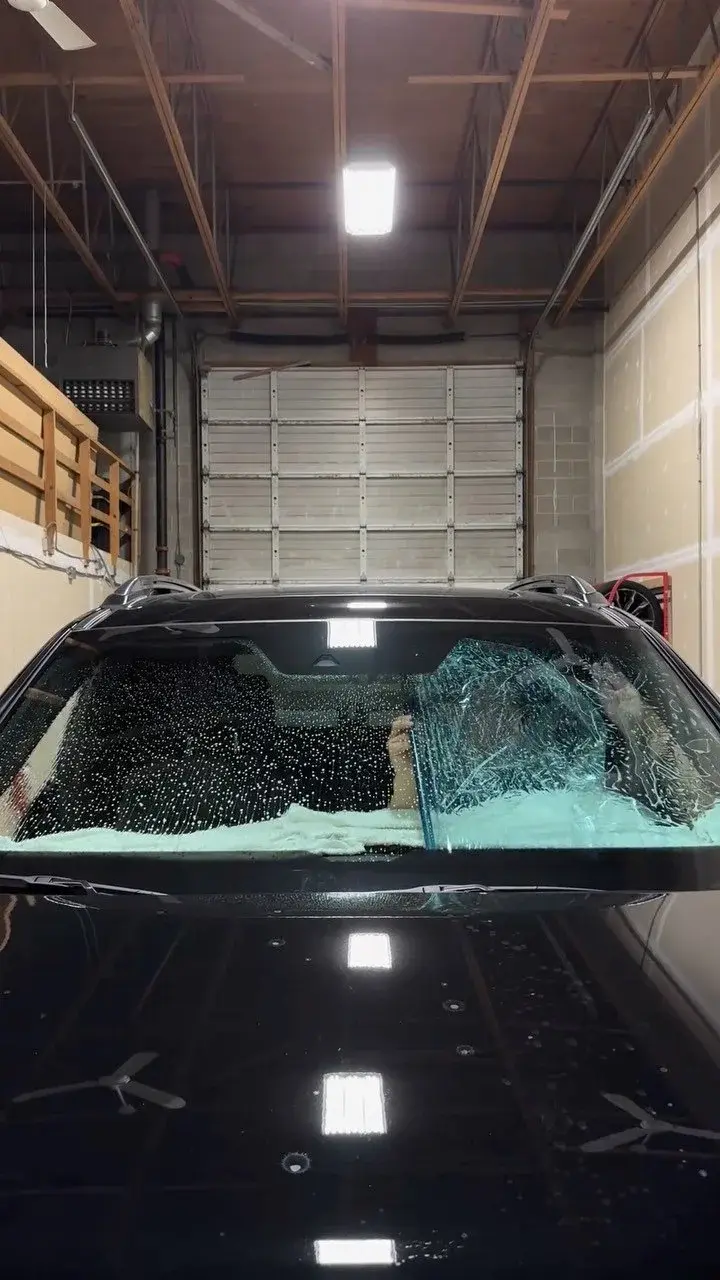
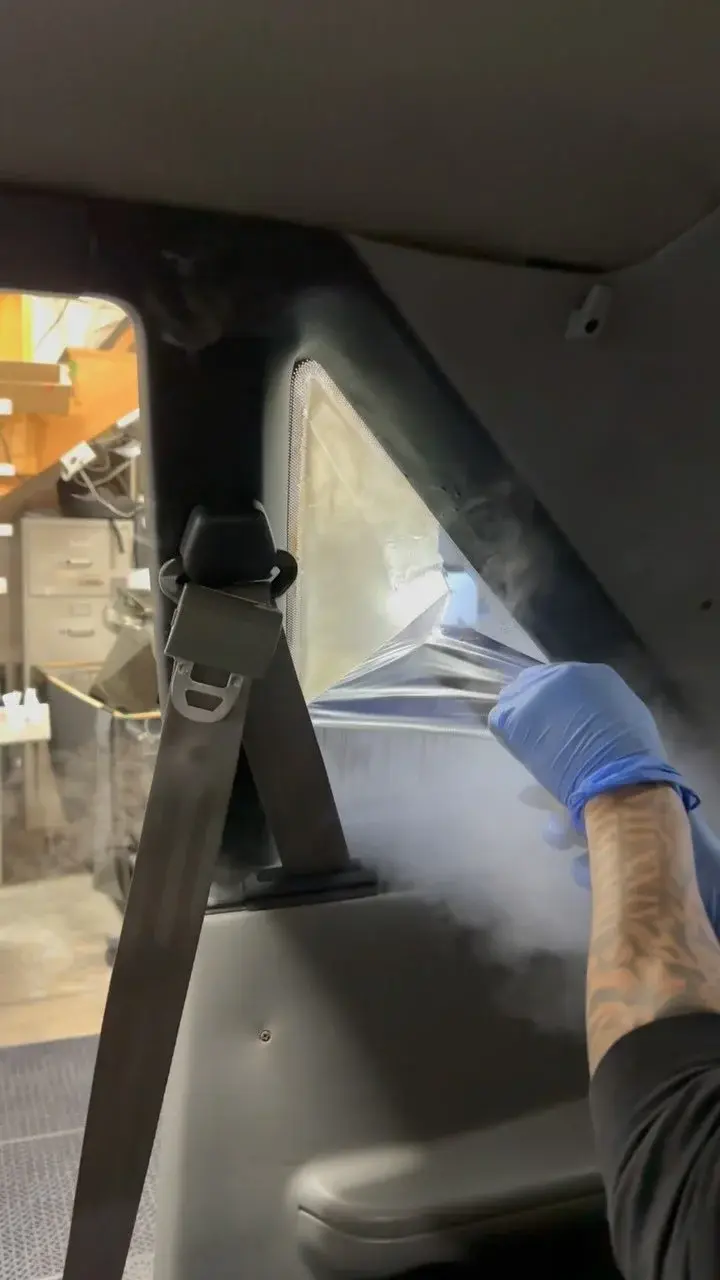
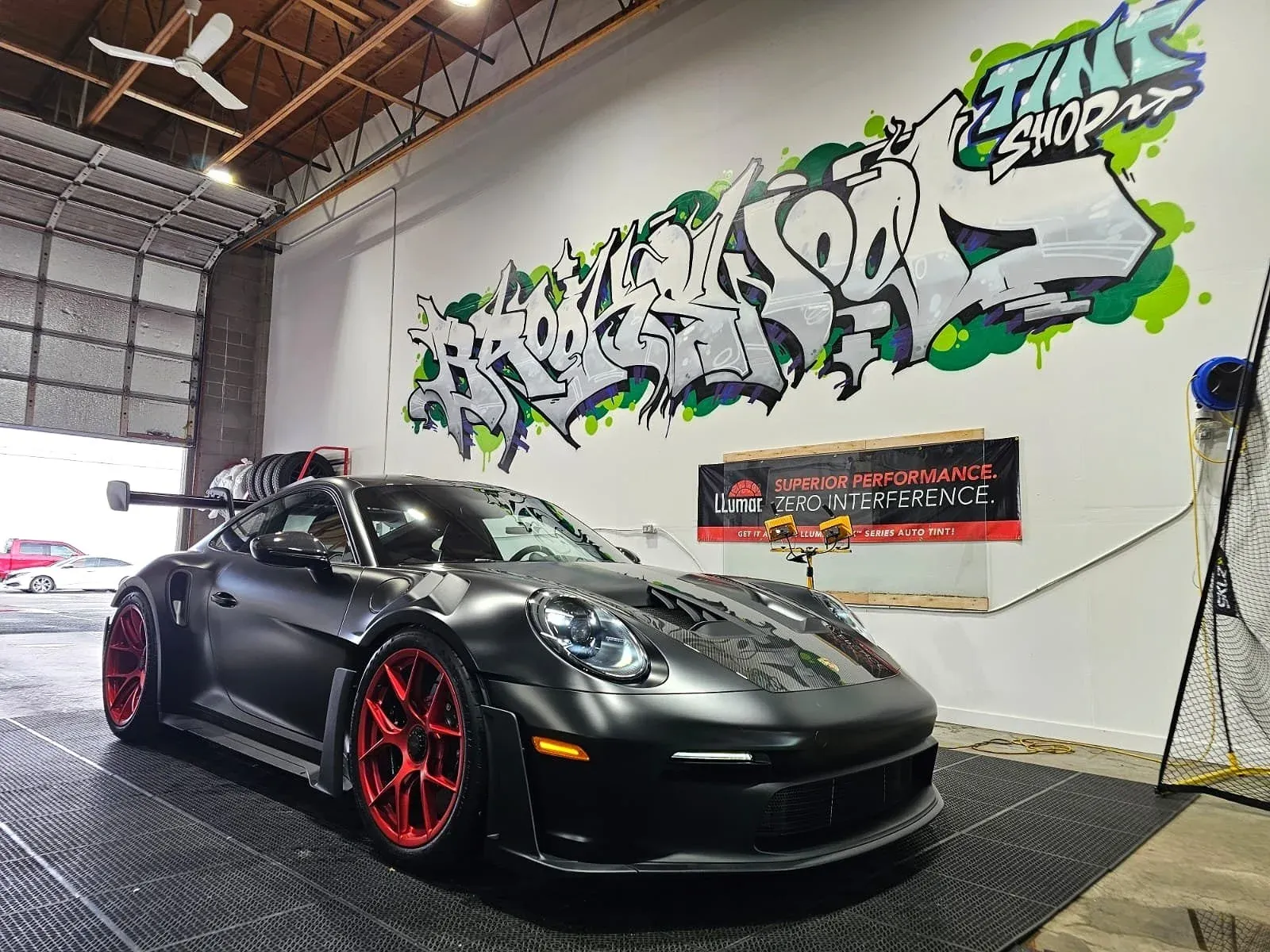
LLumar’s tint FAQ answers this exact question: auto tint typically goes on a vehicle’s interior glass surfaces. Brookswood Tint fits its LLumar ATC, IRX and AIR film to the inside of every pane, side glass, back glass and, when a customer asks, the full windshield.
| Glass | Side the film goes on | Note |
|---|---|---|
| Rear door and quarter windows | Inside | Any shade is legal behind the driver in BC |
| Back glass | Inside, over the defroster grid | Legal with outside mirrors on both sides |
| Windshield | Inside | Road-legal only in the top 75 mm |
| Front door windows | Inside | Not road-legal in BC, clear film included |
| Sunroof or glass roof | Inside | Quoted from the car |
Why is car tint fitted on the inside?
Because the outside of a car window is a hard place for a thin film to live. The outer face takes wipers, ice scrapers, car-wash brushes, road grit, rain and sun all year; the inner face takes almost none of that.
Fitting the film inside also keeps its edges away from weather and washing. Day to day it means you can clean and scrape the outside of the glass however you normally would. The inner face needs gentler care, which is set out in how to clean tinted car windows.
Why do installers work film on the outside of the glass?
To shape it. Back glass and some side glass curve in two directions, so a flat sheet of film can’t lie flat against them without help.
Heat-shrinking on the outside
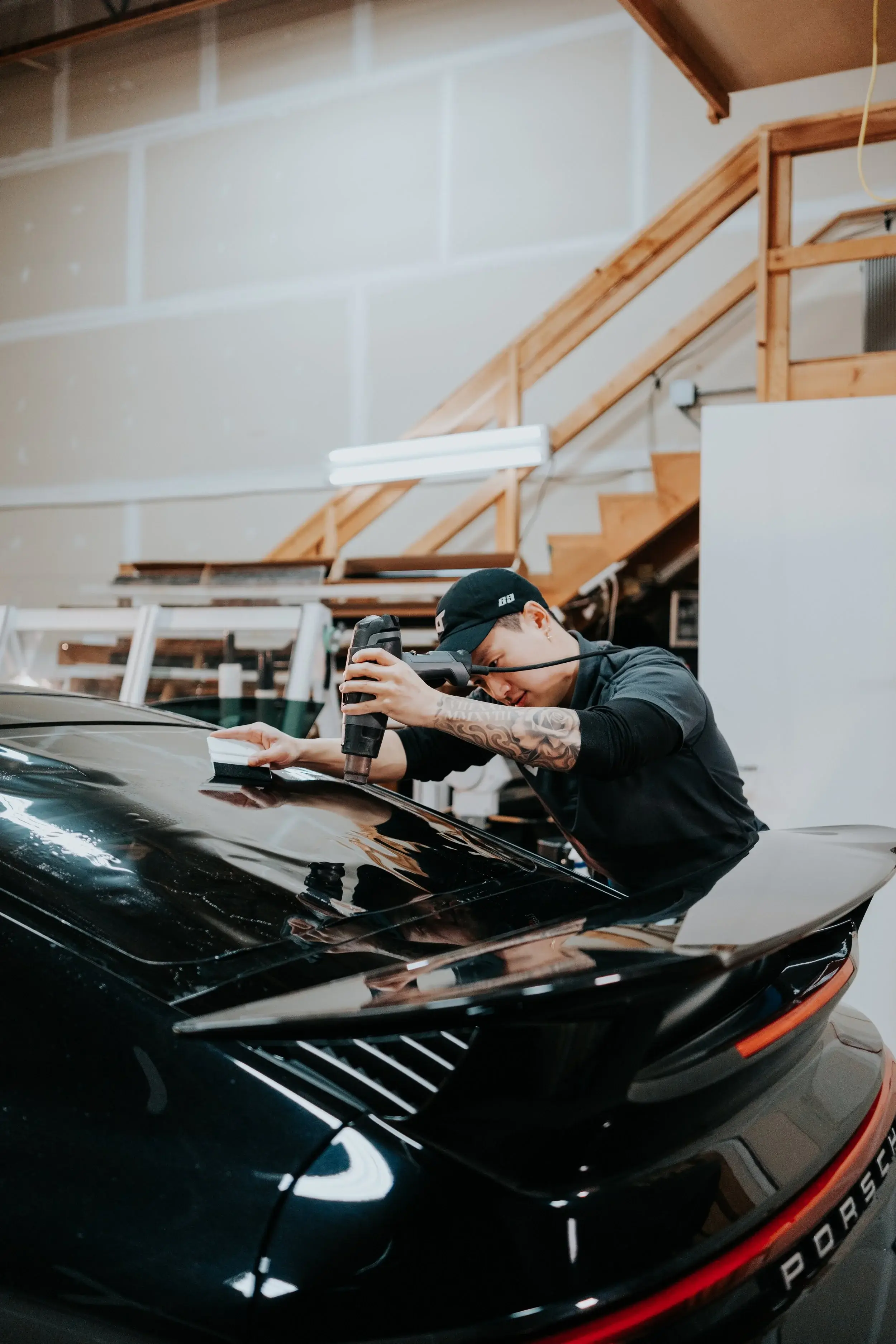
The installer lays the film, wet, on the outer face of the glass and heat-shrinks it with a heat gun until it follows the curve. The shop’s photo of a Porsche 911 shows that step: wet film over the back glass, a card in one hand and a heat gun in the other. The heat-shrinking entry explains the technique.
Then onto the inside
Once it holds the shape of the glass, the film comes off the outside and goes onto the cleaned inner face, where it’s squeegeed down and left to cure while the windows stay closed for 3 to 5 days.
Cut before it reaches the car
Before any of this, each piece is cut by the plotter from the vehicle’s model data, so knives stay off the glass and trim. The plotter-cut tint entry explains how that differs from trimming film on the car.
Does BC law care which side the film is on?
No. The wording of MVAR s. 7.05(8) catches light-reducing material “affixed to or placed on” a window or the windshield, and says nothing about which face.
BC’s 2025 Vehicle Inspection Manual is just as broad: item 13d rejects after-market tint on side glass that sits forward of the driver’s seatback, whether it comes as “film or any material or coating”. So moving film to the outside, or using a spray-on coating, changes nothing legally. If someone still asks for film on the front doors or the whole windshield, the shop fits it only after making clear that neither is road-legal here and that the possible fallout includes a $109 ticket and a Notice & Order. Details are on the windshield tint page.
Which car films do go on the outside?
Films made to protect a surface rather than shade a window. They’re different products from tint, with their own rules.
Paint protection film on the bodywork
PPF goes on the outside of the paint, because its job is to take the rock chips. The shop installs LLumar Platinum, which LLumar sells as self-healing film backed by its 10-year limited warranty. The coverage options are listed under paint protection film.
Film on headlights and taillights
STEK light film goes on the outside of the lamp lens. In BC that comes with a real inspection caution. The 2025 inspection manual’s lamp rule, item 1.0(a) of section 6, treats any covering on a lens (“covered in any manner”) or any drop in the light it transmits as grounds to reject the lamp. Smoked or yellow film can fail for that reason, and clear film may draw questions as well. The headlight and taillight film page covers the options and the risk.
What the shop doesn’t fit outside
The shop doesn’t offer exterior windshield protection film at all. Window tint stays inside.
Where factory tint sits
In the glass itself, not on either surface. AGC says its privacy glass is made dark by changing the recipe of the glass itself. Laminated glass has a plastic sheet between its two layers, and Hyundai’s Palisade bulletin says laminated privacy glass uses a dark version of that sheet instead of a clear one. Film added later goes on the inside face, on top of whatever the glass already does.
Booking tint, fitted on the inside
Rear glass in ATC: $220 for a coupe’s three panes, $240 for the five on a sedan or pickup, $260 for the seven on a full-size SUV or wagon, before any IRX or AIR upgrade, which is quoted per package. Most full tints on a sedan or SUV are a 2-to-4-hour job.
To get a price, call 604 534 6433, or text that number, with your car’s year, make and model, or fill in the tint quote request.