What do carmakers say about tint near a windshield camera?
The makers that put it in writing tell owners to keep film and stickers away from the glass the camera looks through, and Toyota rules out windshield tint entirely. Here is what three of them say, word for word where quoted:
| Maker | Document | What it says |
|---|---|---|
| Toyota | 2025 Tacoma owner’s manual, USA and Canada, Toyota Safety Sense 3.0 | “Do not attach window tint to the windshield.” No stickers, “including transparent stickers”, on the marked area in front of the front camera |
| Honda | 2026 Passport owner’s manual, front sensor camera | “Never apply a film or attach any objects to the windshield” that could obstruct the camera’s field of vision |
| Subaru | EyeSight bulletins 06-43-12R (Legacy, Outback) and 06-45-13R (2014 Forester) | Water-repellent windshield coatings, inside or outside, “must never be used”; grey zones where items or stickers “must never be placed” |
Toyota’s line is the plainest of the three: on that truck, any windshield film goes against the manual, whatever the shade or the province. Honda’s wording turns on the camera’s view, and Subaru’s bulletins deal with coatings, stickers and devices rather than naming window film.
Why would film near the camera matter to the system?
Because the camera reads the road through that patch of glass, and the makers’ instructions are about keeping its view clear and free of reflections. Honda warns that film or objects in the camera’s field of vision can make the system “operate abnormally”.
Subaru’s bulletins explain the reflection side. Light from devices on the dash can bounce off the inside of the windshield and “interfere with EyeSight’s stereo camera”, and the 2014 Forester bulletin adds that dash pad protectants and appearance dressings can cause reflections too. The Legacy and Outback bulletin also tells owners to avoid glossy-backed stickers and decals near the camera because of glare.
Toyota attaches a blunt warning to its camera precautions: ignoring them may stop the front camera working properly, “possibly leading to an accident resulting in death or serious injury”. Its camera also has a built-in heater that clears fog from the glass around it automatically.
None of these documents publishes a test of window film in front of a camera. They are the carmaker’s instructions for its own system, and the shop treats them that way.
Does a legal 75 mm strip clear the camera?
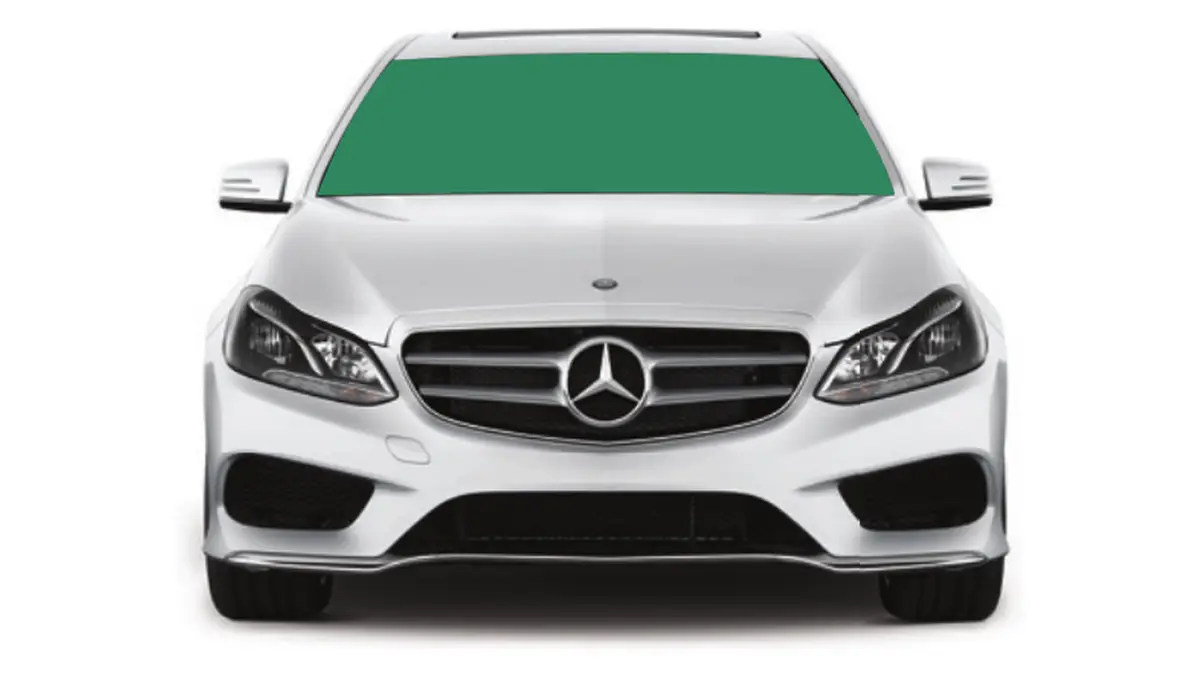
Often it doesn’t, because forward cameras usually sit high in the middle of the glass, inside that same top band. Honda’s manual places the camera behind the rear-view mirror, and Toyota’s diagram dimensions the no-sticker area in front of its camera at about 4 cm (1.6 in).
Under MVAR s. 7.05(8)(a), film may sit only within 75 mm of the windshield’s top edge, just under 3 inches. A quick check: measure 75 mm down from the top of the glass and see where that line falls against the camera housing. If a strip would cross the glass in front of the lens, it’s legal in BC and still against an instruction like Toyota’s. Whether a strip can stop short of the camera on your car is something to look at together before anything is cut.
Is full windshield film road-legal in BC?
No. BC allows no film of any shade more than 75 mm down from the top, and the 2025 Vehicle Inspection Manual fails aftermarket windshield tint that reaches further down under item 12e. That includes near-clear ceramic: AIR 80 measures 77% visible light transmission and AIR 90 measures 84% on LLumar’s data sheet, and both still cut some light.
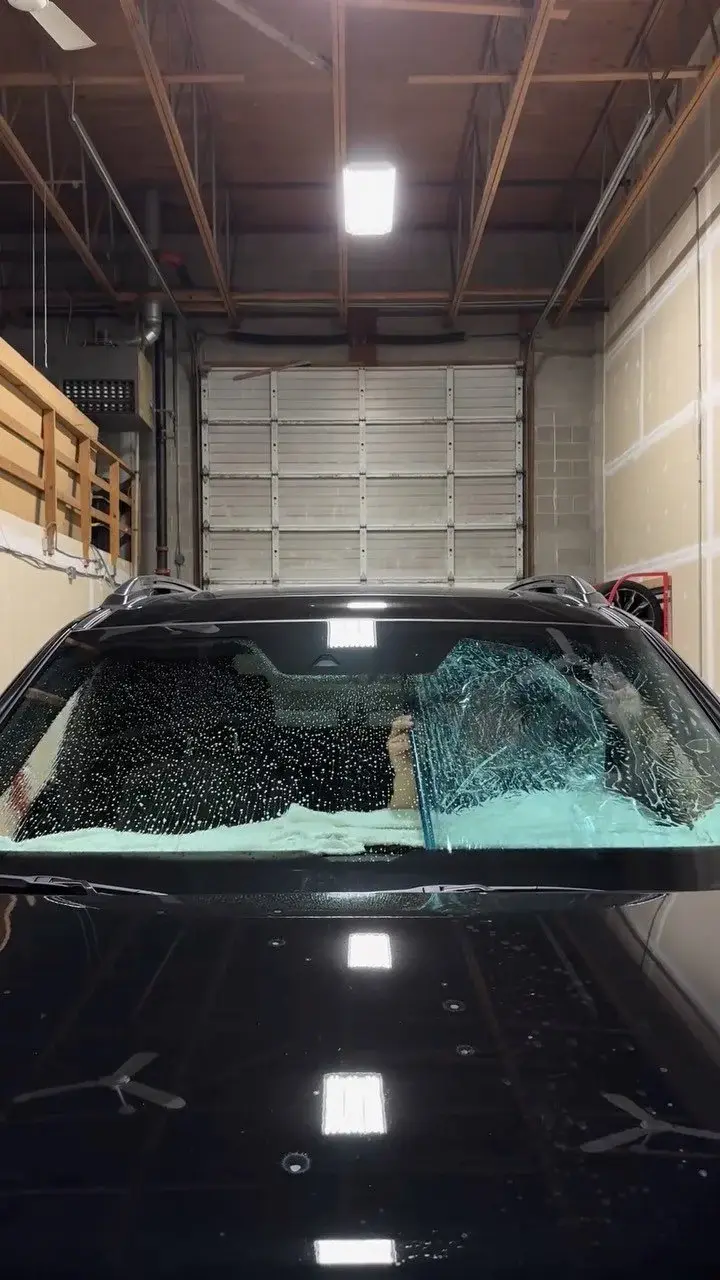
A full windshield also covers the camera’s view on every car that has one. The shop fits full windshields on request, from $200, and explains the consequences first: a typical $109 ticket, and a possible Notice & Order requiring removal and an inspection. The law is covered on is windshield tint legal in BC, and the install itself on the windshield tint page.
What happens to the camera if the windshield is replaced?
It usually needs recalibrating. Toyota’s manual says that once the windshield has been replaced, recalibration of the front camera “will be necessary”, and Honda recommends a genuine replacement windshield followed by a dealer recalibration.
ICBC’s policy for glass claims notes that carmaker procedures “may require” calibrating forward-facing cameras as part of the repair (ICBC calibration policy). Any film on the old windshield goes with the old glass. If yours was filmed, keep the invoice and check with ICBC before assuming the film is part of the claim.
Why check your owner’s manual before windshield tint?
Because the rule comes from your carmaker, it varies by make and model year, and the manual is the only document that states it for your car. The section to look for is the one on the driver-assist camera: Toyota Safety Sense, Honda Sensing or Subaru EyeSight, for example.
Bring the manual or a photo of that page to the booking so the wording can be read before any film is cut; the choice stays with you. Toyota’s and Subaru’s camera instructions also set cleaning rules for the glass in front of the lens, which apply whether or not the windshield is filmed; their wording is quoted in the window tint aftercare guide.
Booking windshield work on a car with driver-assist cameras
Send the year, make, model and trim, list the driver-assist features the car has, and attach the manual’s camera page if you have it. Then pick the route that fits:
- No windshield film. Put near-clear LLumar AIR or a darker film on the glass behind the driver, where BC sets no shade limit.
- A top strip within 75 mm. Quoted per vehicle, once you and the shop have checked where it meets the camera.
- A full windshield. Fitted on request from $200 in ATC, with AIR quoted per vehicle, after the legal and manual issues have been explained.
For the rules on every other window of the car, see the BC window tint law guide. Questions about a specific car can go to 604 534 6433, or use the request form.