How wet is it for a car in Langley?
Very wet. Environment Canada’s climate normals for Abbotsford A, just east of Langley, show 1,537.8 mm of total precipitation each year, falling on 179.5 days, so your paint is wet roughly every other day.
| Abbotsford A, 1981–2010 normals | Value |
|---|---|
| Precipitation per year | 1,537.8 mm |
| Of that, rain | 1,483.3 mm |
| Days with at least 0.2 mm of precipitation | 179.5 |
| Rain in November | 241 mm |
| Rain in July | 43 mm |
Source: Environment and Climate Change Canada. For comparison, Vancouver International records 1,189 mm a year, so Langley drivers get more rain than the city. In winter that water carries more than dirt: provincial highway contractors use “salt, salt brines” and anti-icing agents along with abrasives (TranBC), and the City of Langley treats its priority routes with brine and uses salt, or salt mixed with sand, when snow falls.
What does a ceramic coating change on a car that’s wet half the year?
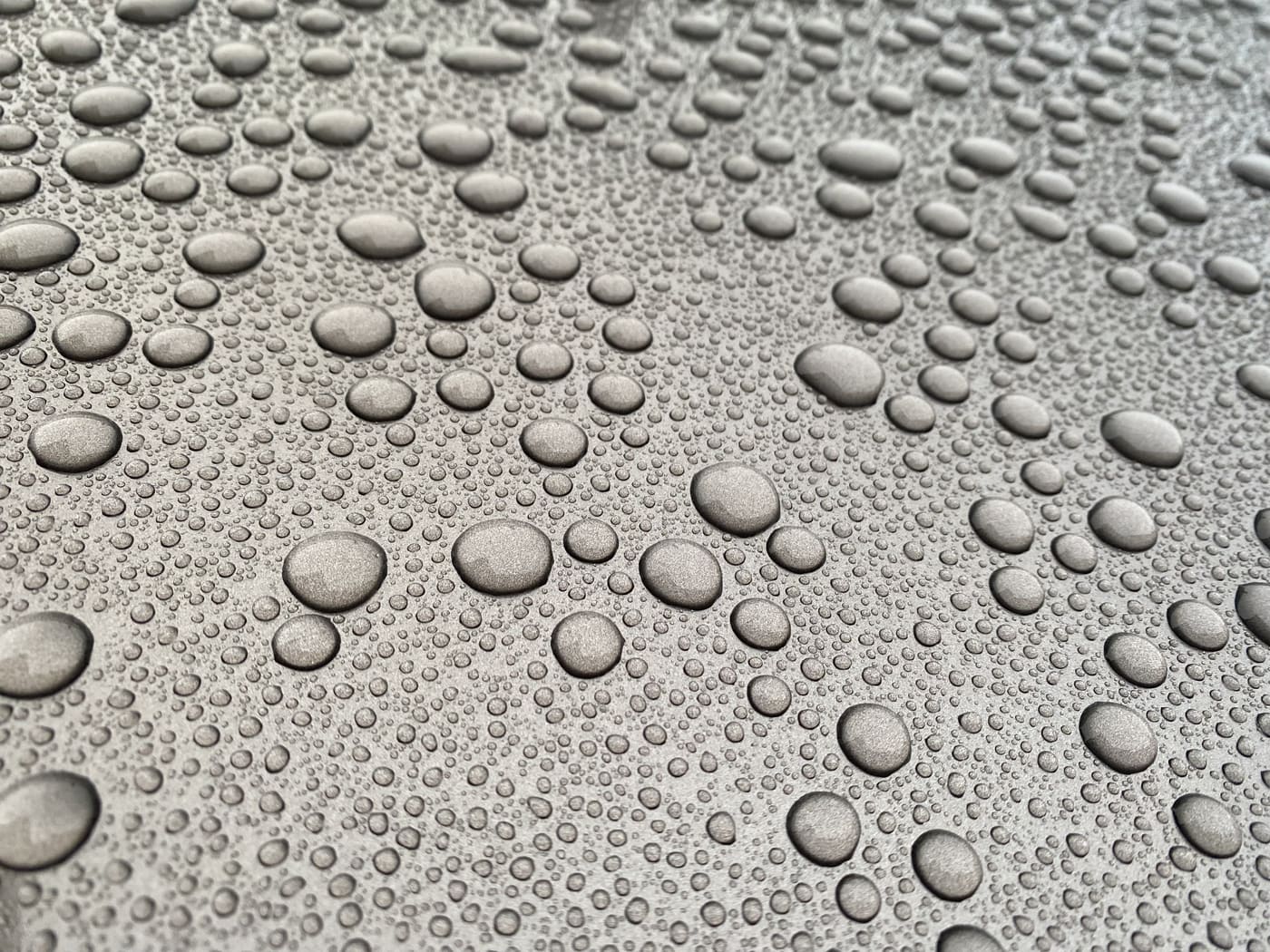
It changes how water and grime leave the paint. Rain beads and rolls off instead of sitting in a film, the car dries faster with fewer spots, and road grime lets go with a rinse.
Beading and drying
A cured coating is strongly hydrophobic, so water gathers into beads and runs off as you drive or as the car sits on a slope. Less standing water means less time for minerals to dry onto the paint.
Road film
The grey haze that builds on a car after a week of wet highway driving is oily residue plus tire and brake dust carried in road spray. On coated paint it sits on the coating rather than gripping the clear coat, so a rinse and a gentle wash move most of it.
Salt and brine
Brine dries into a white crust on the lower doors and rear of the car. A coating doesn’t make the car immune to it, but it gives the salt less to hold on to, which makes the regular rinsing a wet-climate winter needs quicker and easier.
What won’t a ceramic coating do in BC weather?
It won’t stop stones, it won’t wash the car for you, and it won’t repair paint that’s already marked. Knowing those limits is what decides whether it’s worth it for you.
- Rock chips. A coating is measured in microns and puts nothing between a stone and the paint. Winter abrasive on our highways is the main chip risk, which is covered in how PPF stops rock chips. If chips are the concern, you want film, and the trade-off is laid out in PPF vs ceramic coating.
- Washing. Dirt and brine still land on a coated car. The coating shortens the job, it doesn’t remove it.
- Existing swirls and etching. A coating seals in what’s under it. That’s why every package starts with correction; the stages are explained on paint correction.
- Brush car washes. They mar coated paint just like bare paint.
Should you put a ceramic coating on the windshield?
On most cars, a glass coating helps rain clear off the windshield and improves visibility in the wet. On a Subaru with EyeSight, no: Subaru’s own service bulletin rules it out.
A Subaru service bulletin for 2013 and later Legacy and Outback models with EyeSight says water-repellent windshield coatings, on the inside or the outside, “must never be used”, because they can interfere with the system’s stereo camera. If you drive an EyeSight Subaru, its windshield stays uncoated. For any car with a camera behind the windshield, tell us the model when you book a glass coating.
How do you look after a coated car through a wet Fraser Valley winter?
Rinse often, wash gently and skip the brushes. The coating does the most for you when the routine around it doesn’t fight it.
- Keep it dry for 24 hours after pickup.
- Rinse after treated roads. Don’t let brine sit on the lower panels for weeks.
- Hand wash or use a touchless wash, with a pH-neutral soap and two buckets if you wash at home.
- Dry with a clean microfibre so minerals don’t dry in place.
- Skip automatic brush washes; they leave fine scratches in any finish.
Which coating package is worth it for a rainy climate, and how do you book it?
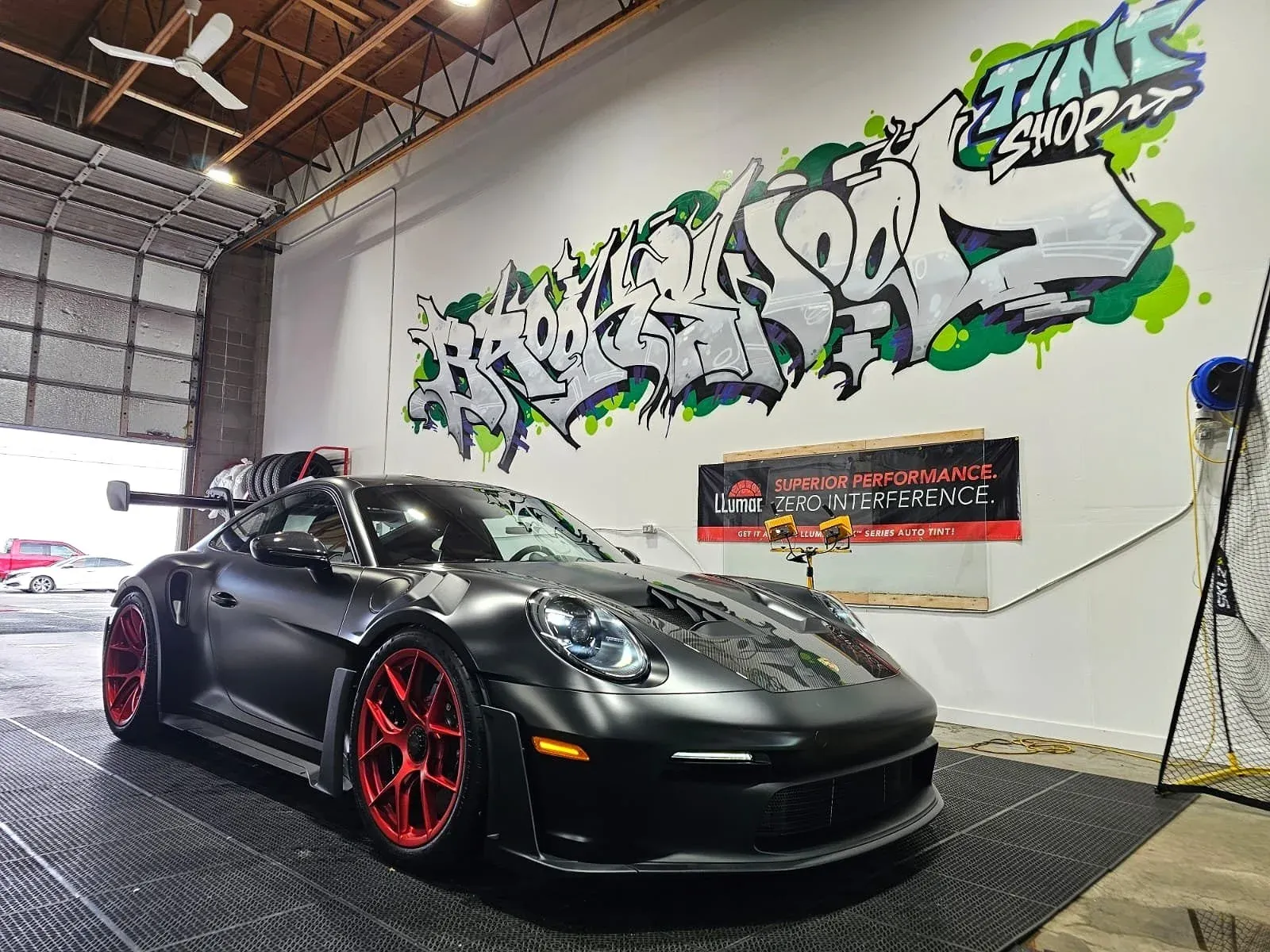
For most cars here, the package that matches how long you’ll keep the car is the right one. Essential is one layer on the paint. Performance adds a second layer, a two-stage correction underneath, and covers wheel faces and glass, which helps in the rain. Signature is four layers over full correction and covers paint, PPF, wheels, glass and trim.
Plan for one to three days in the shop, most of it prep and correction. Book so pickup falls on a dry day, or have a garage ready for the first 24 hours. Coating is quoted per vehicle: send the year, make, model and paint condition through the coating quote form, or see the packages on ceramic coating. Coated cars can be dropped off any weekday or Saturday.