
What does oxidation look like on a car?
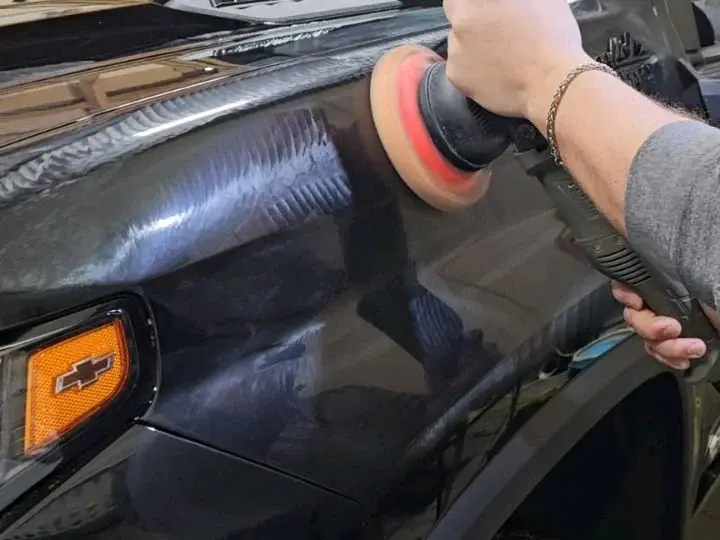
A loss of gloss that won’t wash off, moving toward a rough, chalky surface as it gets worse. The word covers painted panels and plastic headlight lenses alike.
- Paint and clear coat. Weathered paint looks flat and washed out first and chalky at its worst. 3M’s film bulletin separates the two stages, contrasting “slightly oxidized (not chalked)” paint with “highly oxidized substrates, such as chalked paint” (3M Instruction Bulletin 6.5).
- Headlight lenses. Momentive’s coating researchers write that polycarbonate, the usual headlamp plastic, is sensitive to UV and tends to haze or discolour, which is why lenses leave the factory with a protective coat (RadTech, 2008). That layer is defined under UV hard coat. STEK sells its lens film partly on protecting against oxidation (STEK).
Whether faded paint can be brought back is answered in can paint correction fix faded paint.
How does oxidation change the way film sticks to paint?
It makes adhesion unpredictable in both directions. Light oxidation makes film grip harder; heavy oxidation makes it grip badly.
| Paint condition | What 3M says about adhesion | What Avery says about SW900 removal |
|---|---|---|
| Slightly oxidized, not chalked | Much higher adhesion than newly painted surfaces, with a texture like anodized bare aluminum; removal takes more effort | Removal from surface oxidation is at the user’s risk |
| Highly oxidized, chalked | Poor adhesion; graphics may come off more easily | Removability from oxidized or chalked surfaces isn’t warranted |
That’s why paint is inspected before vinyl or paint protection film goes on, and why old, weathered paint is a conversation at the quote rather than a surprise at removal (Avery SW900 data sheet).
Why do cars oxidize in a rainy place like BC?
Because sunlight adds up even in a rainy climate. Abbotsford averages 1,886.7 sunshine hours a year in the federal climate normals (ECCC), and a car parked outdoors takes most of it on its upward-facing panels.
On headlights the pattern is easy to see. Momentive’s study of lenses from cars in Florida found that coating breakdown, where it happened, consistently started at the top edge of the lens, the part closest to horizontal. Paint follows the same pattern, with the flat panels on top of the car taking the most sun.
Fixing oxidation at Brookswood Tint
Paint and lenses go to different services, and both start with an inspection.
| Surface | Service | Levels and time |
|---|---|---|
| Paint | Paint correction, after a thickness reading | Enhancement polish (about a day), two-stage (one to two days) or multi-stage restoration (three or more days, with the price set after an inspection) |
| Headlight lenses | Headlight restoration | Polish and seal, about an hour; wet-sanded full restoration, 2–3 hours; restoration with STEK film, half a day |
Fogging inside the lamp or a cracked housing is a replacement job rather than a restoration.
After correction, ask about protecting the surface with a ceramic coating or paint protection film in the same visit. Send photos through the paint correction quote form.