Which car scratches can be polished out?
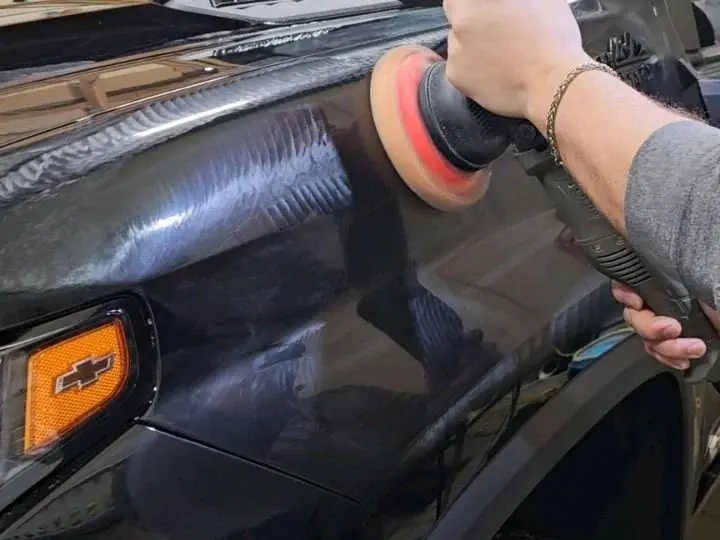
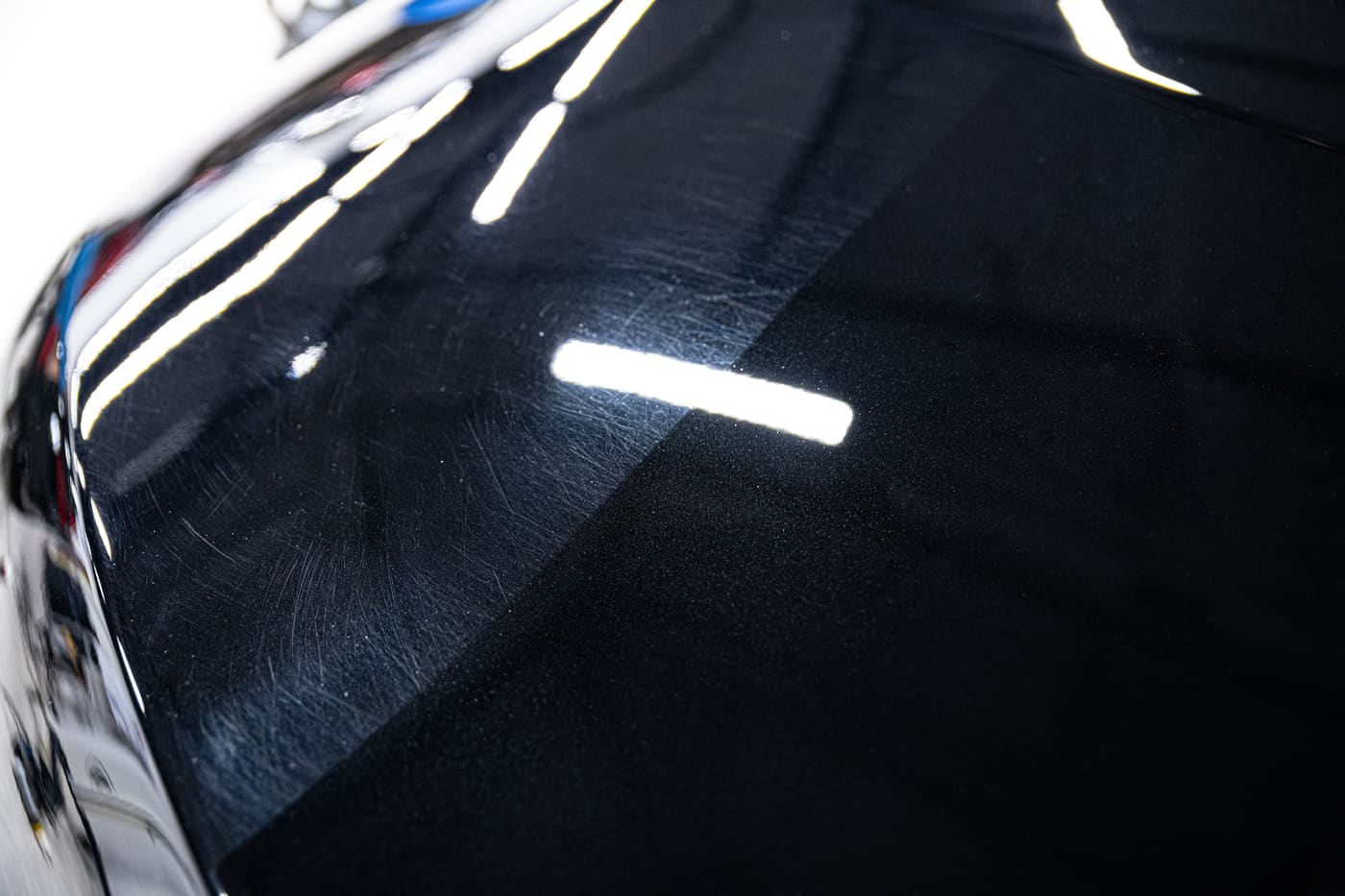
Scratches that sit inside the clear coat, the transparent top layer of the paint, can usually be polished out or made close to invisible. Polishing works by removing a thin, even layer of clear coat around the scratch until the surface is level with the bottom of it, so it only works while there’s clear coat below the scratch to work with.
A car’s paint is built up in layers, and how deep the scratch goes decides who fixes it:
| Layer, top to bottom | What it does | Can polishing fix a scratch that stops here? |
|---|---|---|
| Clear coat | The transparent top layer that carries the gloss | Usually, yes |
| Colour (base) coat | Carries the car’s colour | No: touch-up or refinish |
| Primer | Sits under the colour so it bonds to the panel | No: body shop |
| Metal or plastic | The panel itself | No: body shop; bare steel can rust |
Fine, circular scratches spread across a whole panel are usually wash damage rather than one-off scratches, and they have their own page: swirl mark removal.
How can you tell how deep a scratch is?
Two checks at home give you a good first guess, and the shop’s paint thickness reading settles it. Start with your fingernail and your eyes.
The fingernail test
Draw a fingernail slowly across the scratch, not along it. If the nail slides over without stopping, the scratch is probably shallow enough to sit in the clear coat. If the nail drops in and catches, the scratch is deep, at or past the bottom of the clear, and polishing may only soften it. It’s a rough test: clear coat thickness varies from car to car and panel to panel, which is why the reading matters more.
The colour at the bottom
Look into the scratch in good light. If you can see a different colour in the groove, such as grey or white primer or the glint of bare metal, the paint is cut through, and no amount of polishing will put colour back. If all you can see is the car’s own colour, the scratch may still be in the clear coat, and the thickness reading will tell.
The paint thickness reading
Before any polishing, the shop measures paint thickness across the panels. That reading shows how much paint is there to work with, and it flags panels that read differently from the rest, which can point to earlier polishing or a respray. It decides how far correction can safely go on your car.
What are the three levels of scratch correction?
The shop offers three levels, and the scratches you have decide which one fits. The lightest level that does the job is the one used, so as little clear coat as possible comes off.
| Level | Time | What the shop says it removes | Suits |
|---|---|---|---|
| Enhancement polish | About a day | 60 to 80% of defects, one stage with a fine polish | Light marks and haze on newer paint |
| Two-stage correction | 1–2 days | 85 to 95% of defects, a cutting compound then a finishing polish | Most light scratches, wash marring, water spots |
| Multi-stage restoration | 3+ days, quoted after inspection | Wet sanding where it’s safe to, then heavy compound and refining stages | Heavier scratching on paint that still has clear coat to spare |
A single deep-looking scratch on one door and a whole car of light scratches are different jobs, so the quote follows the inspection, not a price list. The full menu is on the paint correction page.
When is a scratch a body shop job instead?
When polishing can’t reach the bottom of it. A scratch through the clear coat, a dent under the scratch, paint that is cracked or flaking, or clear coat already too thin to polish further all need paint added back, and only touch-up or a refinish does that.
The shop will tell you before starting if the readings or the scratch put it out of reach, rather than polishing a panel thinner for a result that won’t last. Stone chips are the same story: they knock paint off rather than scratch it, so they’re touch-up work, and stopping the next ones is what paint protection film against rock chips is for.
How do you keep scratches off paint once it’s corrected?
Cover the panels that get touched. Swirls come from washing, but a one-off scratch usually comes from contact. Bag zippers and rings around the door handles, branches on a narrow lane, boxes slid across a bumper or tailgate: those marks land on whatever is on top of the clear coat.
Paint protection film is made to be that top layer on the panels it covers and, per LLumar’s FAQ, most surface scratches in its film heal with heat. A graphene-ceramic coating is far thinner: it helps against light marring and lets dirt come away with less rubbing, but it won’t stop a key or a branch. How the two compare is covered in PPF vs ceramic coating, and hand washing with clean mitts or a touchless wash does the rest.
How do you book car scratch removal in Langley?
Start with the paint correction quote form: give the year, make, model and colour, with two photos of each scratch, one close-up in daylight and one from a step back. Mention any respray or past polishing you know of.
Scratch removal is priced after the inspection and thickness readings, because depth decides the work. Time in the shop runs from about a day for an enhancement polish to three days or more for multi-stage restoration, with two-stage correction in between at one to two days. You’ll find the shop at Unit 312, 20560 Langley Bypass; it opens at 9:00 and closes at 17:00, Monday to Saturday, and correction can be booked together with film or coating if you want the paint protected straight away.