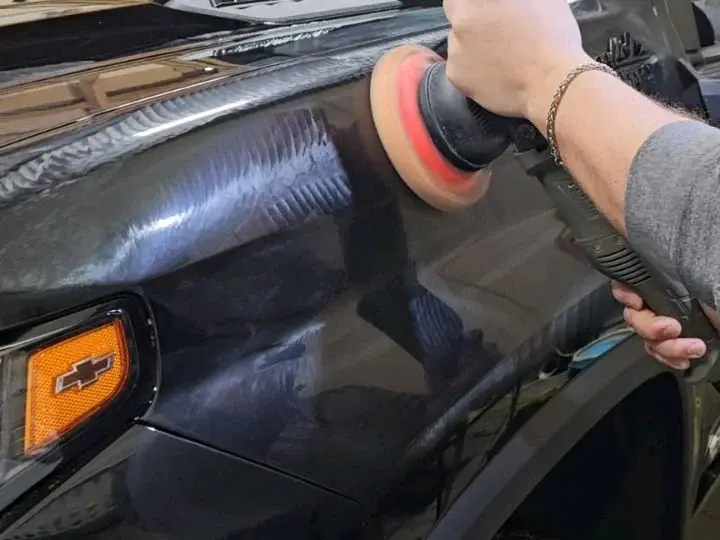
What are swirl marks, and why do dark cars show them most?
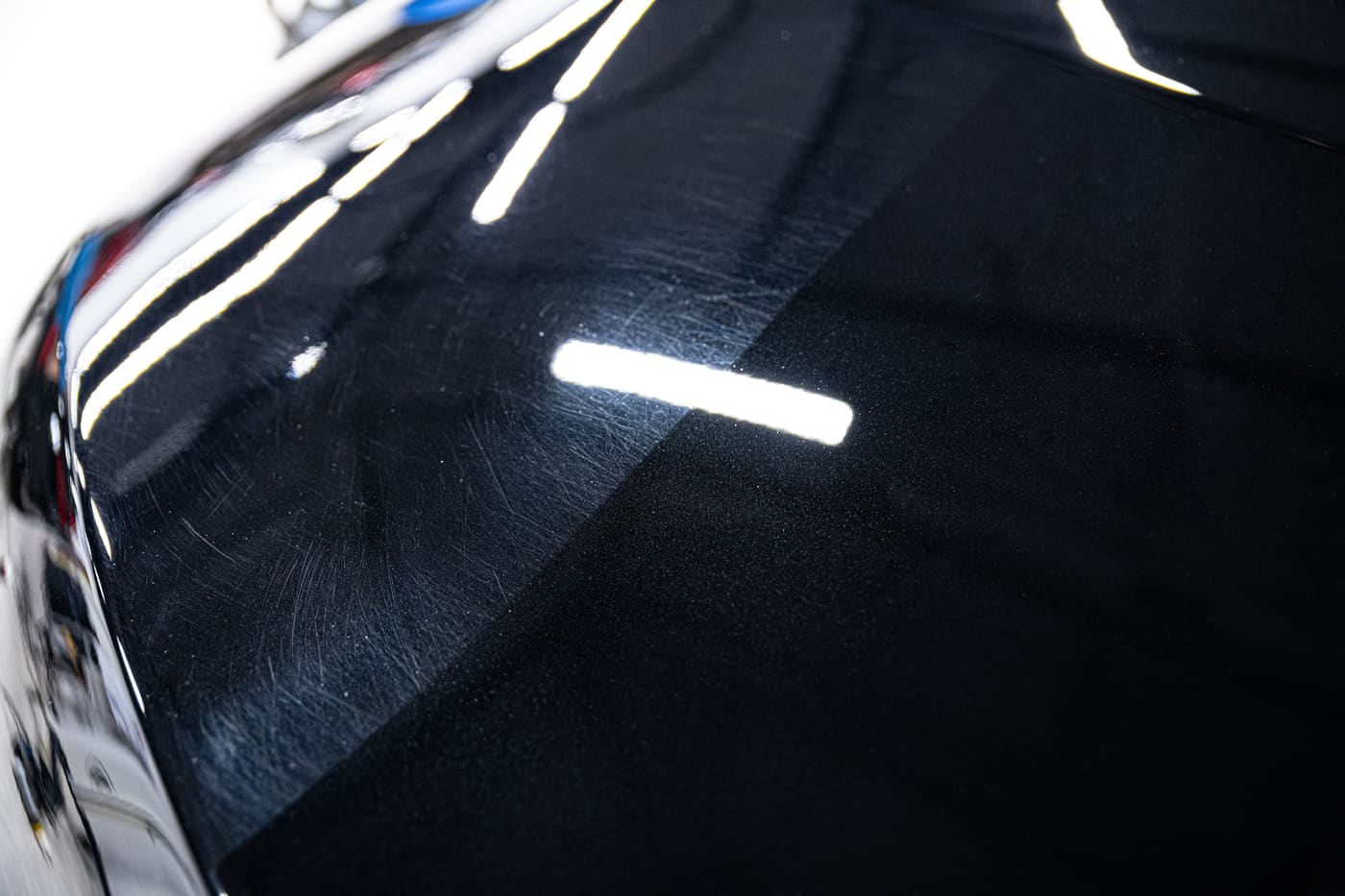
Swirl marks are thousands of fine, shallow scratches in the clear coat, often in arcs or circles, that show up as a spider-web pattern around any bright reflection. They are a surface fault, not a paint fault, which is why they can be polished out.
Each scratch is a tiny edge that catches light and throws it back at a different angle from the smooth paint around it. On black, dark blue or dark grey paint the contrast is high, so in direct sun or under a single bright light the whole panel looks hazy and webbed. On white or silver the same scratches are there but blend into the background. That’s why owners of dark cars are usually the first to notice them.
What causes swirl marks?
Almost always contact during washing and drying, with grit dragged across the paint. Every careless wash can add more.
Washing technique
A mitt or sponge that picks up dirt and goes back onto the car, a single bucket of dirty water, and a drying towel with grit in it all scratch the clear coat in the direction they move. Wiping a dusty car with a dry cloth does the same.
Automatic brush washes
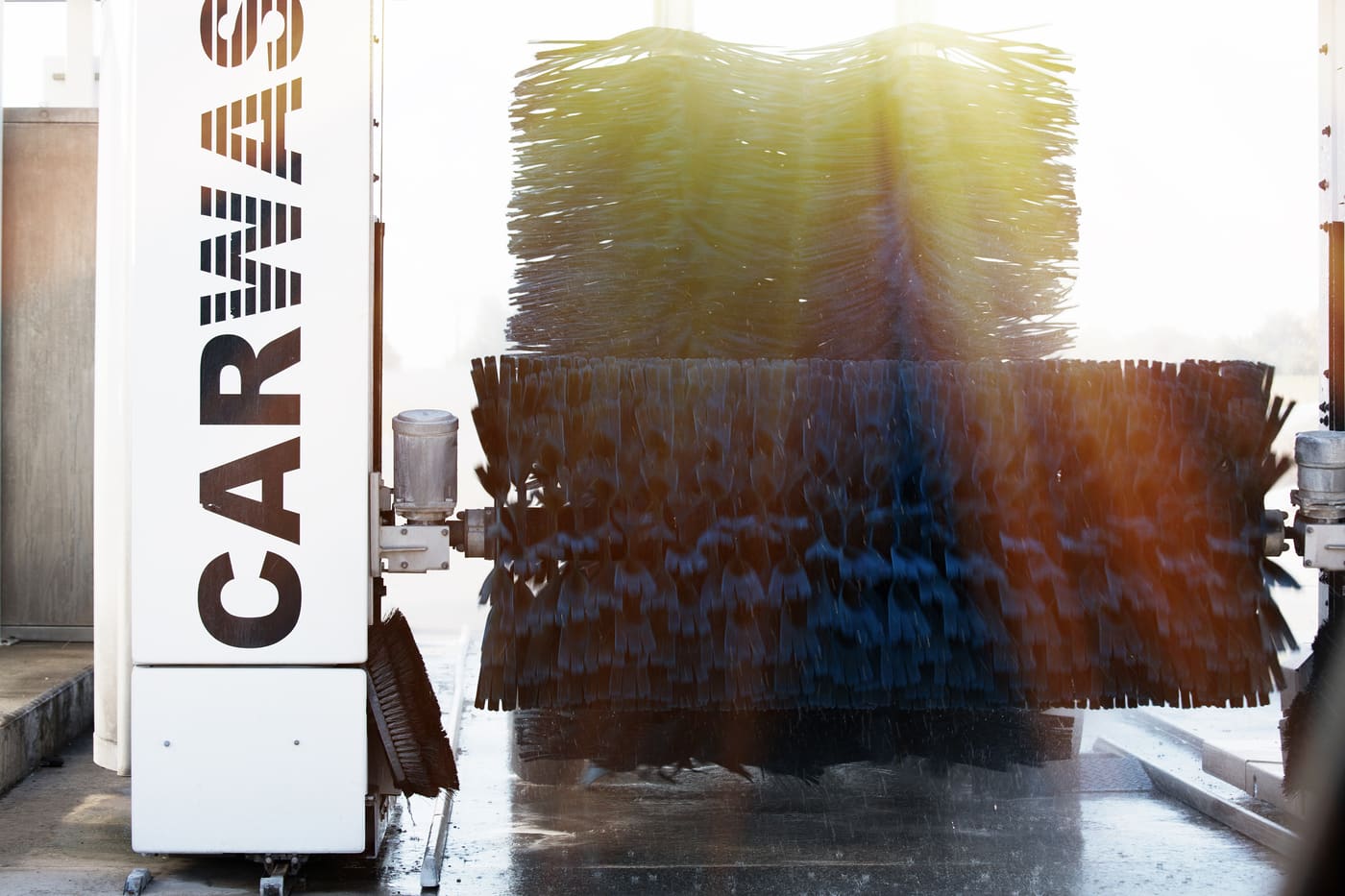
Brushes that have cleaned the car before yours carry that car’s grit. They swirl every finish over time, coated or not.
Dealer prep
A new car can arrive with swirls already in it from prep washes before delivery. They’re easiest to spot on a dark car in sunlight, and worth checking before film or coating goes on, because both seal in whatever is underneath. Planning around that is part of protecting a new car in the right order.
How does the shop remove swirl marks?
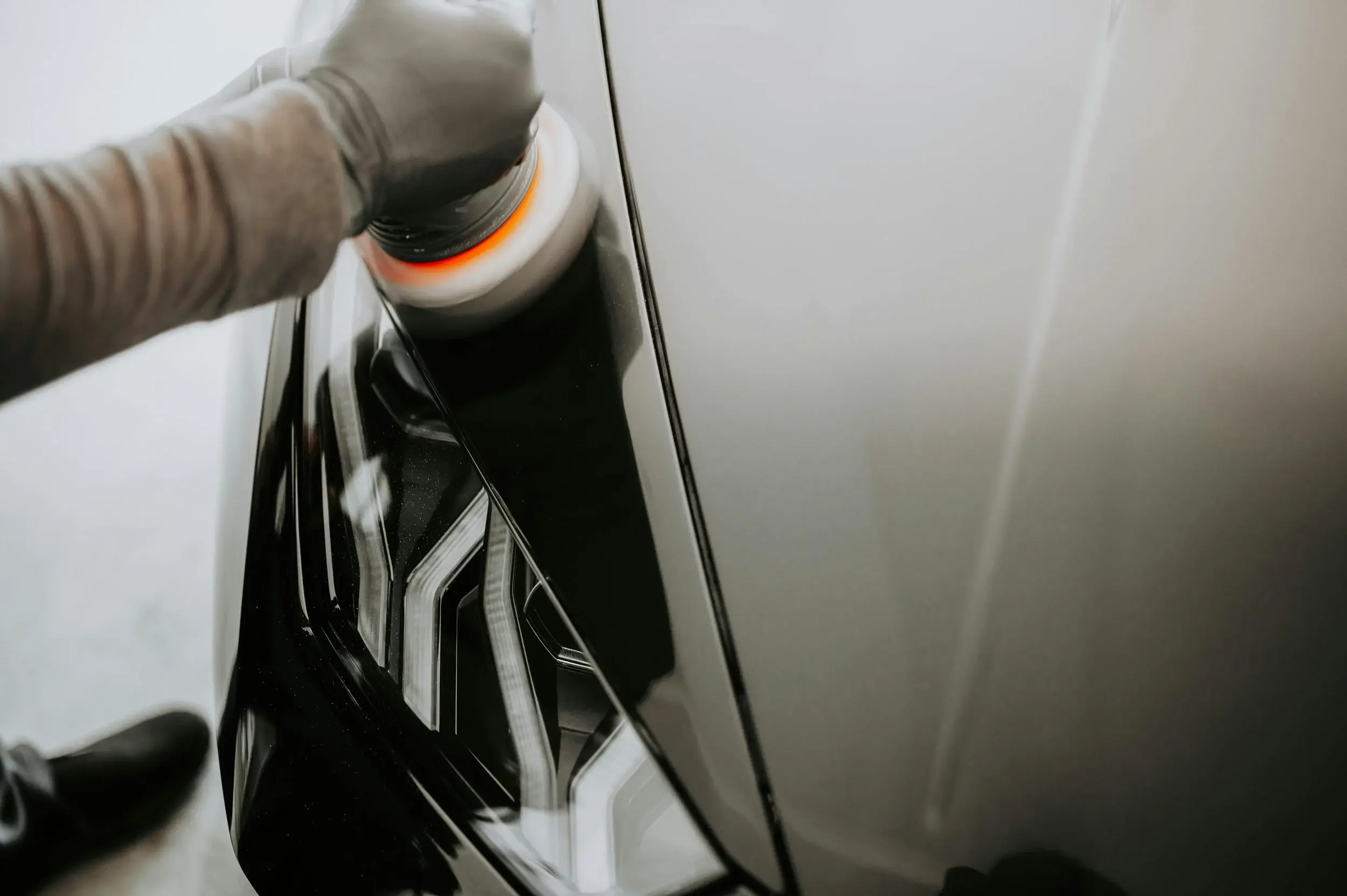
By machine polishing, in as few stages as the paint needs, after measuring how much clear coat there is to work with. Paint thickness is measured first, on every job.
| Stage | What it suits | Time |
|---|---|---|
| Enhancement polish | Light swirls and haze; one stage with a fine polish | About a day |
| Two-stage correction | Deeper swirls and wash marring; a cutting compound, then a finishing polish | 1–2 days |
| Multi-stage restoration | Heavy swirling on neglected or oxidized paint that still has clear coat | 3+ days, quoted after inspection |
The thickness reading decides how far the work can go. Healthy clear coat can take a two-stage correction; thin or previously polished paint gets the least aggressive approach that still makes a visible difference. The stage is chosen for your car from those readings and what the swirls look like under light. The full service is described on the paint correction page.
Which swirls and scratches can’t be polished out?
Anything that has gone through the clear coat into the colour or primer below. Polishing only levels the clear layer, so a scratch deeper than that layer stays.
A rough guide at home: run a fingernail across the mark. If the nail catches, the scratch is probably too deep to polish out completely, and it may be a touch-up or body shop job. Swirl marks themselves almost never catch a nail; they are far shallower than that. The other limit is the clear coat itself. If the readings show there isn’t much left, you’ll be told, and the last few marks may be left rather than thinning the clear further.
Factory matte and satin finishes are a separate case. Polishing puts shine into them, so they aren’t corrected the way gloss paint is; ask before booking if your car has one.
How do you keep swirl marks from coming back?
Change how the car is washed, and put something on top of the paint that takes the wear instead. Correction resets the paint; the routine afterwards decides how long it stays that way.
Wash method: hand wash with clean mitts and plenty of rinse water, or use a touchless wash. Keep the car out of brush washes, and dry with a clean, soft microfibre.
Ceramic coating: a graphene-ceramic coating over corrected paint makes dirt release more easily, so less rubbing is needed at every wash. Of the three coating packages, Performance is two layers on top of a two-stage correction, and Signature is four layers on fully corrected paint. The ceramic coating page has the packages, and whether coating is worth it in BC’s rain covers the local case.
Paint protection film: LLumar says its Platinum Gloss film has “a self-healing surface that uses heat from your engine or sunlight to reduce swirl marks and minor scratches” (LLumar Platinum Gloss). On the panels it covers, the film takes the wash marks instead of the paint. How film and coating compare is set out in PPF vs ceramic coating.
Booking swirl mark removal
Correction prices aren’t published because each car is priced on the condition of its paint, so start with the quote form: send the year, make, model and colour, and a photo of the swirls in sunlight if you can. Plan on about a day for an enhancement polish and one to two days for a two-stage correction, longer if the car needs multi-stage work. If you want a coating or PPF on top, say so up front so the correction and protection can be booked together. Brookswood Tint is at Unit 312, 20560 Langley Bypass, open Monday to Saturday, 9:00 to 17:00.