
What’s on this Bronco?
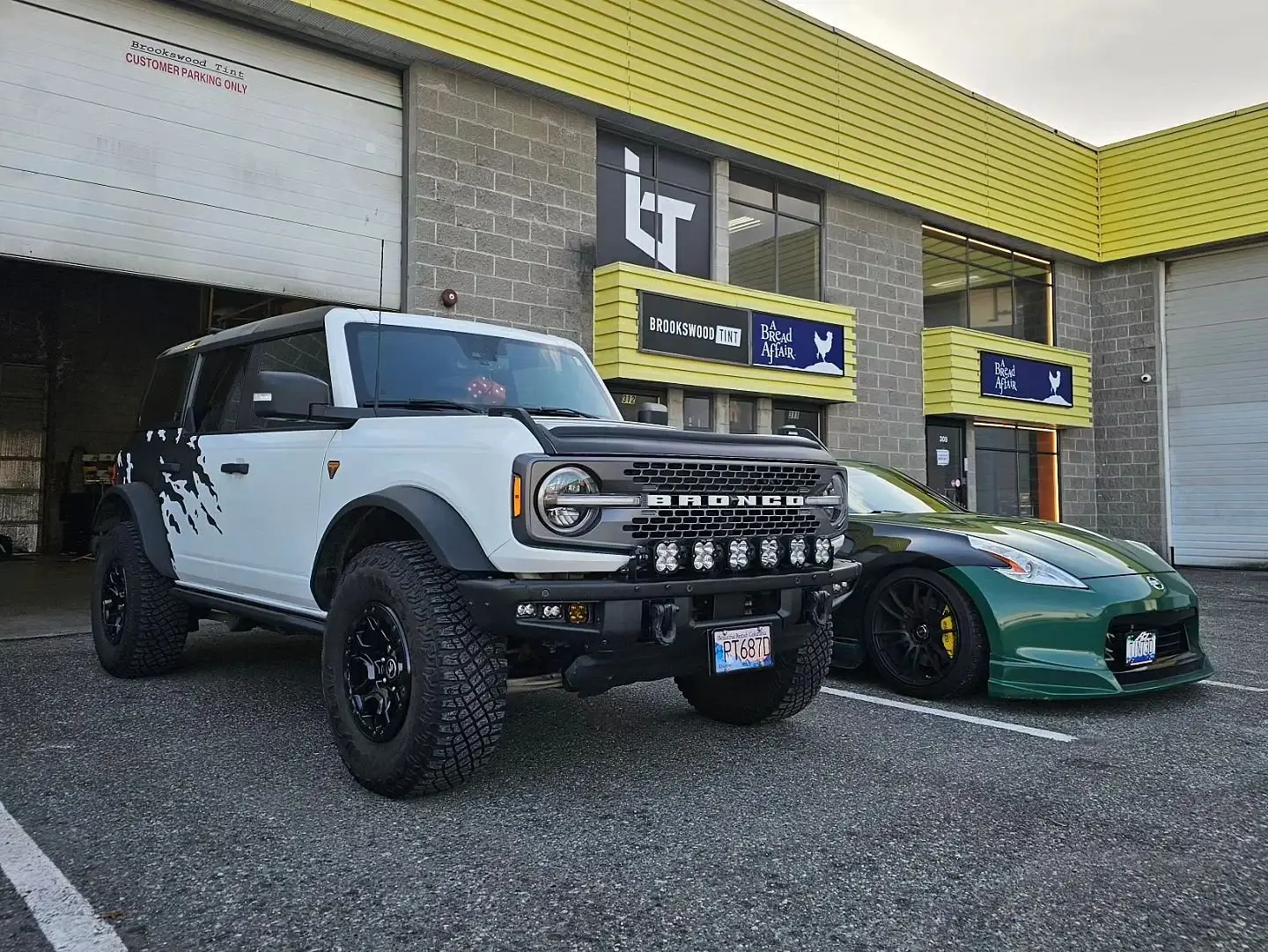
A black splatter graphic down the rear of the side. The vinyl covers most of the rear quarter panel and breaks into jagged shapes across the rear door, then stops short of the front door. From the front door forward, the truck is plain white.
The rest of what’s visible is the truck itself: a white four-door Bronco with a black top, black fender flares, black wheels on all-terrain tires and a row of LED light pods across the front bumper. It’s parked at the shop’s storefront beside the shop’s own green 370Z. The photo shows one side only, so whether the graphic is mirrored on the other side isn’t known.
Is this a partial wrap or a full wrap?
Partial. A full wrap covers every painted panel in a new colour. This Bronco’s vinyl covers part of two panels, and the white body around it is part of the look.
The shop sells three levels of wrap: full colour change, partial wraps and accents, and commercial and livery work. This truck sits in the middle one. The photo can’t tell you whether the white is factory paint or film, so this page doesn’t claim either; the black graphic is the part that reads as added vinyl.
Why do bodyside graphics suit a Bronco?
Because the truck is built in panels you can take apart, and Ford itself dresses it with graphics. Ford Canada’s Bronco page mentions the storage bags that “keep the doors from getting dinged while they’re off the vehicle,” and it lists “exclusive bodyside graphics” on one edition and a Stroppe Edition Graphic Package on another.
That tells you two things. Bodyside graphics are part of the Bronco’s own look, not a bolt-on idea. And any vinyl on the doors has to be planned around the gaps, so each door carries its own piece and comes off cleanly. A splatter pattern helps there, because its broken edges hide the cut lines at the door gaps better than one solid stripe would.
What vinyl does the shop use for graphics like these?
Cast film from 3M or Avery Dennison, the same ranges the shop uses for full colour changes. Its published terms give that vinyl a 5-year manufacturer warranty.
Graphics come off later, too. Cast vinyl on healthy factory paint removes with heat, which is how a truck goes back to its plain body colour or takes a new design. Repainted panels or paint that’s already failing can lift when vinyl is pulled, which is why the paint gets looked at before the film goes on. More on taking film off is on removing a car wrap.
How do graphics hold up on a truck that goes off-road?
The edges are the part to protect. Mud and grit are easy to rinse off a vinyl face, but a pressure washer aimed at an edge can lift it, and a brush wash drags grit across the film.
After a trail day, rinse the mud before it dries on, then hand wash or use a touchless wash. The lower edges of a graphic, nearest the wheels, take the most spray, so those are the ones to check after a muddy drive.
How do you plan a Bronco graphic of your own?
Bring a design, a reference photo or just the idea, plus the year and door count of your Bronco. Graphics are quoted for the truck and the design, since no two are the same size.
Model notes for full and partial Bronco work are on Ford Bronco wraps, and the shop’s finishes and coverage options are on the vinyl wrap page. Ask for a quote through the wrap quote form, and see the truck among the shop’s other jobs in the gallery and on the projects page.