Which car washes are safe for a ceramic coated car?
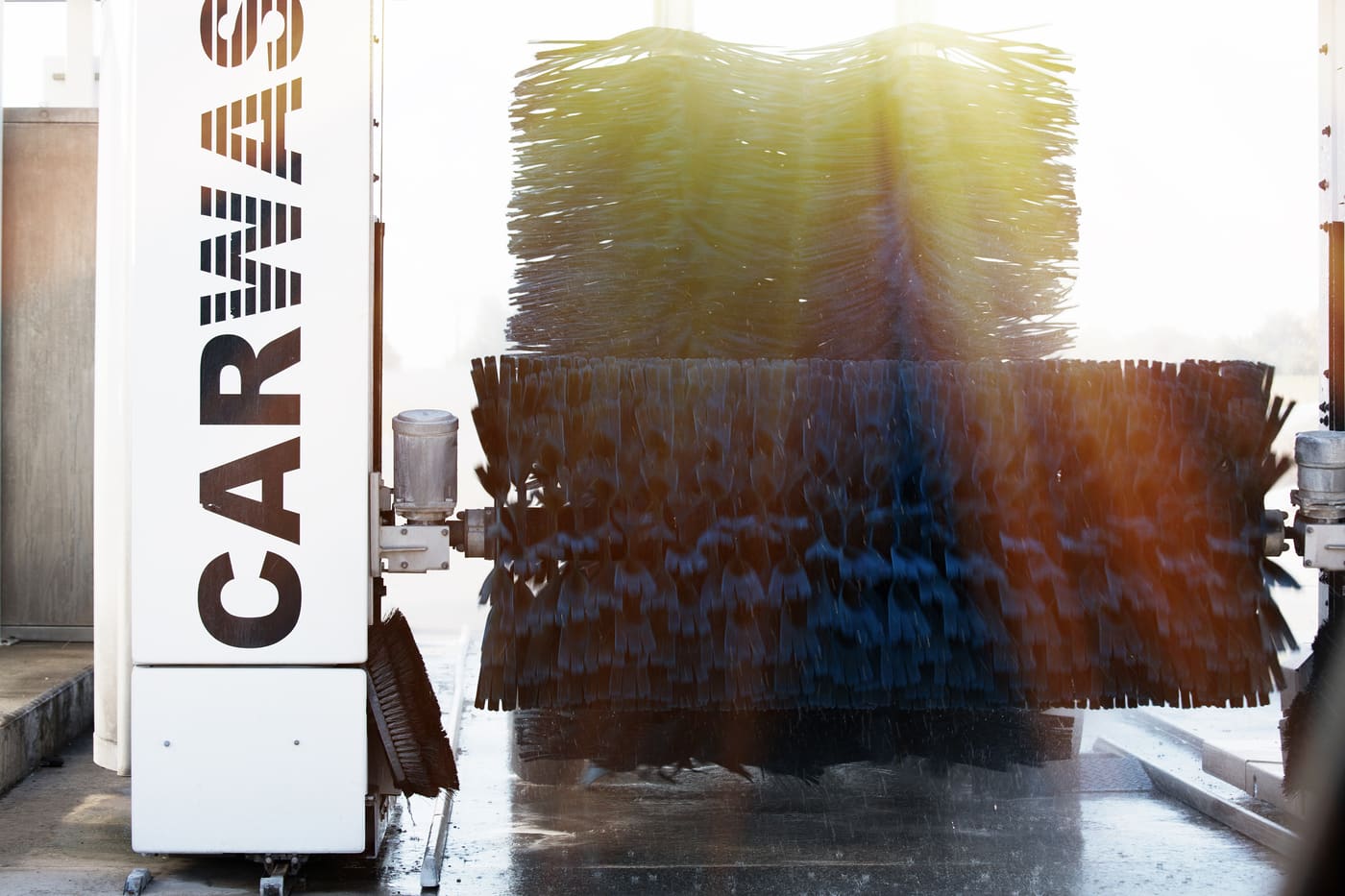
Touchless automatic washes and self-serve wand bays are safe; anything that rubs the car with shared brushes or cloth isn’t. The shop’s own coating FAQ gives touchless washes the all-clear and says brushes mark every finish in time, coated or not.
| Type of wash | For a coated car | Why |
|---|---|---|
| Touchless automatic | Yes | Only water and detergent touch the paint |
| Self-serve wand bay | Yes, with care | You control the distance; leave the shared brush alone |
| Brush tunnel | No | Rotating brushes drag grit from earlier cars across the paint |
| Soft-cloth tunnel | No | Still friction from material that has cleaned other cars |
| Hand-wash service | Depends | Ask whether they use clean mitts and towels for each car |
| Home hand wash | Yes | The gentlest option when it’s done right |
If you can hand wash at home, that’s still the gentlest choice; washing a coated car by hand walks through the method. A touchless wash is the right backup for a busy week or a cold month.
Why do brush washes damage coated paint?
Because a coating is a thin, hard layer, and the brushes push other cars’ grit across it at speed. It’s the grit that scratches, and the coating is too thin to keep it away from the paint for long.
Carmakers warn about this even for uncoated cars. Mazda’s Canadian owner’s manual cautions that car wash brushes can dull the paint and speed up its deterioration, names brushes “that are dirty or too stiff” as a cause of scratches, and disclaims responsibility for damage from automatic washes (Mazda Canada). If you must use one, it says to choose a wash that keeps its brushes well maintained.
On a coated car the damage shows up two ways. Fine marring builds up in the coating, dulling the gloss you paid for. And the slickness that makes the car easy to rinse fades where the brushes wear the surface. Brush marks on dark paint are the classic cause of swirls, explained in what causes swirl marks.
Are the chemicals in a touchless wash safe for a coating?
Generally yes for routine washes, but ask what the wash uses. A touchless wash swaps the mitt for detergent and water pressure, so its chemistry does more of the cleaning.
Coating makers do set limits. One of them, IGL, tells collision repairers that surfaces coated with its Ecocoat Quartz “should be cleaned with cleaners in the pH range 3-9”, as reported by I-CAR, which trains body shop technicians. Mazda also warns against “strong detergents containing highly alkaline or caustic agents” on chrome-plated and anodized trim, saying they may discolour or deteriorate the paint.
What that means at the wash:
- Choose a basic wash and rinse over the heavy-duty or bug-blaster cycle for regular cleaning.
- Ask staff what pre-soak they use if the menu doesn’t say.
- Rinse well so detergent doesn’t sit and dry on the car.
In a self-serve bay, the same manual says to keep “30 cm (12 in) or more” between the nozzle and the vehicle and not to dwell on one area, especially around door gaps and window edges. On a car with paint protection film as well, keep the jet off the film’s edges.
Should you pay for the wax or ceramic add-on at an automatic wash?
No. Those sprays sit on top of your coating, and what’s on top is what you see and feel, so they can mask the coating’s own beading with a weaker product.
Gtechniq, a coating manufacturer, advises against wax over its coatings because it gets in the way of the coating’s water and dirt repellency and can leave the surface “looking dull and smeary” (Gtechniq). A spray applied in seconds over unprepared paint also isn’t the same thing as a coating bonded over decontaminated, polished paint, whatever the menu calls it. Save the money for a proper hand wash now and then.
How long should a new coating wait before its first car wash?
At least 24 hours with no water at all after you collect the car. That’s the shop’s standing instruction for every coating package.
Beyond that, ask at pickup when the first full wash should be for the package on your car. What happens in those first days is covered in the curing timeline for a new coating.
Are car washes open during Metro Vancouver water restrictions?
Through Stages 1 and 2, yes. At Stage 3, commercial washes in the City of Langley can only run under water-saving conditions, and at Stage 4 they must close.
The City’s water conservation bylaw sets these rules for commercial vehicle washing, which it defines as wash services offered to the public for a fee, not counting dealerships, fleet wash facilities or charity washes:
| Stage | Commercial car washes in the City of Langley |
|---|---|
| Stage 3 | Only automatic systems installed before November 1, 2017 on a basic wash and rinse cycle; newer automatic systems recycling at least 60% of their water; or hand-wash and self-serve bays whose wands or brushes flow no more than 11.4 litres a minute |
| Stage 4 | Prohibited |
At Stages 3 and 4, washing a car at home is also prohibited except for windows, lights, mirrors and licence plates. Stage 1 starts automatically every May 1; later stages are called by Metro Vancouver’s water commissioner. The City’s posted text was consolidated in April 2022, so confirm the current stage and wording with the City before relying on it.
What should you book if a car wash has already marked the coating?
Bring it in and let us look under proper light. Light marring confined to the coating can often be polished out, but polishing removes the coating it touches, so the panel is re-coated afterwards.
The correction stages are on swirl mark removal: an enhancement polish is roughly a day’s work, while a two-stage correction takes a day or two, both after a paint thickness reading. A fresh coating takes one to three days in total and is quoted per vehicle. Start with the coating quote form and mention which wash the car went through. The coating packages themselves are on ceramic coating.