Is the damage in the film’s surface or through it?
That’s the first question, because it decides whether anything needs fixing. Surface marks in the top coat often heal on their own; anything that goes through the film, or lifts it off the paint, needs a new piece.
| What you see | Likely cause | What happens next |
|---|---|---|
| Fine scratches or swirl-like marks | Wash marks or light contact | Warm it: they often heal |
| A cut or tear you can catch a nail on | A sharp stone, a key, debris | Replace the piece |
| An edge starting to lift | Water forced under it, for example by a pressure wand | Inspect early; re-lay or replace |
| A stain that won’t wash out | Droppings or sap left too long | Replace the piece |
| Yellowing, cracking, bubbling or peeling | A possible film defect | A warranty question: bring the invoice |
| A dent or a chip in the paint under the film | An impact the film couldn’t absorb | Paint repair first, then new film |
LLumar’s PPF FAQ explains that the top coat is there to guard the urethane against surface scratches, and that most such scratches heal once warmed, whether by sun, warm water or a panel heated by a running engine. Try that before booking anything: park in the sun, or pour warm water over the spot. How that top coat works is covered in the self-healing top coat explained.
Why not stick a small patch over the damage?
Because a patch adds edges, and edges are where film fails. The damaged film also stays where it is, underneath the patch.
LLumar’s own car-wash warning makes the point: when pressure washers or automatic washes lift film, it says, the lifting mostly starts at the edges. A patch brings a whole new set of edges to an area that’s already damaged. 3M’s installation guidelines add a safety note: loose film “could tear away from a moving vehicle,” and damaged film should be repaired, removed or replaced. A loose patch on a hood is exactly that risk.
Replacing the piece also keeps the look right. A template-cut piece ends where the original ended, at a panel edge or at the line the pattern set, so the repair adds no lines the original install didn’t have.
How is a damaged piece of PPF replaced?
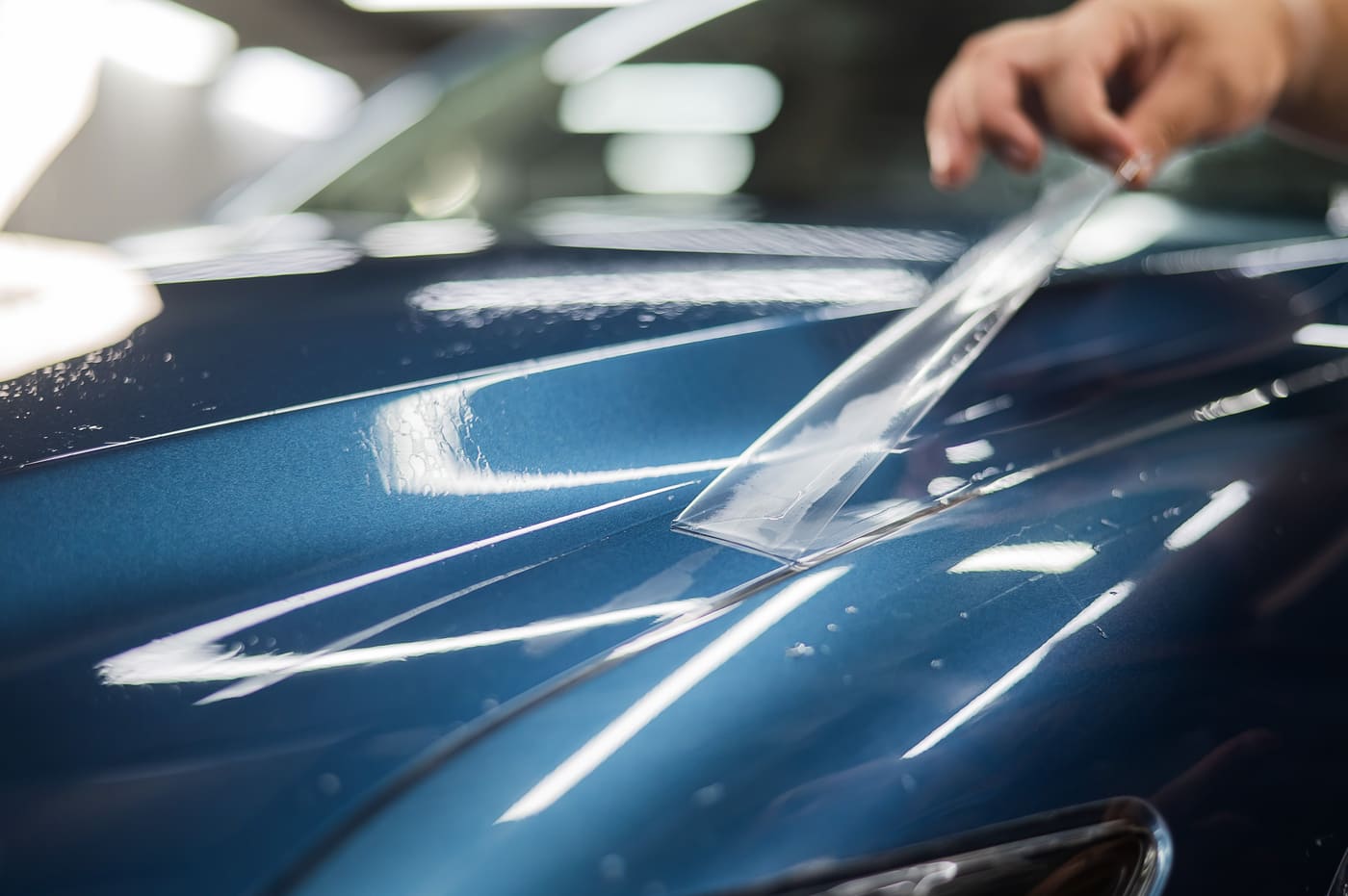
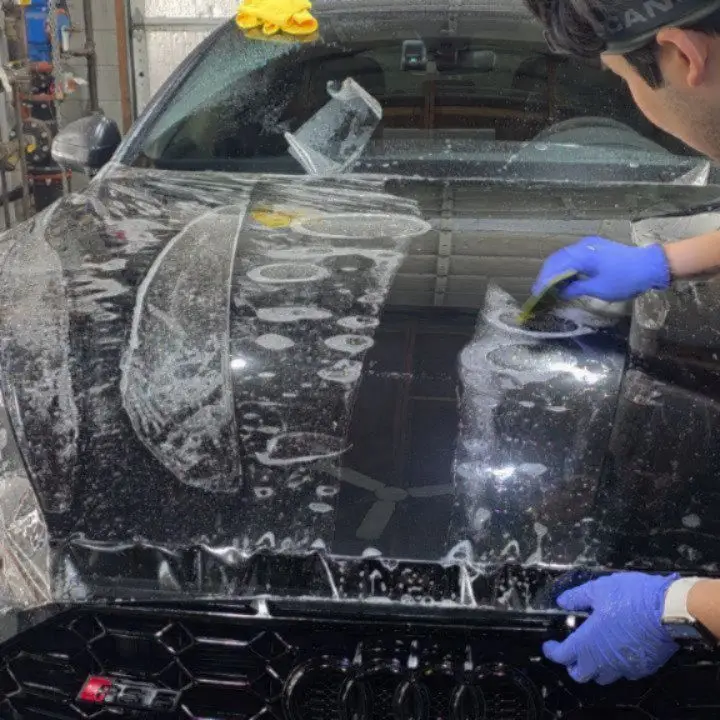
The old piece comes off warm, the paint is checked and cleaned, and a new piece goes on wet. The steps:
- Removal, in a warm room. LLumar puts the floor at 55 °F, roughly 13 °C, and wants a professional doing it; colder than that, the film can part company with its adhesive. 3M recommends a steamer or heat gun and peeling at 30 to 60 degrees to the paint; SunTek says not to fold film back on itself and rip it, which can leave adhesive behind.
- A look at the paint. Once the film is off, any mark that reached the paint shows. A chip or dent there is repaired before new film, or the new piece would seal it in.
- Clean-up. Adhesive residue and road film come off, and the panel is decontaminated.
- A new piece from the template. Every piece the shop fits is cut by software to a pattern for the exact model, so the replacement matches the shape of the one it replaces.
- Wet install and edges. The piece is laid, squeegeed and wrapped around the edge where the panel allows, then left alone for a week before its first wash.
For what removal means for the paint itself, see film removal and factory paint.
Who pays for replacing damaged film?
It depends on what damaged it. A film defect is a warranty question; impact, wash damage and stains are not.
Film defects
Platinum’s 10-year limited warranty comes from LLumar, and the shop’s list of defects it covers runs: yellowing, cracking, bubbling, peeling. If your film shows one of those, bring the invoice; the warranty page sets out the terms.
Damage from outside
A rock cut, a key, a stain that baked in, or an edge lifted by a pressure washer isn’t a defect. LLumar is explicit about the last one and won’t cover lifting that a pressure washer or an automatic wash started. Those replacements are quoted per vehicle.
A crash
If the film was damaged in a collision, that’s an insurance conversation, and ICBC publishes nothing about film; does ICBC cover paint protection film covers what to ask.
How do you keep film from needing repairs?
Wash it gently and keep water off the edges. The car wash is the part of film care you control most.
- Hand wash or touchless only, and never a brush wash.
- Keep pressure nozzles away from film edges and relief cuts.
- Lift droppings and sap off promptly so they don’t stain.
- Check edges after washing; 3M advises inspecting the film for edge lifting after every wash.
How do you get damaged PPF looked at?
Bring the car in, or describe it first: the year, make and model and the panel that’s affected, so it can be checked for whether it needs a new piece or is a warranty matter.
Start with the film repair and quote form, or text 604 534 6433; the shop takes drop-offs from 9 in the morning to 5 in the afternoon, every day except Sunday. If the film is old enough that more than one piece is failing, how long PPF lasts helps you decide between repairs and a fresh install.