
How does self-healing PPF work?
The healing happens in a thin clear coat on top of the film. When that layer is warmed it relaxes back toward its smooth original surface, so a light scratch closes up instead of staying as a groove.
LLumar calls the layer a “proprietary top coat” guarding the urethane, and says “the majority of surface scratches will self-heal when exposed to a heat source” (LLumar PPF FAQ). XPEL describes the same idea more technically on its Ultimate Plus data sheet: the clear coat “employs special elastomeric polymers that allow light scratches in the surface to ‘heal’ over time.”
The same XPEL sheet shows how thin that layer is on its film: 0.50 mil, about 12 microns, sitting on 6.0 mil of polyurethane. The healing claims are about marks in that surface layer. A scratch that cuts below it is no longer a surface scratch.
What heat does self-healing film need, and how long does it take?
Warmth, and not much of it. The makers name everyday heat sources, and XPEL says room temperature is enough for its film, given time.
| Heat source | Who names it | What it suits |
|---|---|---|
| Sun on the panel | LLumar; Platinum Gloss page says engine heat or sunlight | Summer marks; park in the sun for the afternoon |
| Warm water | LLumar; XPEL suggests 120 °F (about 49 °C) in colder conditions | Any season, any panel |
| A warm engine | LLumar: “heated body panel (with motor running)” | The hood after a drive |
| Room temperature, 20 to 30 minutes | XPEL’s care page, for its own films | A car in a heated garage |
In a Fraser Valley winter the sun does very little of this work. Abbotsford’s mean daily temperature is 2.9 °C in December and 3.6 °C in January (ECCC climate normals, 1981–2010), well short of room temperature. From November to March, a rinse with warm water or a drive long enough to warm the hood is the practical way to let a mark heal.
Which marks heal and which don’t?
Light marks in the film heal; anything that opened the film, sits in the paint, or sits on top of the film doesn’t. That’s the line between what self-healing covers and what still needs a person.
| Mark | Heals with heat? | What to do instead |
|---|---|---|
| Fine wash swirls in the film | Usually | Warm it and look again |
| A light scuff from a bag, sleeve or branch | Usually | Warm it and look again |
| A deep scratch, key line or cut | No | Re-film that panel |
| A stone strike that tore the film | No | Re-film the panel; check the paint under it |
| A chip in the paint from before the film | No | It’s in the paint; repair it before re-filming |
| A stain from droppings or sap left to bake | No | Not a scratch; clean droppings off promptly |
| Swirls in bare paint next to the film | No | Paint doesn’t self-heal; it needs polishing |
“Usually” is LLumar’s own hedge: it says the majority of surface scratches heal, not all of them. If a mark is still there after the panel has been properly warm, have it looked at. Deliberate damage is its own topic, covered in whether PPF stops scratches and keying.
Do all paint protection films self-heal?
Every LLumar film listed below does, but not every film on the market. If a quote doesn’t say self-healing, ask.
- Platinum Gloss, the film in every package here: self-healing with engine heat or sunlight.
- Platinum Matte, on request: LLumar says it “self-heals with heat from your engine or sunlight” (LLumar).
- Valor: LLumar says it protects against rocks, road debris, salt and sand “while self-healing surface scratches with sun or engine heat” (LLumar).
- Gloss & Matte, LLumar’s entry film: LLumar calls both finishes self-healing (LLumar), with a 5-year warranty rather than Platinum’s 10.
How self-healing film compares with film that lacks the feature is a separate question, covered in self-healing vs non-self-healing PPF. The term itself is defined in the glossary under self-healing top coat.
Does self-healing mean you can wash PPF any way you like?
No. Self-healing forgives light marks; it doesn’t protect the film’s edges, and edges are what careless washing damages.
Pressure washers and automatic car washes can lift film, LLumar warns, and lifting from them falls outside its warranty; its own preference is washing by hand with a soft, clean cloth. A brush wash might leave fine marks that heal, while also lifting an edge that won’t. Self-healing doesn’t change the rules: hand or touchless washing, pressure nozzles kept off the edges.
Getting self-healing film on your car
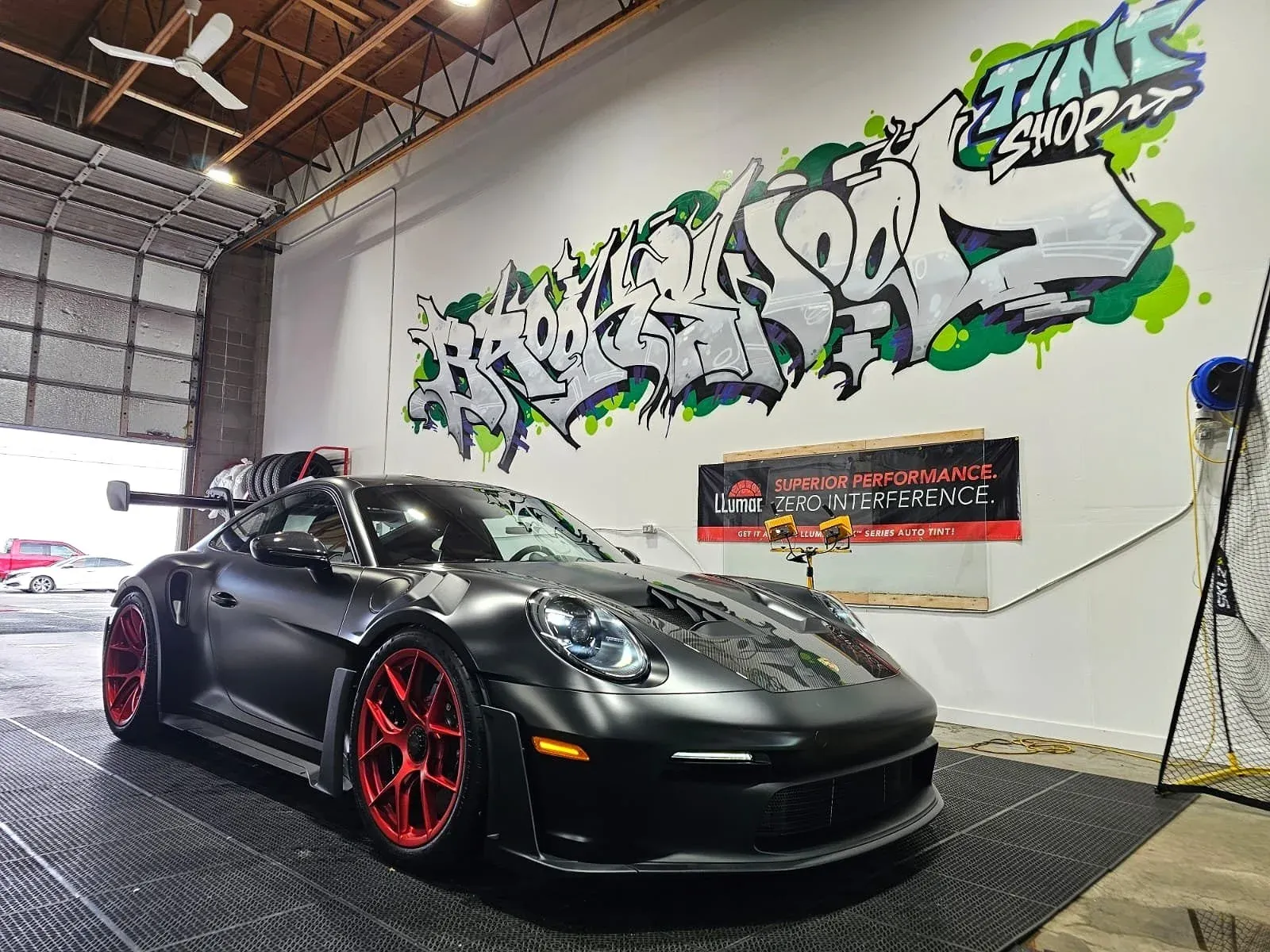
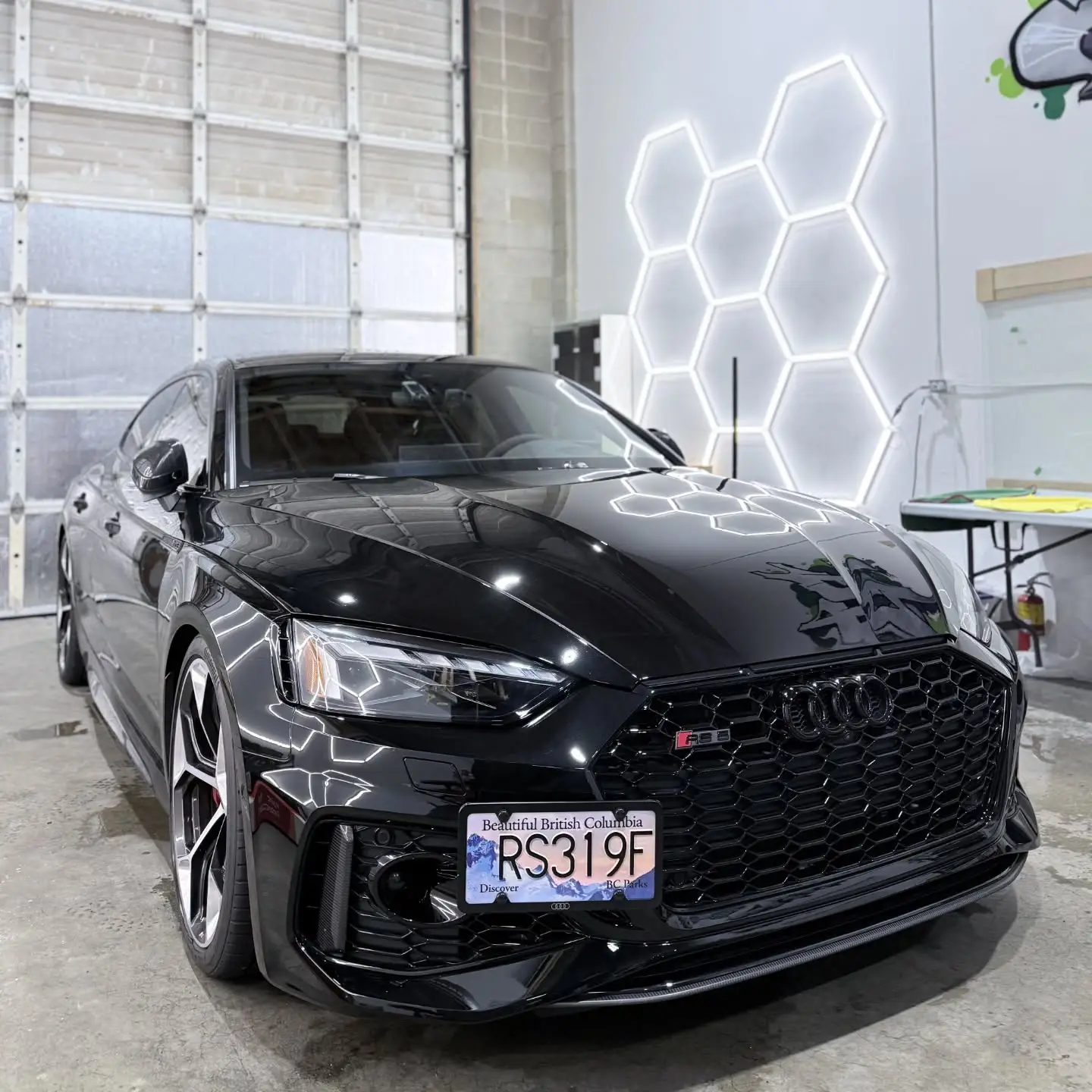
At Brookswood Tint, self-healing comes standard: every package uses LLumar Platinum, with its self-healing top coat, HydroGard water repellency and LLumar’s 10-year manufacturer’s limited warranty. A Partial Front costs from $850 and a Full Front from $1,550; the LLumar Platinum PPF page covers the film in detail.
Swirls already in the paint get polished out before film goes over them, because clear film preserves them otherwise; swirl mark removal explains that step. Send your car’s details through the quote form, or compare all four packages under paint protection film.