Does PPF come off factory paint cleanly?
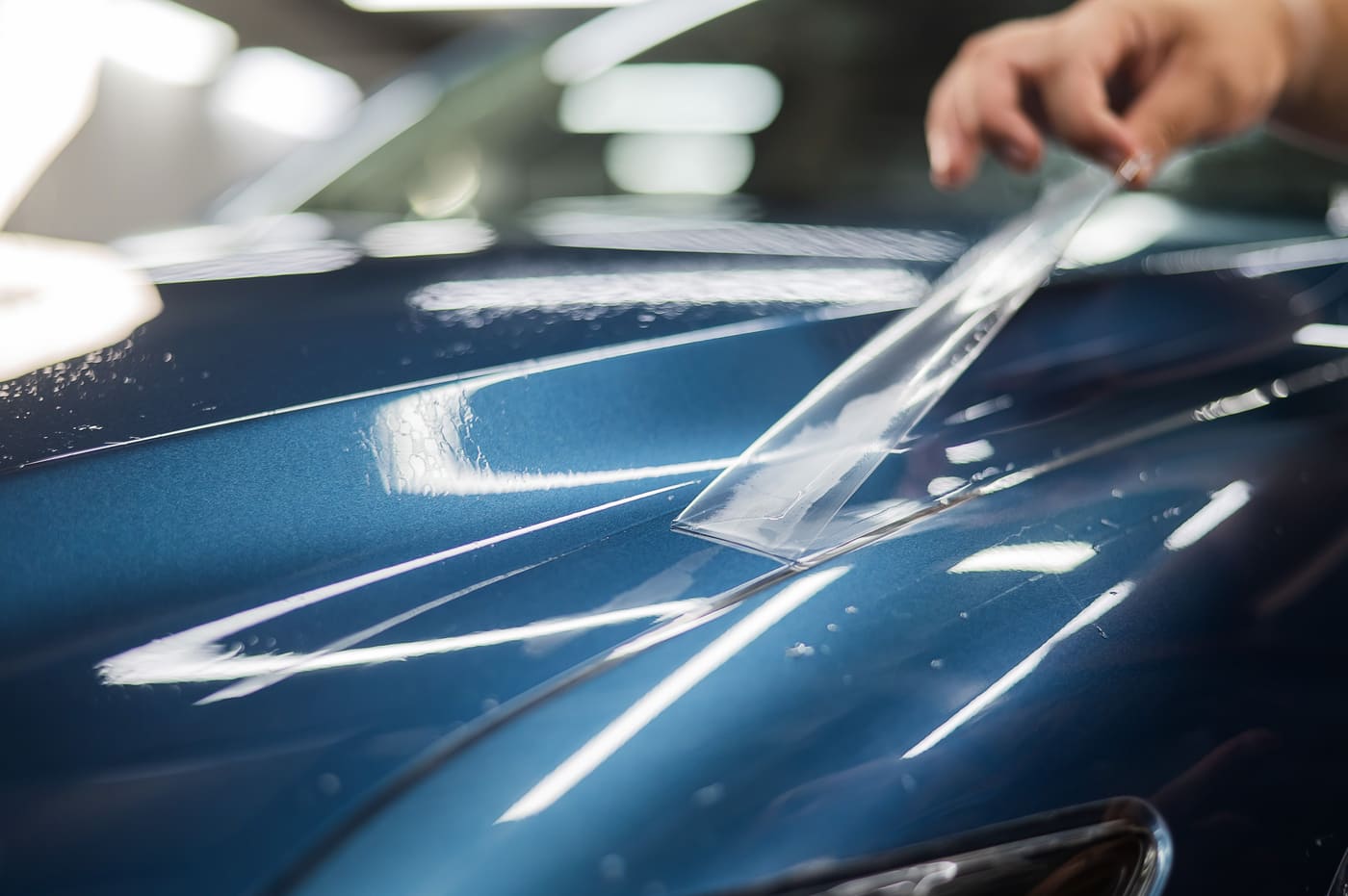
It’s designed to. Film makers build their adhesives for original factory paint and expect the film to come off it with heat.
3M’s Pro Series product bulletin lists “OEM paint” as the substrate the film is made for and says the film “can be removed with the aid of heat.” XPEL goes further on its Ultimate Plus data sheet, saying the adhesive “will not damage paint or leave behind residue if removed.” That’s a maker’s claim with no conditions attached, so read it as describing healthy factory paint. LLumar makes the same point from the other side: its film is meant for “original painted surfaces,” not refinished ones.
Which paint is at risk when film comes off?
Paint that was never factory paint, or factory paint that was already letting go. Film grips the top layer of whatever it’s stuck to, so if that layer’s bond to the panel is weak, removal finds it.
| Paint under the film | What to expect at removal | Before you book |
|---|---|---|
| Original factory paint in good condition | The case film is designed for | Nothing special |
| Body-shop respray or touch-up | Riskier; LLumar’s FAQ leaves repaired and aftermarket paint outside its warranty | Tell the shop which panels were repaired |
| A respray filmed soon after painting | Riskier; LLumar suggests fresh paint be left about 30 days to outgas before film | Mention when the repair was done |
| Factory clear coat already peeling or flaking | Loose clear coat can come up with the film | Plan on paint repair either way |
Carmakers’ paint warranties draw a similar line. Toyota Canada’s paint defect coverage, for example, excludes blemishes tied to “previous repairs or modifications to the same body panel.” If paint lifts on a refinished panel during removal, neither the film warranty nor the car’s paint warranty is likely to pay for it.
What does 3M’s warranty say about paint pull?
It excludes it outright. 3M’s warranty information card for its paint protection film, valid in the United States and Canada, rules out “paint pull” during removal in plain terms: the coverage simply doesn’t include it.
That exclusion is worth knowing even if your car wears LLumar. It tells you a film maker won’t take responsibility for paint that comes away during removal. The protection is in how the job is done and what’s under the film, which is why the next two sections matter.
Why does temperature matter so much for PPF removal?
Cold film doesn’t release the way warm film does. LLumar warns that “PPF should not be removed in the extreme cold as it can separate from the adhesive,” leaving the adhesive behind on the paint, and wants removal done “by a professional, indoors at 55 degrees Fahrenheit or warmer.”
In the Fraser Valley that rules out a driveway job for much of the year. At Abbotsford, the average daily high stays below 13 °C from November through March: 9.3 °C in November, 5.9 °C in December, 6.7 °C in January, 9.0 °C in February and 11.6 °C in March (ECCC climate normals, 1981–2010). Those are averages for the warmest part of the day. A heated bay is the only way to meet LLumar’s minimum all year.
Does old film hold on harder than new film?
The lab numbers say the bond strengthens with heat over time. Both 3M and XPEL publish adhesion before and after baking the film, and in both the grip goes up.
| Film | After a day at room temperature | After heat ageing at 80 °C |
|---|---|---|
| 3M Scotchgard Pro Series 4.0 | 20 N/in | 28 N/in, after 72 hours |
| XPEL Ultimate Plus | Over 4 N/cm | Over 7 N/cm, after 168 hours |
Your car won’t sit at 80 °C, but it does spend summers in the sun. Film that has been on for years can take more time and more heat to release, which is one reason old film is quoted after the shop has seen it.
Can you peel PPF off yourself?
You can, but LLumar’s advice is to have a professional do it, and the risks are real. Three mistakes to avoid: working in the cold, pulling fast, and reaching for a tool to lift an edge.
- Cold film can part from its adhesive. That’s the separation LLumar warns about, and it leaves the adhesive on the paint.
- A blade or scraper at the edge cuts clear coat. Nothing sharp should touch the paint.
- Pulling hard and fast puts more strain on weak paint. On a repaired panel, that’s the moment paint can lift.
If you’re removing film because it’s damaged, whether damaged PPF can be patched is worth reading first; one bad piece doesn’t always mean taking off the lot.
What happens to the paint once the film is off?
It’s cleaned of any adhesive, inspected in good light, and polished if it needs it. Paint that spent years under film has been shielded from chips, but it gets checked like any other panel.
If correction is needed, the shop measures paint thickness first. One stage of enhancement polishing takes about a day; two-stage paint correction runs one to two days. If new film is going on, LLumar advises against waxing or coating the paint beforehand, since that can interfere with adhesion.
Booking PPF removal in Langley
Tell the shop what the film is, how old it is, and whether any panel under it has been repainted. Removal of old film is extra labour and is quoted per vehicle, as the PPF cost page explains.
If new film is going back on, LLumar Platinum runs from $850 for the smallest front package to $4,000 for every painted panel, and the paint is cleaned and, where it needs it, polished before the new pieces go down. Comparing film with vinyl? Whether a vinyl wrap damages paint covers the other material. Request a quote with photos of the current film.