Can you see PPF on gloss paint?
Seen from a few steps back on clean paint, gloss film is hard to pick out. Up close, at a low angle or in low sun, you can find it, mostly at its edges.
LLumar sells Platinum Gloss on a “high-shine” top coat meant to keep the car looking factory fresh, and says the film is meant to blend with the paint even when only part of a panel is covered. The aim is a film that reads as paint, not as a layer on top of it.
LLumar doesn’t publish a gloss measurement for Platinum. XPEL does for its own gloss film: its Ultimate Plus data sheet lists a gloss reading above 90 gloss units at a 60-degree angle, tested to ISO 2813. That gives you a sense of what clear gloss film is built to do: reflect light like a finished clear coat, so your eye doesn’t catch a change in sheen where the film starts.
What you won’t see is the film’s body. The sheet is a fraction of a millimetre thick, and how much of a fraction is answered in how thick PPF is.
Where do PPF edges show on each package?
Where an edge falls decides how visible the film is, and that depends on the package. The more of a panel the film covers, the more its edges end up at panel gaps instead of on open paint.
| Package | Where the film ends | What you can see up close |
|---|---|---|
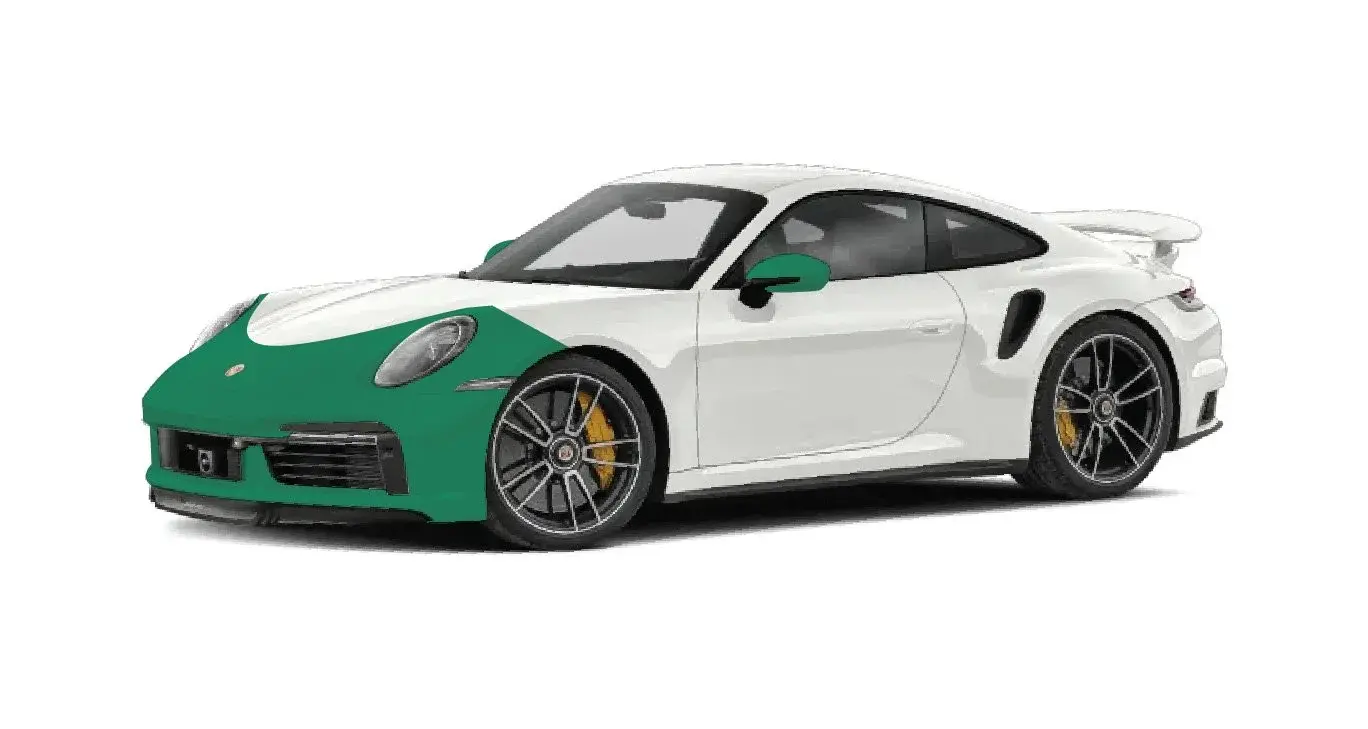
| Partial Front, from $850 | Part way back on the hood and front fenders | An edge running across open paint on the hood and both fenders |
| Full Front, from $1,550 | At the edges of the hood and fenders, wrapped around them where the panel allows | Little on the panel faces; edges sit at the gaps |
| Track Package, from $1,900 | Adds edges on the A-pillars, across a strip of roof and along the rockers | A second line across the roof where the partial roof piece stops |
| Full Vehicle, from $4,000 | At the panel gaps all round the car | The least to find on any panel face |
Bumpers are the wild card in every package. Their shape sometimes makes a relief cut unavoidable, a small deliberate cut that lets the film lie flat over a complex curve, and you’re shown its position before any film is laid. If an edge across the hood is the thing you’d notice every day, partial vs full front PPF weighs the $700 difference.
Does matte PPF show on a gloss car?
Yes, and that’s the point of it. Matte film over gloss paint gives the car a satin finish, so anyone who knew the car before will see the change.
In LLumar’s words, Platinum Matte is built for “optical clarity”, so the paint underneath keeps its own colour. The colour stays; the sheen drops. On a full vehicle install that’s a whole satin car. On a partial front it means a satin nose and a gloss tail, with the change of finish running across the hood. A gloss partial front keeps the whole car in one finish. The choice between the two finishes has its own page: stealth PPF vs gloss PPF.
What makes film easier to spot as it ages?
Mostly what happens at the edges, and what was on the paint before the film went on. Gloss film that’s looked after stays hard to see; neglect is what draws the eye.
- A dirty edge line. Wax and road grime can settle where the film stops. On a partial front, that line across the hood is the first thing to show; a regular hand wash keeps it from building up.
- A lifted corner. An edge raised by a pressure nozzle catches dirt and shows as a dark mark. LLumar’s PPF FAQ says lifting from pressure-washing or automatic car washes isn’t covered by its warranty.
- Chips that were already there. Clear film shows what’s under it, so an old chip stays visible. That’s covered in whether PPF hides existing rock chips.
- A seam on a wide panel. Film comes in rolls of set widths; 3M’s Pro Series bulletin, for example, lists 24, 48 and 60 inch rolls. When a panel is wider than the roll, a join is unavoidable, as explained in why PPF has seams.
How can you tell whether a used car already has PPF?
Look for the edges, because that’s the one part of the film you can find by eye and touch. A careful look takes a few minutes in daylight.
- Run a fingertip from the bumper back across the hood. A film edge on open paint feels like a slight step.
- Study the front part of the hood and each front fender, where a partial front stops.
- Look closely around washer nozzles, badges and sensors; film has to be cut around anything that sticks out of a panel.
- Ask the seller for the installer’s invoice, which names the film and the panels.
If you find film, the next questions are its age and condition. How to spot a bad PPF install lists the faults worth checking for.
Choosing PPF that won’t stand out
Pick gloss film and a package whose edges fall at panel gaps. On most cars that means Full Front, from $1,550, rather than a partial front with a line across the hood.
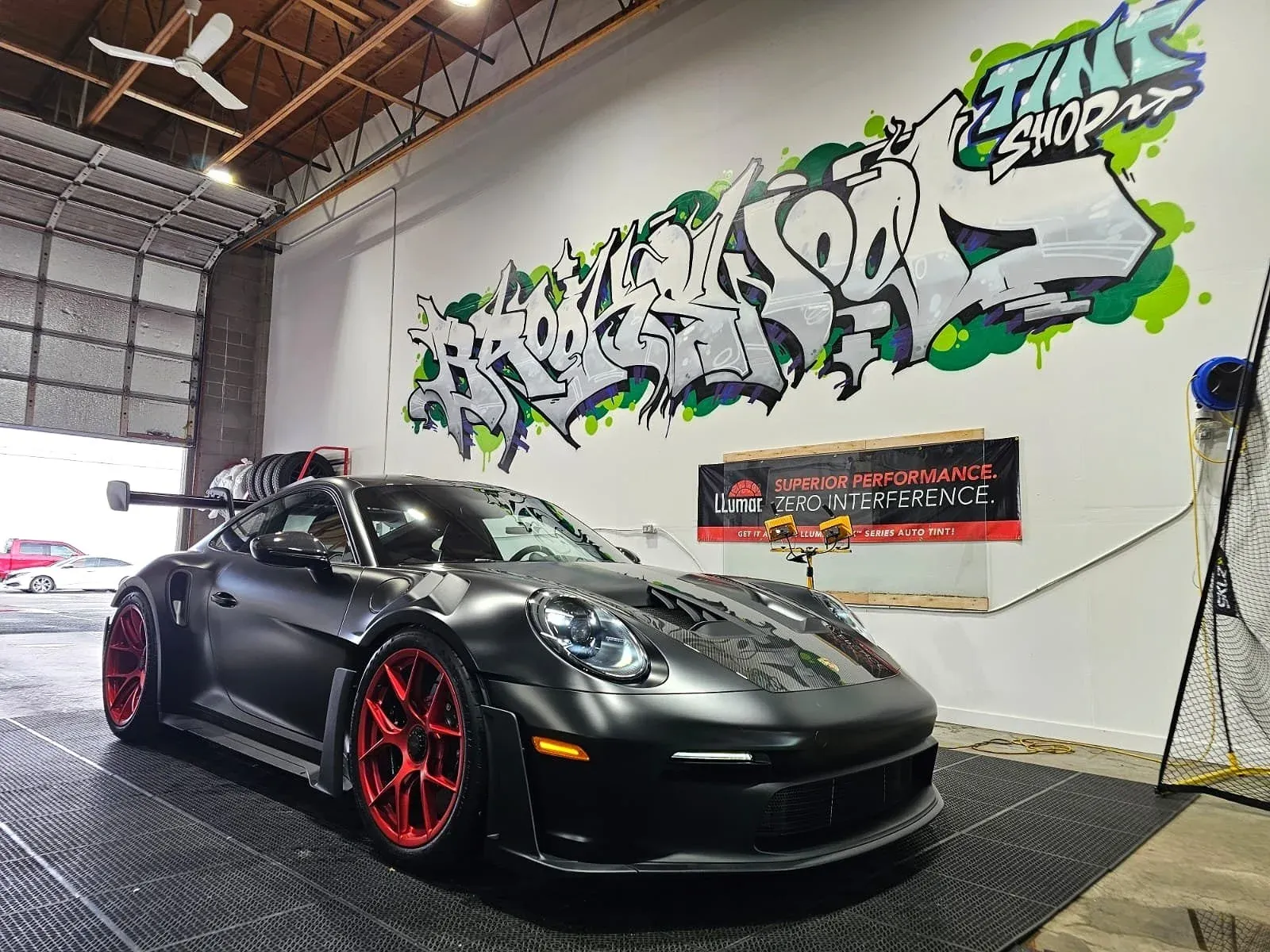
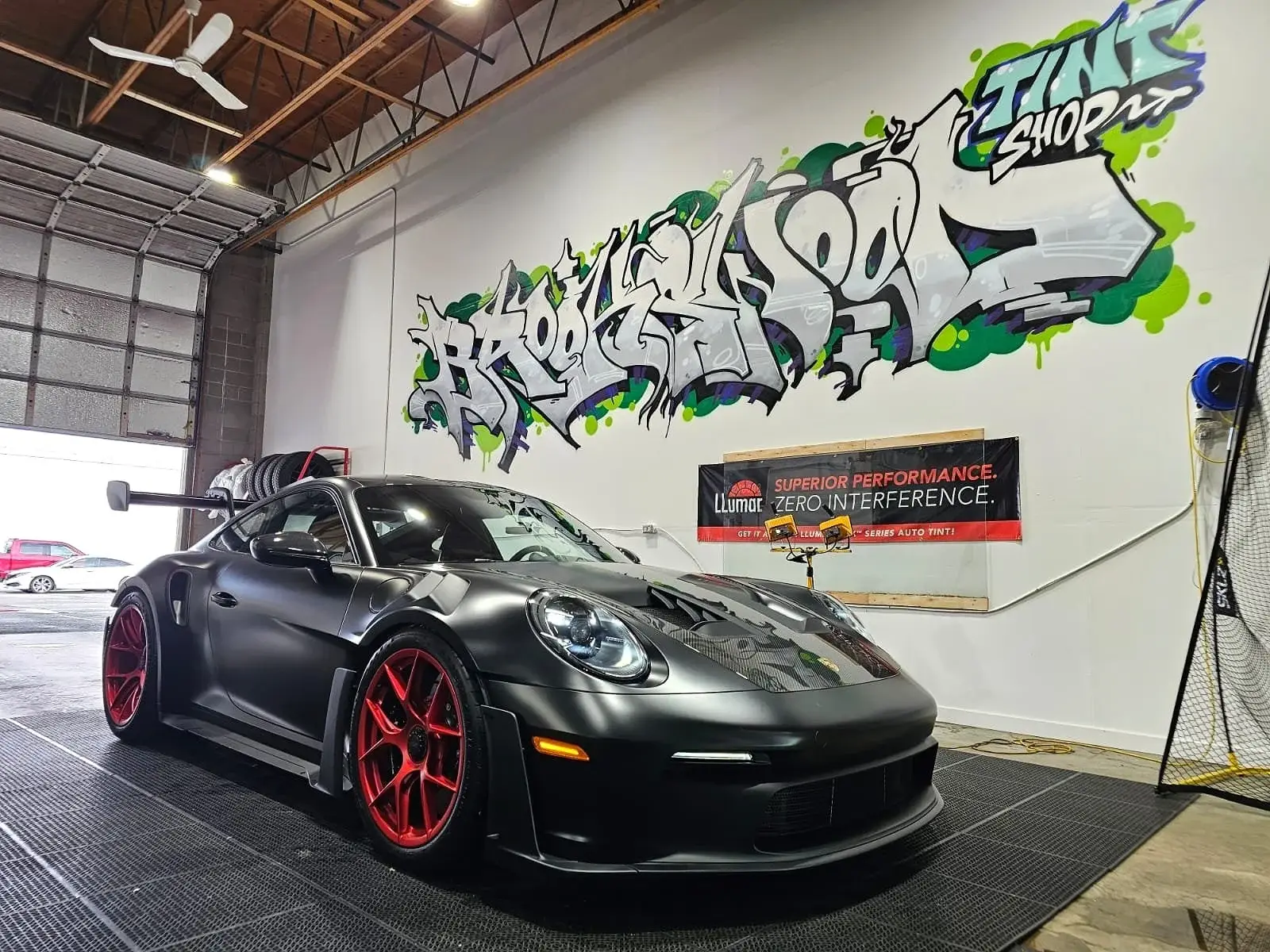
Brookswood Tint installs LLumar Platinum Gloss, with matte on request. Pieces are cut by software from patterns made for your exact model, then fitted by hand, and edges are folded around a panel wherever its shape permits. Ask where the edges and any relief cut will fall on your car when you request a quote, or compare coverage on the paint protection film page.