Do leasing companies let you tint a leased car?
The lease-end guides we read don’t ban tint; what they charge for is wear and damage at turn-in. The finance company owns the car, so your own lease agreement is the first document to check, especially any clause on alterations.
The lease-end guides published by carmakers’ own finance arms show where film can cost you. The Infiniti Financial Services Canada end-of-lease guide lists “Poorly applied/peeling window tinting” as excessive wear, alongside “Any damage caused by the installation or removal of parts and accessories.” The Honda Lease Care Guide from Honda Financial Services charges for accessories that leave “holes, scratches or damage that requires repair and refinish”, and says “Most glass damage is chargeable.”
Neither guide names well-fitted film as a problem. Read together, they point to three risks: film that fails, a bad install, and a bad removal.
Which windows on a leased car can be tinted in BC?
The same ones as on a car you own. A lease changes who holds the title, not what the regulation allows.
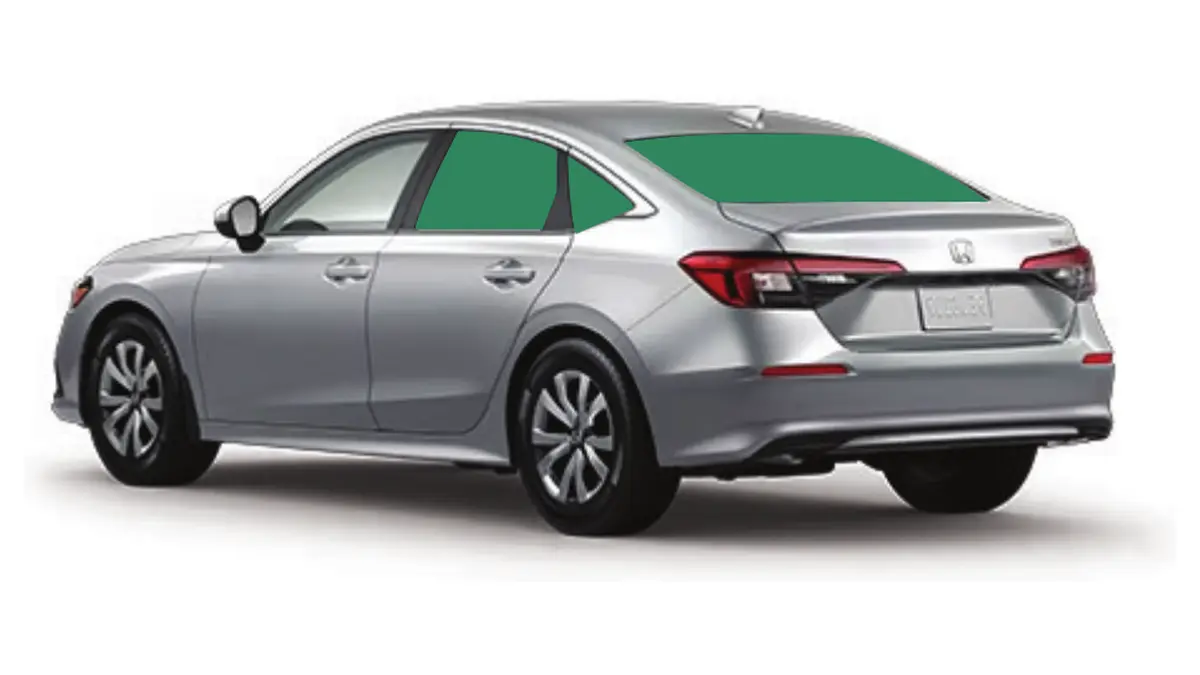
MVAR s. 7.05(8) permits film of any darkness on the side glass behind the driver and, on a car with mirrors outside on both sides, the back window, plus the top 75 mm of the windshield. Front door glass can’t legally carry film of any shade, clear included.
On a leased car, front film also puts a problem on the lessor’s vehicle record. A Notice & Order for illegal tint orders the car to an inspection facility, and CVSE’s information sheet says an order left unsatisfied “will cause an inability to obtain licencing and insurance from ICBC and may prevent the actual completion of the sale.” That’s a leasing company’s resale you’d be holding up. Brookswood Tint installs front-door film only when a customer asks, and explains the $109 ticket and Notice & Order risk before anyone decides. The rule in full is on tinting front windows in BC.
What can go wrong with tint at lease return?
Film that has failed, and damage done putting it on or taking it off. Each lines up with a line in the lease guides.
| What the lease guides charge for | How it happens with tint | How to avoid it |
|---|---|---|
| Poorly applied or peeling tinting (Infiniti) | Lifting edges, bubbles, grit under the film | Quality film and a clean, indoor install |
| Damage from installing or removing accessories (Infiniti, Honda) | Knife cuts on rubber seals or trim | Film cut on a plotter, so no blade touches the car |
| Scratched glass (Honda: larger than its wear card, about 10 cm × 7.5 cm) | Scrapers dragged across the glass to strip old film | Steam removal with the adhesive fully dissolved |
| Broken or inoperative parts (Infiniti) | A rear defroster grid cut during removal | Steam on rear glass, grid tested before and after |
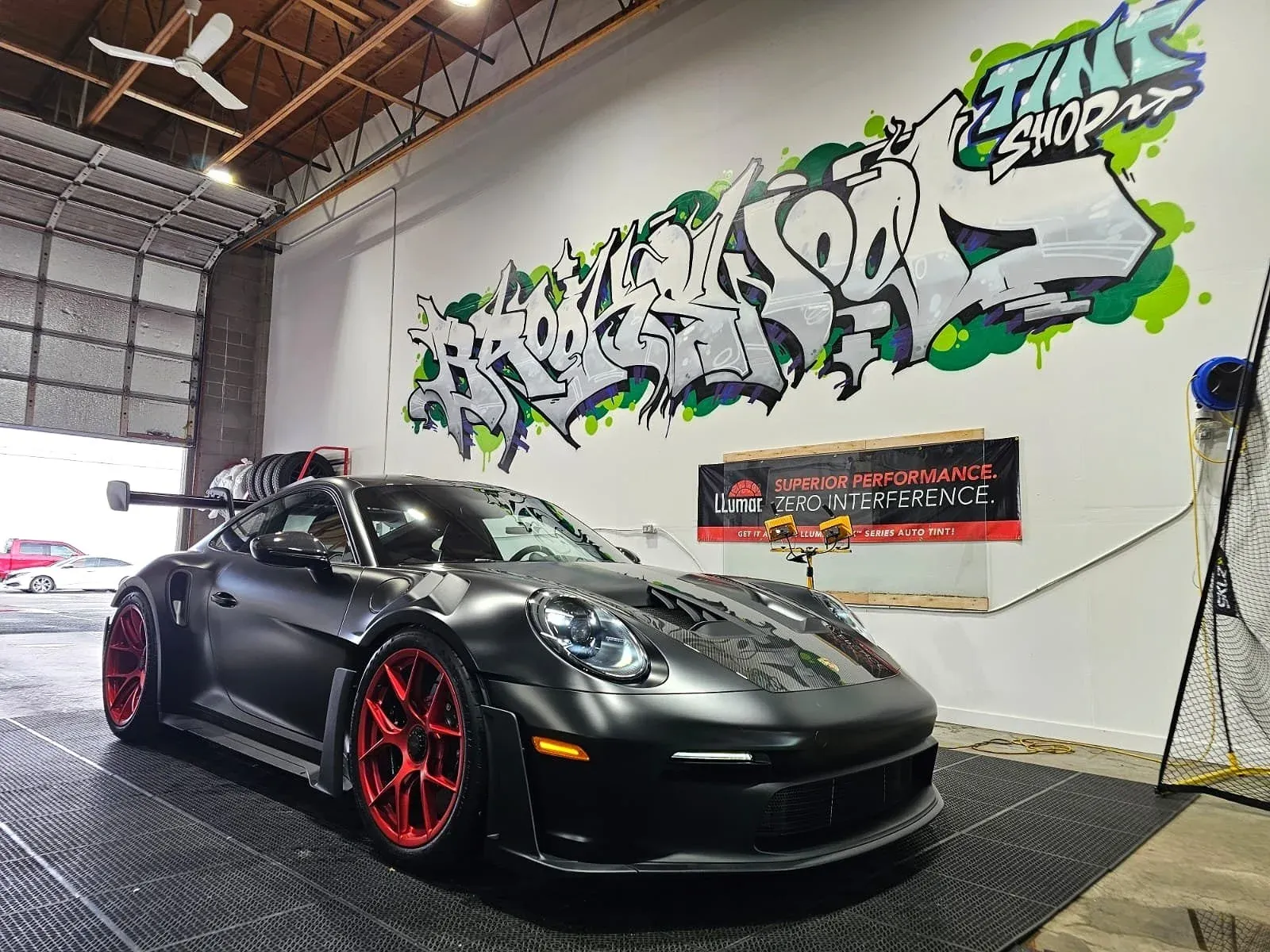
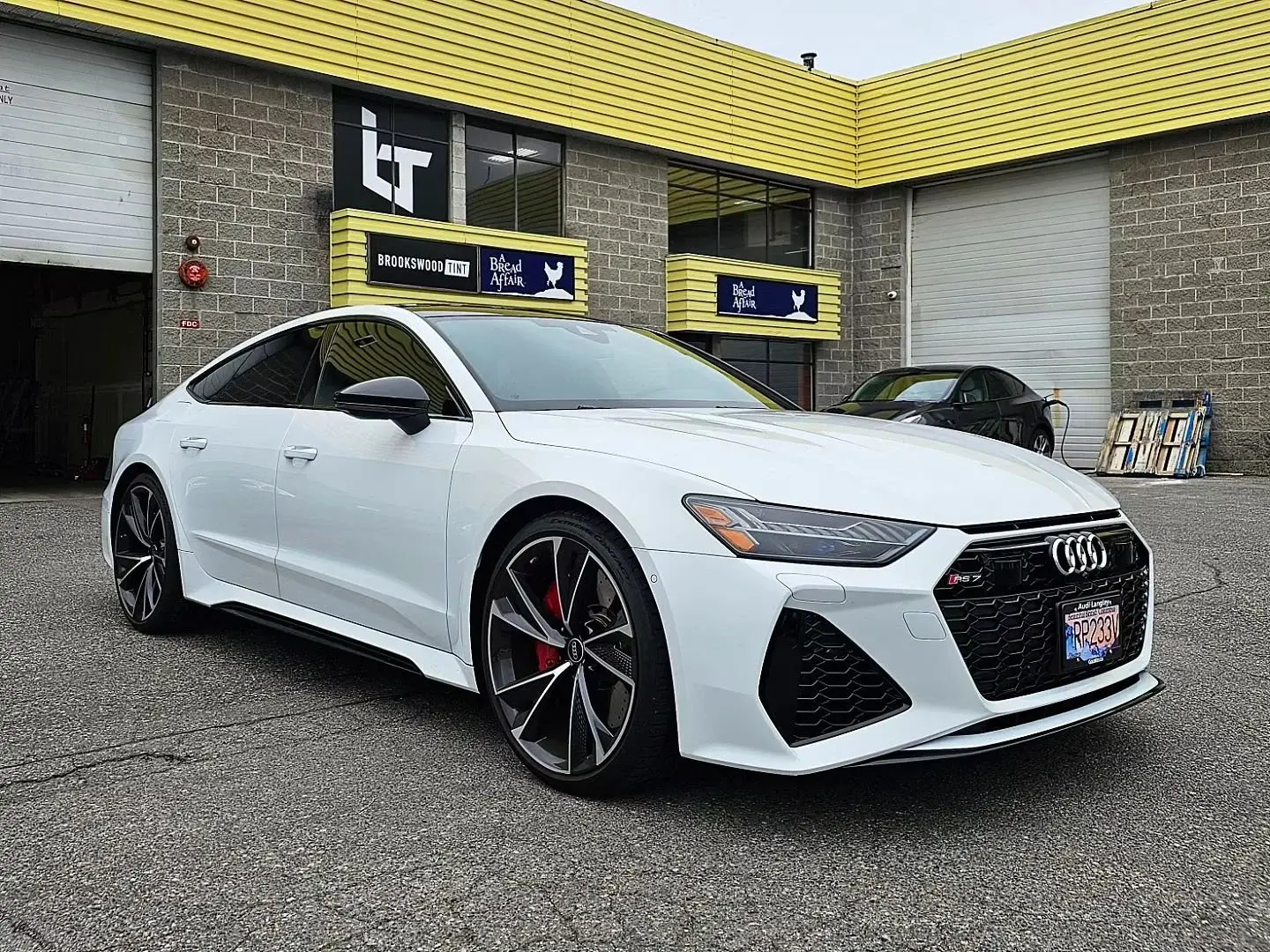
Brookswood Tint cuts LLumar film on a computerized plotter for the exact year, make and model, heat-shrinks it and fits it by hand. LLumar ATC, IRX and AIR carry a lifetime warranty on the film and the shop’s workmanship, which matters on a car you’re returning in good order.
Should the tint stay on or come off before you hand the car back?
If the film is intact and it’s behind the driver, leaving it on avoids a removal bill. Take it off if it’s failing, if it’s on the front doors, or if your lease terms ask for the car in original condition.
Removal at the shop is done with steam rather than blades on the rear glass, so the defroster grid survives, and the adhesive is fully dissolved rather than left as a haze. It typically takes 1 to 3 hours, is priced per window, and is discounted when the car is re-tinted at the same appointment. If only the front two need to come off, the shop does front-two-only removal. Booking it a few weeks before turn-in leaves time for anything else on the inspection list. The process is on the tint removal service page.
Is ceramic or dyed tint the better pick on a lease?
Pick on how you’ll use the car during the lease, since the benefit ends when you hand it back. Dyed ATC is in every starting price; IRX ceramic is a quoted upgrade.
On LLumar’s spec sheet, ATC rejects 28 to 44% of total solar energy, depending on shade, and IRX 50 to 62%. Both block over 99% of UV. A leased car that sits in the sun every workday, or carries passengers in the back through July and August, gets real use out of IRX. A car that lives in a garage and makes short trips does fine with ATC. Clear LLumar AIR adds heat rejection while leaving the car’s look as it came from the factory. Is ceramic window tint worth it has the full comparison.
What does tinting a leased car cost at Brookswood Tint?
The same as any other car, starting from the rear-glass packages in LLumar ATC:
| Package | Windows | From |
|---|---|---|
| Sports coupe, rear glass | 3 | $220 |
| Sedan or pickup, rear glass | 5 | $240 |
| Full-size SUV or wagon, rear glass | 7 | $260 |
IRX and AIR are quoted per package, and most cars are done the same day. Every package is on the window tint price list. If you’re also weighing film or a coating on a lease, lease car protection and PPF on a leased car cover those choices, and wrapping a leased car covers vinyl. Use the window tint quote form with your year, make and model, or text the shop at 604 534 6433.