Who has to agree before you wrap a leased car?
The leasing company, if your agreement says so. ICBC’s page on insurance for leased vehicles is clear that “the leasing company (lessor) is the vehicle owner,” while you, the lessee, hold the licence and the insurance policy.
That makes the lease agreement the rulebook. Look for any clause on alterations, modifications or the car’s appearance. If it’s unclear, get the leasing company’s answer in writing and file it with the lease. The Vehicle Sales Authority of BC advises reading “the front and back of the agreement carefully” and asking about every term, which applies to a wrap as much as to the payments.
What does a wrap mean for the lease return inspection?
Ideally nothing, because the wrap is gone by then and the factory paint underneath is what gets inspected. What you can be charged for at the end is set out in your agreement, and BC law requires it to be.
Section 101 of the Business Practices and Consumer Protection Act makes the lessor disclose any circumstances in which you’ll owe a payment, and how the amount is worked out, naming “unreasonable wear or excess use” among them. So the wear standard is written down before you ever wrap the car. Returning the car in the colour it was built in gives the inspection the factory finish to look at. Leaving the wrap on is a conversation to have with the lessor, not an assumption to make.
Will the wrap come off cleanly at the end of the lease?
On healthy factory paint, it should, as long as the film comes off while it’s still within its rated life. The catch is that the flat panels are rated far shorter than the sides, and a lease can outlast them.
Both makers tie removability to time. Avery Dennison’s SW900 data sheet lists the film as removable for its durability period, and 3M says the same of 2080 within its warranty period. Here’s how that lines up with a lease:
| Part of the car | 3M 2080 rating in Canada | What it means on a lease |
|---|---|---|
| Doors, sides and other upright panels | 7 years | Outlasts any lease shorter than seven years |
| Hood, roof and trunk lid | 2 years | Can age before the lease ends; check them yearly |
Source: 3M’s 2080 warranty card. Paint age counts as well: Avery’s removal terms stop at paint older than five years, which matters most on a long lease or a used one. The paint side is explained in whether a vinyl wrap damages paint.
Do you need to tell ICBC about wrapping a leased car?
If it changes the car’s colour, yes, and as the lessee it’s your call to make. ICBC’s Autoplan page asks you to talk to your broker if you’re modifying the vehicle, “for example, changing its colour”.
ICBC also notes that even with your signed letter of authorization, a lessor can only renew your policy or add coverage, so the colour change is yours to report. Keep the wrap invoice with your policy documents. The broader question of what to tell ICBC about a wrap is answered in do you tell ICBC if you wrap your car.
Are partial wraps and chrome deletes easier on a lease?
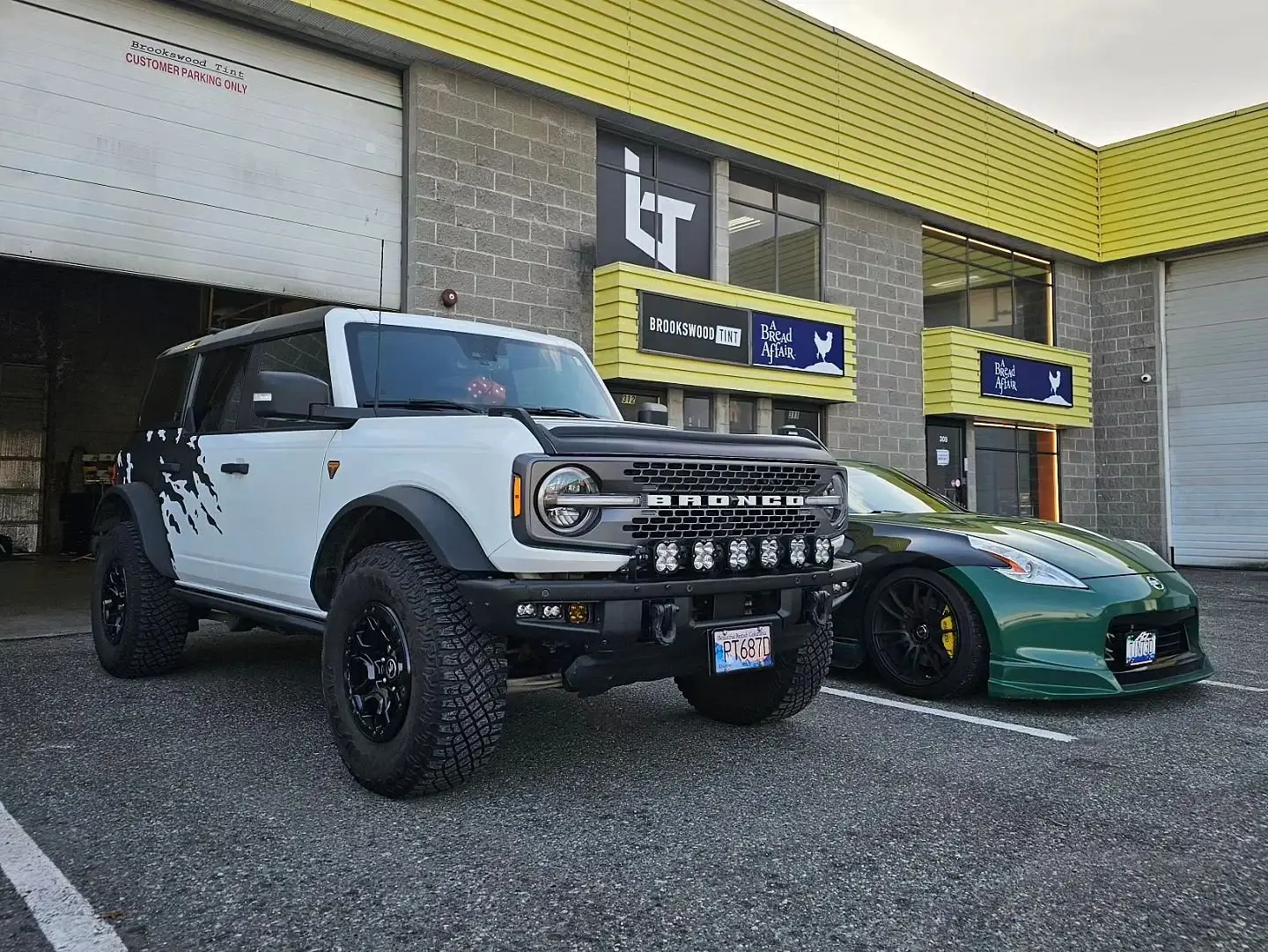
Yes. Less vinyl means less to remove, less to check on the flat panels and a quicker return to factory condition. A satin black roof, a hood, a set of graphics like the Bronco’s, or blacked-out chrome all change a car’s look without wrapping every panel.
A roof is a horizontal panel, so it’s the piece to keep an eye on; the job is described on roof wraps. Blacking out trim on a lease has its own answer in chrome deletes on a leased car.
How do you book a wrap for a leased car?
Start by telling the shop three things: that the car is leased, the turn-in date, and whether buying it out is on the table. Those decide which panels to wrap and when removal goes in the calendar. Pricing is per vehicle; request it through the vinyl wrap quote form, or text the details to 604 534 6433.
When the lease is nearly up, book wrap removal a few weeks before the inspection. For protecting a lease more broadly, film, tint and coating included, see lease car protection.