What does ICBC say about changing your car’s colour?
It asks you to talk to your broker. ICBC’s Autoplan insurance page tells drivers to see their local broker when they’re modifying a vehicle, and the first example it gives is “changing its colour”.
The same section carries a warning worth reading twice: if the details on your policy aren’t correct and current, “you may not be covered” when you make a claim. ICBC doesn’t say the new colour has to come from paint, and a full wrap changes what colour the car is to anyone looking at it, so the plain reading puts a colour change wrap inside that example. The list closes by asking drivers to check with their broker about “any other changes”, which covers whatever it doesn’t spell out.
How does ICBC’s repair policy treat a wrap?
As equipment on the car. ICBC’s replacement policy for decals and wraps, a page for its repair partners last updated August 20, 2026, puts wraps, along with full, partial and panel decals, in the category of “additional vehicle equipment” under its Own Damage coverage. Own Damage is the heading ICBC’s Autoplan Optional Policy uses for its collision, comprehensive and specified perils coverage.
The policy attaches conditions, and each one is a question for your broker:
| What the repair policy says | What to ask your broker |
|---|---|
| ICBC counts a wrap as added equipment under Own Damage | Which of my coverages would respond if wrapped panels were damaged? |
| The owner or lessee has to hold an “insurable interest” in the wrap or decal | Is there anything to put on file for a leased car? |
| Replacement decals can be depreciated when the car itself is repairable | How would a damaged wrap be valued? |
| Harm to the car’s finish from stripping a wrap with tools, solvent or heat is left out | Who carries the risk when the wrap eventually comes off? |
| A covering you can pull off without a tool isn’t treated as permanently attached | Does anything else on my car fall into that group? |
ICBC wrote this for body shops handling claims, not as a description of any one driver’s policy. Treat it as a guide to the right questions, and let your broker supply the answers for your coverage.
What should you have ready when you call your broker?
The invoice and the film details. Every wrap is quoted per vehicle, so the installer’s invoice is the clearest record of what went on the car and what it cost.
- The invoice, showing the price and the panels covered. For 3M film, the same paper does a second job: 3M’s warranty card must be shown with the original invoice to get warranty service.
- The film’s name, colour and lot number. The 3M card has spaces for all three, along with the VIN and the installation date.
- Photos before and after, so the original colour and the new one are both on record.
- What was wrapped: the whole car, single panels, door jambs or trim.
Then ask the questions in the table above, and whether the colour on your file needs updating.
Does a partial wrap or chrome delete count?
ICBC doesn’t draw a line, so ask. Its definitions for repair partners describe decals as covering anything from one panel to the whole vehicle, and wraps as usually covering the full car, so vinyl on part of a car is something ICBC’s claim rules already expect to see.
Whether a satin black roof or blacked-out trim counts as a colour change on your policy is a different question, and only your broker can answer it. A roof wrap or a chrome delete changes much less of the car’s look than a full colour change does, but a short call settles it.
What happens when the wrap comes off?
Call again. Once the vinyl is gone and the car is back to its factory colour, the information on your policy should match the car, the same as it did when the wrap went on.
Plan the removal itself with care. Damage done to the finish while stripping vinyl sits outside ICBC’s repair policy, so removal is a job for someone with the right heat and technique. What removal involves, and what makes it harder, is covered in can a car wrap be removed.
Getting a wrap with the paperwork in order
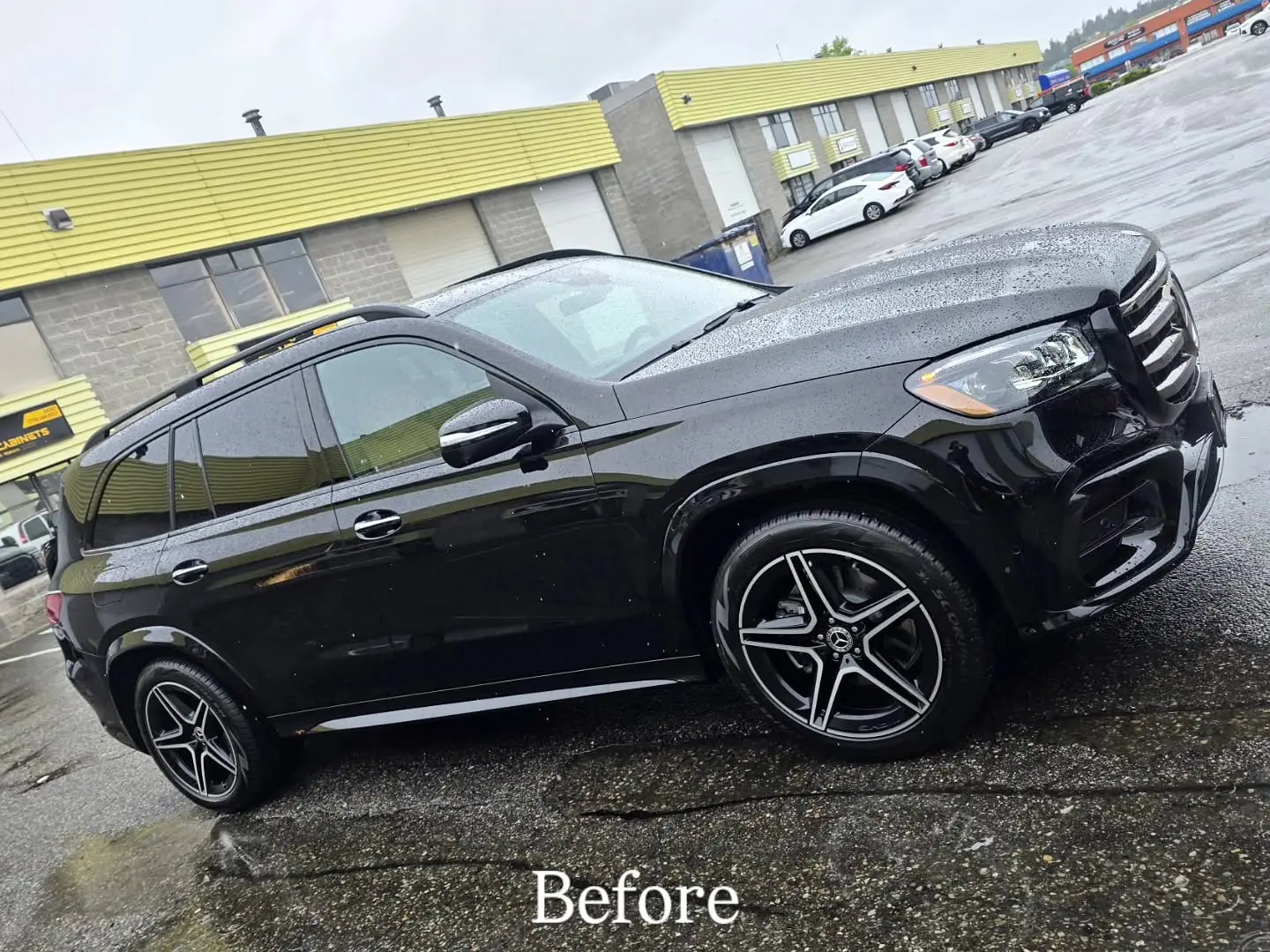
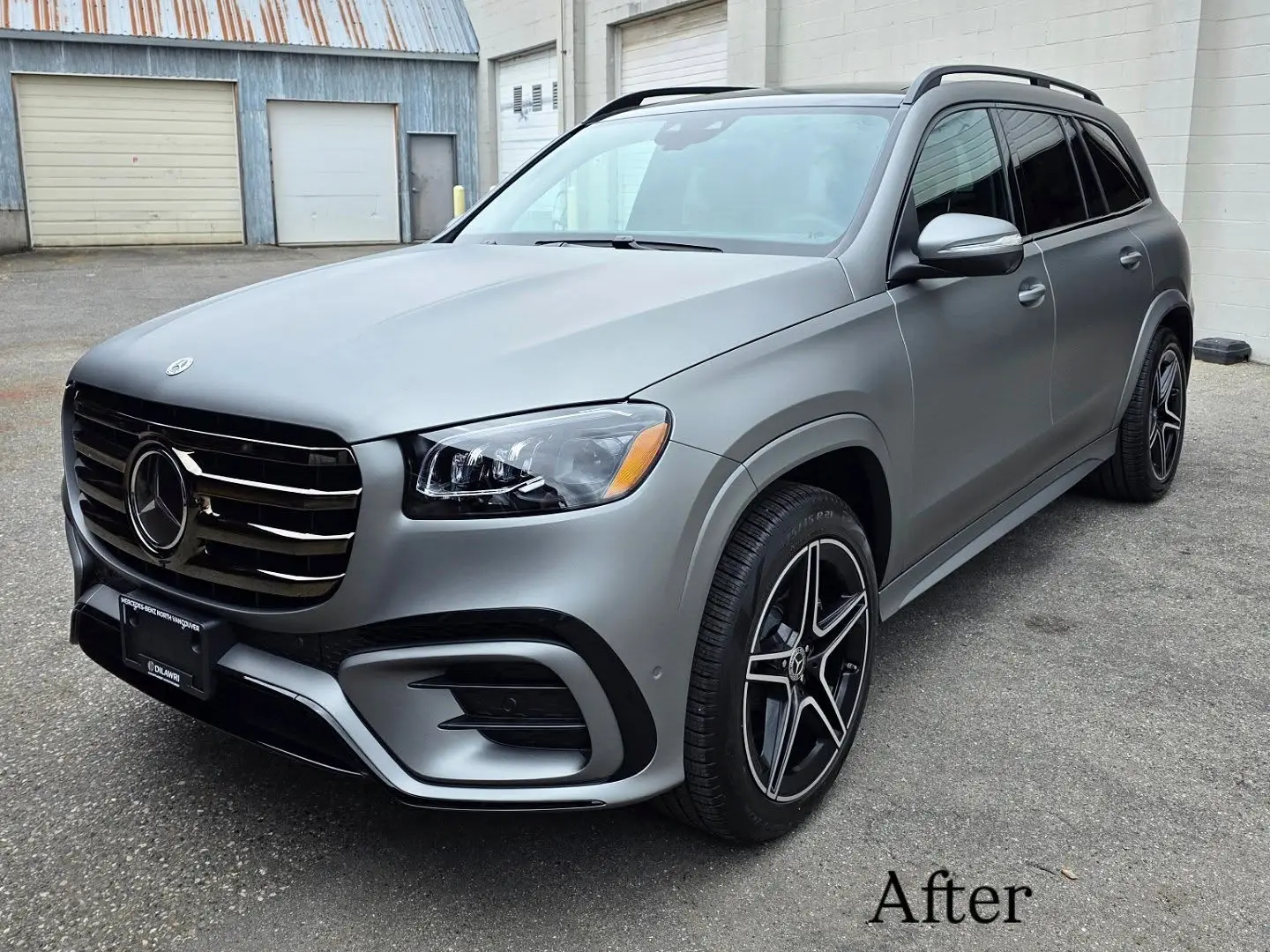
Ask for an itemized invoice when you book, with the film maker, colour name and code, and the panels covered. The Mercedes GLS on this page went from gloss black to Avery Matte Metallic Gunmetal at Brookswood Tint, the kind of change ICBC’s own example describes.
A whole-car colour change means three to five days in the shop, with jambs as an option, backed by the 5-year vinyl warranty the shop passes on from the film maker. Prices come from the quote form, or text your year, make and model to 604 534 6433. The full job is described on colour change car wraps.