What does a colour change wrap cover?
A full colour change puts vinyl on every painted exterior panel, so the car reads as a new colour from every side. Door jambs, the painted faces you only see with a door open, are available too; ask for them if you don’t want the old colour showing when you climb in.
| Part of the car | In a full colour change |
|---|---|
| Hood, roof, fenders, doors, quarter panels, bumpers, trunk or hatch | Wrapped in the new colour |
| Door jambs | Available on request |
| Chrome window trim, grille and badges | Blacked out as a chrome delete, which can go in the same booking |
| Factory paint | Left untouched under the vinyl |
How many parts have to come off the car so the film can wrap their edges cleanly varies from model to model. That’s one reason every wrap is quoted per vehicle rather than from a price list.
Which vinyl films and finishes can you choose from?
The shop wraps in 3M and Avery Dennison cast films, and the finish list runs from gloss, satin and matte to metallic, colour-shift, textured and chrome. 3M builds its 2080 wrap series as a multi-layer cast film intended for full colour changes, accents and partial wraps.
Gloss, satin and matte
Gloss looks closest to fresh paint. Satin has a soft sheen, and matte is flat with no reflection at all. Satin and matte both pick up stains more readily than gloss, so they ask a little more of how you wash and what you park under.
Metallic, colour-shift and textured
Metallic films carry flake under the colour, colour-shift films change hue as you walk around the car, and textured films add a surface pattern you can feel. Ask for samples held against the car under daylight, since a swatch on a screen won’t show how flake or shift behaves.
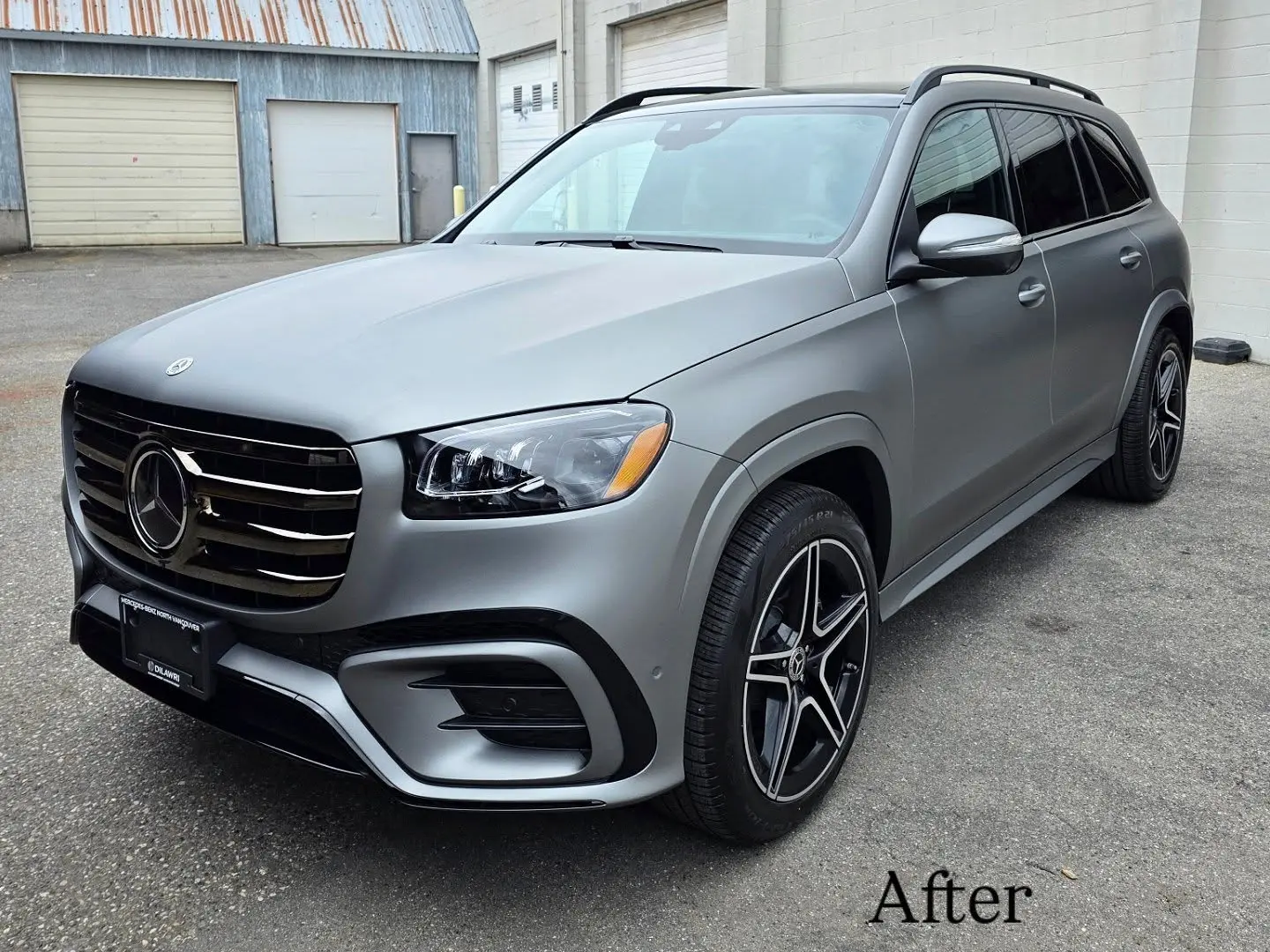
The GLS in Avery Matte Metallic Gunmetal
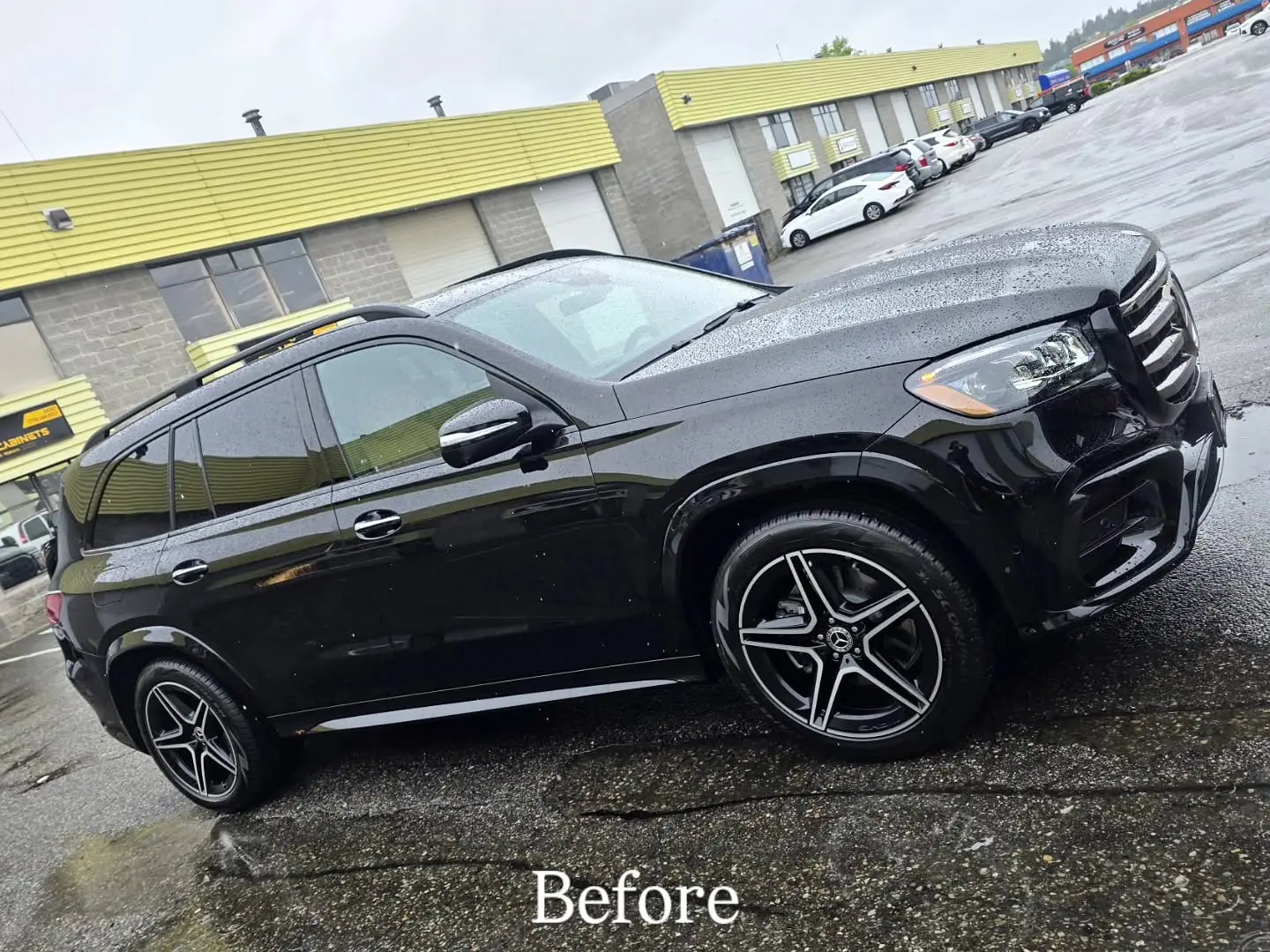
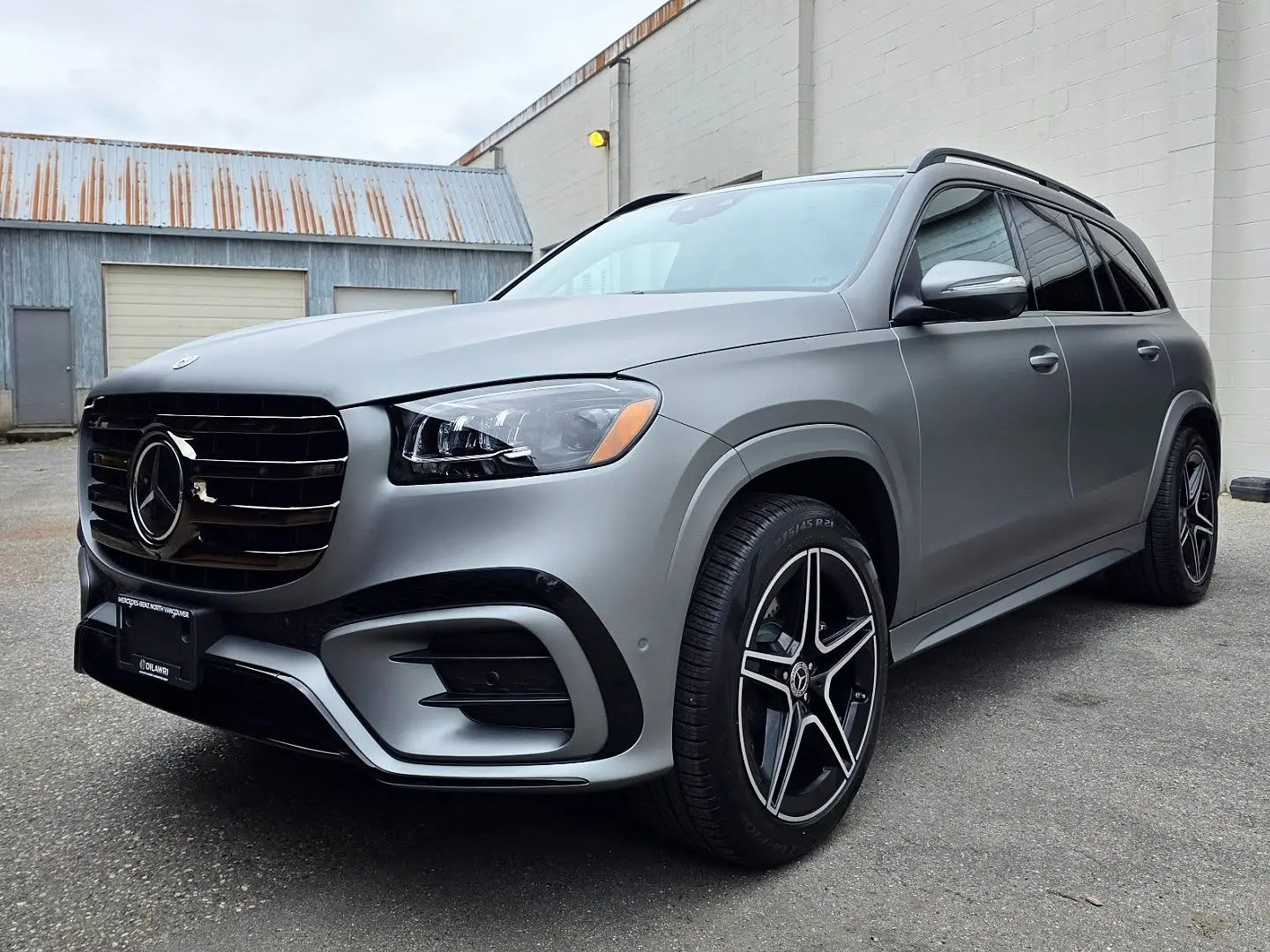
The Mercedes GLS in the photos arrived in gloss black and left the bay in Avery Dennison Matte Metallic Gunmetal, a flat grey with metallic flake. The black paint is still there under the film, untouched by the change.
Why does the paint get checked before a colour change?
Because vinyl adhesive holds on to whatever is under it. 3M’s product bulletin for its 2080 film names standard factory (OEM) paint as the intended surface and tells installers to check adhesion on powder-coated or water-based paints.
On sound factory paint, cast vinyl releases cleanly with heat when it’s time to take it off. A panel that’s been resprayed, or paint that’s already starting to peel, can come away with the vinyl instead. 3M’s warranty card for 2080 states that its coverage “does not include paint pull during film removal process”, so the risk sits with the paint, not the film. That’s why the shop inspects the car and tells you about any doubtful panel before the wrap goes on.
How long does a colour change wrap take?
Three to five days in the shop. That time covers preparing every panel, laying the film and finishing each edge, and door jambs add to it.
Temperature is part of the reason a wrap is shop work. 3M lists an application temperature of 18 to 24 °C for 2080 film, a range an indoor bay can hold all year and an open driveway often can’t. If you only want one panel changed, a roof wrap or a single hood or mirror job is normally a same-day to two-day visit.
What warranty comes with a colour change wrap?
The shop publishes a 5-year manufacturer warranty on the vinyl. The written terms come from whoever made your film, so ask for the warranty card that goes with it. 3M’s card for 2080, which applies in the United States and Canada, shows what that kind of cover includes:
- Covered: defects in materials and manufacture, “including yellowing, bubbling or cracking”.
- Not covered: misuse, accidents, misapplication, ordinary wear, dents from rocks or road debris, and paint pulled off during removal.
- Who holds it: the original purchaser only.
- How to claim: start with your installer, and keep the card together with the original invoice.
3M’s card also gives flat, sun-facing panels like the hood and roof shorter terms than the doors and sides, and its terms change by climate zone, so ask which term applies to your film and to each panel. How the shop’s own warranties compare across tint, PPF, light film and vinyl is set out on the warranty page.
Do you need to tell ICBC about a colour change wrap?
Yes, talk to your broker. On its Autoplan insurance page, under when you need to update your insurance, ICBC asks you to talk to your local broker if you’re “modifying your vehicle (for example, changing its colour, chassis, fuel type)”.
ICBC’s wrap policy for its repair partners counts wraps as “additional vehicle equipment”. It leaves out coverings “of a temporary nature that do not require a tool for removal”, and it excludes damage to the vehicle’s surface caused by taking a wrap off with tools, solvent or heat. That page is written for repairers, not as a summary of your policy, so keep the wrap invoice and ask your broker how your wrap is covered.
How do you book a colour change wrap in Langley?
Every wrap is priced per vehicle, so start with the vinyl wrap quote form or a text to 604 534 6433. Include the year, make and model, the colour and finish you want (the film name or code if you’ve chosen one), whether you want door jambs, and anything you know about the paint’s history, such as a respray.
Plan on three to five days without the car. Drop-off is at Unit 312, 20560 Langley Bypass, Monday to Saturday between 9:00 and 17:00. If you’re still deciding between colour and clear protection, PPF vs vinyl wrap lays the two side by side, and more of the shop’s finished cars are in the gallery.