How do PPF and a vinyl wrap compare side by side?
PPF is a clear protective layer that keeps your paint looking exactly as it does; a vinyl wrap is a coloured layer that makes the car look different. Both are films laid over the paint, both come off again, and that’s roughly where the similarity ends.
| Paint protection film (LLumar Platinum) | Vinyl wrap (3M or Avery Dennison cast) | |
|---|---|---|
| Main job | Protect the factory paint | Change the colour or finish |
| What you see | Your own paint: invisible on gloss, or satin with matte film | A new colour: gloss, satin, matte, metallic, colour-shift or textured |
| Stone chips | Made to take them on every covered panel | The shop describes a barrier against minor chips |
| Light scratches | Self-healing top coat, with sun or engine heat | No self-healing claim in the shop’s vinyl copy |
| Coverage options | Partial front up to every painted surface | Full colour change, single panels, accents, chrome delete |
| Starting price | $850 Partial Front to $4,000 Full Vehicle | Quoted per vehicle |
| Time for a whole car | 3 to 5 days | 3 to 5 days |
| Warranty | 10-year LLumar limited, naming yellowing, cracking, bubbling and peeling in the shop’s terms | 5-year manufacturer warranty on the vinyl, per the shop’s published terms |
| Coming off | Professional removal, indoors and warm | Heat, cleanly from healthy factory paint |
The film side of the table is LLumar Platinum, which LLumar says uses “heat from your engine or sunlight to reduce swirl marks and minor scratches” (Platinum Gloss). The vinyl side is the cast film the shop wraps with; the service is laid out on vinyl car wraps.
What does PPF do that a vinyl wrap doesn’t?
PPF is engineered around impact. It’s a urethane film meant to absorb the stones, grit and scuffs that would otherwise mark the clear coat, then heal the light scratches it picks up, all while staying close to invisible.
That changes what you’re buying. With film, the result you’re paying for is a car that looks untouched years later: factory paint, no chips on the nose, no repainted panels for a buyer to find. LLumar backs Platinum for 10 years, twice the 5-year term the shop publishes for its vinyl, and the shop’s terms name yellowing, cracking, bubbling and peeling as the defects covered. Film packages are sold by coverage, from the most-hit front panels to the whole car, and the line itself is described on LLumar Platinum PPF.
What does a vinyl wrap do that PPF can’t?
It changes the colour. Clear PPF can’t make a white car grey, and a vinyl wrap can, in gloss, satin, matte, metallic, colour-shift or textured finishes, over the whole car or a single panel.
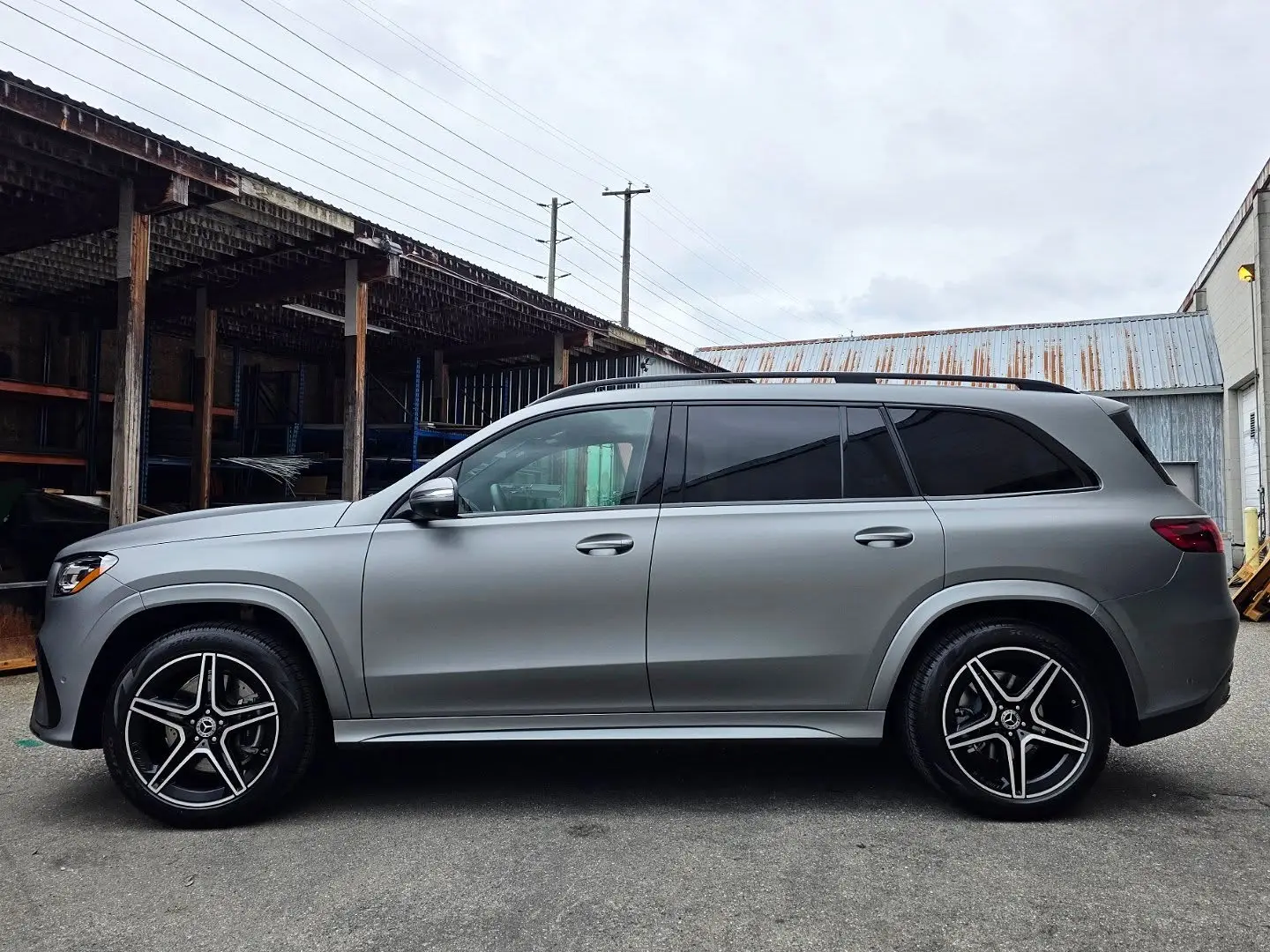
The Mercedes GLS on this page wears Avery Matte Metallic Gunmetal, a full colour change over its black paint. Partial wraps work too: the shop says its most-requested single panel is a satin black roof on an otherwise gloss car, covered on roof wraps, and blacking out chrome trim is its own service, chrome delete. A full change of colour is planned on colour change wraps.
Two routes to a satin car
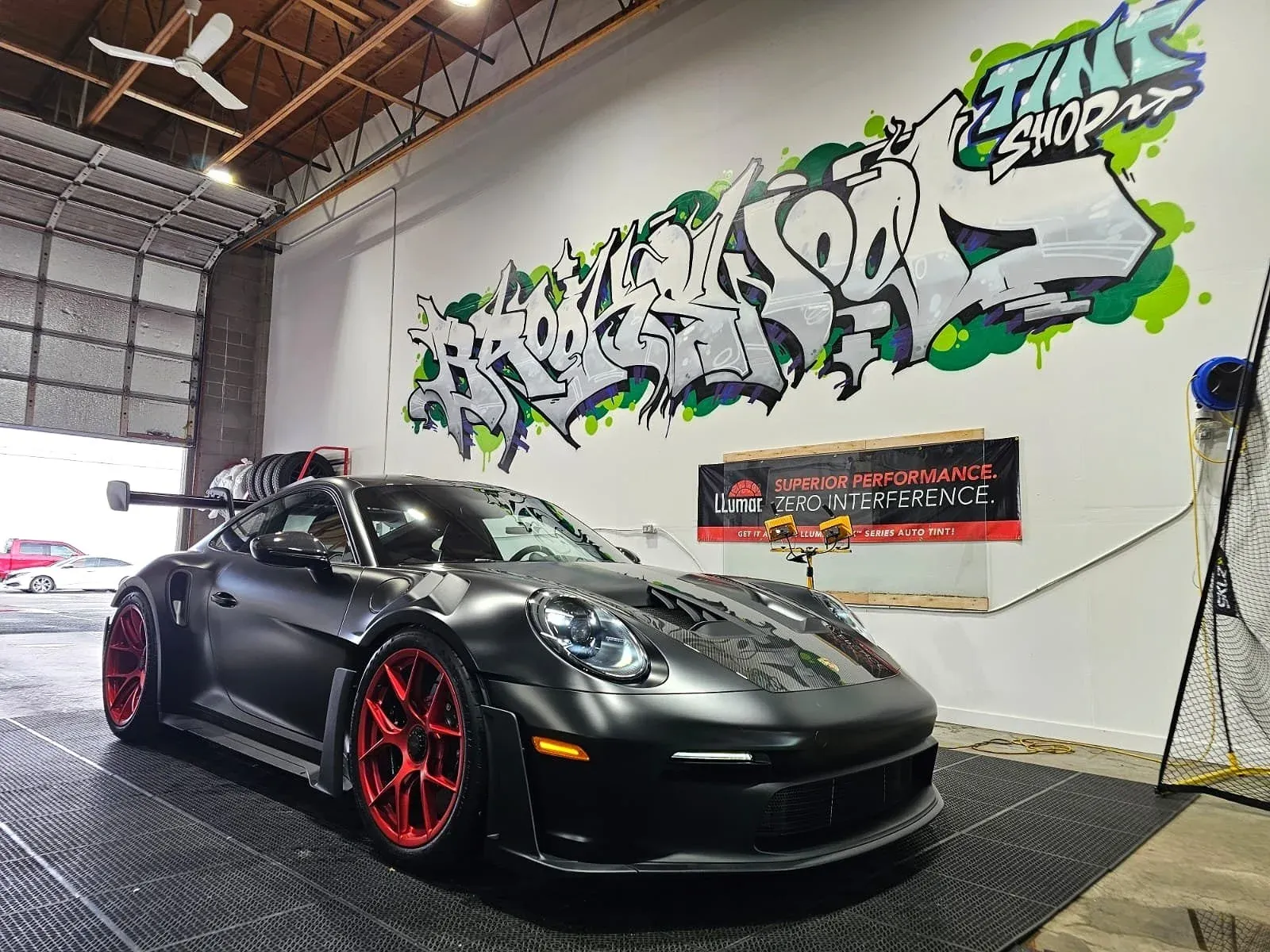
Matte PPF and matte vinyl can both make a car satin, and they get there differently. Platinum Matte, in LLumar’s words, can “transform glossy paint” with a flat finish. The colour you see is still the paint’s own, so a black car stays black, just without the shine. The satin black 911 GT3 RS in the shop’s photos wears full PPF; the GLS wears matte vinyl in a new colour. If you like your colour and want satin, film does it with protection included. If you want satin in a different colour, that’s vinyl.
Can PPF and a vinyl wrap go on the same panel?
Not as a standard pairing. Both are sold as films that go onto a car’s paint, so on any single panel you’re choosing one or the other, and the way to have both is to split the car by panel.
What LLumar publishes points the same way. Its PPF FAQ advises against wax or coatings on the paint before film, saying they can interfere with adhesion. It also leaves aftermarket and repaired paint outside its warranty, and doesn’t treat carbon fibre as OEM paint. A vinyl wrap isn’t paint at all, so film laid on top of one sits outside what LLumar describes. 3M is as cautious from the vinyl side: its 2080 wrap film bulletin excludes “coatings or other aftermarket additions” from its wrap warranty. If you’re picturing a layered job, ask before you book rather than assume it can be done or warranted.
Splitting by panel is straightforward:
- PPF on the nose, vinyl on the roof. Film takes the stones on the bumper, hood and fenders; a satin black roof wrap changes the look up top.
- PPF on the front, chrome delete on the trim. The film protects paint, and the vinyl blacks out the bright work around the glass and grille.
How do PPF and vinyl wrap costs and timelines compare?
PPF has published starting prices by package; vinyl wraps are quoted per vehicle because the finish, the size of the car and how many parts come off for clean edges change the job. A whole car takes three to five days either way.
| Job | Starting price | Typical time in the shop |
|---|---|---|
| PPF, Partial Front | $850 | Usually 1 day |
| PPF, Full Front | $1,550 | 1 to 2 days |
| PPF, Track Package | $1,900 | 1 to 2 days |
| PPF, Full Vehicle | $4,000 | 3 to 5 days |
| Vinyl, single panel or accents | Quoted per vehicle | Same day to 2 days |
| Vinyl, full colour change | Quoted per vehicle | 3 to 5 days |
Insurance is worth a phone call before either job. ICBC’s partner policy lists vehicle wraps as “additional vehicle equipment”, and we found no ICBC page that addresses paint protection film. Keep the invoice and ask ICBC how your film or wrap would be handled after a claim.
What happens to PPF or a wrap when you sell the car?
Both are reversible, which is a big part of their appeal. Vinyl lets you hand the car back in its factory colour, and PPF lets you hand it over with paint that has been under film the whole time.
Cast vinyl comes off healthy factory paint with heat, according to the shop, and lease returns are no obstacle. LLumar warns against removing its PPF in extreme cold, when film and adhesive can part company, and wants it done by a professional inside, at 55 °F (roughly 13 °C) or above. Repainted panels are the weak point. The shop warns that resprayed or already-peeling paint can lift when a wrap comes off, and LLumar doesn’t cover issues with aftermarket or repaired paint under film, so tell the shop about any refinished panel before work starts.
PPF or vinyl wrap: which should you choose?
Decide whether the problem is damage or appearance. If you like your car’s colour and want it to stay perfect, choose PPF; if you want a different colour or finish, choose vinyl, and add film where stones hit if the budget allows.
Clear PPF suits you if
- You like the factory colour and want to keep it unmarked.
- Rock chips from highway driving are the main worry.
- You want the longer warranty: 10 years against 5.
- You want satin without changing the colour, using matte film.
A vinyl wrap suits you if
- You want a new colour or a finish the factory didn’t offer.
- You want to change the look of one panel, such as the roof or mirrors.
- You’d like the option of going back to the original colour later.
- Chrome trim is the thing you’d change first.
Where Brookswood Tint stands on PPF versus vinyl
We install both and treat them as answers to different questions. Film won’t make you like a colour you’re tired of, and a wrap isn’t the product we’d pick to stop highway chips on a new car’s hood. If you want both, splitting the car by panel keeps each film on the surface its maker’s warranty is written for.
Getting a wrap or film quote
Send the year, make and model, the colour or finish you have in mind, and the panels you care about through the wrap quote form, or ask for film through the PPF page. Photos of any chips or repainted panels help. Texts go to 604 534 6433; the Langley Bypass shop (Unit 312, number 20560) is closed only on Sundays. The terms behind each warranty are on the warranty page.