Does PPF add a fixed amount to a car’s value?
No. There is no published figure for what film adds to a resale price, so treat any number you hear as a guess. Used-car prices come from the market and the car’s condition, and film only touches the condition side.
Film makers talk about resale without putting a number on it. XPEL’s news release for its coloured film quotes its director of products on “long-term resale value”, with no figure attached. LLumar’s PPF FAQ leaves pricing to its dealers and doesn’t mention resale at all. So treat PPF as protection for the paint you have, and the resale benefit as a by-product of that.
What does PPF protect that a used-car buyer looks at?
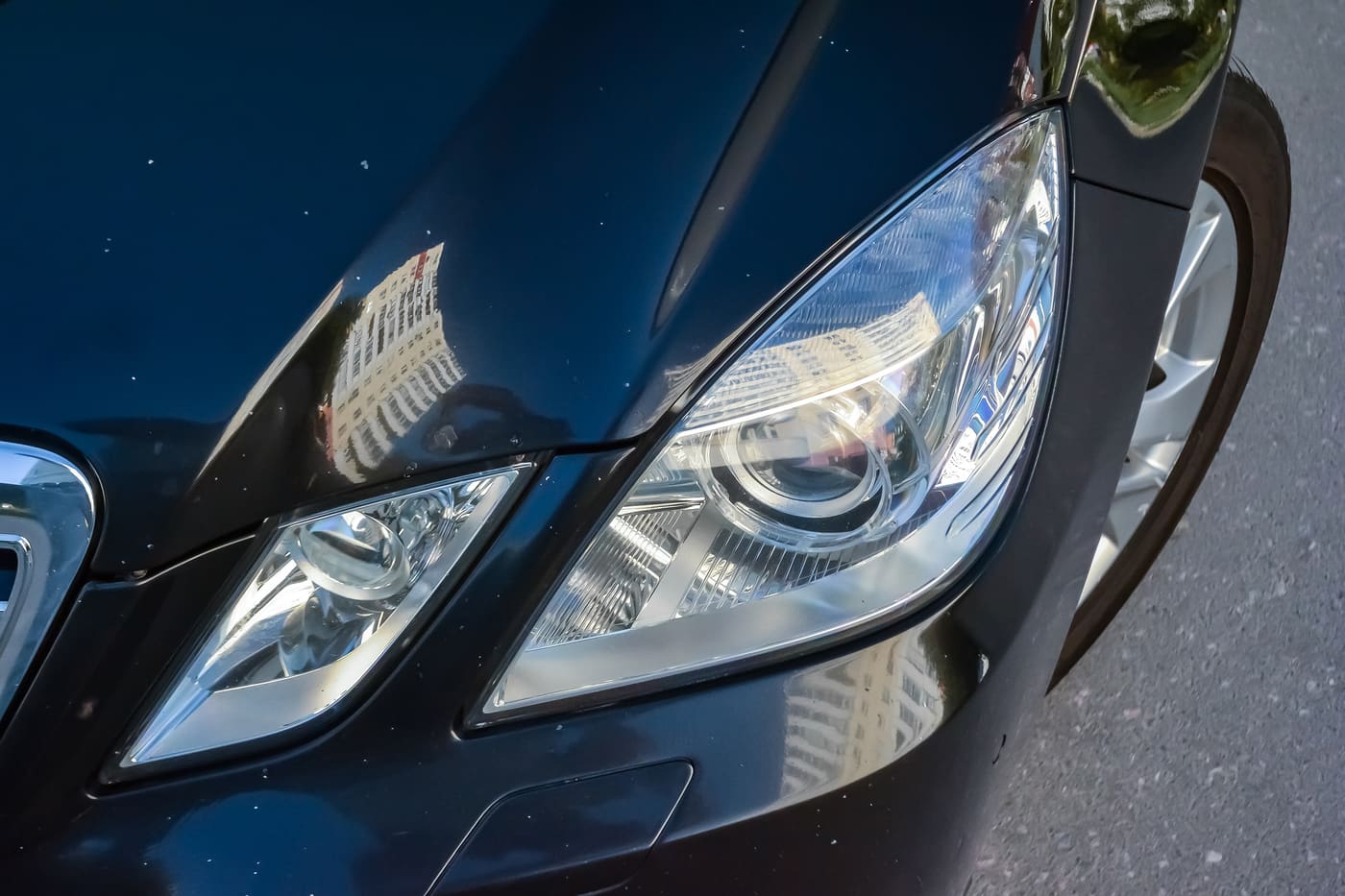
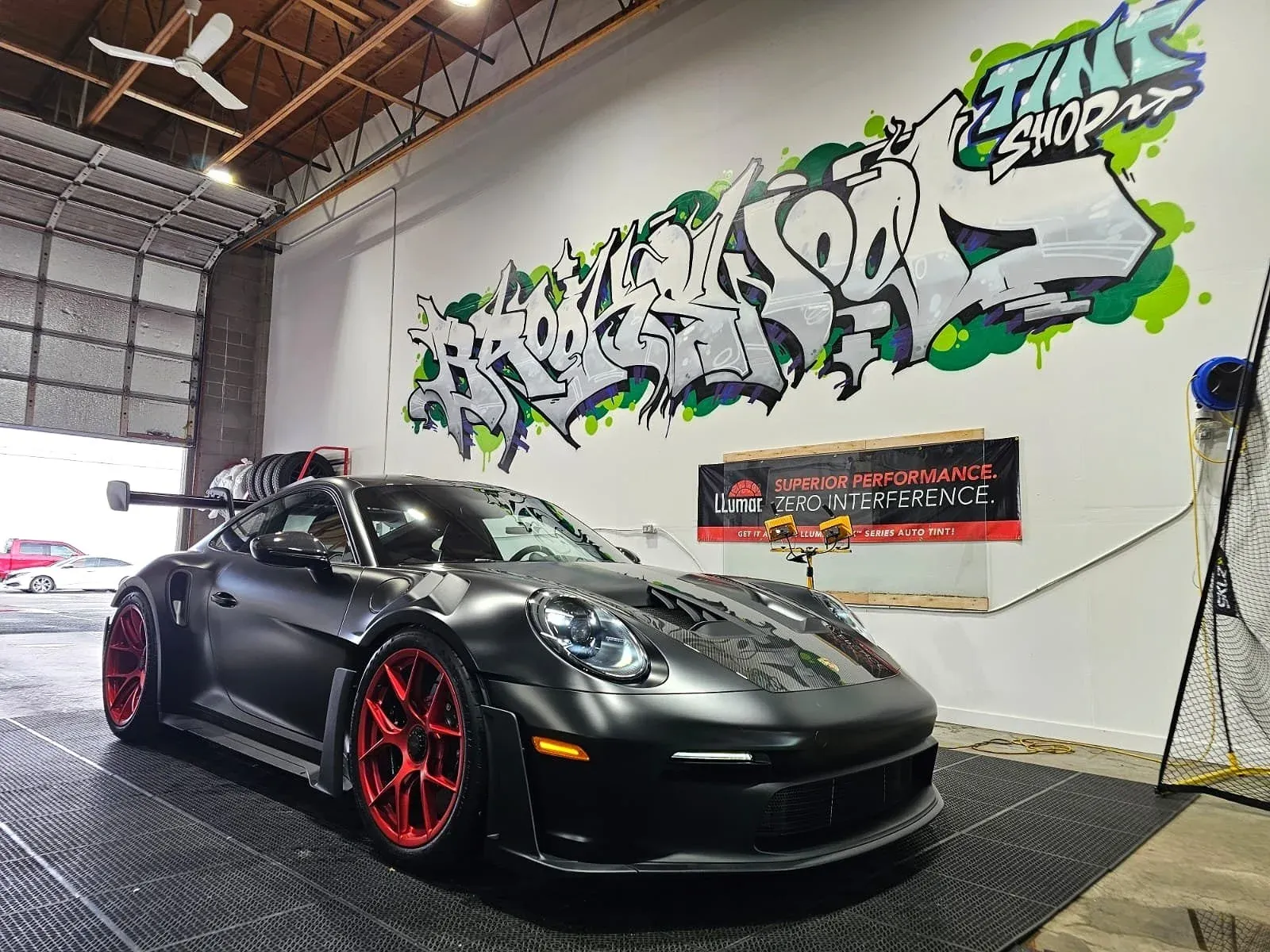
The paint on the front of the car. A buyer walking around a used car reads the nose first: the bumper, the hood’s front edge, the headlights and the mirrors. Those are the surfaces every one of Brookswood Tint’s four PPF packages covers.
| At sale time | Daily highway car, no film | Same car under film |
|---|---|---|
| Front bumper | Chipped, touched up or resprayed | Factory paint |
| Leading edge of hood | Chips that show against the colour | Factory paint |
| Headlights | Stone-marked lenses | Covered in every package |
| Story for the buyer | “It’s had some paint work up front” | “Original paint, filmed since new” |
The second column isn’t a disaster on its own; it’s normal wear. The point is that a buyer can see the difference in a minute, and original paint is the easier car to sell.
How do paint repairs show up when a car is sold in BC?
Some repairs follow the car on paper. Under the Vehicle Sales Authority of BC’s rules, when a dealer sells a used vehicle, the written agreement has to state whether it sustained damage that cost more than $2,000 to repair, and the dealer has to disclose material facts, which can include smaller damage.
Buyers also check records themselves. ICBC’s vehicle claims history report lists vehicle damage claimed through ICBC, with the date and dollar value where available and the primary area of damage. A bumper respray you paid for yourself to fix chips isn’t an ICBC claim, so that report has nothing to say about it. A close look at the paint does.
Does film on repainted paint protect resale the same way?
Not quite, because the advantage of film is keeping original paint original. Once a panel has been resprayed, film still guards it from fresh chips, but the panel’s history doesn’t change.
LLumar’s FAQ is direct about this. It builds its film for original factory paint, keeps problems with repaired or aftermarket paint out of its warranty, and gives 30 days as the usual wait after a respray, so the new paint can finish outgassing. That’s the strongest argument for putting film on early, while every panel still wears its factory finish; timing is covered in whether to put PPF on a new car right away.
Should you leave the PPF on when you sell the car?
Usually yes, if the film is clear and the edges are down. The buyer gets protected factory paint and you avoid a removal bill.
Take it off or replace it first if it shows yellowing, cracking, bubbling or peeling, the four faults the shop names under LLumar’s 10-year term. Film in that state draws attention to itself. In LLumar’s view, removal belongs to a professional, inside, with the air at 13 °C (55 °F) or more, never in hard cold, which can split the film from its adhesive. More on that in whether PPF damages paint when it’s removed.
Two more things to settle before listing:
- Matte film. It turns gloss paint satin, and not every buyer wants that look. It’s reversible, so decide whether to sell it as-is or return the car to gloss.
- Paperwork. The shop can’t confirm that LLumar’s warranty passes to a new owner, so don’t advertise it as transferable. Hand over the invoice instead, so the buyer knows the film line, the package and the install date.
When does PPF make the most sense if resale matters to you?
When you’ll keep the car for years, drive it on the highway, and want to sell it on original paint. The longer the ownership and the more highway kilometres, the more chips the film absorbs on your behalf.
It makes less sense on a car you’ll part with in a few months, or one whose nose is already chipped. Leases follow their own logic, set out in PPF on a leased car. For tint and resale, a separate question with its own BC wrinkle, see whether window tint lowers resale value.
How do you protect the resale value of a car you’re keeping?
Film the panels that take stones, keep the invoice, and keep the film in good shape. At Brookswood Tint, LLumar Platinum comes in four packages, all starting prices:
- Partial Front, from $850: bumper, headlights, mirrors, and the hood and fenders in part.
- Full Front, from $1,550: the whole hood and both fenders as well, with no film line across the hood.
- Track Package, from $1,900: Full Front with the rockers, both A-pillars and a partial roof added.
- Full Vehicle, from $4,000: every painted surface and the headlights.
The final figure follows the car’s size, its panel shapes and the paint’s condition. The partial vs full front comparison helps you choose, and the PPF quote form is the way to a price for yours.