Why is the first week the right time for PPF?
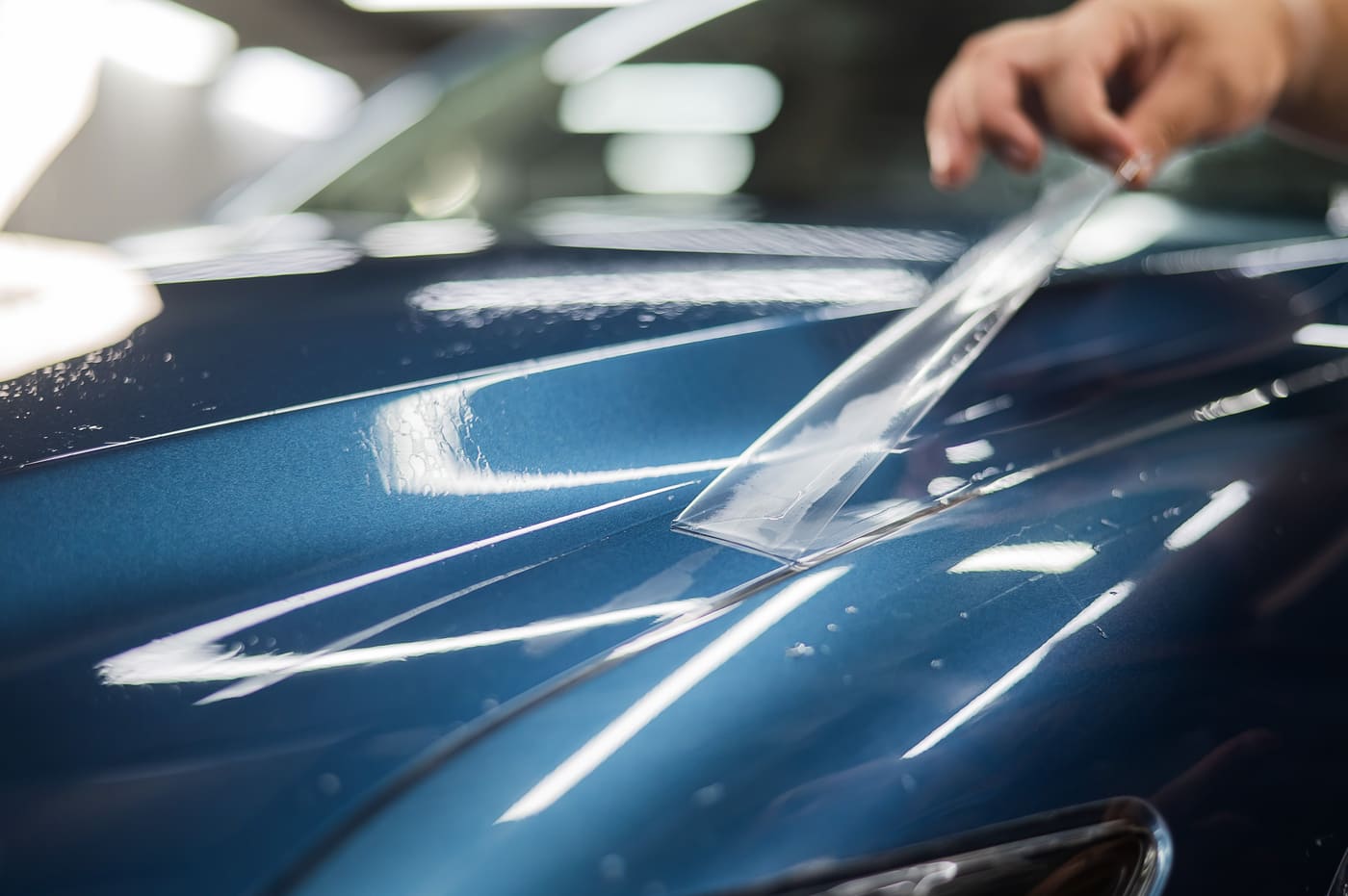
Because the paint will never be in better shape. Film protects whatever is under it from the day it goes on, so a car filmed in its first week keeps the front end it left the factory with, and a car filmed after a season keeps the chips it collected in between.
LLumar’s PPF FAQ says its film “is designed to be applied to original painted surfaces.” A new car’s factory paint is exactly that surface, before road grit, car washes or parking lots have had a go at it.
Does new factory paint need time to cure before film?
No. The waiting period people hear about is for freshly painted panels, not original factory paint. LLumar’s FAQ gives 30 days as “the common waiting period for the new paint to outgas” when film goes on a freshly painted vehicle, and it says issues with aftermarket and repaired paint aren’t covered by its warranty.
Where this matters on a new car is a panel the dealer touched up or repainted before you took delivery. Ask your salesperson directly whether any panel has been refinished. If one has, tell us when you book: the timing changes, and LLumar’s warranty doesn’t cover problems that come from repaired paint.
What about swirls and marks from dealer prep?
Film locks in whatever is on the paint, so swirls or wash marks are polished out before it goes on. New doesn’t always mean flawless: look at the hood in direct sun or under a bright light, and fine circular scratches show up if a wash put them there.
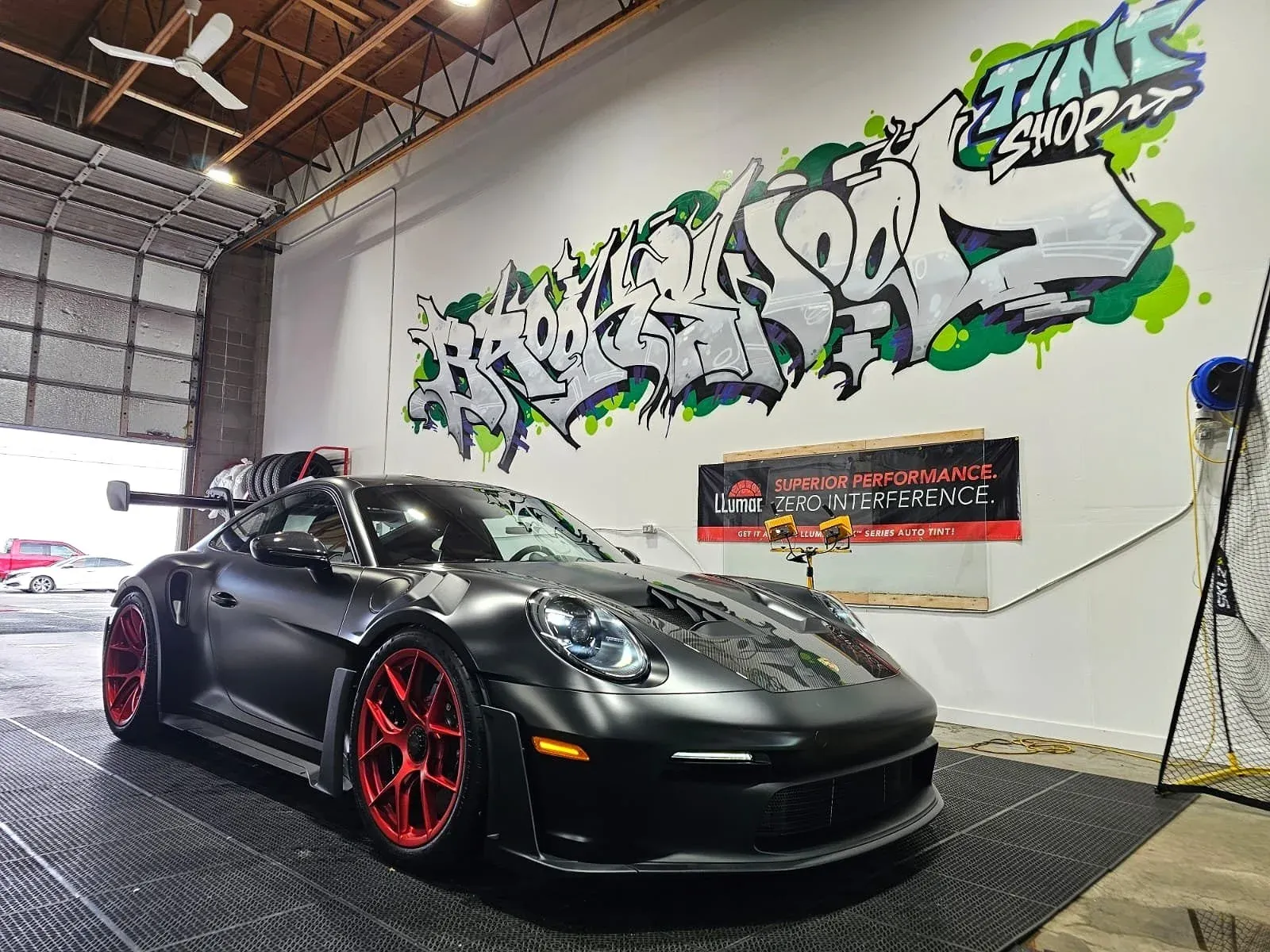
At Brookswood Tint the paint is decontaminated first and corrected if it needs it. Paint correction starts by measuring paint thickness; a one-stage enhancement polish takes about a day and a two-stage correction one to two days. If swirls are the main issue, swirl mark removal explains the work in more detail.
One more thing to settle with the dealer before delivery: LLumar advises against applying “wax or any other coatings” before its film goes on. In LLumar’s words, “Waxes and coatings can interfere with the film’s adhesion to the painted surface.” If a dealer package includes a sealant or coating, ask whether it’s been applied yet; how those packages compare with film is covered in dealer paint protection packages vs PPF.
Should you wait until after the first winter?
No. Waiting means the first wet season’s grit lands on bare paint, and film added in spring seals those chips in rather than preventing them.
The Fraser Valley’s wet season is long. The Environment Canada station at Abbotsford Airport, just east of Langley, averages 241 mm of rain in November against 43 mm in July, and 179.5 days a year with measurable precipitation (ECCC climate normals, 1981–2010). Main highways get winter abrasive of up to 9.5 mm a piece, a size TranBC chose to limit chips and dings on paint and glass, not to prevent them.
Cold isn’t a reason to hold off either: LLumar says its film, with proper care, “can withstand winter cold.” If your car arrives in October or November, book the install for delivery week.
How do you plan delivery day around the install?
Set the install date as soon as the dealer gives you a delivery date, and drive straight from the dealer to the shop if you can. The sequence looks like this:
| Step | When | What happens |
|---|---|---|
| Book the install | When you get a delivery date | Choose a package and hold the bay for delivery day or soon after |
| Talk to the dealer | Before delivery | Ask whether any panel was refinished, and hold off on wax or coating |
| Drop the car off | Delivery day if possible | Unit 312, 20560 Langley Bypass (closed Sundays) |
| Prep | In the shop | Decontamination, inspection, correction if needed |
| Install | 1 day partial front, 1–2 days full front or track, 3–5 days full vehicle | Film cut from software templates and applied by hand |
| First wash | After a week | Hand or touchless wash, nozzles kept off the film edges |
Some buyers skip the drive entirely. On RevScene, a Vancouver car forum, one poster mentioned that dealers route new cars to Brookswood. If you work at a dealership, dealership services covers how that works.
What if the new car is on a lease?
Film from day one means the covered panels go back with the paint they left the dealer with. Before you book, check two things in your lease agreement: how chips and paint damage are charged at return, and whether the leasing company wants aftermarket film removed before the car goes back.
For a lease, the Partial Front package, from $850, puts film on the nose of the car: bumper, lamps, mirrors and the first stretch of hood and fenders. Removal is a job for the shop, so if the lease requires it, build that into your return plan.
What should you book for a new car?
Pick the coverage, book it for delivery day or soon after, and let the shop handle prep. LLumar Platinum comes with a 10-year manufacturer’s limited warranty. Packages start at $850 (partial front) and $1,550 (full front), and the final figure depends on the car itself: its size, its panel shapes and its paint.
If you’re also planning tint or a ceramic coating, new car protection lays out the full package, and the right order for tint, film and coating is its own question. When you’re ready, request a quote with your delivery date, year, make and model.