Is paint correction permanent?
For the defects it removes, yes. Correction lowers the clear coat until each swirl or light scratch has nothing left to it, so those marks are physically gone, with no filler in them to wear off.
That’s the difference from products that only hide defects. In the shop’s experience, a filler hides light swirls only until a handful of washes strips it away, and then they’re back; polishing them out is what removes them. What correction can’t do is stop new marks from arriving. From the day the car leaves the shop, the paint starts collecting damage again at whatever rate its washing and parking allow.
What undoes a paint correction?
Mostly the same things that made it necessary. Toyota’s owner’s manual for the 2026 Tacoma reads like a list of them: it warns that “brushes used in automatic car washes may scratch the vehicle surface,” and tells owners to wash the car immediately in several situations.
| What touches the paint | What it does | What keeps the finish clean |
|---|---|---|
| Automatic brush car washes | Toyota warns the brushes may scratch the paint | Hand wash or touchless |
| Dirty mitts and gritty towels | Drag grit across the clear coat; the shop names washing as the usual source of swirls | Rinse first, clean mitts, soft microfibre to dry |
| Bird droppings, insects, tree sap, tar | Toyota says to wash them off immediately to prevent paint deterioration | Wash them off promptly |
| Road salt | Toyota lists driving on salted roads as a reason to wash right away | Regular rinses through winter |
| Stone chips | Knock paint off, which correction can’t replace | PPF on the front panels |
Salt is a real factor here: the City of Langley relies on brine for its priority routes and on salt, sometimes mixed with sand, during snowfall, so a car corrected in the fall faces a winter of extra washing. The everyday habits that keep new swirls out are set out in how to prevent swirl marks.
How do a ceramic coating and PPF protect the result?
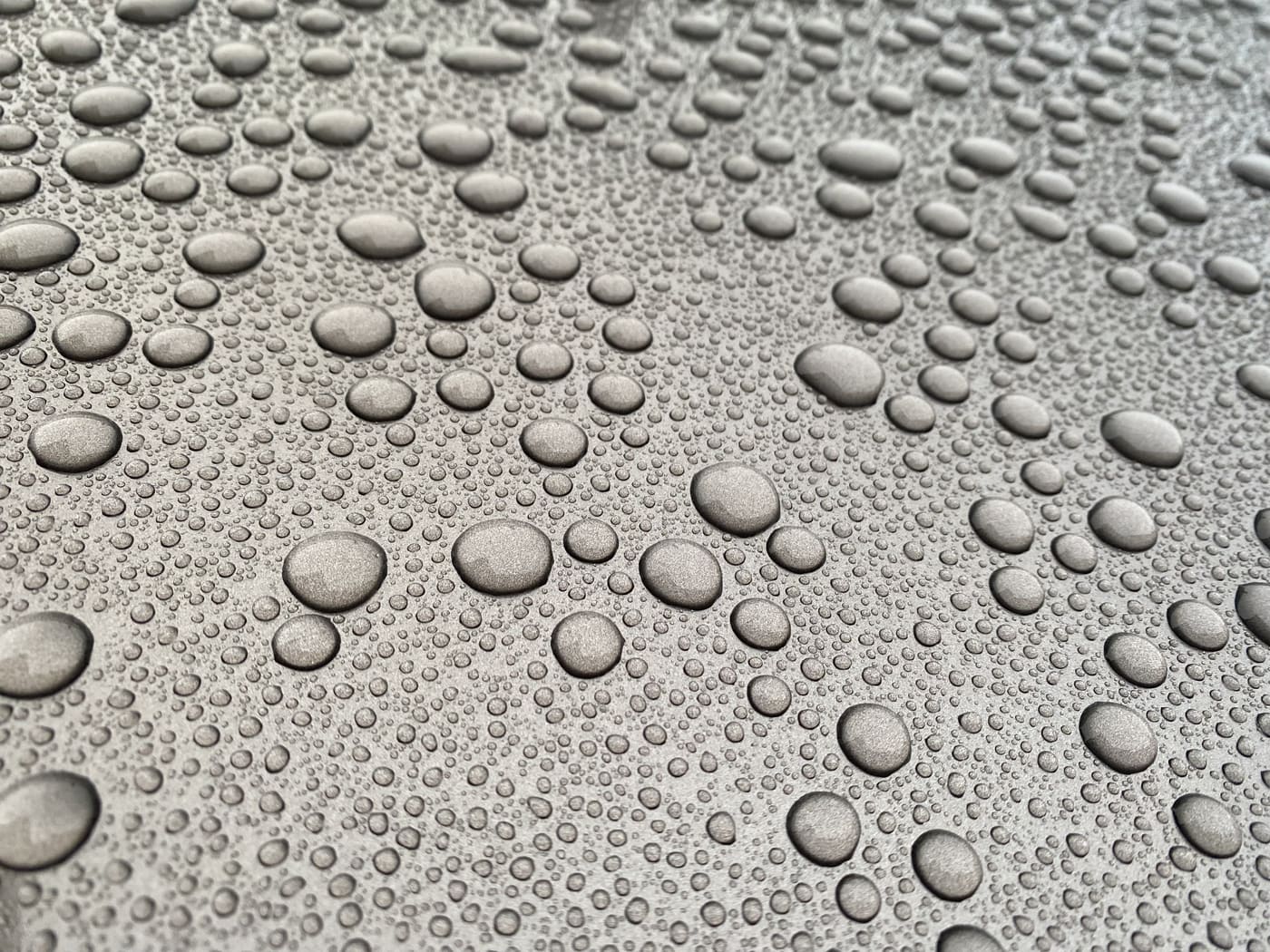
They put something sacrificial between the corrected clear coat and the next wash. That’s the shop’s reasoning for coating after correction: polishing takes a few microns off the clear coat, so a coating goes back on as a sacrificial layer that wears in its place and keeps the gloss.
Graphene-ceramic coating
A coating makes dirt release more easily, so each wash needs less rubbing, and less rubbing means fewer new swirls. Two of the shop’s three packages are built around correction: the two-layer Performance package sits on two-stage correction, and the four-layer Signature package on full correction. The packages are on ceramic coating.
Paint protection film
PPF covers the panels where the paint takes the most abuse. LLumar’s PPF FAQ says most surface scratches in its film heal on their own when warmed, by the sun or warm water for example, and the shop decontaminates and, if needed, corrects the paint before any film goes on. The four packages, from $850, are on paint protection film.
Why protect a corrected car instead of correcting it again?
Because the clear coat doesn’t grow back. Ford’s paint researchers, in a presentation hosted by NIST, put typical body clearcoat at about 45 µm, and that one layer supplies the gloss and keeps UV light off the colour beneath.
Each correction spends a little of it, which is why the shop takes a thickness reading before every job and stops at the lightest stage that works. A coating or film uses up none of it, so protecting the result keeps the finish without spending more of that layer. The exact amount a correction takes off is the subject of clear coat removal during correction.
Making a correction last, from the first booking
Book the protection with the correction. Say in your quote request whether film or a coating should follow, so the work runs in one visit and the corrected paint never meets a wash bucket unprotected.
Expect about a day for the lightest polish and three days or more for full restoration, with the price set once the paint has been inspected and measured. The correction quote form asks for year, make, model and colour, or you can text them to 604 534 6433. If you’re correcting a car to sell it, whether paint correction is worth it before selling weighs that case.