How thick is the clear coat on a factory finish?
Thinner than most owners expect: carmakers put it at roughly 1.5 to 2 mils, or about 38 to 51 µm. The whole paint system is not much thicker. PPG, the paint maker, says a complete OEM finish measures roughly 90 to 120 µm, “around the same as a strand of human hair” (PPG, OEM film builds).
The clear layer is only the top part of that stack. Two carmaker bulletins published on NHTSA’s site give a figure for it on its own:
| Source | Clear coat figure | In microns |
|---|---|---|
| Chrysler Collision Bulletin 31-001-13 (2013) | “Most vehicles have 1.5 mils” | About 38 µm |
| GM Preliminary Information PIT5763 (2020), 2021 Tahoe and Yukon | “typically” 1.5 to 2 mils | About 38 to 51 µm |
Each mil, 0.001 of an inch, equals 25.4 µm. Under the clear sits the colour coat. Once polishing reaches the colour, the only fix left is a repaint, which is why the clear coat is the budget every correction spends from.
How much does each kind of correction take off?
Carmakers set ceilings, not targets, and the ceiling depends on the method. Chrysler’s Collision Bulletin 31-001-13, written for technicians removing overspray, gives two:
| Method | Chrysler’s maximum | In microns | Share of a 1.5 mil clear coat |
|---|---|---|---|
| Machine polishing | 0.2 mils | About 5 µm | About 13% |
| Wet sanding, then polishing | 0.5 mils | About 13 µm | About a third |
GM uses the same half-mil line as its warning in PIT5763: “Removing more than 0.5 mils… of the clearcoat may result in early paint failure.”
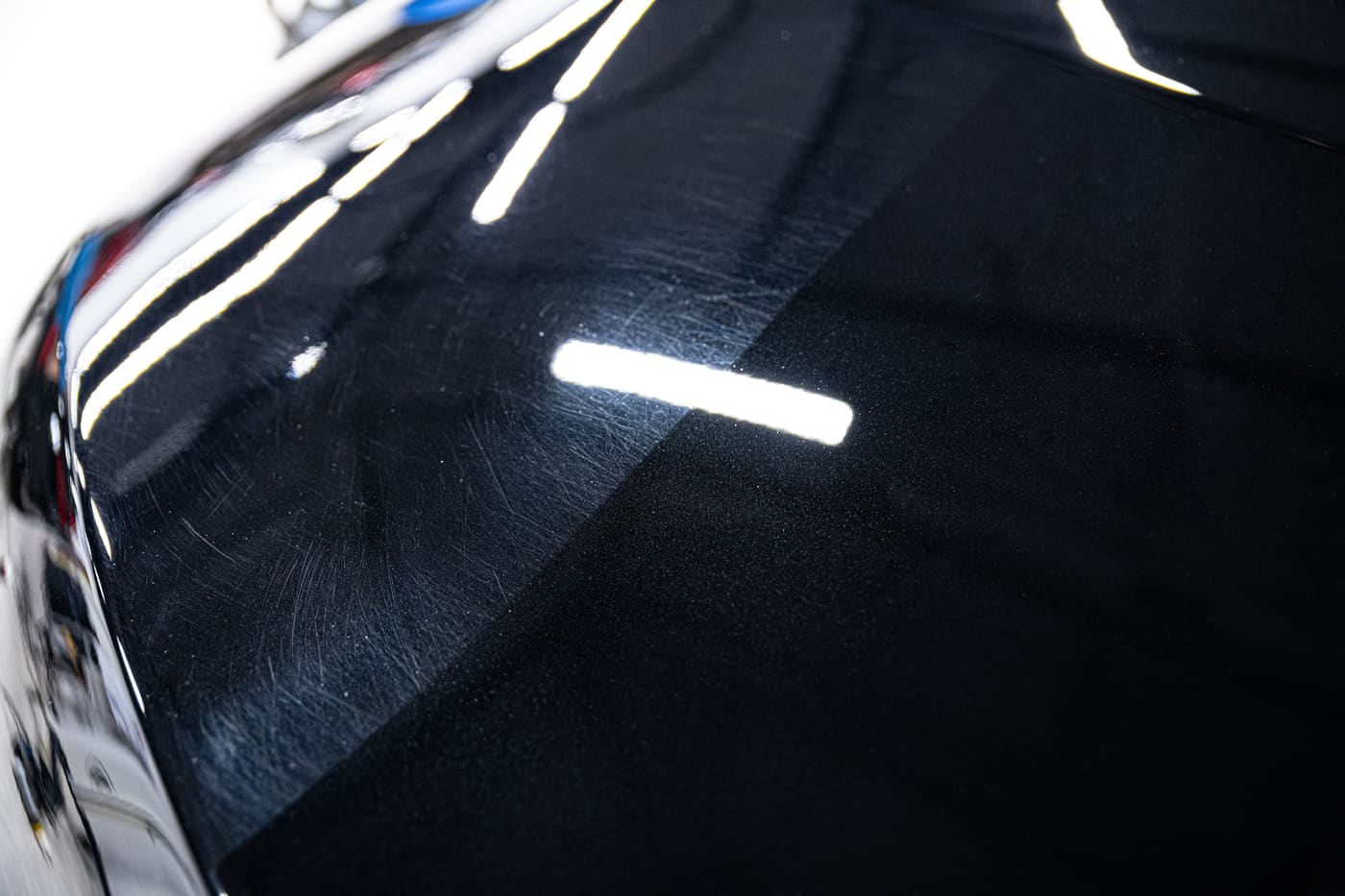
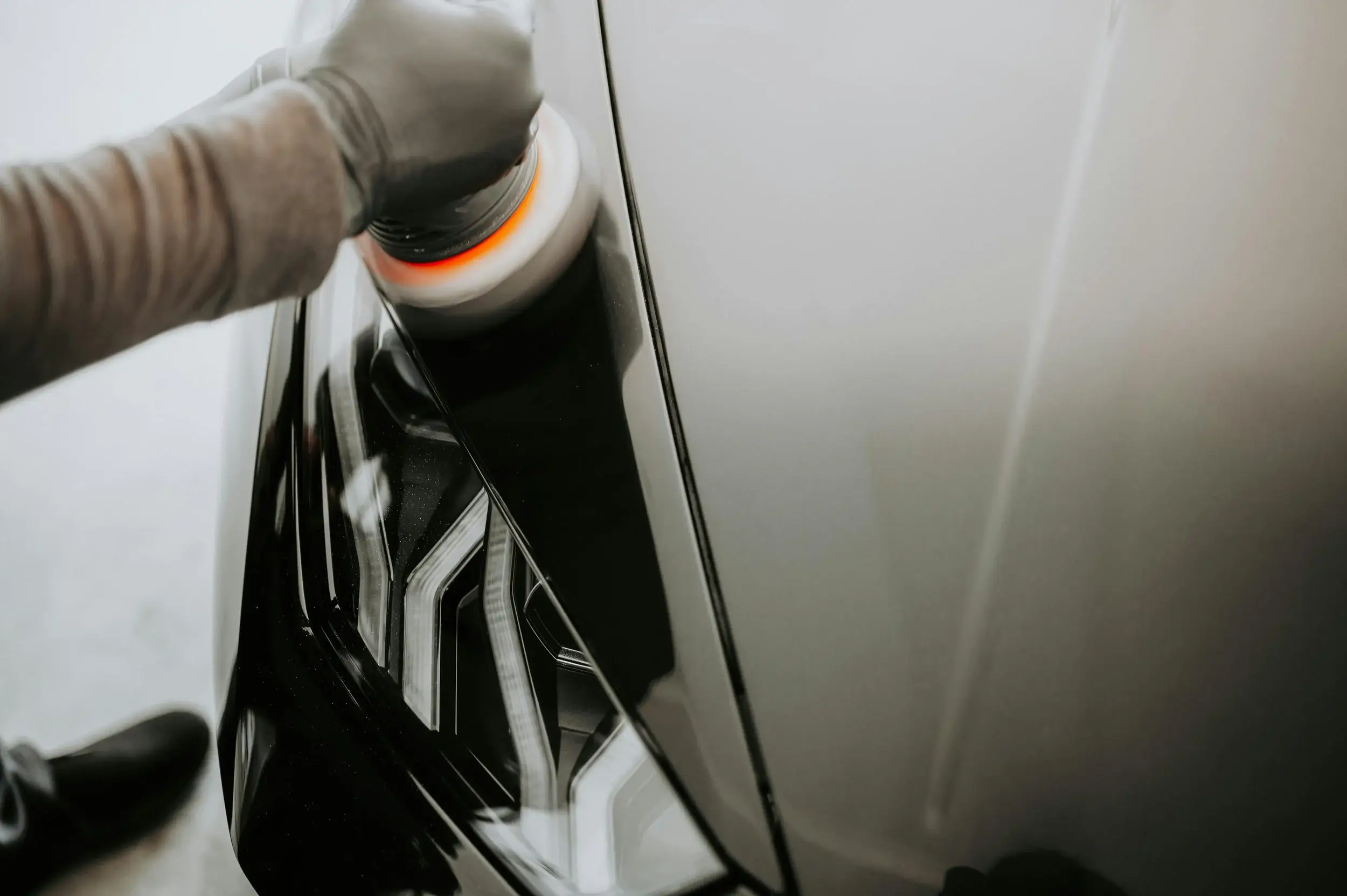
Brookswood Tint doesn’t publish a micron figure for each of its levels, but the order is easy to follow. An enhancement polish is a single stage with a fine polish, the lightest cut. A two-stage correction adds a cutting compound before the finishing polish, so it takes more. Multi-stage restoration can include wet sanding where the readings allow it, and that is the step both bulletins treat as the deepest.
Why does the clear coat you lose matter?
Because it doesn’t grow back, and it carries the paint’s sun protection. GM’s bulletin states plainly that “The clearcoat contains ultraviolet screeners”, which is why it links thinning past half a mil with early failure.
Chrysler adds a warning about technique. A rotary buffer, it says, “can permanently damage the painted surface if not used correctly”, and the only repair it lists for that damage is refinishing the panel. So the useful question before any correction isn’t only whether the marks will come out. It’s how much clear will be left once they do. A car that has been machine polished several times, or a panel that has been resprayed, may have less to spend than the factory figures suggest.
How does the shop know how much clear coat is left?
It measures before a polisher touches the paint. At Brookswood Tint, paint thickness is read across the panels first, and those numbers decide which level of correction is safe on your car.
The paint industry treats this as routine. PPG’s guidance says checking dry film thickness “should be standard practice” during the initial inspection, and Chrysler asks technicians to measure “before and after the repair” so they can see exactly what came off. A panel that reads well above or below its neighbours is a warning sign: it may have been polished hard before, or repainted. The tool itself is explained on the paint depth gauge page.
How many times can paint be corrected?
There’s no fixed number, because it depends on how much clear the car started with and how much each round took. Chrysler’s own numbers show the scale. A single wet-sand-and-polish repair at its 0.5 mil maximum would use about a third of a 1.5 mil clear coat, while a polish at its 0.2 mil maximum uses a little over an eighth.
That arithmetic is the case for the lightest stage that does the job, and for keeping new marks out afterwards rather than polishing them away every few years. Scratches that sit deeper than a safe cut can reach raise their own question: can paint correction remove deep scratches? How long a finished correction stays looking good is answered in how long paint correction lasts.
Getting your paint measured before correction
Ask for the readings when your car is inspected, and ask which level they allow. An enhancement polish keeps the car about a day and a two-step correction one to two. Multi-stage restoration needs at least three days and is quoted only once the paint has been seen.
Correction isn’t priced from a list, because the paint’s condition sets the work. Use the paint correction quote form to give the car’s year, make, model and colour, attach a daylight photo of the marks, and mention any past polishing or respray you know about. Every level is laid out on the shop’s paint correction service page.