

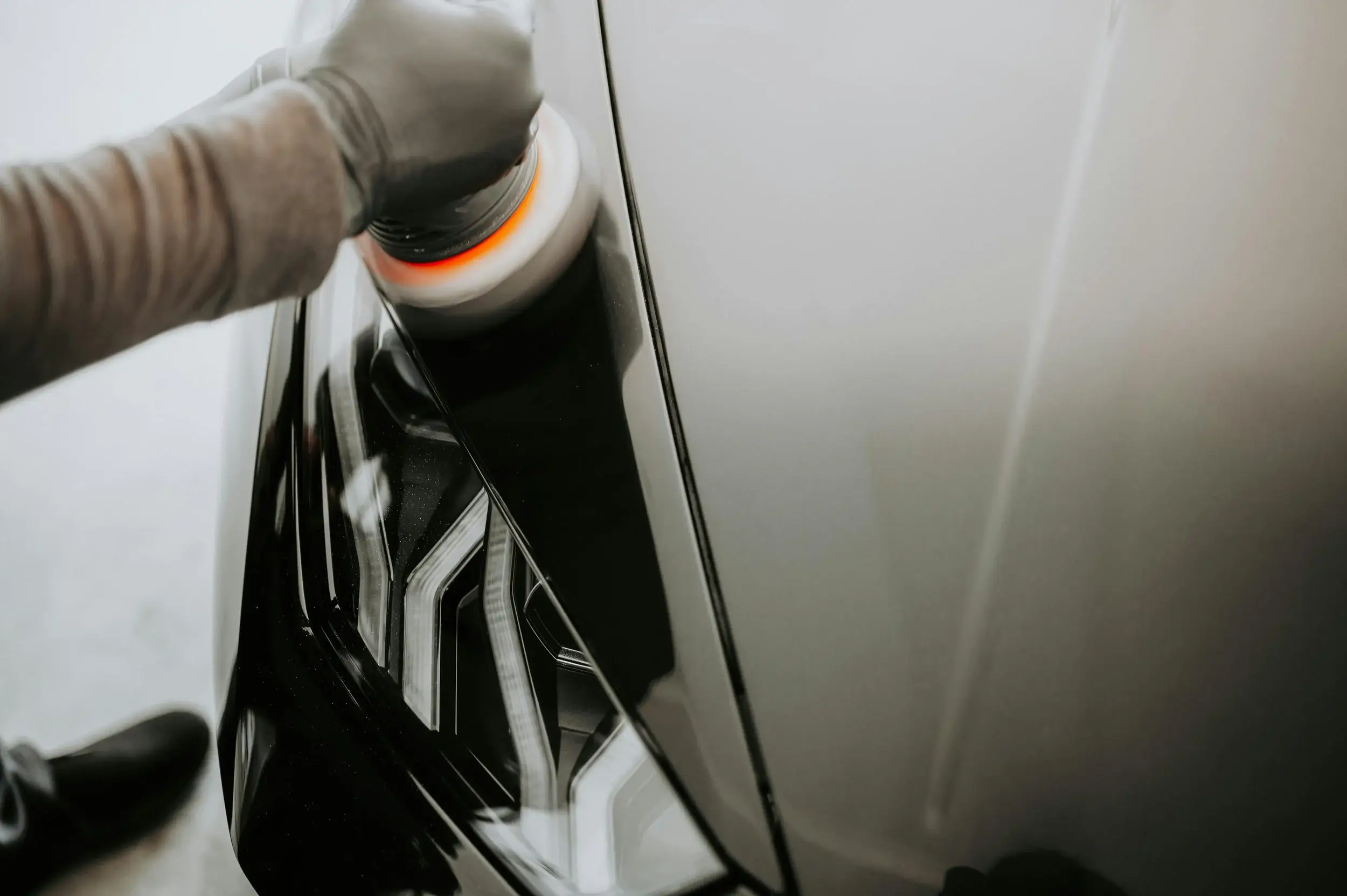
How deep is too deep for paint correction?
Any scratch that reaches below the clear coat. Polishing works by lowering the surface around a scratch until it’s level with the bottom, so the bottom has to sit in clear coat, with enough left beneath it to protect the colour.
On factory paint that’s a thin margin. A 2016 presentation by Ford’s paint and corrosion research lead, published by NIST, gives typical body clearcoat as 45 µm, sitting on a basecoat of 10 to 20 µm, a 25 µm primer and a 20 µm electrocoat. PPG’s refinish division puts the whole factory finish at about 90 to 120 µm. That’s why the depth of a scratch can’t be judged by eye alone.
| What the scratch reached | Can correction remove it? |
|---|---|
| Upper part of the clear coat | Yes, usually with compound and polish |
| Deep in the clear coat | Sometimes, with wet sanding, if the readings allow |
| Basecoat (colour) | No |
| Primer | No |
| Bare metal or plastic | No |
Checks you can do at home before booking, with a fingernail and a good light, are explained on car scratch removal.
Can wet sanding remove a deep scratch?
Sometimes, when the scratch is deep but still in the clear coat and the panel has thickness to spare. Wet sanding cuts the surface level with a fine abrasive, and then the sanding marks have to be polished out in turn.
3M’s Perfect-It paint finishing chart shows how many steps that takes. A defect is levelled with a P1500 or P2000 abrasive, the sanding marks are refined with 3000 and then 5000, a rubbing compound removes what’s left of the sand scratches, a machine polish removes the compound’s swirl marks, and an ultrafine polish finishes. Each step exists to erase the one before it.
At Brookswood Tint, sanding lives inside multi-stage restoration, the top correction level: it runs three days or more, is quoted only after inspection, and the shop’s own description limits wet sanding to where it’s safe. That condition does the heavy lifting: sanding is the most aggressive step, so it’s only used where the thickness reading shows enough clear coat is there.
What happens when a scratch has gone through the clear coat?
It needs paint added back, not taken away. Correction can only remove material, and once the scratch has opened the colour or primer beneath, there’s nothing above the damage left to level.
The fix becomes touch-up paint for a small, isolated mark, or a refinish of the panel for anything larger, at a body shop. Toyota’s 2026 Tacoma manual files that advice under preventing paint deterioration and corrosion: get chipped or scratched paint repaired right away. Don’t leave an open scratch through a wet winter. How correction and a respray compare as options is laid out in paint correction vs respray.
Are deep scratches on bumpers different?
Often, yes. Plastic bumpers are painted with a different system from the metal body, and modern bumpers can hide sensors that care about the paint over them.
Ford’s presentation contrasts the two: body paint cures at about 140 °C and is hard and less flexible, while trim paint for plastic fascias cures at about 80 °C and is softer and more flexible, over a conductive primer. Toyota’s manual, for its part, warns that if the paint on the front or rear bumper is chipped or scratched, the systems it lists as BSM, RCTA, PKSB, Intuitive parking assist and Toyota Safety Sense 3.0, where fitted, may not work correctly, and tells owners to consult a dealer. A deep bumper scratch near a sensor is a dealer or body shop question before it’s a polishing one.
Why might part of a deep scratch be left?
Because thinning the clear coat to chase it would cost more than the scratch. The clear layer is what carries the gloss and shields the colour from UV, according to Ford’s researchers, and every pass to reach the bottom of one scratch takes clear coat from the whole area around it.
Readings also vary from car to car. Ford puts the share of vehicles repainted in the plant at 5 to 10%, and later polishing or body work changes thickness again, which is why the shop reads every panel rather than assuming. If the numbers say the scratch can’t come out safely, you’ll be told before work starts, so you can decide what to do next with the facts in hand.
Getting a deep scratch assessed in Langley
Photograph the scratch twice, once up close in daylight and once from a metre or two away, and send both through the correction quote form with the year, make, model and colour. Mention whether the car has had body work.
Deep scratches are quoted after inspection and a thickness reading, since depth decides whether it’s a two-stage job (one to two days), restoration work (three days and up) or a referral for paint. What correction typically costs and why is covered on paint correction cost. Inspections happen at the shop, Unit 312, 20560 Langley Bypass; it’s open from 9:00 until 17:00 and closed Sundays.