How do paint correction and a respray compare?
Correction takes material away to level what’s there; a respray adds new paint over a prepared panel. That single difference decides what each can fix, what happens to the factory finish, and what follows for film, warranty and resale.
| Paint correction | Respray | |
|---|---|---|
| What happens to the paint | A thin layer of clear coat is polished off to level defects | New paint, normally with new clear, goes on the panel |
| What it fixes | Swirls, haze, wash marring, water spots, oxidation, scratches inside the clear | Damage through the clear, peeling or flaking clear, rust and dent repairs, a colour change |
| Factory paint | Stays on the car | Replaced on every panel painted |
| Who does it | A correction shop such as Brookswood Tint | A body shop |
| Time | About a day to 3+ days here | Set by the body shop |
| Film afterwards | Straight onto corrected factory paint | LLumar’s FAQ: a 30-day wait, and repaired paint outside its warranty |
| Dealer sale later | Not a damage repair | Can form part of declarable damage history (used car, repairs over $2,000) |
Which paint problems can correction fix?
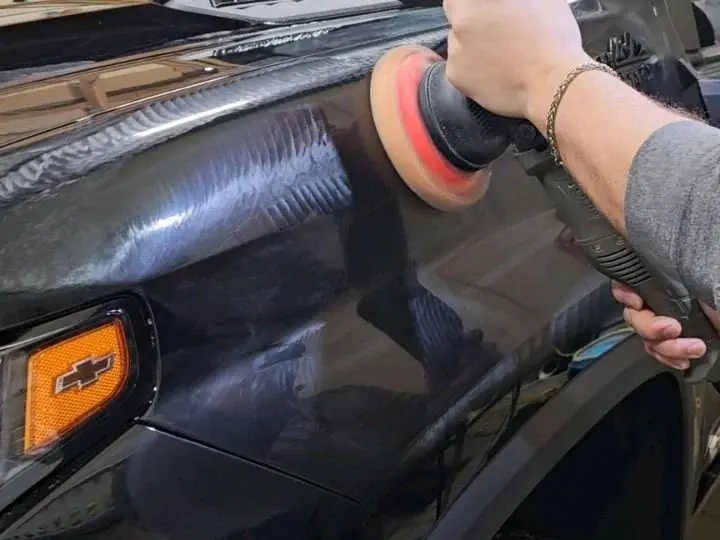
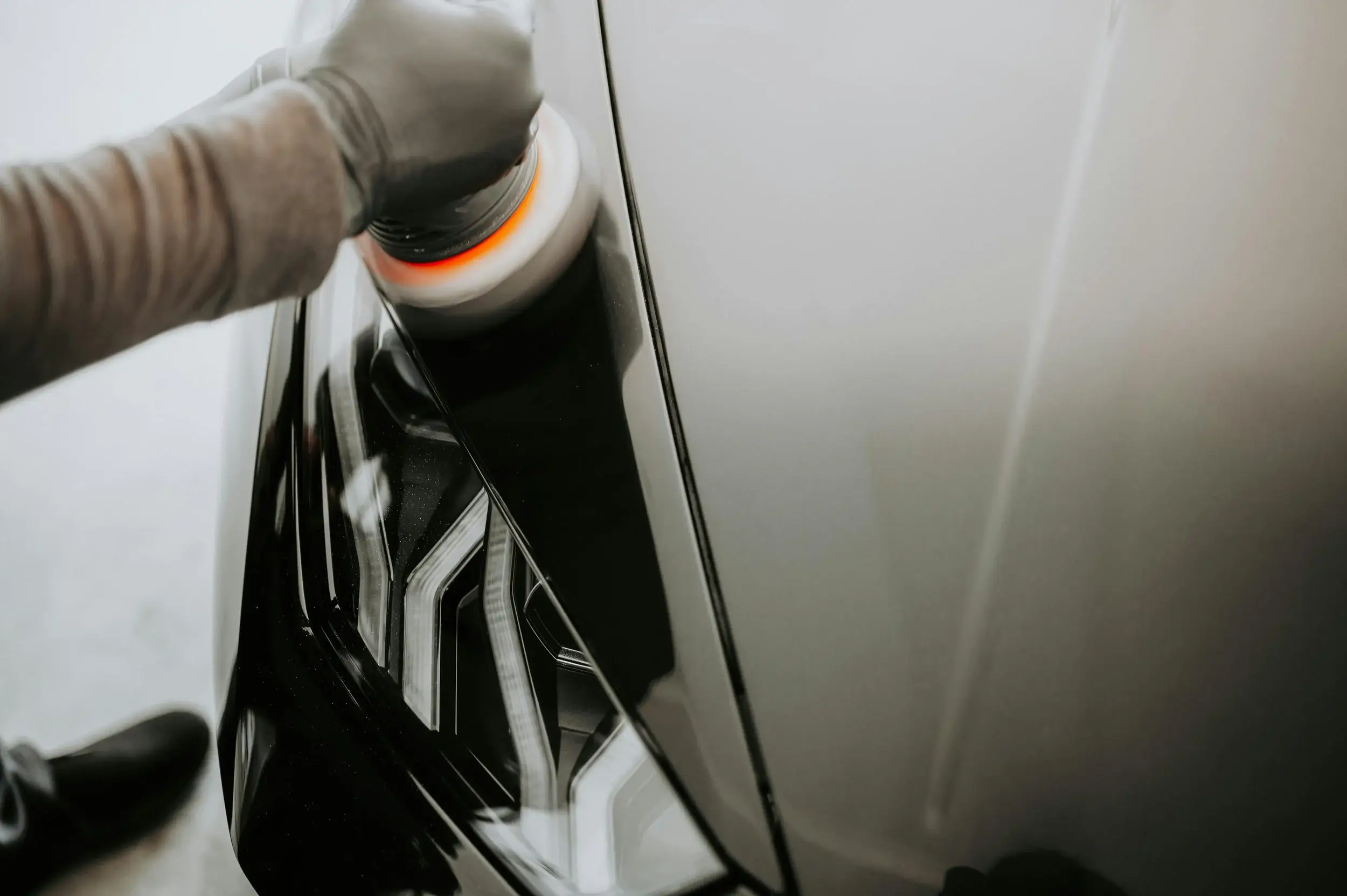
Anything that lives in the clear coat. The shop’s three correction levels work through progressively deeper defects, always using the lightest level that does the job, and the shop’s own wording is that correction takes only a few microns off the clear coat to bring it level.
| Level | What the shop says it does | Time |
|---|---|---|
| Enhancement polish | One fine-polish stage for light swirls and haze; the shop quotes 60 to 80% defect removal | About a day |
| Two-stage correction | A compound to cut, then a polish to finish, for heavier swirls, marring from washing, water spotting and the bulk of light scratches; 85 to 95% removal | 1 to 2 days |
| Multi-stage restoration | Careful wet sanding where readings allow, heavy compounding and refining, for badly neglected, oxidized or scratched paint that still has clear to spare | 3+ days, priced once inspected |
Faded or chalky paint, swirls from years of brush washes and a car that looks dull in every light are all correction jobs as long as the readings allow. The full menu is on paint correction, and wash swirls on their own have their own page, swirl mark removal.
When is a respray the only fix?
When polishing has nothing left to level, or the problem sits below the clear. No amount of correction puts paint back on a panel.
- Damage through the clear coat. A scratch showing primer, a different colour or bare metal at the bottom has cut through the layers polishing works on. How to read a scratch’s depth at home is on car scratch removal.
- Clear coat that’s peeling, flaking or crazed. Polishing can thin clear coat but can’t reattach it.
- Rust, or dents that have cracked the paint. These are body-shop repairs, normally followed by refinishing.
- Readings too low to polish safely. If a panel doesn’t have the clear coat to spare, more polishing just brings failure closer.
- A new colour. Correction restores the existing colour; it can’t change it. For a colour change without paint, compare vinyl wrap vs paint job.
A car can need both: correction across most of the body and a respray on one damaged panel. Splitting the work that way keeps as much factory paint on the car as possible.
How does a paint thickness reading decide between them?
It tells the shop whether there’s enough paint to polish, panel by panel, before anyone picks up a machine. That number, not the look of the defect alone, decides whether correction is safe.
Brookswood Tint measures paint thickness on every correction job before polishing. A panel with plenty of material can take a two-stage or multi-stage correction; a thin one gets the lightest pass that helps, or a recommendation to leave it alone. A panel that reads well above its neighbours is worth a question too, since extra material there can point to an earlier respray. The question of how much clear a correction removes gets its own page, clear coat removed by paint correction, and the tool itself is explained in the glossary entry for the paint depth gauge.
What does a respray change for film, wraps and warranty?
It changes what goes on top of the paint afterwards. Film and vinyl makers design around original factory paint, and carmakers’ warranties treat repainted panels differently too.
- Paint protection film. LLumar builds its film for factory paint, according to its PPF FAQ. Faults that trace back to refinished paint fall outside its warranty, and a freshly sprayed panel should outgas for around 30 days before film goes on it.
- Vinyl wraps. The shop’s own wrap page warns that resprayed panels or paint that is already peeling can lift when vinyl is later removed, which is why it inspects first.
- The car’s warranty. Tesla’s North American New Vehicle Limited Warranty, as one example, excludes corrosion and paint defects caused by “paint matching”, among other causes. Check how your own carmaker’s booklet treats refinished panels.
Correction carries none of those knock-on effects: the paint stays original, so film or a coating can follow straight away.
Does a respray have to be disclosed when the car is sold?
When a dealer sells it, damage history does. BC’s Motor Dealer Act Regulation, s. 23, requires a dealer’s sale agreement to disclose, to the best of the dealer’s knowledge, whether a used vehicle has “sustained damages requiring repairs costing more than $2 000”. For a new vehicle the line is damage costing more than 20% of the asking price.
The Vehicle Sales Authority sums this up as dealers having to “make declarations about prior damages”, per its What are my Rights? page. A respray done as part of repairing a damaged car may sit inside that history; polishing out wash marks never does. Keep the invoices for any paint work either way. Whether correcting a car before you sell it pays off is covered in paint correction before selling.
Correction or respray: which should you choose?
Correct whenever the problem is in the clear coat and the readings allow it; respray only the panels correction can’t reach. Factory paint is worth keeping when you can.
Correction suits you if
- The paint looks dull, swirled, hazy or spotted, but the colour is intact.
- Scratches don’t catch a fingernail or show a different colour underneath.
- You plan to add film or a coating and want it on factory paint.
A respray suits you if
- Clear coat is peeling or flaking, or scratches show primer or metal.
- There’s rust or a dent to repair.
- The readings show a panel has no clear coat left to polish.
Where Brookswood Tint stands
The shop corrects and protects paint; it doesn’t paint cars. That makes the advice simple: if correction can’t do the job, it says so before starting rather than polishing a panel thinner, and that panel goes to a body shop.
How do you book paint correction in Langley?
Fill in the paint correction quote form with the car’s details (year, make, model, colour), a few daylight photos, and anything you know about earlier paint work. The price follows the inspection and the thickness readings, and what drives it is set out on paint correction cost.
Time in the shop runs from roughly one day for the lightest polish to three days or longer for a full restoration, with two-stage work in between. Corrected paint is bare paint, so ask about sealing it under paint protection film or a graphene-ceramic coating in the same visit.