Are bubbles under new PPF normal?
Some are. Small, soft, cloudy pockets during the first few days are usually moisture left over from fitting the film. Hard specks, lifting edges and bubbles that grow are not normal, and they don’t fix themselves.
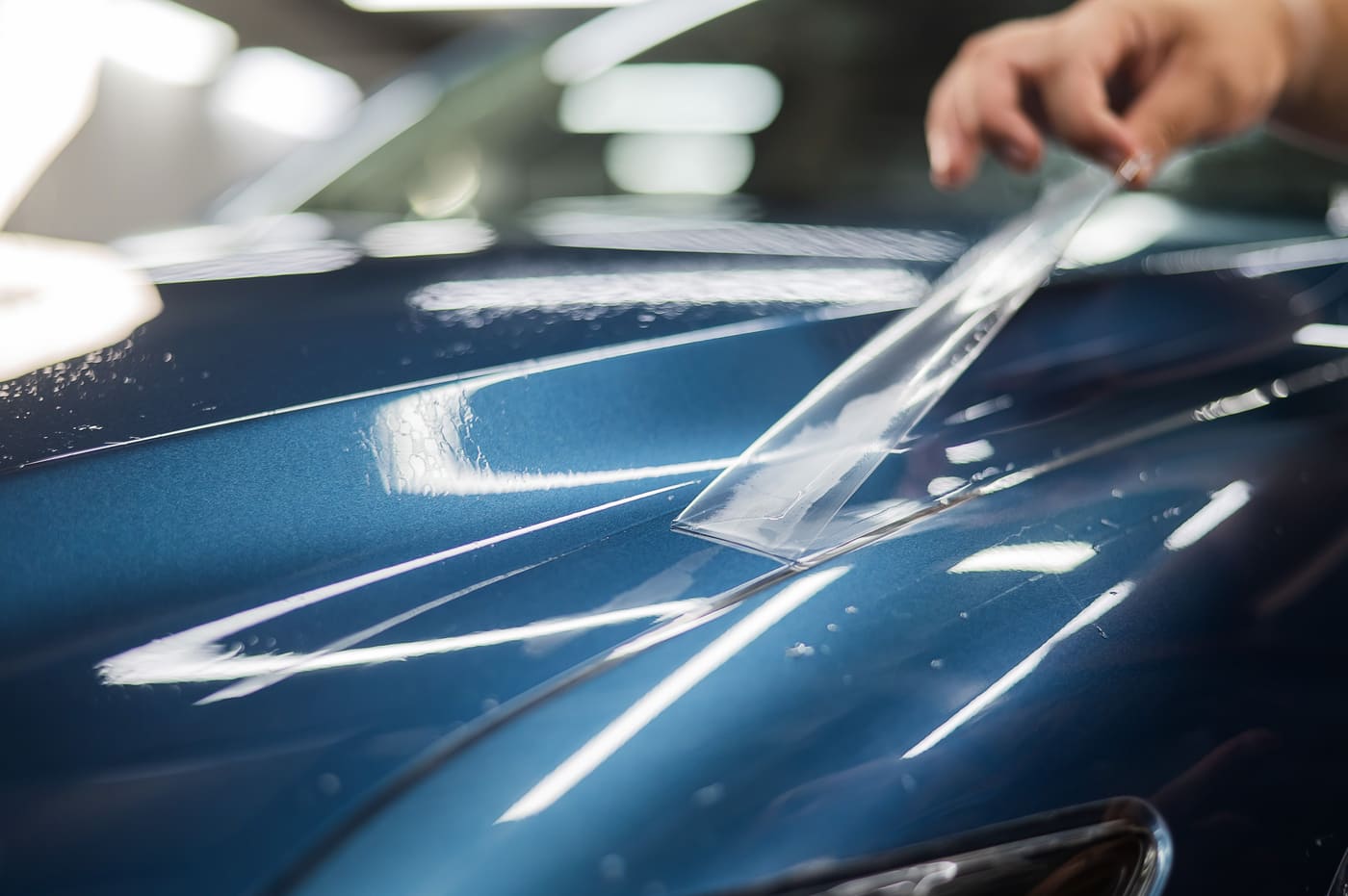
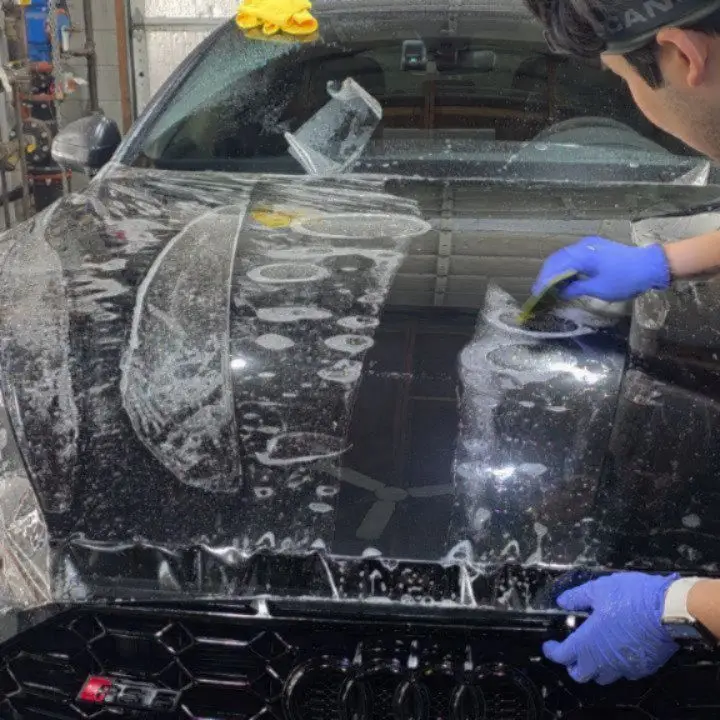
The moisture comes from how film goes on. SunTek, another paint protection film maker, describes PPF installation as a “wet installation” similar to window film, using a soap and water mixture to align the film before it’s squeegeed into place. The photo at the top of this page shows that stage at Brookswood Tint: the solution is still visible under the film while the installer works it out toward the edges.
How do you tell a water bubble from a real problem?
Look at the centre and the edge of the bubble. Water pockets are soft and cloudy with no hard point; contamination has a speck in the middle; lifting starts at the edge of the film.
| What you see | What it usually is | What to do |
|---|---|---|
| Soft, hazy or milky patch, no hard centre | Leftover install solution | Leave it and look again after the first week |
| Tiny raised bump with a dot or fibre in the middle | Dust, hair or grit trapped under the film | It won’t clear; show the shop |
| Clear bubble that keeps the same size and shape | Air trapped during fitting | Show the shop |
| Bubble or lift along an edge or a relief cut | The edge letting go of the paint | Keep wash jets away and show the shop |
| Bubbles appearing weeks or months later | Lost adhesion, paint outgassing or a film defect | Bring the car and the invoice in |
A rule of thumb: anything you can see a solid object inside, or anything that gets bigger, needs a professional look.
Why does PPF go on wet?
So each piece can be moved into exactly the right spot before it sticks. That’s the reason SunTek gives: the mixture is there to align the film before it’s squeegeed down.
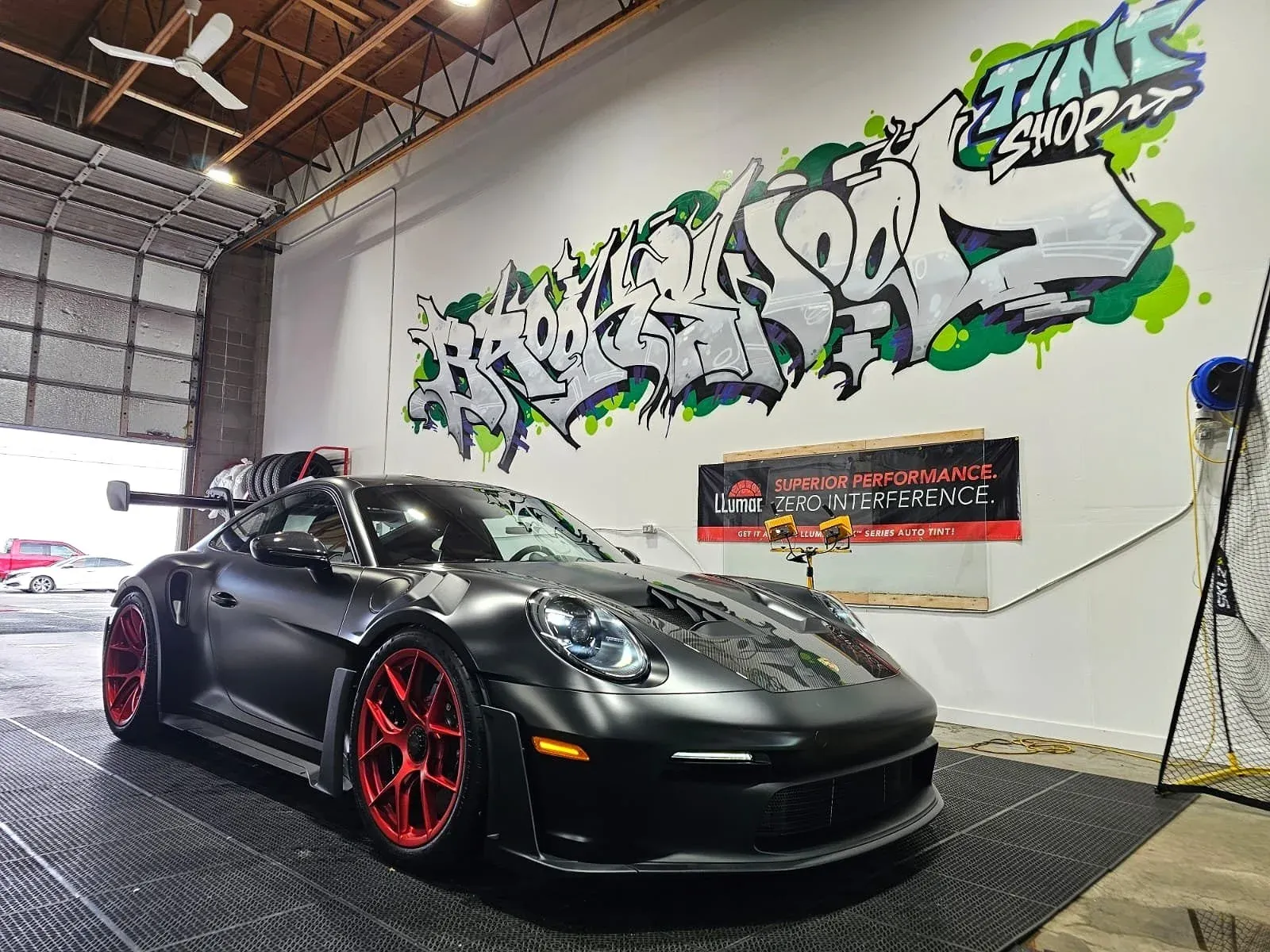
At Brookswood Tint the pieces are cut from software templates for the exact vehicle, so they arrive at the car already shaped. The wet surface lets the installer slide each one into position, wrap its edges around the panel where the panel allows, then squeegee the solution out. Most of it is pushed out in that pass; what remains can show as light haze or the odd small pocket in the first days.
Why would bubbles appear weeks or months after the install?
Late bubbles have a cause other than install moisture. LLumar’s PPF FAQ points to most of them.
Water forced under an edge
According to LLumar’s FAQ, pressure washers and automatic washes are best avoided, which can pull film up, most often at its edges, and it leaves the resulting lifts outside its limited warranty.
Something on the paint under the film
LLumar’s FAQ recommends no wax or other coating on paint that’s about to be filmed, since either can get in the way of adhesion. At Brookswood, paint is decontaminated, and corrected where needed, before any film touches it.
Fresh paint underneath
If a panel was recently resprayed, LLumar puts the usual wait before filming at 30 days so fresh paint can outgas, and repaired paint sits outside its warranty. LLumar doesn’t spell out the symptoms, but the wait exists so the paint finishes releasing solvent before film covers it.
A film defect
Bubbling is on the shop’s published list of what LLumar’s 10-year Platinum warranty covers, along with yellowing, cracking and peeling.
Do cold, damp months slow the moisture down?
Yes, moisture leaves slowly in cool, damp air, so autumn and winter installs can show their pockets a little longer. Environment Canada’s normals for Abbotsford give November a mean daily temperature of 6.0 °C, morning humidity near 87% and about 21 days with precipitation.
Parking under cover in the first week helps, and so does patience. What cold weather means for booking an install at all is covered in whether PPF can be installed in winter.
What should you do about a bubble in new PPF?
Leave it alone, keep water jets away from it, and check it again at the first wash. If it has a speck in it, an edge involved, or it has grown, call the shop.
- Don’t press, pin or squeegee it yourself. If it’s a defect, it needs to be seen as it is.
- Hold off washing for the full week, then wash only by hand or in a touchless bay.
- Look again in good light after that first wash. A soft pocket that has shrunk is drying; anything unchanged or larger is worth a visit.
- Photograph it and keep the invoice. Both make a warranty conversation quick.
For a wider checklist of what good and poor film work looks like, see how to spot a bad PPF install. If Brookswood Tint fitted your film, phone or text 604 534 6433 to arrange a look, Monday to Saturday between 9:00 and 17:00. Planning a new install? The paint protection film packages begin at $850 for a partial front.