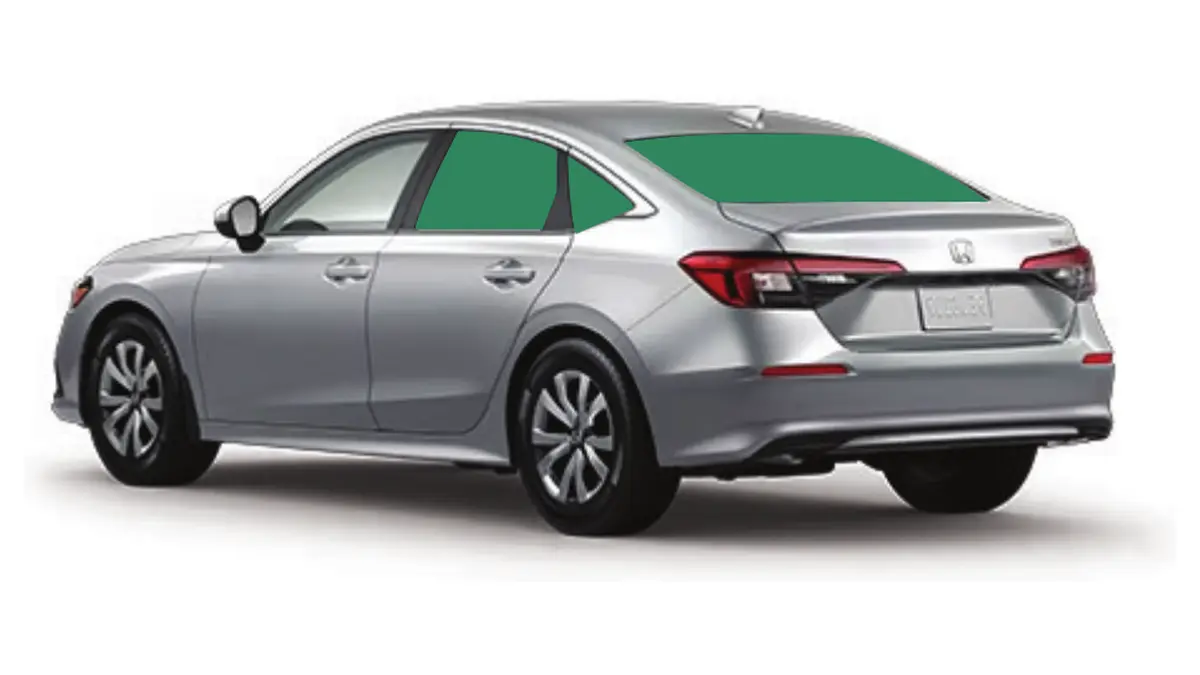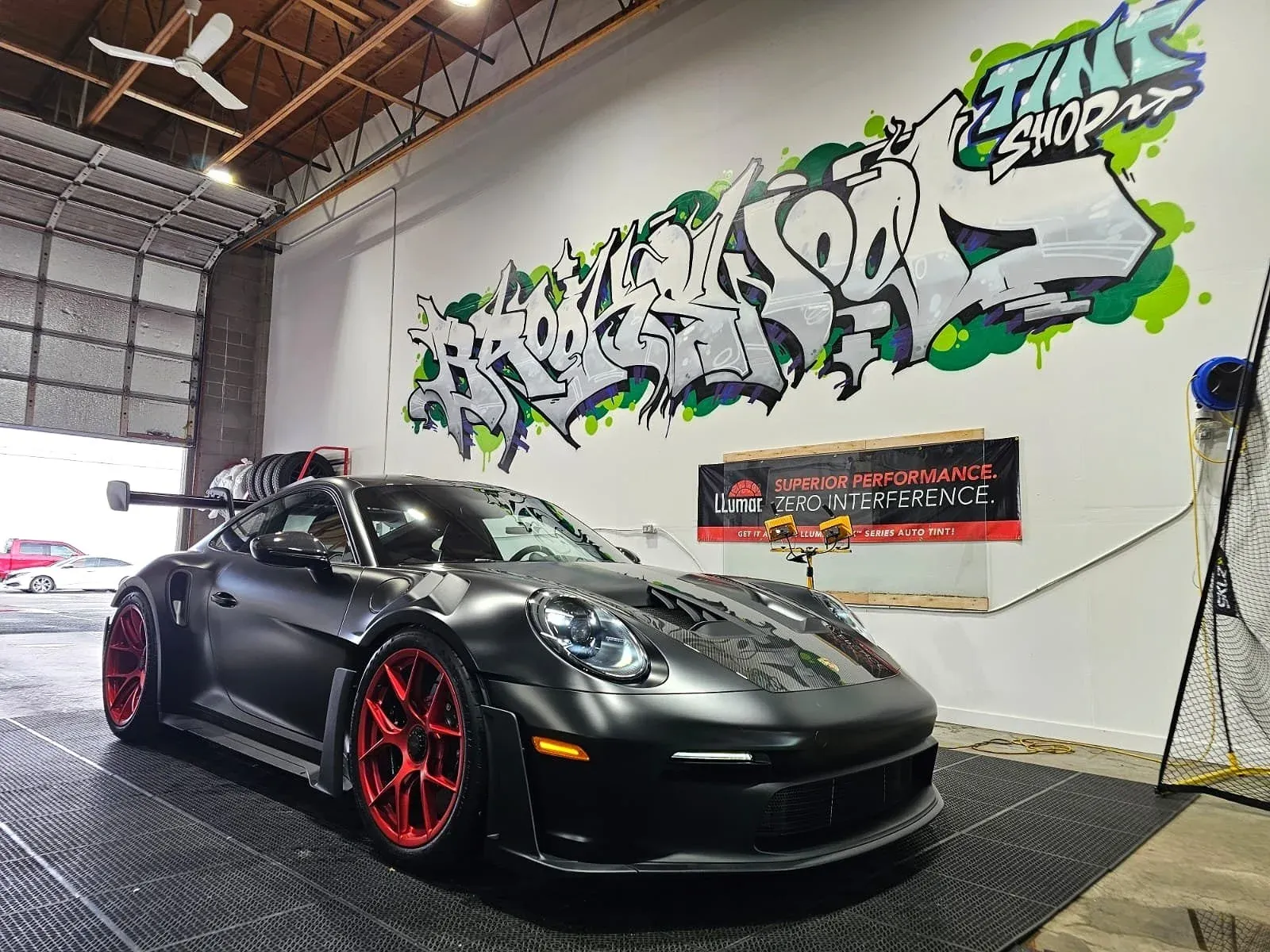
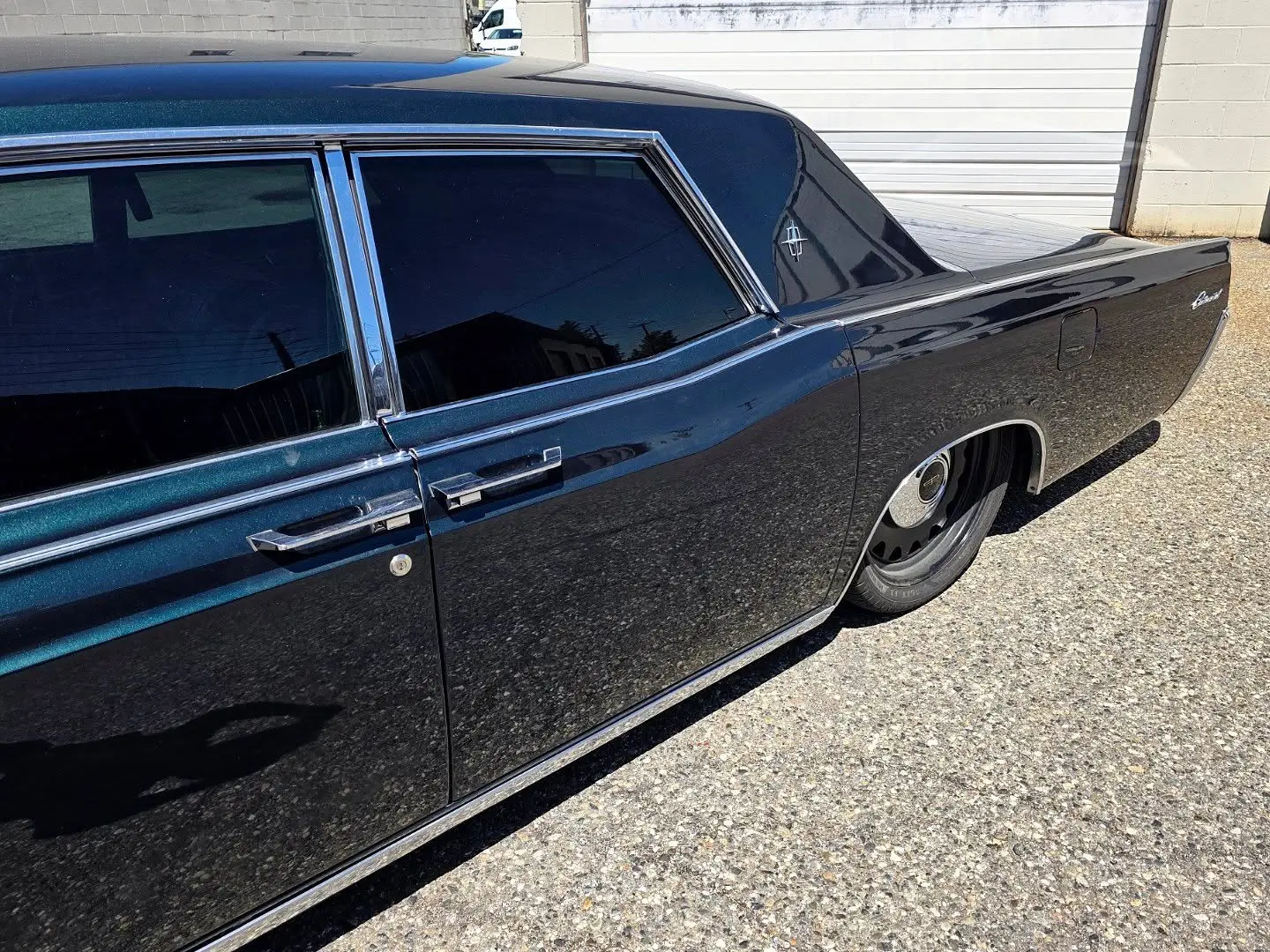
How do 35% and 50% tint compare side by side?
The 50 shades let in roughly 40 to 60% more daylight than the 35s and give up 17 to 25 points of glare reduction, while heat rejection moves by only a few points within each film. Every number below comes from LLumar’s data sheet (LL0116NAEN, dated 03/26), tested on clear 6 mm glass per NFRC methods.
| ATC 35 | IRX 35 | ATC 50 | IRX 50 | |
|---|---|---|---|---|
| Film type | Colour-stable dyed | Nano-ceramic | Colour-stable dyed | Nano-ceramic |
| Measured VLT | 38% | 39% | 60% | 54% |
| Glare reduction | 57% | 56% | 32% | 39% |
| Total solar energy rejected (TSER) | 35% | 54% | 28% | 50% |
| Infrared energy rejected (IRER) | 22% | 60% | 22% | 60% |
| Visible reflection | 6% | 6% | 7% | 7% |
| UV blocked, 300–380 nm | >99% | >99% | >99% | >99% |
Both shades are on the shop’s menu in both films, so the choice is really four films, not two.
Why do the two 50% films look different when the 35s match?
Because LLumar’s shade names are codes rather than measurements. The two 35s read within a point of each other, but on the sheet ATC 50 reads 60% and IRX 50 reads 54%, a six-point gap you can see side by side.
That changes the size of the step from 35 to 50. In ATC, going from 35 to 50 lifts the light let through from 38% to 60%, about 1.6 times as much. In IRX, the same step goes from 39% to 54%, about 1.4 times. So “50%” in dyed film is noticeably lighter than “50%” in ceramic, and the glare figures follow: ATC 50 cuts 32% of glare, IRX 50 cuts 39%. How the measurement works is covered on how window tint percentage is measured. The practical rule: pick the film first, then the shade.
Does 35% keep a car cooler than 50%?
A little, within the same film; a lot less than changing film. In dyed film the 35 turns back 35% of the sun’s total energy and the 50 turns back 28%; in ceramic, the figures are 54% and 50%.
The infrared figure doesn’t move with shade at all. IRX holds 60% infrared energy rejection at both 35 and 50, and ATC holds 22% at both, so the infrared control comes with the film type rather than the darkness. That’s why the lightest ceramic here beats the darker dyed film: IRX 50’s TSER is 15 points higher than ATC 35’s, with 54% of daylight coming through instead of 38%. If heat is your reason for tinting and you’d rather keep the glass light, IRX 50 does both; does ceramic tint really block heat explains the physics, and the spec table is on LLumar IRX.
Do 35% and 50% tint block the same amount of UV?
Yes. Every film in this comparison is rated above 99% UV rejection between 300 and 380 nm, so going darker buys you nothing on UV.
The Skin Cancer Foundation’s expert Q&A on car tint backs that up: a window film consultant there says darker tints protect no better against UV “than clear UV-protective film does.” If UV protection for passengers in the back is the goal, the lighter 50 does that job as well as the 35, and keeps more daylight in the cabin.
How do 35% and 50% look over factory privacy glass?
Both get much darker, because light has to pass through the factory glass and then the film. Glassmaker AGC says its privacy glass is made at light transmissions “from 4.5% to 40% (ISO 9050)”, depending on the vehicle.
Multiply the two figures for a rough idea of the result:
| Factory glass passes | With a 35 (38–39%) | With ATC 50 (60%) | With IRX 50 (54%) |
|---|---|---|---|
| 40% | About 15–16% | About 24% | About 22% |
| 20% | About 8% | About 12% | About 11% |
On privacy glass, 50 is the shade that changes the look least, which makes it the natural pick when heat and UV are the reason. If the glass is already near the dark end of AGC’s range, even a 50 makes the cabin hard to see into. What the factory glass does on its own is on how dark is factory privacy glass.
Can you put 35% or 50% tint on the front windows in BC?
No. On BC roads, film on either front door window is illegal at any shade, so 50% isn’t “light enough” for the front doors, and clear film isn’t either.
The exceptions in MVAR s. 7.05(8) are short: a strip down to 75 mm from the windshield’s top edge, side glass behind the driver, and the back window, given outside mirrors left and right. The 2025 Vehicle Inspection Manual that inspectors follow fails “any after-market tint” on a front door window under item 13d. A tint ticket typically costs $109, Mission RCMP says, adding that a Notice & Order can require the film’s removal and a visit to a designated inspection facility, with $598 owing if that inspection isn’t done within 30 days. Front-door film is still available here on request, once all of that has been explained. The rule in full: can you tint front windows in BC.
Across the border
South of the border, RCW 46.37.430 requires side and rear windows to pass at least 24% of light, glass and film together, for anyone driving in Washington. On clear glass both shades clear that line comfortably. That doesn’t make front film legal once the car is back on BC roads.
35% or 50%: which should you choose?
Go with 35% for an obviously tinted car and stronger glare control in the back. Go with 50% for heat and UV control that barely changes the look, or when the car already has factory privacy glass.
Pick 35% if
- A visibly tinted look and some privacy for passengers and cargo matter to you.
- Whoever rides in the back squints at low sun through the side glass.
- The rear glass is clear and you want it closer to a privacy-glass look.
Pick 50% if
- You want the rear glass to look nearly factory while cutting heat and UV.
- The car has privacy glass and you don’t want it any darker than it is.
- You want the most light for the view over your shoulder after dark.
- Heat is the reason, and you’re choosing IRX 50.
Our advice on 35 versus 50
For most owners, the film decides more than the shade. If heat is the point, IRX in either shade outperforms ATC in either shade. If looks are the point, 35 gives a finished tinted look on clear glass, and 50 is the shade we’d suggest over privacy glass. For the next step darker, see 20% vs 35% tint.
What does each shade cost, and how long is the appointment?
Shade doesn’t change the price; film does. Rear-glass ATC is priced from $220, $240 or $260, by body style: sports coupe, sedan or pickup, or full-size SUV or wagon; IRX is added as a per-package upgrade (window tint price list).
You’ll usually drive away the same day; tinting a whole sedan or SUV takes about two to four hours. Each piece comes off the plotter already shaped for your model’s glass, then gets heat-formed to its curve and fitted by hand, and the windows then stay closed for three to five days of curing. Each shade has its own page, 35% window tint and 50% window tint, and you can book through the window tint quote form.