
How do LLumar IRX and AIR compare side by side?
Line up the six shades the shop lists with LLumar data, darkest to lightest, and the infrared column barely moves while everything you can see changes. Every number below is from LLumar’s performance data for automotive film, sheet LL0116NAEN dated 03/26, tested to NFRC methods with the film on a single 6 mm pane of clear glass.
| Shade | Film | Measured VLT | TSER | IRER | SIRR | Glare reduction | Visible reflection |
|---|---|---|---|---|---|---|---|
| IRX 05 | Dark ceramic | 6% | 62% | 60% | 86% | 94% | 5% |
| IRX 15 | Dark ceramic | 20% | 59% | 61% | 88% | 78% | 5% |
| IRX 35 | Dark ceramic | 39% | 54% | 60% | 87% | 56% | 6% |
| IRX 50 | Dark ceramic | 54% | 50% | 60% | 87% | 39% | 7% |
| AIR 80 | Clear ceramic | 77% | 43% | 60% | 86% | 13% | 9% |
| AIR 90 | Clear ceramic | 84% | 30% | 40% | 57% | 5% | 9% |
UV protection is rated above 99% (300–380 nm) on all six. A 70% AIR appears on the shop’s list too, but LLumar’s current sheet carries no figures for it, so it’s left out of the table.
Reading the IRX and AIR rows together
From IRX 05 all the way to AIR 80, infrared energy rejection (IRER) stays between 59 and 61%. Over the same span, total solar energy rejected (TSER) falls from 62% to 43%. That 19-point drop is daylight: a darker film turns away more of the sun’s visible light, which is part of its energy. AIR 90 is the only shade where the infrared figures fall too, to 40% IRER and 57% SIRR.
Why do IRX and AIR usually go on different windows?
Because people buy them for opposite reasons. IRX is chosen to darken glass, for privacy, glare and heat. AIR is chosen to leave glass looking untouched, and most of the glass drivers want to keep clear sits ahead of them, where BC allows no film at all.
| Glass | What MVAR s. 7.05(8) allows | IRX there | AIR there |
|---|---|---|---|
| Rear door and quarter windows | Film of any shade | Privacy, glare and heat control | Heat and UV control, glass stays clear |
| Back glass | Film of any shade, with outside mirrors on both sides | Same as the rear doors | Same as the rear doors |
| Windshield, top 75 mm | Film allowed | Road-legal | Road-legal |
| Front door windows | No film | Not road-legal | Not road-legal |
| Windshield below the top 75 mm | No film | Not road-legal | Not road-legal |
So in BC, both films have the same legal territory, and on that glass they compete head to head. Where the factory has already darkened the rear glass, AIR has a job IRX doesn’t. LLumar’s AIR product page markets AIR for most auto glass and names factory privacy glass in particular, saying that glass is weak on heat control. That’s a film maker’s view; a glassmaker’s own figures are set out in window tint vs factory privacy glass.
Is AIR road-legal on the windshield or front doors in BC?
No. A clear film is still a material that reduces the light reaching the driver, and BC’s rule has no exception for films that reduce it only a little. AIR 90 still cuts visible light to 84% on clear glass.
In BC: MVAR s. 7.05(8) keeps film off the front door glass and off the windshield below its top 75 mm, and the 2025 Vehicle Inspection Manual rejects it at inspection (item 13d for the front side windows, item 12e for the windshield). Brookswood Tint will install AIR there if you ask, after explaining what can follow. The typical tint ticket, according to Mission RCMP, is $109. Police can instead issue a Notice & Order requiring the film to come off and the car to pass an inspection; miss the 30-day inspection deadline and the fine is $598.
The full front-glass rule is on can you tint front windows in BC, and the windshield job itself is described on windshield tint.
What do you give up with each film?
With IRX you trade some of the view out for privacy and glare control; with AIR you keep the view and give up privacy and nearly all glare control. Heat rejection on infrared is a draw between IRX and AIR 80, so the trade is about light, not heat.
What IRX costs you
- View after dark. IRX 15 lets through 20% of daylight and AIR 90 lets through 84%, more than four times as much. On an unlit road, that’s the difference you notice over your shoulder.
- The factory look. Even IRX 50, the lightest shade the shop sells, measures 54% and reads as tinted.
What AIR costs you
- Privacy. At 77% and 84% VLT, people can see into the car much as they could before.
- Glare control. AIR 80 cuts glare by 13% and AIR 90 by 5%, against 39% for IRX 50 and 78% for IRX 15. Low sun through the side glass is cut very little.
- A few points of total heat. AIR 80’s TSER is 43% and IRX 50’s is 50%, and the darkest IRX, IRX 05, reaches 62%.
Can one car have both IRX and AIR?
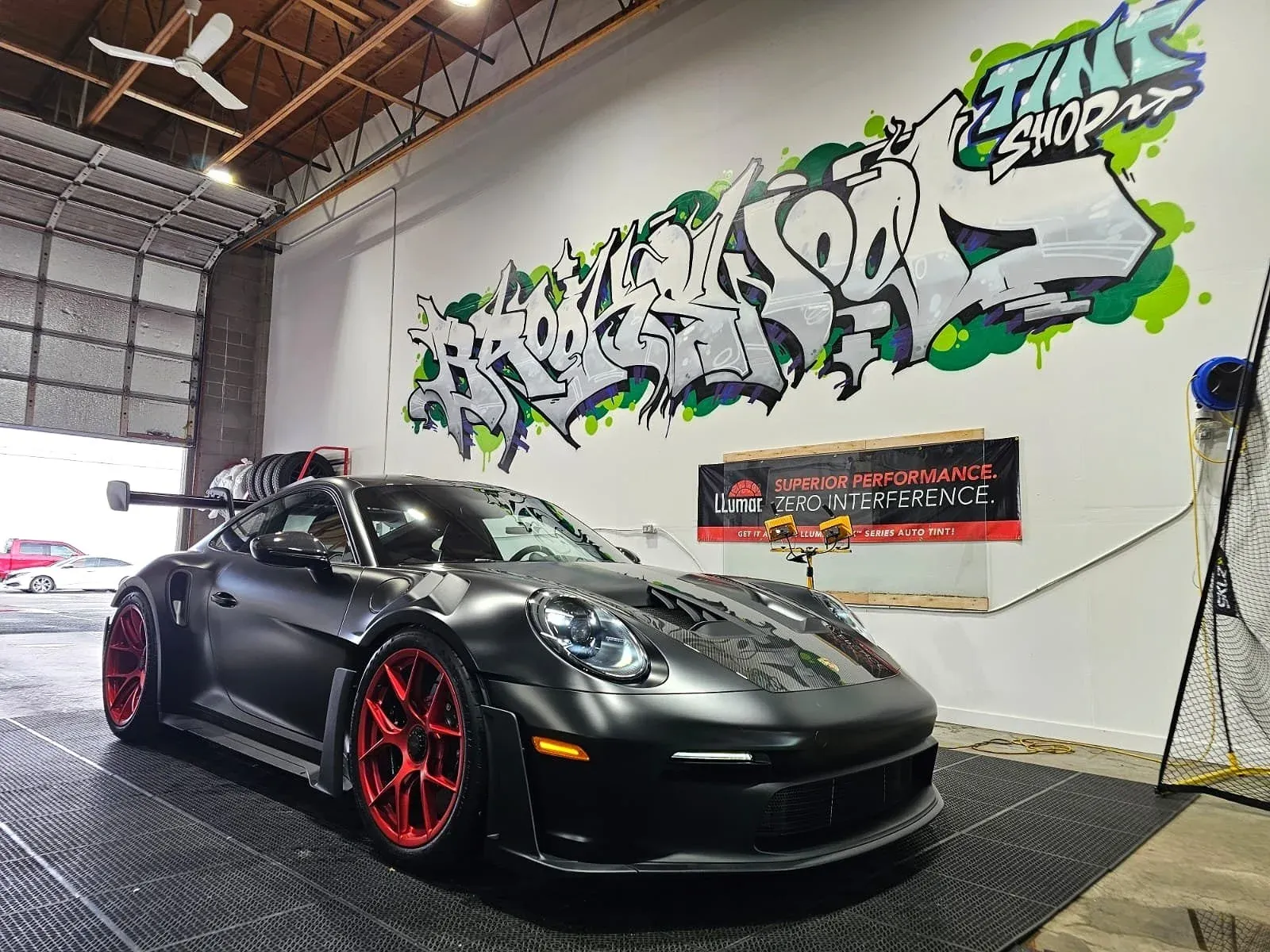
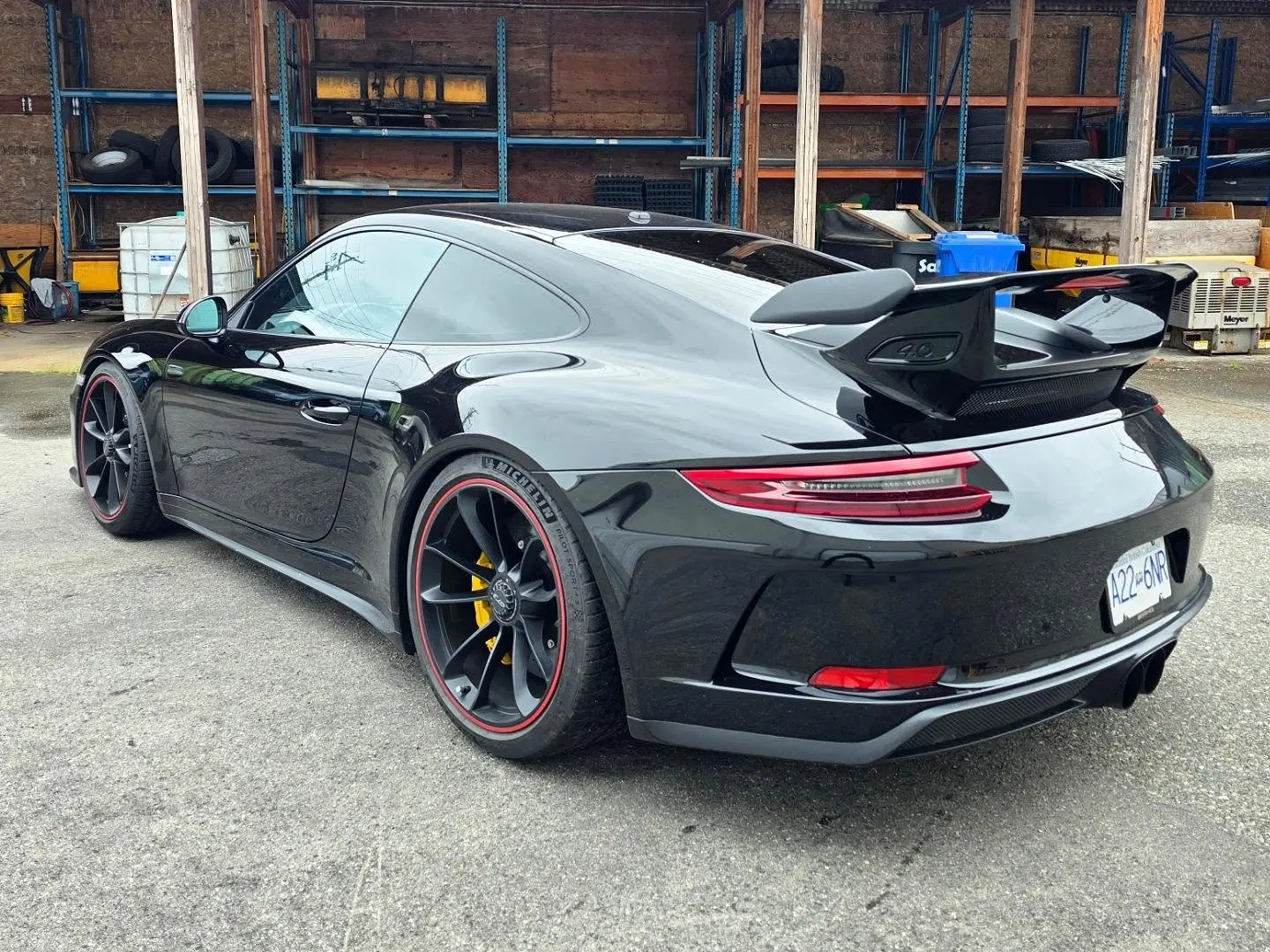
Yes. The plotter cuts each pane on its own, so the film can change from one window to the next, and the shop has done exactly that: the black 991.2 911 GT3 pictured on this page has every pane done in either AIR or IRX.
Within BC’s rules, a mix only happens behind the driver. One example: IRX on the rear doors so passengers get shade and privacy, and AIR on a back glass you’d rather keep clear for the view through the mirror. Every pane carries the same cover whichever film it gets: LLumar’s lifetime limited warranty for the film, plus Brookswood Tint’s lifetime warranty for the fitting.
IRX or AIR: which should you choose?
Choose IRX if you want the glass behind the driver darker, cooler and harder to see into. Choose AIR if you’d like the heat and UV handled behind the driver while the car keeps its untinted look, especially over dark factory glass.
IRX suits you if
- Privacy for passengers, kids or cargo is part of the reason you’re tinting.
- Low sun through the rear glass bothers whoever rides in the back.
- You want the most total heat rejection LLumar lists: 62% TSER at IRX 05.
- The car has clear factory glass at the back and you want it to look tinted.
AIR suits you if
- The rear glass is already privacy glass and dark enough for you.
- You don’t want the car to look tinted at all.
- You want infrared rejection to match IRX (AIR 80, 60% IRER) with three-quarters of the daylight still coming in.
Where we stand
We sell both and quote them side by side. For a car that will stay road-legal in BC, IRX is the one we’d point most people to, because the glass it suits is the glass the law lets you film. AIR earns its place behind the driver on dark factory glass, and with owners who simply don’t like a tinted look. If you’re asking about AIR for the windshield or front doors, we’ll fit it on request and tell you plainly, before any film goes on, that it isn’t road-legal here. Full specs are on the LLumar IRX nano ceramic and LLumar AIR clear ceramic pages.
What do IRX and AIR cost at Brookswood Tint?
Both are upgrades priced per package over the ATC base price. The window tint price list has a sports coupe’s three rear windows from $220, the five on a sedan or pickup from $240, and the full-size SUV or wagon package from $260. A full windshield, done from the inside, starts at $200.
Ask for IRX and AIR on one quote and you’ll see both prices for your car. Most cars are finished the same day, and fitting every window on a sedan or SUV usually takes two to four hours. Afterwards, don’t lower the side windows for three to five days; the film needs that long to cure. Send the year, make, model and the windows you want through the ceramic tint quote form, and the ceramic window tint page explains the service.