
How do LLumar IRX and CTX compare shade by shade?
Both lines come in the same seven shade codes, and at each code the darkness is within two points. IRX rejects more heat in every row. These are LLumar’s own figures from its performance data sheet, LL0116NAEN dated 03/26, with both films tested the same way: NFRC methods, one pane of 6 mm clear glass.
| Code | IRX VLT | CTX VLT | IRX TSER | CTX TSER | IRX IRER | CTX IRER | IRX SIRR | CTX SIRR |
|---|---|---|---|---|---|---|---|---|
| 05 | 6% | 5% | 62% | 58% | 60% | 50% | 86% | 72% |
| 15 | 20% | 20% | 59% | 53% | 61% | 49% | 88% | 69% |
| 25 | 26% | 28% | 57% | 50% | 59% | 47% | 85% | 66% |
| 30 | 33% | 34% | 56% | 49% | 60% | 48% | 87% | 68% |
| 35 | 39% | 37% | 54% | 48% | 60% | 48% | 87% | 69% |
| 40 | 42% | 44% | 53% | 47% | 60% | 49% | 87% | 69% |
| 50 | 54% | 55% | 50% | 43% | 60% | 48% | 87% | 68% |
The shop’s IRX menu is 05, 15, 35 and 50. LLumar makes the other codes in both lines, and neither line has a 20.
Where the two films match
Glare reduction is within three points at every code, from 94% for both 05s to 39% (IRX) and 37% (CTX) at 50. Visible reflection is 5–7% for both, so neither looks mirrored. Both are charcoal, both are rated above 99% for UV, and neither is a metallized film: LLumar lists both as ceramic, and phone and GPS signals pass through both.
How much more heat does IRX reject than CTX?
On total solar energy, IRX leads by 4 to 7 points. On infrared alone, the gap roughly doubles: 10 to 12 points of IRER and 14 to 19 points of SIRR. That’s the difference LLumar is selling when it calls IRX its infrared-rejecting line.
The three heat columns, film against film
- TSER (total solar energy rejected) counts UV, visible light and infrared together. The gap is smallest at 05 (62% vs 58%), where both films already keep out almost all the daylight, and 6 to 7 points from 15 to 50.
- IRER (infrared energy rejection) holds near 60% for every IRX shade and between 47 and 50% for CTX. IRER counts heat the film absorbs and passes on into the car, which is why LLumar’s sheet describes it as “a more complete measurement” of heat.
- SIRR, selective IR rejection, is the larger number and the one most ads quote: 85–88% for IRX against 66–72% for CTX.
One way to see it: CTX 05, the darkest CTX, rejects 58% of total solar energy. IRX 15, which lets in four times as much light, rejects 59%.
How does LLumar itself position CTX and IRX?
LLumar puts IRX above CTX. Its spec sheet sums up CTX as “for excellent heat rejection without blocking electronic signal transmission”, and ranks IRX as its top line for heat rejection, built on “advanced nanoceramic IR-blocking technology”.
The CTX product page describes it as ceramic tint in “color-stable charcoal shades, from deep limo-dark to subtle gray”, without “a reflective, mirror-like finish”, and calls it “a practical choice for drivers seeking quality tint without the highest price point”. In other words, LLumar’s own framing is that CTX costs less and IRX does more.
What did the shop’s CTX Turbo S get, and what would IRX change?
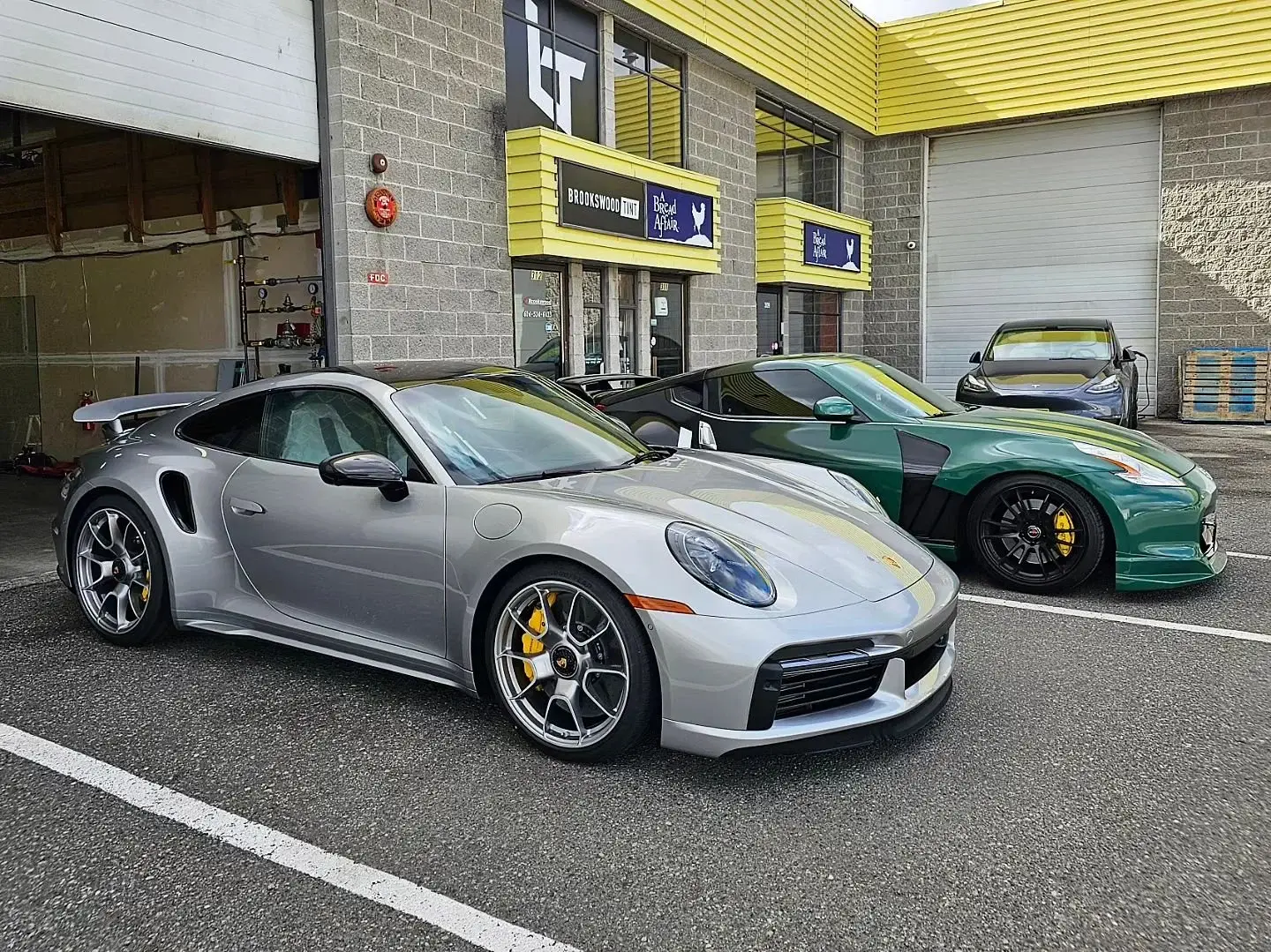
The silver 911 Turbo S in the photo wears LLumar CTX 15, a job posted on the shop’s Instagram. On LLumar’s sheet, CTX 15 lets through 20% of daylight and rejects 53% of total solar energy and 49% of infrared energy.
IRX 15 on the same glass would look the same on paper: 20% VLT, 78% glare reduction and 5% reflection, all identical to CTX 15. The heat columns would move to 59% TSER and 61% IRER, 6 and 12 points higher. So a car that already wears CTX 15 on some windows could take IRX 15 on the rest without a visible step in darkness, at least on LLumar’s clear-glass figures. Factory glass that’s already tinted can shift both.
Can you get LLumar CTX at Brookswood Tint?
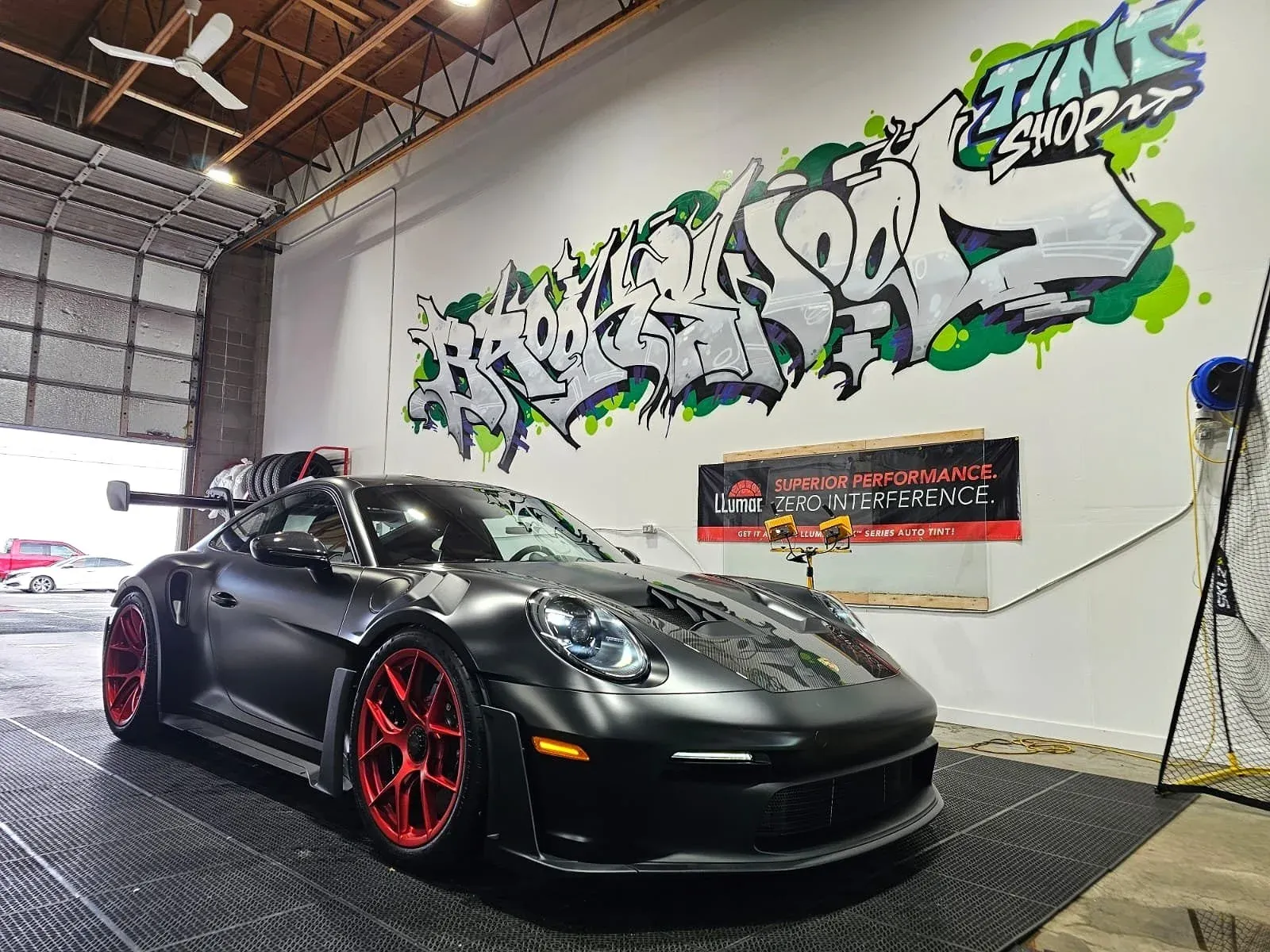
Not from the current menu, which lists ATC dyed film plus the IRX and AIR ceramics. The shop has fitted CTX on customer cars, including the Turbo S on this page, but it doesn’t list or price CTX today, and IRX is the ceramic it quotes. If you have a reason to want CTX, such as film already on part of the car, mention it when you ask for a quote.
Whichever ceramic you end up with, LLumar’s tint FAQ extends its manufacturer’s lifetime limited warranty to every LLumar tint product, subject to “certain restrictions” it asks you to get from the dealer. On top of that, the installation carries the shop’s lifetime workmanship warranty. More about the shop’s standing with LLumar is on authorized LLumar dealer in Langley.
Where can IRX or CTX go on a car in BC?
The two films follow the same rule, because BC’s rule doesn’t care which film it is. Under MVAR s. 7.05(8), any shade of either can go on the side glass behind the driver, on the rear window as long as both outside mirrors are fitted, and along the windshield’s top 75 mm. The front door glass can’t take either.
The shop fits front-door film when an owner asks, and says up front that it isn’t road-legal in BC. Police can write a ticket, $109 being the typical fine according to Mission RCMP, or issue a Notice & Order that means removing the film and passing an inspection within 30 days.
IRX or CTX: which should you choose?
Choose IRX if heat is the main reason you’re tinting. CTX makes sense mainly where you’re matching film already on the car, or where a shop you trust stocks it and quotes it below IRX, which is how LLumar positions it.
IRX rather than CTX suits you if
- The car sits in the sun, or the back seats carry kids or a dog on long summer drives.
- Light shades appeal to you but heat still matters: IRX 50’s TSER is 50% at 54% VLT, equal to CTX 25’s at a much darker 28%.
- You’d rather book straight off the shop’s current menu.
CTX suits you if
- You’re matching CTX already on part of the car.
- You’re quoted it elsewhere and its numbers cover what you need: 43–58% TSER is still well above the 28–44% of ATC dyed.
Where we stand
IRX is the ceramic on our menu and the one we recommend, and the numbers in the table are why. We have nothing against CTX: it’s a real ceramic film, it’s on the same LLumar sheet, and it’s on a 911 Turbo S we did. It just isn’t on our current menu, so the ceramic we quote is IRX. For ceramic against dyed film, see ceramic vs dyed window tint, and for whether ceramic pays off at all, is ceramic window tint worth it.
How do you get IRX priced for your car?
Send the year, make, model, the windows you want done and the shade, and mention any CTX already on the car so the new film can be matched to it. For a sedan, ATC on the rear glass starts at $240 and IRX is quoted per package above that; sports coupes start at $220 and full-size SUVs and wagons at $260, as the tint price list shows.
Most cars are done the same day, cut on the plotter for your exact model and heat-shrunk to the glass by hand. Use the quote form, and read the LLumar IRX nano ceramic film page for the film on its own.