What does matte PPF cost at Brookswood Tint?
Matte film is offered on the same four packages as gloss film, whose published starting prices are $850, $1,550, $1,900 and $4,000 plus tax. The shop confirms the matte figure on your quote; bigger vehicles, busier bumpers and paint that needs work first all push a quote up.
| Package | What gets matte film | From (plus tax) |
|---|---|---|
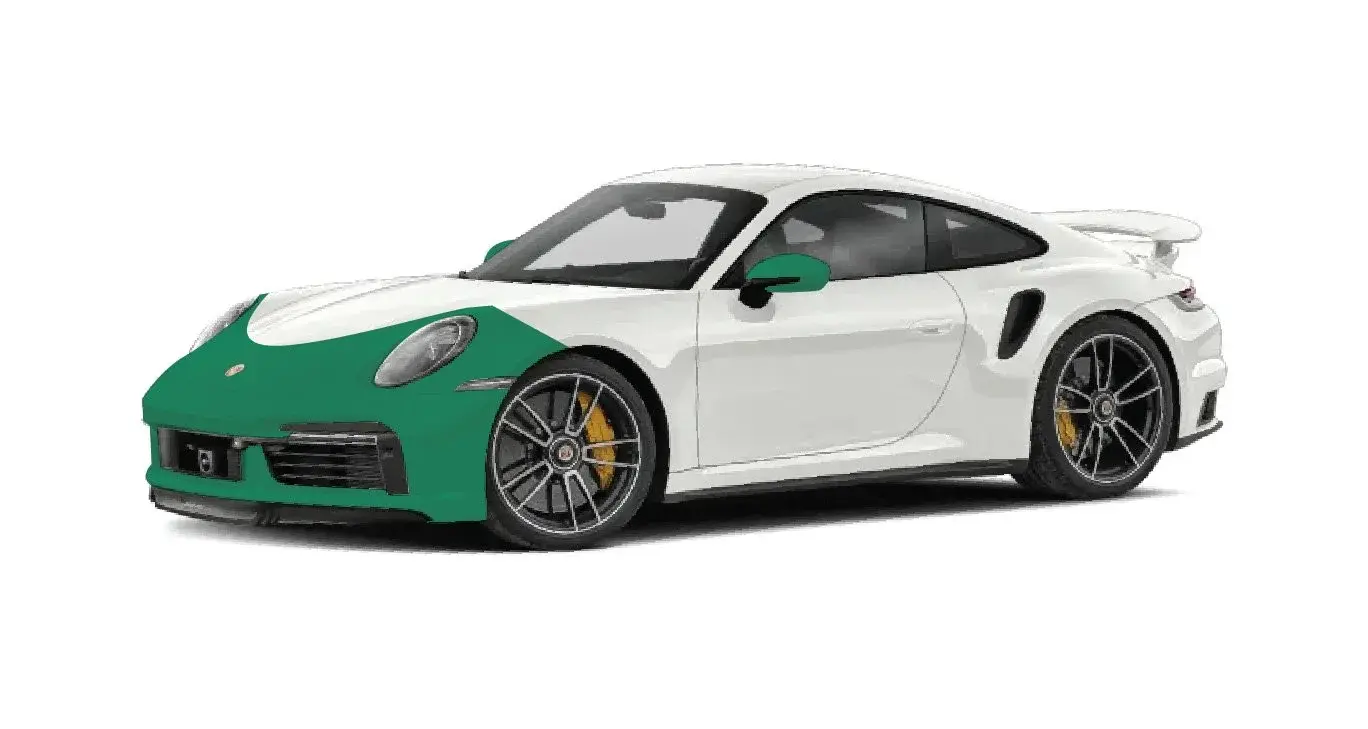
| Partial Front | Full bumper, partial hood, partial fenders, headlights, side mirrors | $850 |
| Full Front | Full hood, full fenders, full bumper, headlights, side mirrors | $1,550 |
| Track Package | Full Front plus A-pillars, a partial roof and the rocker panels | $1,900 |
| Full Vehicle | Every painted surface, plus the headlights | $4,000 |
The film is LLumar Platinum Matte, the flat-finish member of the Platinum family. If you’re still weighing the look against clear film, stealth PPF vs gloss PPF sets the two finishes side by side, and every package is described on the paint protection film page.
What does matte film look like on your paint?
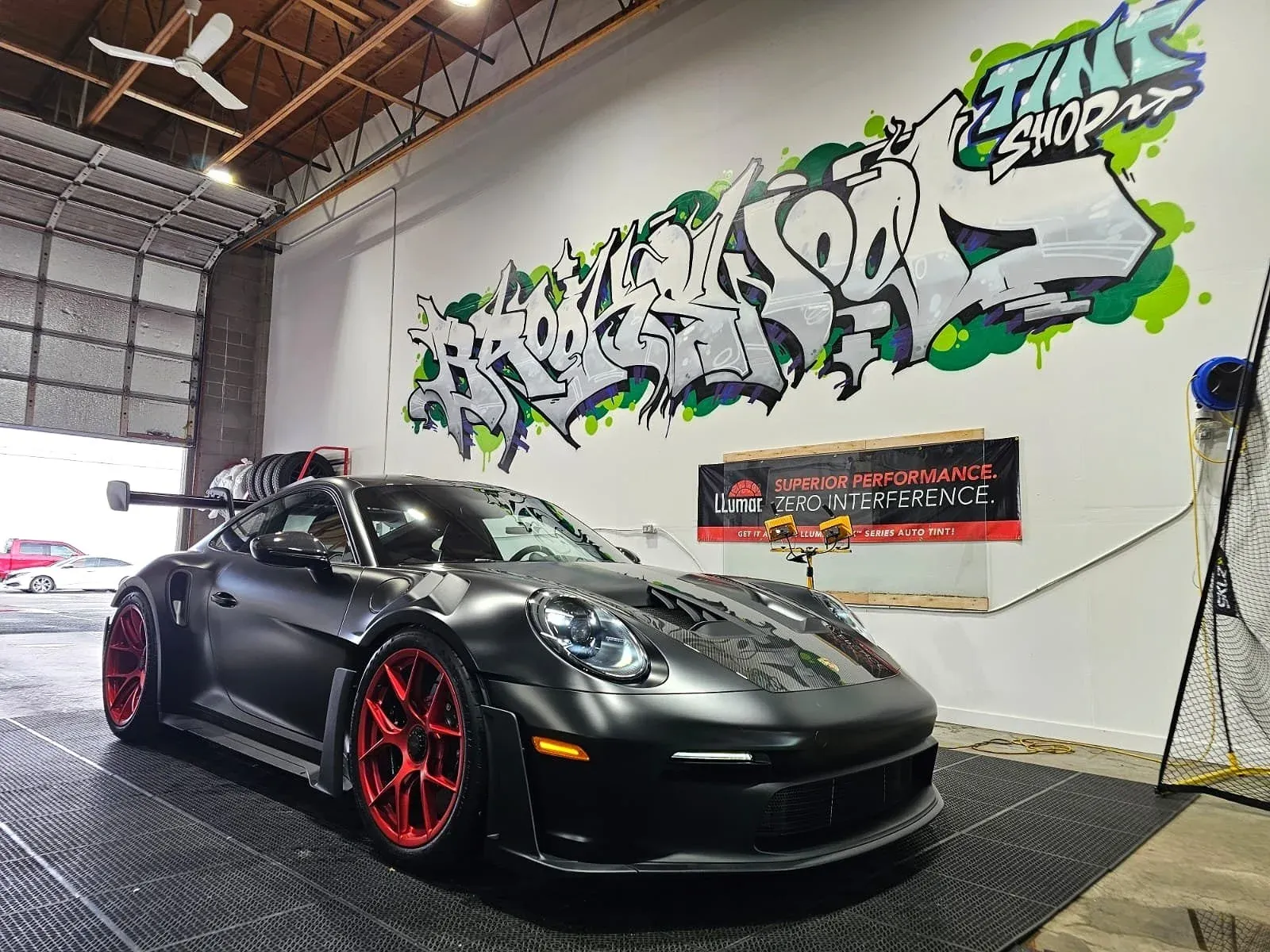
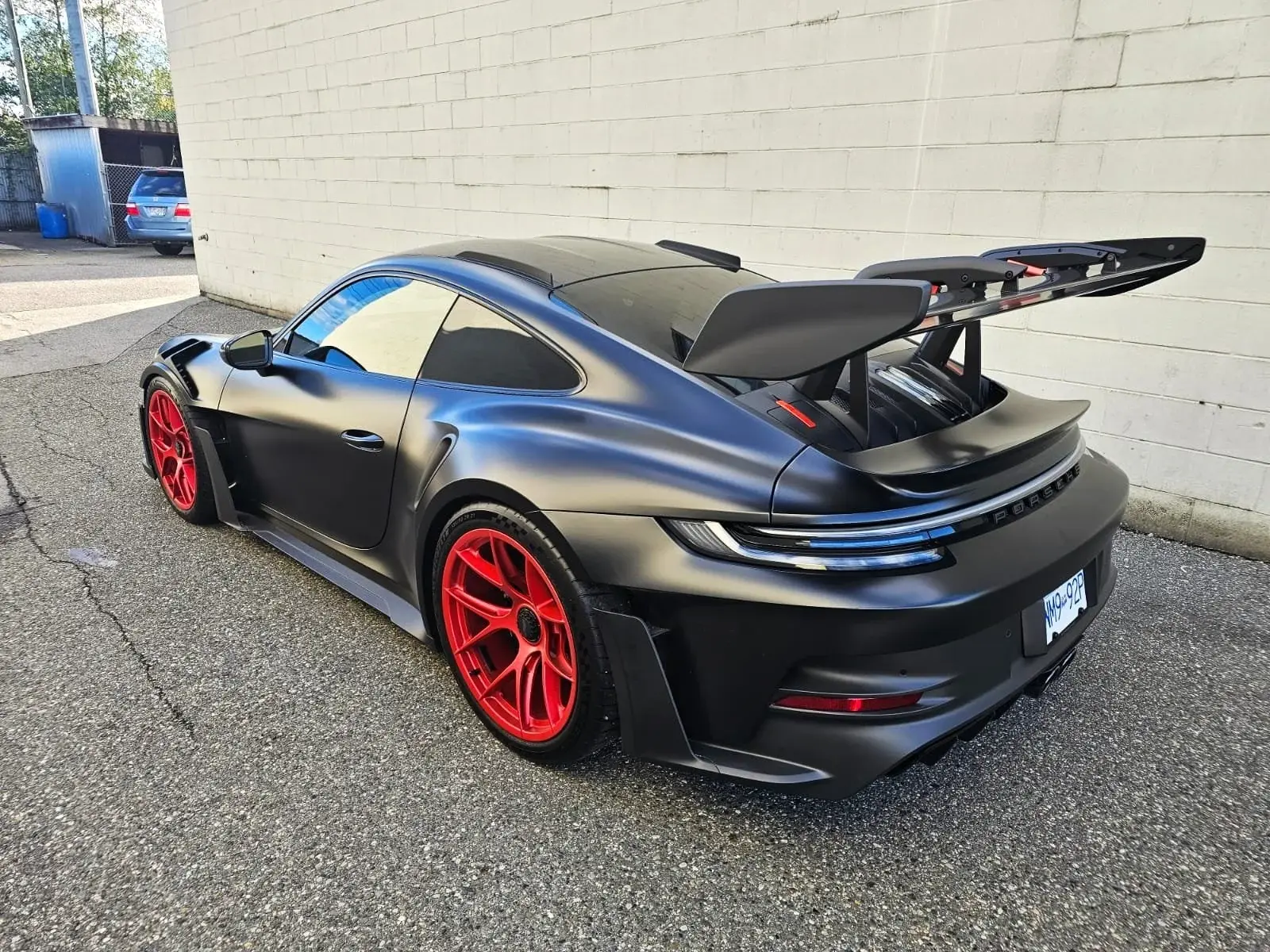
On gloss paint, matte film gives the covered panels a satin, low-sheen finish while the colour underneath stays the same. On paint that left the factory flat, it keeps that flat look instead of putting a shine on it.
LLumar markets Platinum Matte for two jobs, matching paint that is already flat and changing the look of gloss paint, and stresses that the film is clear enough for the paint colour to read true. Its HydroGard top coat is described as water-repelling and stain-resisting. The same product page names flying rocks, road salt, sand, bugs and oil as hazards the film stands up to, and says surface scratches heal when the sun or a warm engine heats the film.
Where does the finish change on a partly filmed car?
On gloss paint, the satin look stops wherever the film stops. That makes the edge of your package a visible line, so with matte film the choice of coverage is about looks as much as protection.
| Package | Where satin meets gloss | How it reads |
|---|---|---|
| Partial Front | Across the middle of the hood and partway along each fender | A satin nose with a line on open panels; the most noticeable split |
| Full Front | Where the hood and front fenders end | A two-tone car split at the panel gaps by the doors |
| Track Package | Panel gaps by the doors, plus the roof behind the windshield and the sills | Satin nose, pillars and sills against gloss doors and rear |
| Full Vehicle | Nowhere on the paint | One even satin finish |
For an even stealth look on gloss paint, the full body package is the one that gets you there, because the finish never switches back. If budget points you to front coverage, Full Front at least lands the change on panel gaps rather than across the open hood. On factory matte paint none of this applies: matte film over matte paint keeps one finish whatever the package.
Who is matte PPF for?
Two kinds of owner: those whose car came from the factory in matte paint and want to keep it that way, and those with gloss paint who want a satin look without a repaint.
Owners of factory matte paint
Matte paint is hard to fix once it’s marked. Kia’s EV9 owner’s manual warns that on a matte finish “it is impossible to modify only the damaged area”: the whole part has to be repaired. On a car like that, a chipped matte bumper means refinishing the whole bumper, which is why film over the panels that take hits matters more. What to expect from the install on flat factory paint is covered in putting PPF on matte paint.
Gloss cars going satin
Matte film changes the look without touching the paint underneath. The original gloss is still there, so the look can be reversed later: LLumar’s PPF FAQ says removal belongs indoors at 55 °F (13 °C) or warmer, done by a professional and never in extreme cold. If you’re also weighing a satin vinyl wrap, matte PPF vs matte wrap compares the two.
How is matte film installed, and how long does it take?
The install is the same as for gloss film: pieces cut from a software template for your exact vehicle, laid on decontaminated paint and wrapped at the edges where the panel allows. Matte jobs keep the published schedule: one day is typical for the nose package, Full Front and Track run one or two, and covering the whole body takes three to five.
Gloss paint is corrected before film when it needs it, after the paint thickness is measured, because film keeps whatever is under it. Factory matte paint is different: carmakers tell owners not to polish it, so correction is off the table and prep comes down to cleaning. On bumpers, a relief cut is sometimes unavoidable, and the installer shows you where before starting.
How do you look after matte paint protection film?
Hand washing and touchless bays are both fine; brush washes are not, and a pressure wand should never be pointed at an edge of the film. The shop wants seven days before the first wash, a longer wait than the three days in LLumar’s FAQ.
LLumar’s care advice covers its films in general and doesn’t give separate rules for the matte version. Products made to add shine work against a flat finish, so choose cleaners labelled for matte surfaces and ask the shop before using anything else on the film. A coating made for flat finishes can go on top; the options are explained on ceramic coating for matte paint. LLumar’s 10-year limited warranty applies to the matte film just as to gloss, and the defects the shop names in its own terms are yellowing, cracking, bubbling and peeling.
How do you book matte PPF in Langley?
Send your year, make and model, say whether the paint is gloss or factory matte (with the paint name if it’s matte), and pick the package you’re leaning toward on the PPF quote form. Budget from $850 for a matte partial front or $4,000 for a full satin car, plus tax; the car stays with the shop on the Langley Bypass for a day at the least and five at the most.