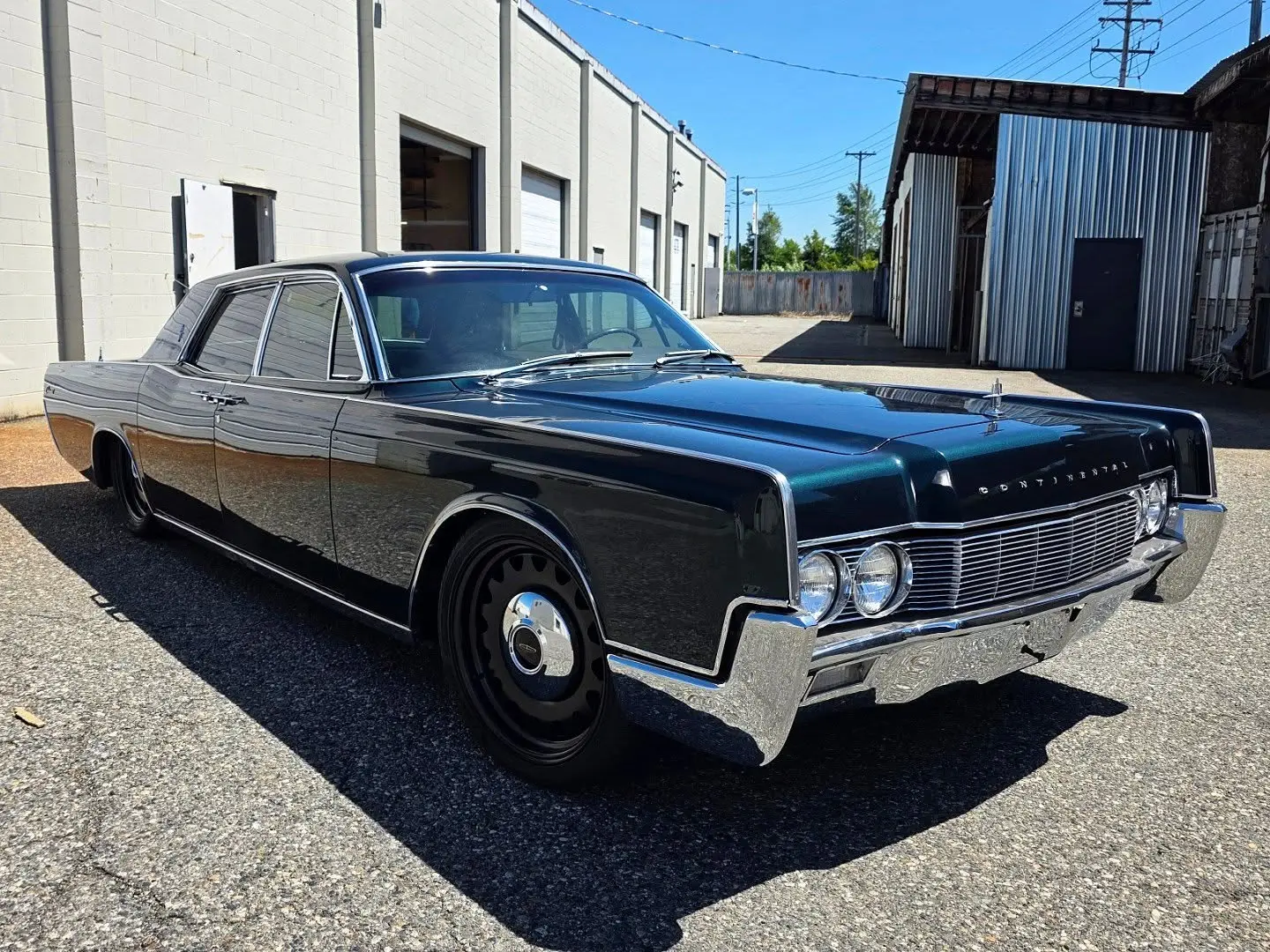
What do the photos show of this Continental’s tint?
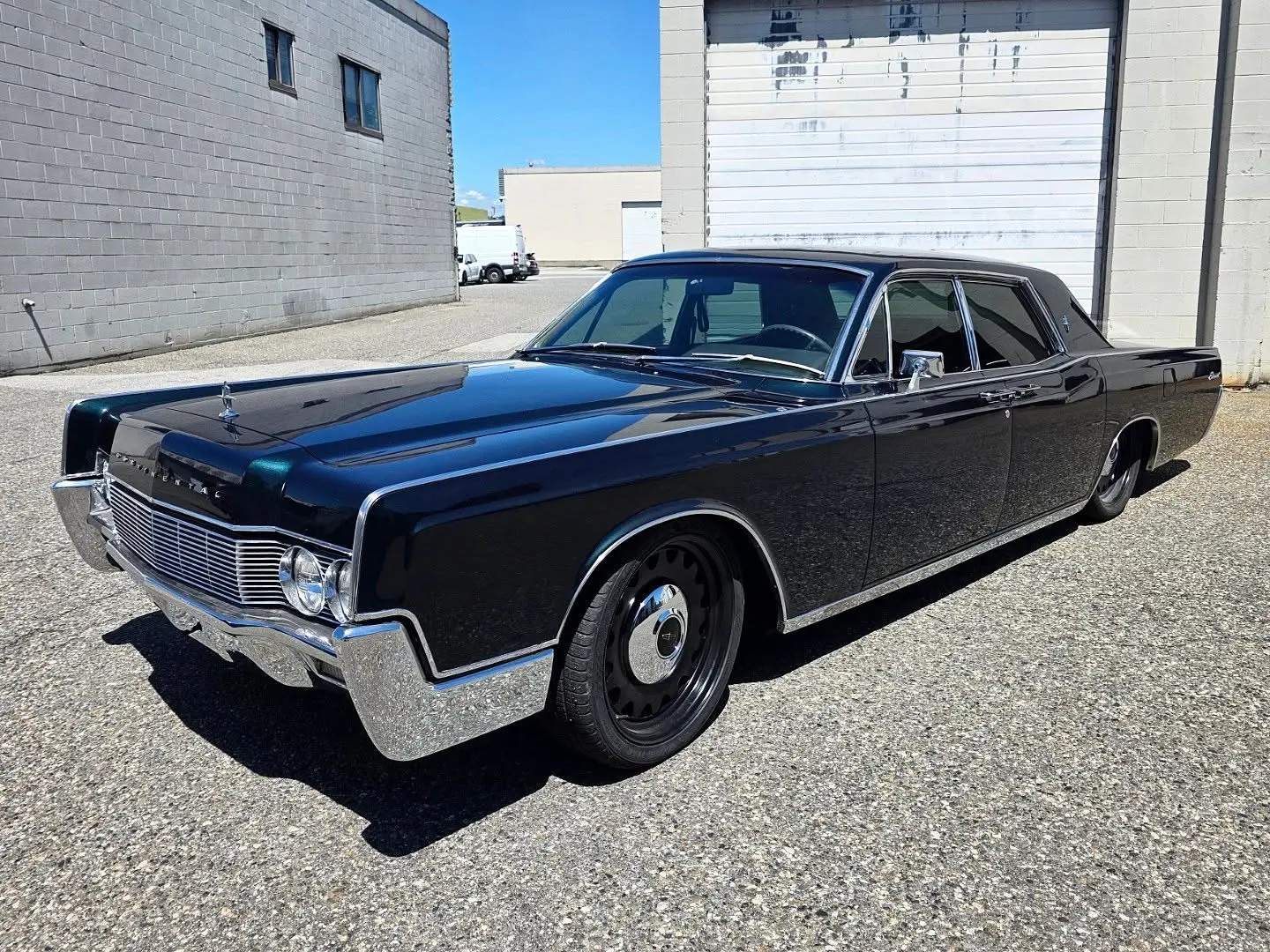
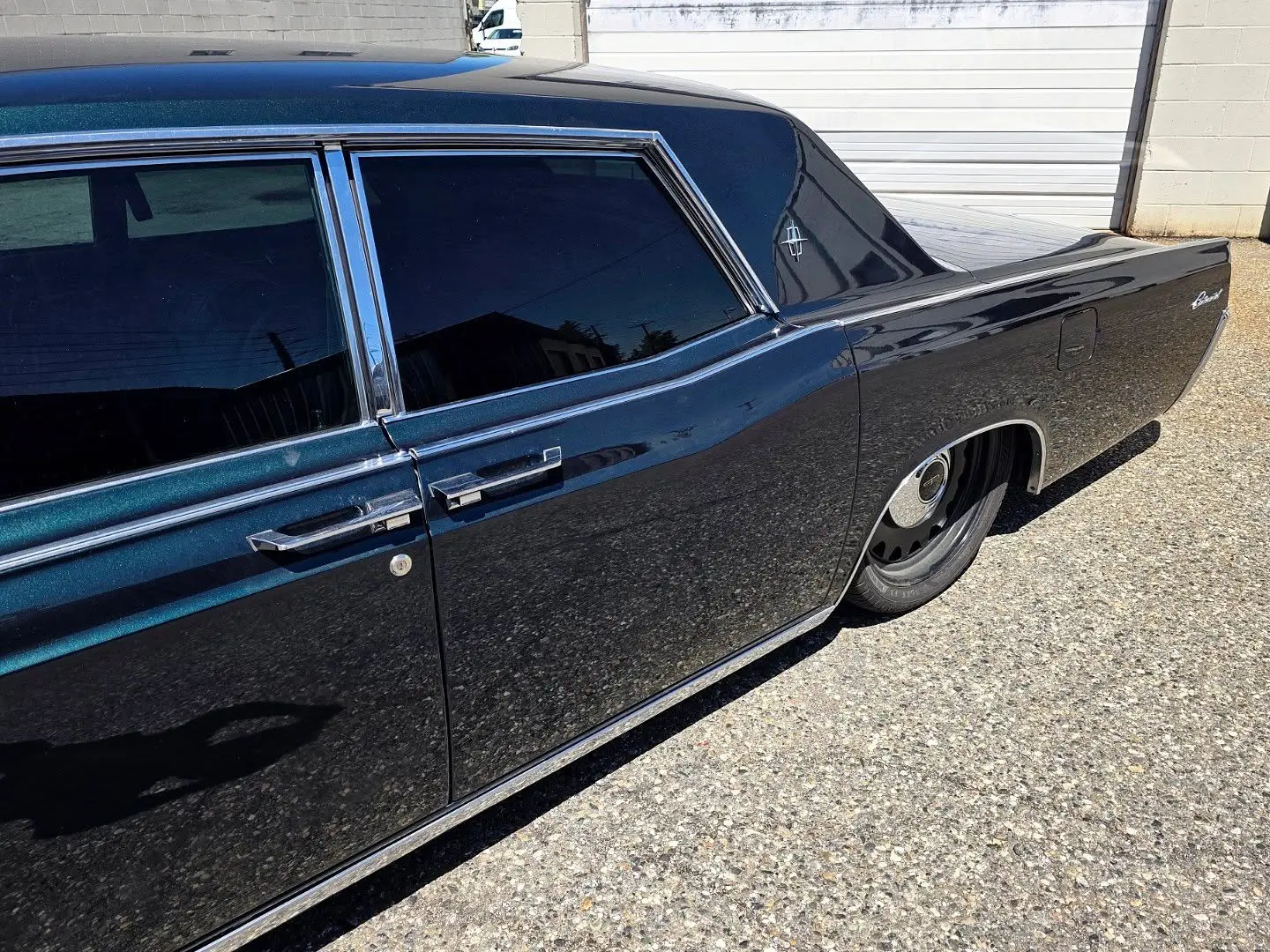
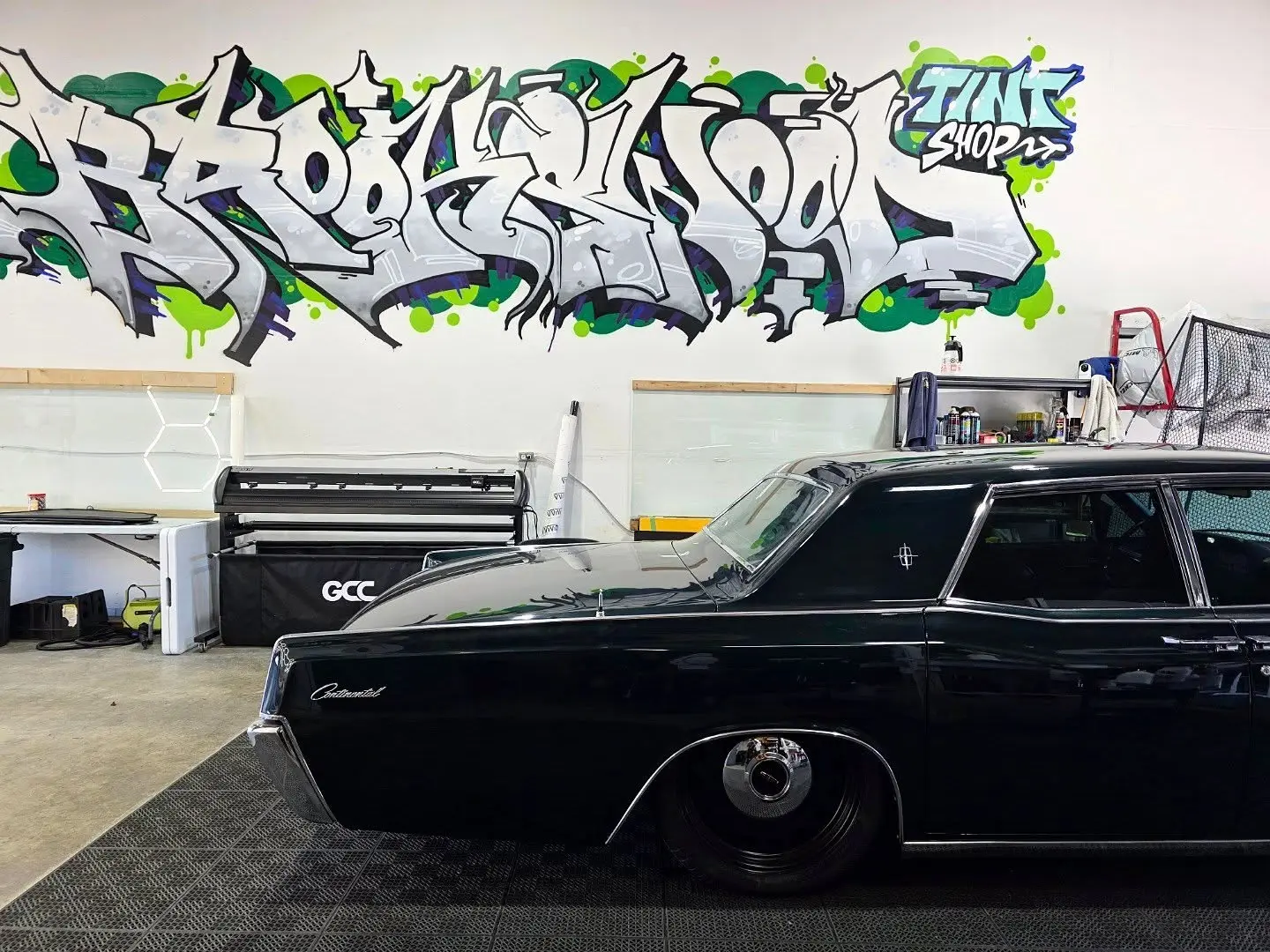
They show a 1967 Continental four-door with darkened side glass, photographed outside the shop and inside the bay. The paint is a very dark green with a teal flake that shows in the sun, the car sits low over black steel wheels with chrome caps, and the chrome bumpers, grille and window frames all shine.
The clearest view of the film is the close-up of the rear door glass, where the darkness is plain against the bright day. In the side view the front door glass also looks darker than the windshield, but a photo can’t separate film from the glass’s own shading, so this page makes no claim about the front doors. In the shop photo, the back window, seen edge-on, reads lighter than the door glass.
The shop hasn’t published the film or shade for this car, so this page names neither.
How does a 1967 Continental’s glass affect the tint job?
The side glass sits in thin chrome frames, and the two door handles on each side meet at the centre pillar because the rear doors hinge at the back. Every window that drops into a door slides past those frames and the rubber around them, so the film’s top edge has to clear them each time the glass goes down.
On any car this age, check the condition of the glass and its seals before booking. Scratches in old glass still show under film, and worn rubber can drag on a film edge. That’s general advice for classics, not a report on this car.
Which LLumar film suits a classic like this?
That depends on what the owner wants from the car; any of the shop’s three lines fits on its glass. Our view:
- ATC is a colour-stable dyed film in charcoal, the most period look and the film behind every starting price.
- IRX is nano-ceramic, turning away 50 to 62% of the sun’s total energy on LLumar’s sheet against 28 to 44% for ATC, the better pick for a dark car that sits in summer sun.
- AIR is clear ceramic for owners who want the glass to look untouched while still blocking UV.
Every one of them stops more than 99% of UV, per the LLumar spec sheet, which is the part that matters for old upholstery. The answer on whether tint stops interior fading goes further.
What does BC law allow on a 1967 Continental?
The same as on a new car. MVAR s. 7.01(2) lets an antique or collector vehicle skip certain equipment rules it was never built to meet, but s. 7.05(8), the tint rule, is not among them. Collector plates add a separate condition from ICBC: its approved parts and accessories list for collector status says owners can’t “install an aftermarket window tint on vehicles 1992 or older”. A classic tinted behind the driver can be road-legal and still not qualify for collector plates, so ask ICBC before booking.
Rear door glass
There’s no darkness limit for side glass behind the driver, so the darkened rear doors in the photos sit within the rule.
Front door glass and windshield
The front side windows can’t carry film at all in BC, and the windshield only in a band across its top 75 mm. The shop will fit front film if asked, but only after telling the owner it breaks BC’s rule and can lead to a ticket and an order to take it off.
Back window and the mirror rule
BC only allows back-window film on a car with a mirror mounted outside on each side. The front three-quarter photo of this Continental shows no mirror on the passenger door, and inspection item 14c fails back-glass tint on a car without both mirrors. A classic with a single door mirror needs a second one before its back glass can be filmed. The answer on side mirrors and rear window tint has the detail.
Bringing a classic to Brookswood Tint
The quote form takes the year, model and the windows you want filmed; mention any glass or seals that have been replaced. The side windows should stay closed for three to five days after the film goes on. The classic car protection page covers paint film and the other work an older car may need.