What did Brookswood Tint put on this 911 GT3?
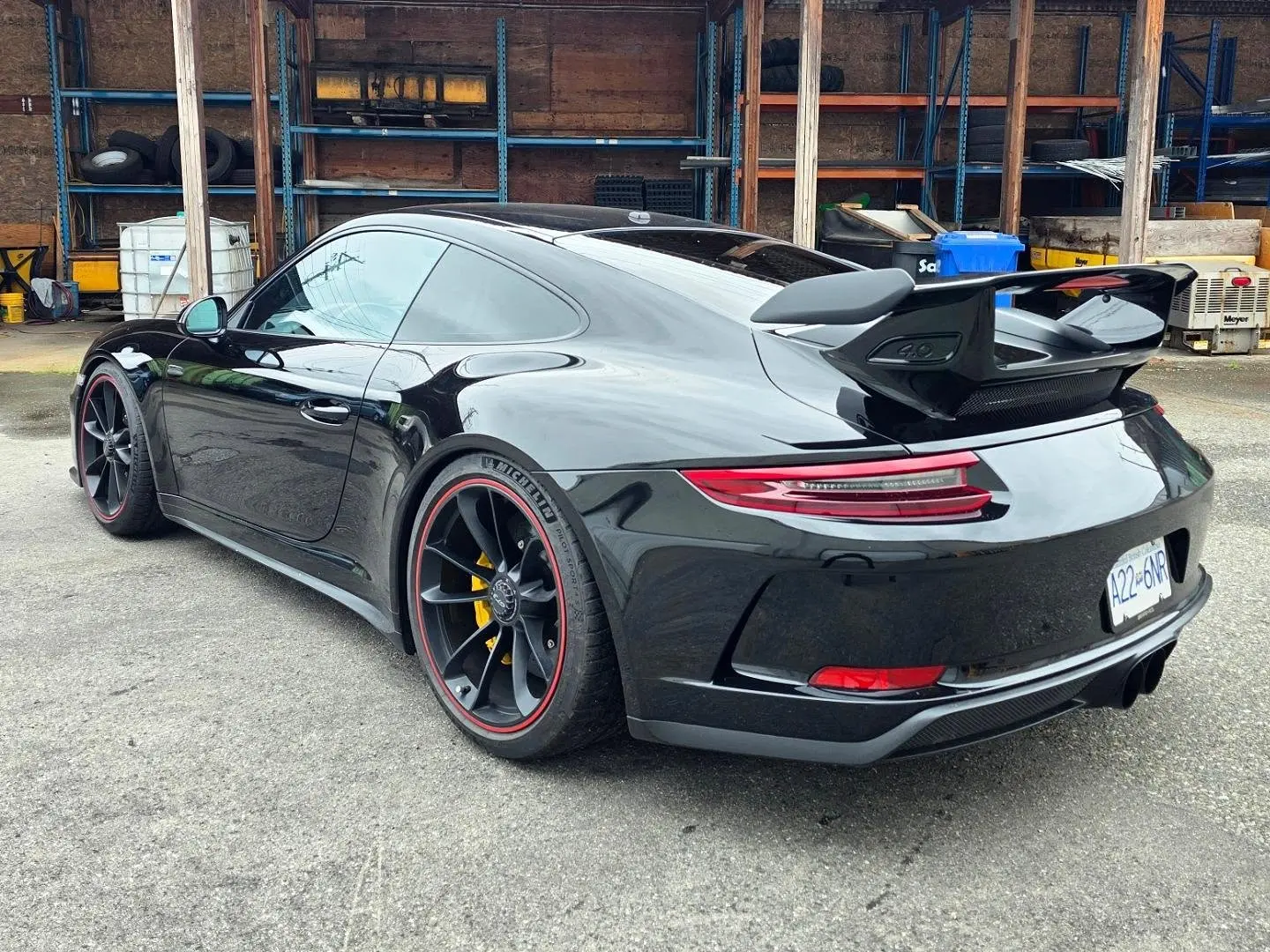
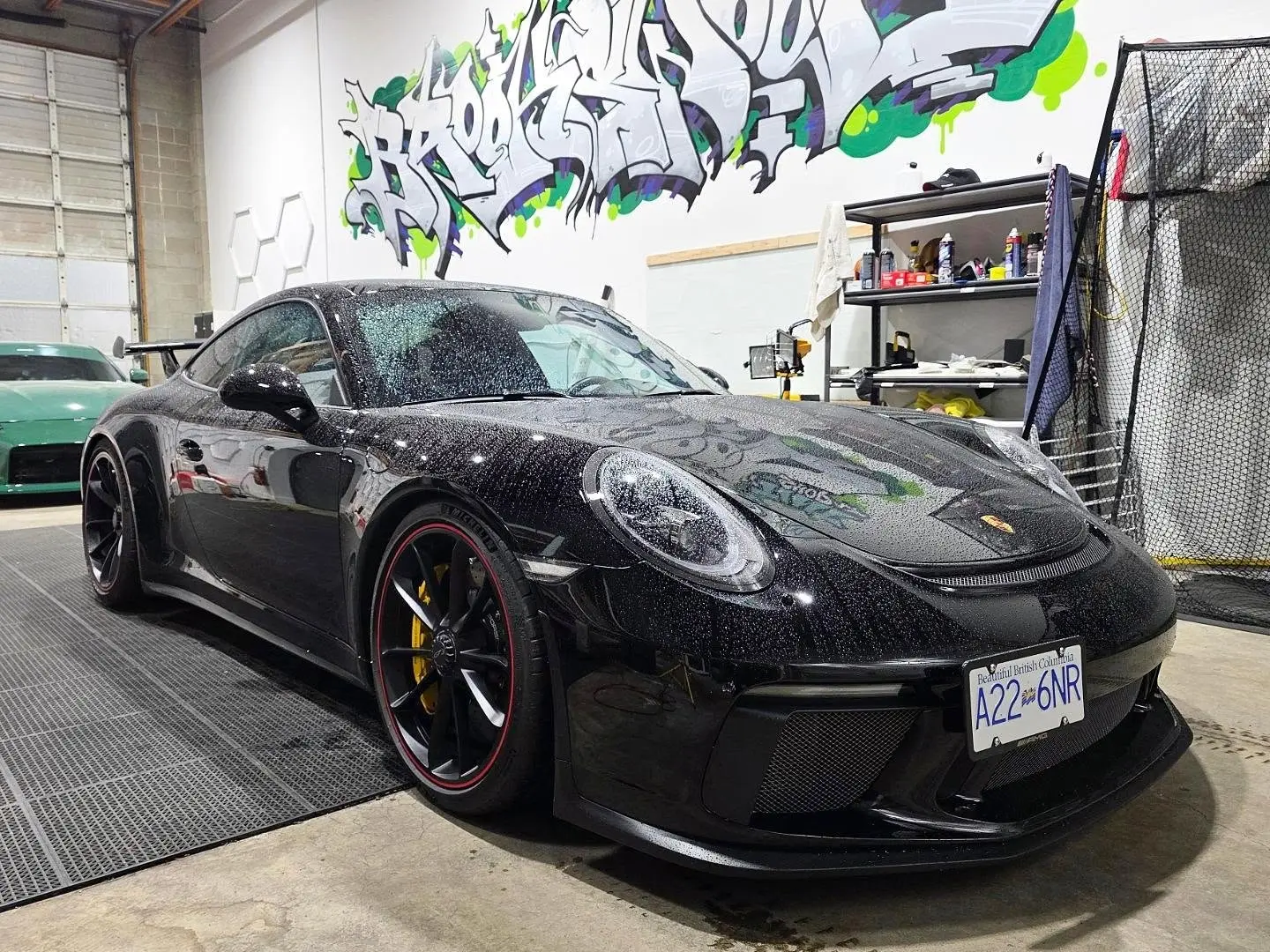
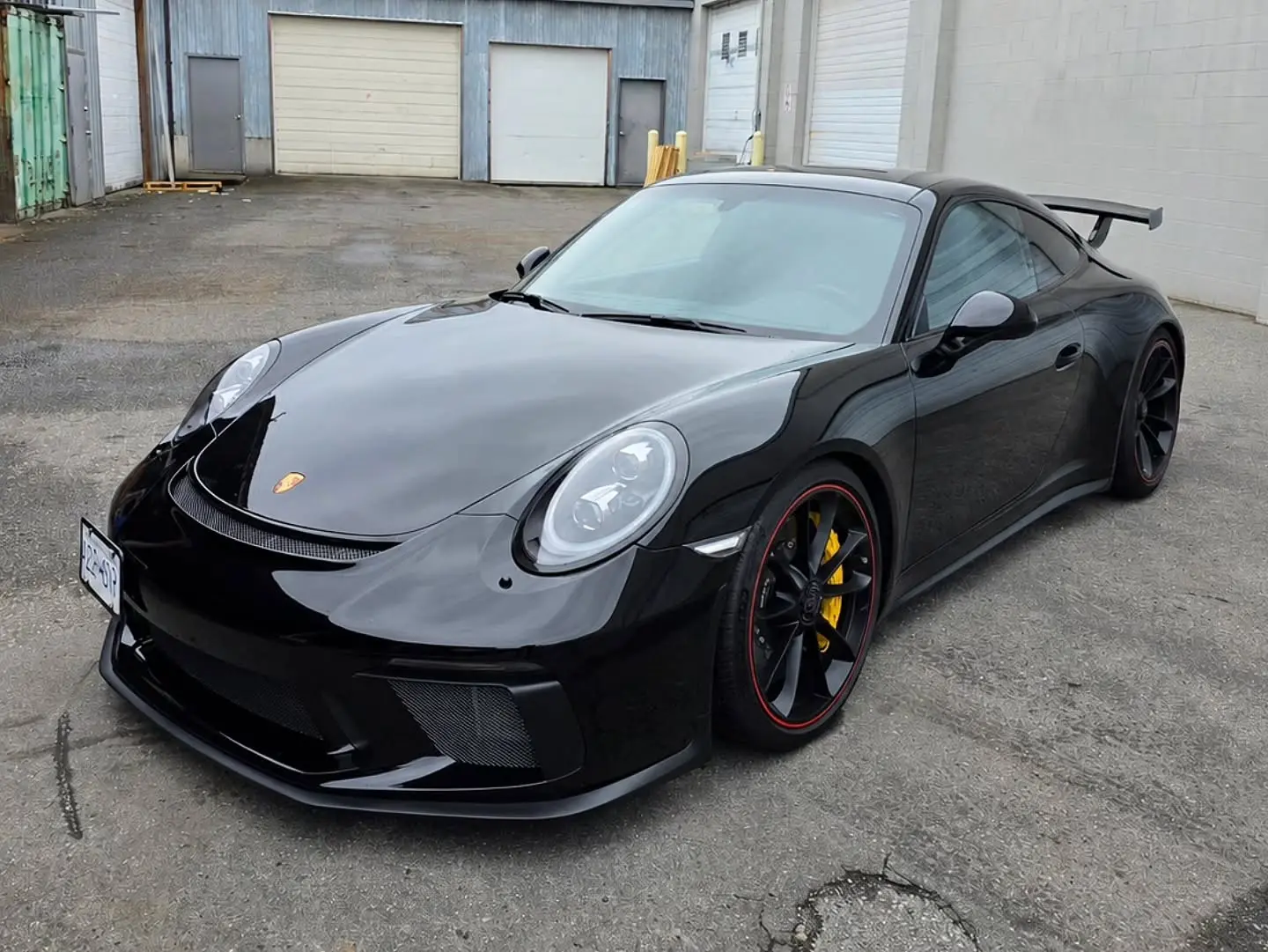
Every pane on this 991.2 GT3 went into LLumar ceramic film, AIR and IRX, according to the shop’s own caption for the car.
The photos show a black GT3 on yellow brake calipers and black wheels edged in a thin red stripe, with a fixed rear wing whose uprights carry a 4.0 badge. One shot catches it on a damp lot, one from behind in a yard, one in the bay with water beaded over paint and glass.
The caption doesn’t say which film went where or in what shade, and this page won’t guess. In the front shot the windshield and door glass stay light while the quarter window behind the door reads darker. That fits clear AIR in front and darker IRX behind, but it’s an observation, not a job record.
How do LLumar AIR and IRX compare on the spec sheet?
AIR leaves the glass looking almost untreated; IRX darkens it and turns away more of the sun’s energy. The figures on LLumar’s Window Film Performance Data sheet come from plain 6 mm test glass, and a car’s own glass shifts them a little.
| LLumar film | Light transmitted | Solar energy turned away (TSER) | Infrared energy turned away (IRER) | Glare cut |
|---|---|---|---|---|
| AIR 90 | 84% | 30% | 40% | 5% |
| AIR 80 | 77% | 43% | 60% | 13% |
| IRX 35 | 39% | 54% | 60% | 56% |
| IRX 15 | 20% | 59% | 61% | 78% |
| IRX 05 | 6% | 62% | 60% | 94% |
Both lines are rated above 99% UV rejection. The sheet publishes AIR 80 and 90 only. The AIR film page and the IRX film page carry the rest of each line.
Why pair a clear ceramic with a darker one on a GT3?
Our reasoning, not a note from this job: a GT3 is bought to be driven, and mixing the two films keeps a clear view where the driver looks most while the glass behind goes darker. AIR 80 rejects about as much infrared energy as IRX on the test glass, 60% against 59 to 61%, though its total solar figure is lower at 43%.
The darker IRX shades also cut glare, up to 94% for IRX 05, which you notice when headlights fill the rear window at night. The IRX vs AIR comparison goes through the trade-off shade by shade.
Is film on a GT3’s windshield and front doors legal in BC?
No. MVAR s. 7.05(8) limits light-reducing material to three places: a band no deeper than 75 mm across the top of the windshield, the windows behind the driver, and the rear glass if the car has outside mirrors left and right. “All glass” on a 911 takes in the windshield and both door windows, and clear AIR still counts as film.
Mission RCMP puts the usual fine on a tint ticket at $109. A Notice & Order can come with it, and on a GT3 filmed this way that means stripping the film from the windshield and door glass, then booking an inspection at a designated facility; the regulation adds a $598 fine if that inspection hasn’t happened inside 30 days. The 2025 Vehicle Inspection Manual fails the same two areas: the door glass beside the driver under item 13d, and a windshield filmed lower than its top 75 mm under item 12e.
Front-door and windshield film is something the shop does only when asked, and it walks you through that risk first. Read the answer on front side window tint in BC before asking.
What does the owner of a GT3 like this get from the film?
UV protection on every filmed pane, less solar heat in the cabin, and more privacy wherever the darker film went. Both films are covered by LLumar’s manufacturer’s lifetime limited warranty, with the shop’s own lifetime workmanship warranty on top; see the dealer for warranty details.
Every piece comes off the shop’s computerized plotter cut for that exact model year, which keeps knives away from the glass and trim, and is then heat-shrunk and laid by hand. Give the film 3 to 5 days to cure before lowering the door glass.
Booking ceramic film for your own 911
Read the Porsche 911 window tint page, then send your car’s year and model through the quote form. AIR and IRX are quoted per package as upgrades over base ATC film, so say which film you want on which glass.