What does SUV window tint cost?
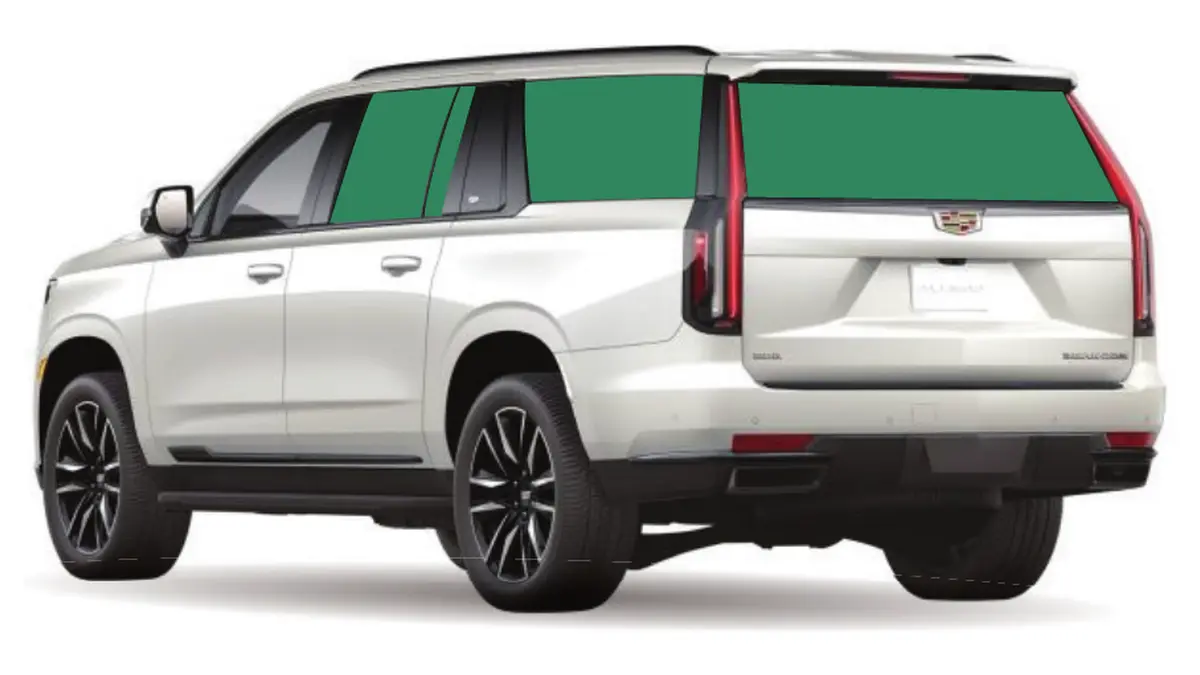
A full-size SUV’s rear glass starts at $260 for seven windows in LLumar ATC dyed film, hatch included. IRX or AIR ceramic on the same glass is quoted per package, and smaller crossovers are quoted from their own glass.
| Package | Glass covered | From |
|---|---|---|
| Rear glass, full-size SUV or wagon | 7 windows: both rear doors, rear quarters, extended windows, hatch | $260 |
| IRX or AIR ceramic on the rear glass | The same seven windows in ceramic film | Quoted per package |
| Compact SUV or crossover, rear glass | Depends on the body | Quoted per vehicle |
| Front doors, full-size SUV | Driver’s and front passenger’s windows | $160, not road-legal in BC |
The shop fits the $160 front-door job on request, and it’s not road-legal in BC. MVAR s. 7.05(8) only lets film sit on side windows behind the driver, so anything on the two front doors, clear film included, is outside the rule. A ticket for it typically runs $109, police can order the film removed and the SUV inspected, and an inspection fails it under item 13d. The shop sets this out before you decide, and tinting front windows in BC covers the law.
Included in the price: genuine LLumar film, a plotter cut from your SUV’s own pattern, and a lifetime warranty that covers the film and the shop’s labour. Plan on two to four hours for a full SUV. Doing the whole vehicle in one visit usually brings the total under the list prices added up, so ask for that figure. Every package is drawn out on the window tint prices page.
What happens when film goes over factory privacy glass?
The two layers stack. Factory privacy glass is darkened in the glass itself; film on its inside face takes away a share of the light that’s left, and the result is darker than the glass or the film would be on its own.
The catch is knowing how dark the factory glass is to begin with. Hyundai’s 2023 Palisade bulletin says privacy glass has “lower percentages of visible light transmittance (typically less than 20%),” and that laminated privacy glass gets its colour from a dark plastic interlayer. The bulletin gives no exact figure for a given trim, and the glass itself changes from trim to trim, so ask the shop about your glass before you pick a shade.
Start from the glass: on glass that’s already dark, a light film can give the darkness you were after. Without the factory number, a shade chart can’t tell you how the finished window will look.
The same bulletin notes that under US federal standards, front door glass must let through 70% or more of visible light, while rear door glass has no set level. In BC, s. 7.05(9) requires tint built into factory glass to meet the Canadian safety standard, and aftermarket film behind the driver can be any shade. For choosing a number, see what tint percentage you should get.
What glass sits behind the front doors of an SUV?
On a full-size SUV, seven windows: the two rear door windows, the quarter glass beside them, the extended windows along the third row or cargo area, and the hatch glass. That glass isn’t uniform. One SUV can mix tempered and laminated panes, and privacy glass with lighter solar glass, row by row and trim by trim.
Hyundai’s bulletin lays this out for the 2023 Palisade:
| 2023 Palisade | SE | SEL, XRT | SEL Premium, Limited, Calligraphy |
|---|---|---|---|
| Front doors | Tempered solar glass | Acoustic laminated solar glass | Acoustic laminated solar glass |
| Rear doors | Tempered privacy glass | Tempered privacy glass | Acoustic laminated privacy glass |
| Third row | Tempered privacy glass | Tempered privacy glass | Tempered privacy glass |
The bulletin also warns that the acoustic laminated privacy glass on those upper trims “may appear slightly hazy or foggy” in direct sunlight because of its dark interlayer, and that this is normal. If your SUV shows it, point it out before the tint goes on, so a property of the glass isn’t blamed on the film.
How is SUV hatch glass tinted?
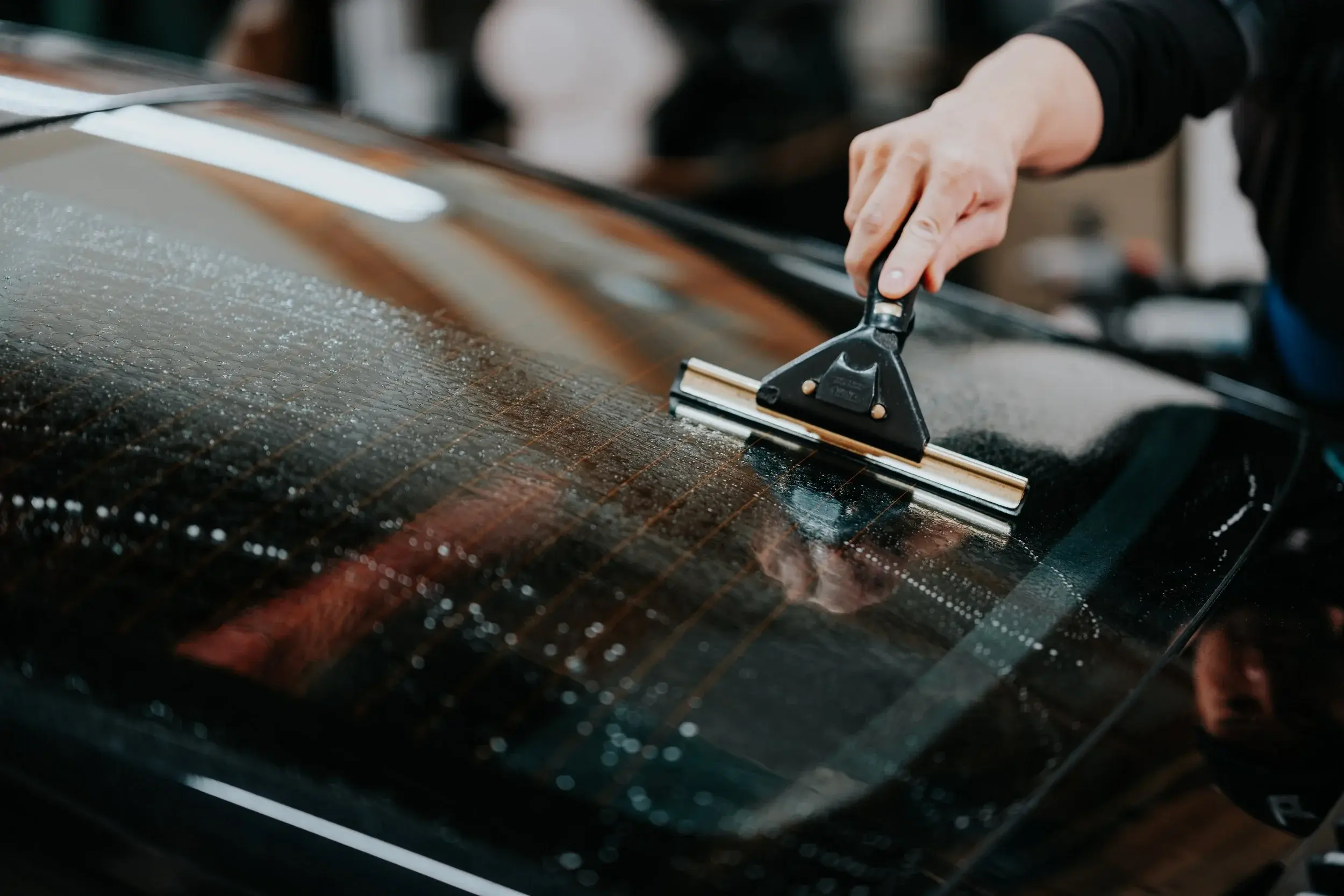
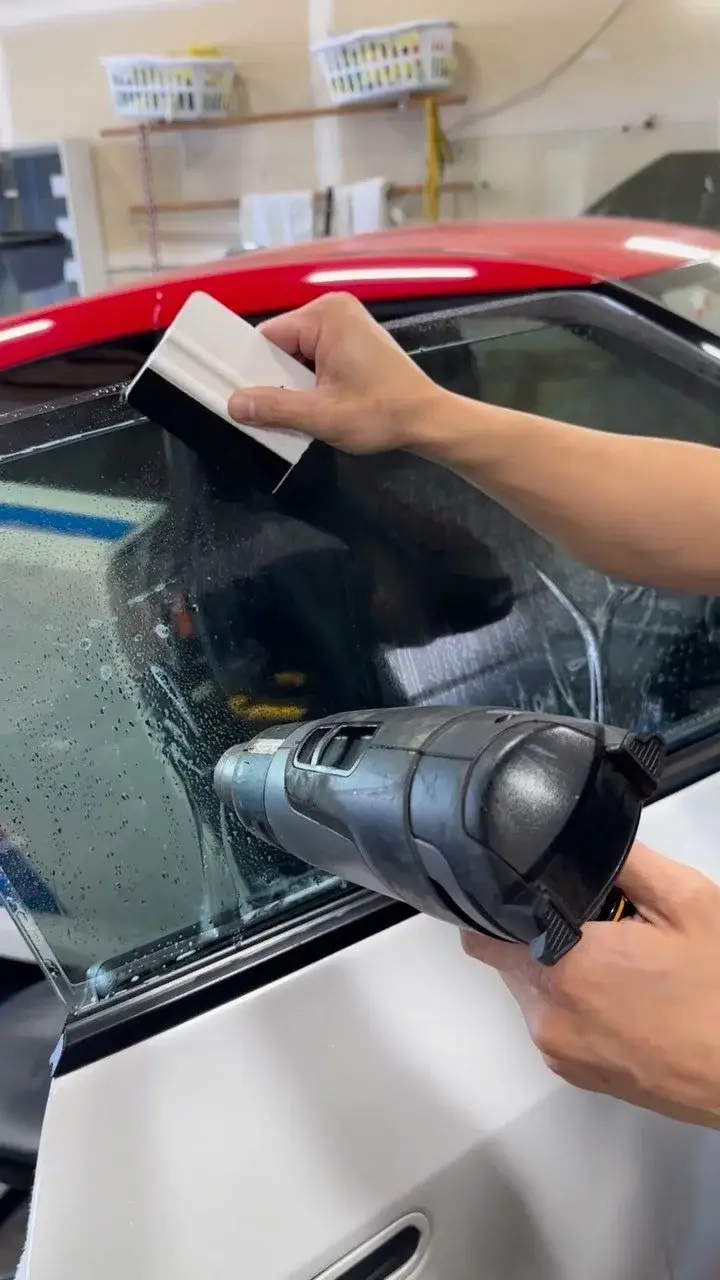
The hatch is often the largest pane behind the driver and can be strongly curved, so it gets the most hand work. The film is cut on the plotter to the hatch’s outline, then heat-shrunk to the curve and squeegeed into place, with no blade on the glass or trim.
Hatch glass may carry defroster lines and, on some SUVs, a rear wiper mounted through the glass, which the film is cut to clear. The grid matters again if the hatch ever needs re-tinting: old film on rear glass comes off with steam, not blades, so the defroster survives. Under s. 7.05(8)(c), film on this back glass is allowed only when the SUV has a mirror outside on both the driver’s and passenger’s side, and inspection item 14c checks exactly that, along with rejecting reflective tint.
Many SUVs and crossovers also offer a glass roof. Roof film is quoted separately; the sunroof and panoramic roof tint page explains how it’s priced and fitted.
Which LLumar film suits an SUV?
On factory privacy glass you can keep the darkness you have and cut heat with AIR, or go darker with IRX or ATC. LLumar markets AIR for exactly this glass, noting that factory privacy glass looks the part but does little to control heat.
| What you want | Film | From LLumar’s spec sheet |
|---|---|---|
| Keep the factory look, cut heat | AIR 80 | 77% visible light, 60% IR energy rejection (IRER) |
| Darker, with the most heat rejected | IRX 5 to 50% | 50–62% total solar energy rejected (TSER) |
| Darker, at the starting price | ATC 5 to 50% | 28–44% total solar energy rejected (TSER) |
All three block over 99% of UV, which counts for whoever rides in the back. Side and back glass is usually tempered, and according to the Skin Cancer Foundation tempered glass does a poor job of stopping UVA. For the near-clear film on its own, read about LLumar AIR clear ceramic.
How do you book SUV tint in Langley?
Start with the year, make, model and trim: on many SUVs the trim settles the privacy glass, the seat count and the roof. Say which film you’re considering and whether the rear glass is factory privacy glass. The shop replies with the rear package price, any ceramic difference, and a figure for the roof if you want one.
Most SUVs are done the same day. Afterwards, leave the side windows closed for three to five days, and don’t be surprised by a faint haze that clears within the week. Pickups follow the same process with a different package, set out on the truck window tint page. Book through the SUV tint quote form, or ring 604 534 6433 with the details.