What are the signs a ceramic coating is still working?
Four things, all visible at an ordinary wash: how water beads, how fast it leaves, how the paint feels, and how easily dirt lets go. A coating that’s doing its job passes all four on a clean panel.
| What to check | Coating working | Coating worn on that panel |
|---|---|---|
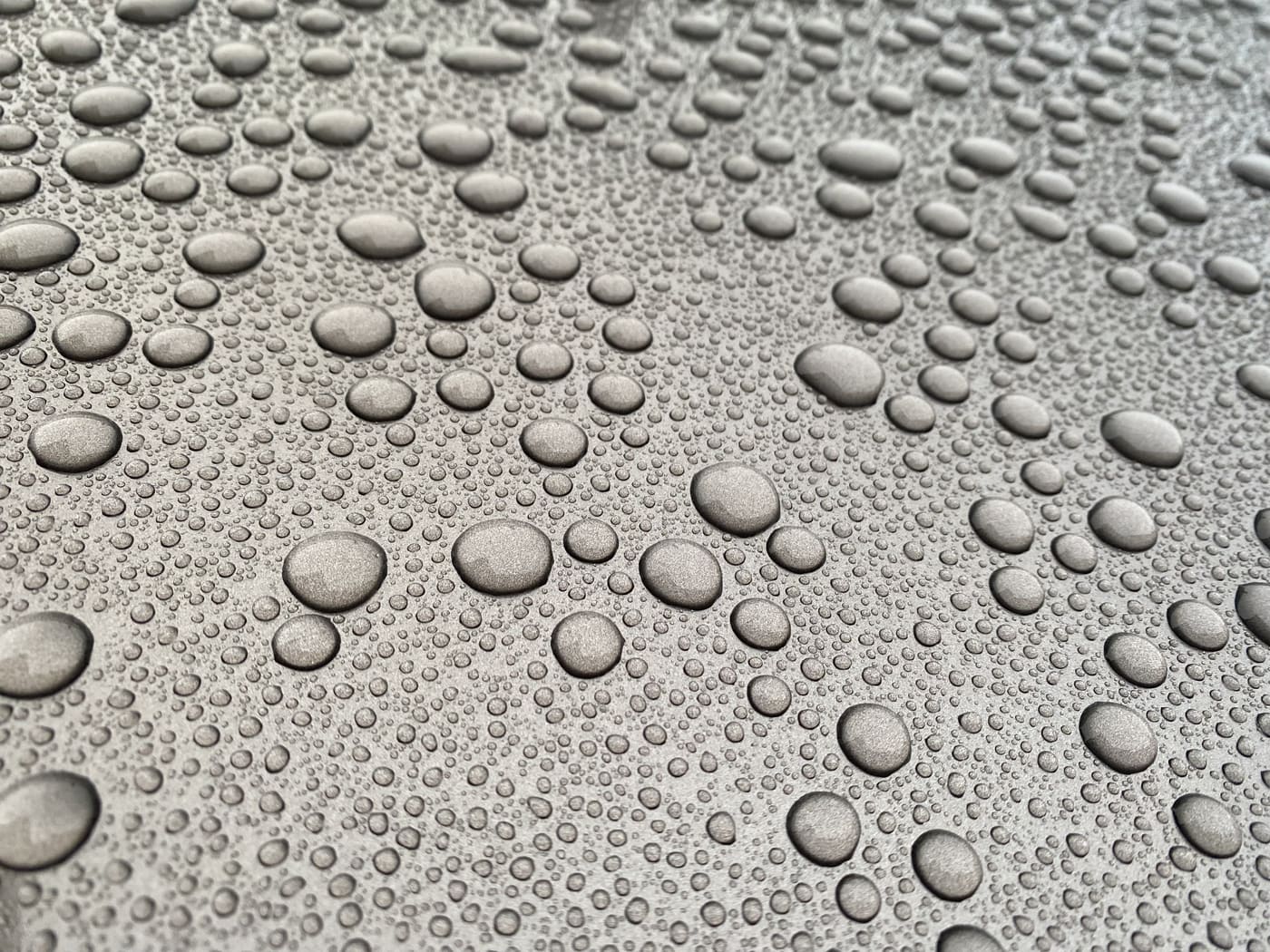
| Beading | Small, round, tall beads across the panel | Flat, wide puddles or irregular smears |
| Run-off | Water sheets and slides off quickly as you rinse | Water clings in a film and drains slowly |
| Feel | A dry microfibre glides with almost no drag | The towel grabs or drags |
| Dirt release | A rinse moves most road grime | Grime needs scrubbing to shift |
| Drying | The panel dries quickly with few drops left | Water hangs on and dries into spots |
The pattern matters more than any single result. One flat patch on a door is a different story from a whole car that has stopped beading.
How do you test a ceramic coating at home?
Wash first, then test on a cool, clean panel in the shade. Testing a dirty car only tells you about the dirt.
1. Wash it properly
Hand wash with two buckets and pH-neutral shampoo, then rinse thoroughly so no soap film is left behind. Leftover shampoo can make water behave oddly on its own.
2. Rinse and watch
Set the shut-off nozzle to its softest, widest stream and let the water flow across the roof, hood and one side. On a working coating, water gathers and slides off in sheets, leaving few drops behind.
3. Mist a panel
Spray a fine mist over a flat panel and look at the beads from a low angle. Tight, rounded beads mean the surface is still repelling water.
4. Compare panels
Repeat on the hood, roof, a door and a lower panel. If all behave the same, the coating is even; if one area lags, note where it is for when you have it looked at.
5. Feel it dry
Once the car is dry, draw a clean microfibre lightly across a panel. Slick and quiet means the coating is there; grabby means something has changed.
Why can a working coating look like it has failed?
Because the beading you see belongs to whatever is on top, and in a Fraser Valley winter there’s usually something on top. A coating smothered by road film behaves like bare paint until that film is washed away.
Winter is the worst for this. On provincial highways, TranBC says contractor crews work with salt, brine, anti-icing chemicals and abrasive grit. In town, Langley’s city crews pre-treat priority routes with brine when snow is forecast and lean on salt during storms, adding sand on steep hills. The residue leaves a dull grey film low on the doors and across the back of the car, and water can’t bead through it.
Other common false alarms:
- Traffic film from wet highway driving: an oily grey haze that takes a proper wash, not a rinse.
- Soap residue from a shampoo that wasn’t fully rinsed.
- A wax or car-wash spray sitting on top of the coating, showing its own behaviour; that’s explained in whether you can wax over ceramic coating.
If a thorough wash brings the beading back, the coating was fine all along. A deeper clean that lifts bonded grime without abrasion is described under decontamination wash.
What wears a coating out faster?
Abrasion, harsh products and contamination left in place. A coating is a thin cured layer, so anything that rubs it or eats at it shortens its working life.
- Polishing and cleaner products. Gtechniq warns that polishing over one of its coatings can damage it badly enough to need reapplying (Gtechniq).
- Brush and soft-cloth car washes, which grind other cars’ grit across the surface.
- Droppings, sap and salt left to sit on the paint for days or weeks.
- A car that lives outside. Climate records for Abbotsford A count 179.5 wet days in an average year, so an uncovered car here spends about half its days wet and collecting road spray.
How long a coating holds up overall depends on the package, the prep and the care it gets, which is the subject of how long ceramic coating lasts.
What can be done when a coating has worn?
Have it inspected, then deal with the paint before re-coating. Where the coating has worn, the clear coat underneath may have picked up marks that need polishing out first.
The usual path is a decontamination wash, a look under strong light and a paint thickness reading, then the level of correction the paint needs and a fresh coating over it. Panels that still test well don’t always need the same work as the ones that don’t. Both the polishing and the new coating are priced after that look, for your car.
How do you book a coating check?
Use the coating quote form to tell us the year, make and model, when the car was coated and which panels have stopped beading, with a photo of a misted panel if you can. A new coating means one to three days with us, most of it prep, and a dry day after pickup.
The packages, from a single layer to four layers over full correction, are on ceramic coating. The week-to-week care that keeps a coating testing well is laid out in whether ceramic coating needs maintenance.