
Why is there no single answer to how long a coating lasts?
Because a coating is a thin layer that wears away with use, and two cars use it up at very different rates. The same product on a garaged weekend car and on a commuter parked outside all winter will not age the same way.
One film maker says as much about its own water-repellent surface. On its PPF lineup page, LLumar notes that the durability and level of hydrophobic behaviour of its ceramic-like Valor top coat “can be influenced by environmental conditions and other variables beyond Manufacturer’s control”, naming road treatment chemicals and cleaning substances and frequency. Paint coatings meet the same road chemicals and wash habits. So the useful question isn’t “how many years” but “what will wear mine down, and how do I slow it.”
What makes one ceramic coating outlast another?
Four things: the number of layers, the prep underneath, the way the car is washed, and how exposed it lives. The first two are decided at the shop; the last two are up to you.
Layers
Brookswood Tint’s three packages differ mainly in depth. Essential is a single graphene-ceramic layer on the paint. Performance puts two layers over paint that has had a two-stage correction, and the shop credits it with “longer life”. Signature is four layers over full correction, applied to paint, PPF, wheels, glass and trim. Choosing between them is the subject of how many coating layers a car needs.
Prep
A coating bonds to the surface it’s given. Every package starts with a decontamination wash, a clay treatment and at least one stage of machine polish, so the coating bonds to a cleaned, polished surface rather than to road film and swirls.
Washing
| Shortens a coating’s life | Helps it last |
|---|---|
| Automatic brush washes | Touchless bays, or hand washing with two buckets |
| Harsh or unknown cleaners | pH-neutral car soap |
| Brine left on the lower panels for weeks | Rinsing after drives on treated roads |
| Gritty towels and dry wiping | Clean microfibre towels |
According to the shop, two buckets and a pH-neutral soap keep a coating slick for its whole life, while brush washes scuff any finish eventually.
Exposure
A car that lives outside takes every hour of sun and every rainfall; one that sleeps in a garage takes far fewer.
How do Fraser Valley conditions wear a ceramic coating?
They work on it from two sides: wet, salty winters and bright summers. The 1981–2010 normals from Environment Canada’s Abbotsford Airport station put numbers on both.
| Season | What the coating faces | What to do |
|---|---|---|
| November to March | More than half of the year’s 179.5 wet days; 241 mm of rain in November alone | Rinse road film off often rather than letting it build |
| Snow events | City of Langley brine on priority routes, then salt or salt and sand | Rinse the lower doors, sills and rear after treated roads |
| June to August | About 277 hours of bright sunshine in July, 263 in August | Shade or a garage where you can; wash off bird droppings promptly |
On provincial highways the picture is the same: TranBC says highway crews use salt, brine, anti-icing chemicals and abrasive, alone or mixed, to suit the weather. The City of Langley applies brine before forecast snow and spreads salt during it. Those are exactly the “road treatment chemicals” LLumar names.
How can you tell when a ceramic coating is wearing thin?
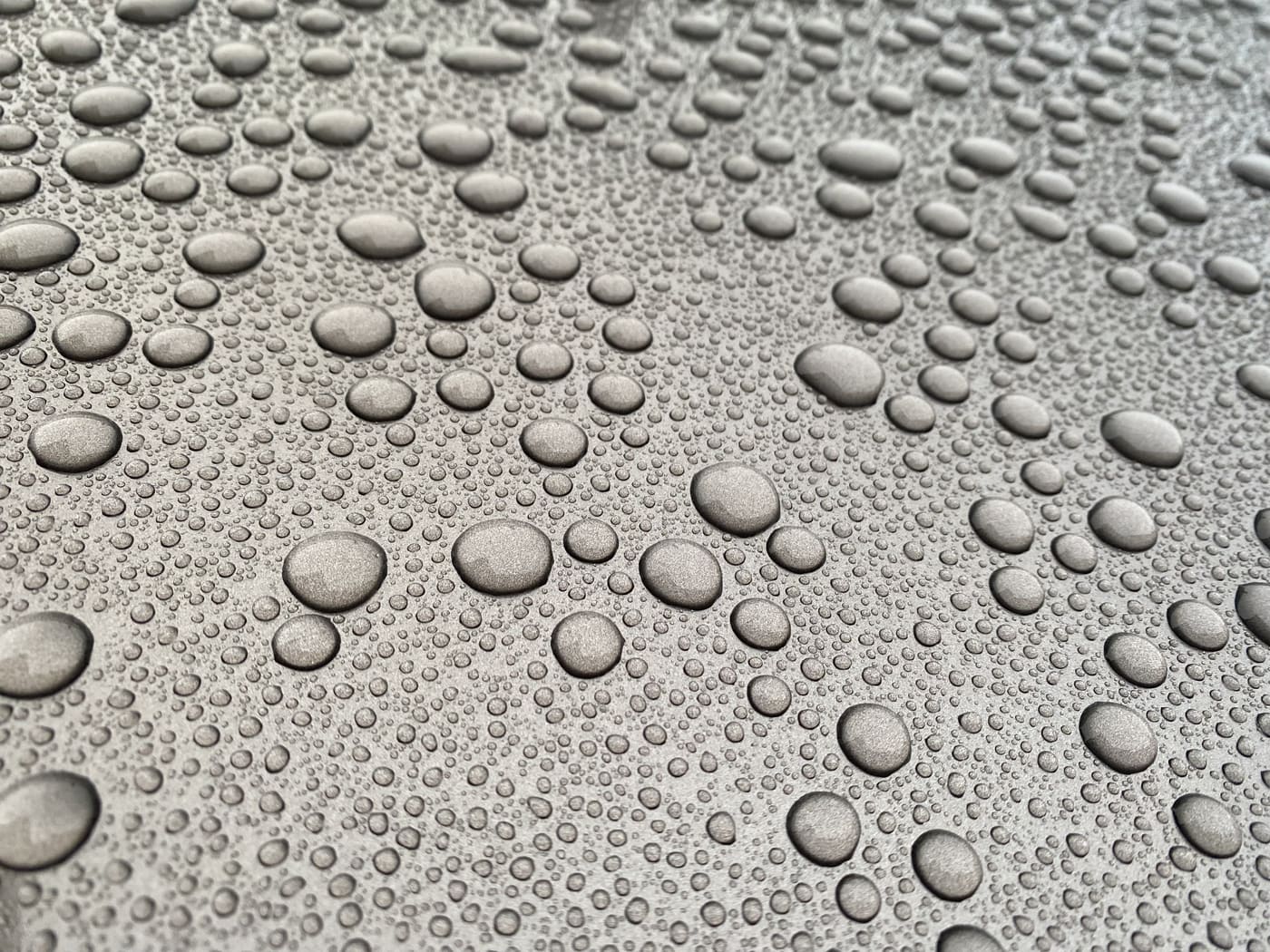
Watch the water. A healthy coating beads water into tight drops that roll away; a worn one lets water cling, spread and sheet, and dirt starts sticking harder between washes.
Check the lower doors, rocker area and rear of the car first; they take the most road spray and brine. For a fuller set of checks, see signs a coating is still working.
What happens to the paint once a coating wears off?
It goes back to being bare clear coat. The slick, easy-rinse surface is gone, and fine wash marks can start to collect again.
Recoating means preparing the paint again, because a fresh coating needs clean, corrected paint just like the first one did. If swirls have built up, that may mean another round of polishing; the options are on paint correction. What ongoing care looks like in between is covered in whether ceramic coating needs maintenance.
How do you make a ceramic coating last as long as possible?
Choose the layers for how long you’ll keep the car, then wash it gently and often. The habits that matter most:
- No water on the car for a full day after you collect it.
- Wash in a touchless bay, or by hand with two buckets and pH-neutral soap.
- Never use an automatic brush wash.
- Rinse brine off the lower panels through winter.
- Clean bird droppings and sap off promptly, especially in summer sun.
A Brookswood Tint coating job runs one to three days, mostly correction and curing, and each car gets its own price because the state of its paint decides the prep. Use the ceramic coating quote form: give the year, make and model plus a note on the paint, and ask how each package would hold up on your car. The packages themselves are on ceramic coating.