
What is the right order for PPF, ceramic coating and tint?
Correction, then film, then coating, with tint slotted wherever it suits. Each step either needs bare paint or covers what came before it, which is what fixes the order.
| Step | Job | Why it sits here | Shop’s published time |
|---|---|---|---|
| 1 | Paint correction, only if needed | Polishing can’t reach paint once film covers it | About a day for an enhancement polish; 1–2 days for two-stage |
| 2 | PPF on the chosen panels | Its adhesive needs clean, uncoated paint | Usually a day for a Partial Front; 1–2 days for Full Front |
| 3 | Light film or vinyl, if wanted | Same reason: film and vinyl bond to the bare surface | 2–3 hours for a pair of lamps |
| 4 | Ceramic coating | Goes over film and paint together | 1–3 days; keep dry 24 hours after pickup |
| Any | Window tint | Fitted inside the glass, away from the paint work | 2–4 hours on most sedans and SUVs |
Whether all of that fits in one visit, and how many days it adds up to, is a separate question answered in getting tint, PPF and ceramic at the same time.
Why does paint correction have to come before PPF?
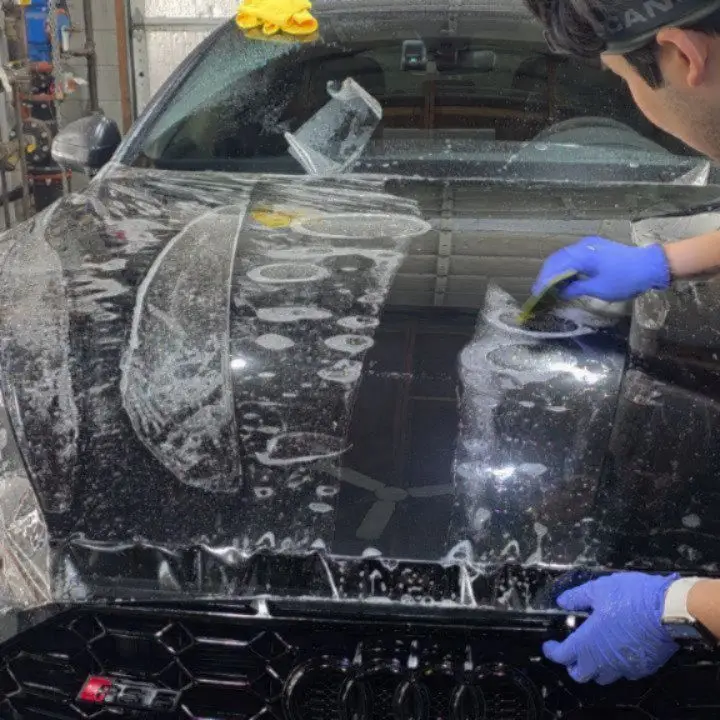
Because film seals the paint exactly as it is. Swirls, haze and light scratches under clear film stay visible, and the polisher can’t reach them again until the film comes off. The shop measures paint thickness before any correction, then decontaminates every panel before film.
Fresh bodywork has its own wait. LLumar’s PPF FAQ says 30 days is the common period for new paint to outgas before film goes on, and that issues with aftermarket and repaired paint aren’t covered by its warranty. If a panel has been resprayed, that month comes before step 2.
What goes wrong if the ceramic coating goes on before PPF?
The film may not stick properly. LLumar’s FAQ says it is “not recommended to apply wax or any other coatings” before installing its paint protection film, because they can interfere with the film’s adhesion to the paint.
A coating is built to bond to paint and make it slick, which is the opposite of what a film adhesive wants. So a car coated first has to have the coating taken off every panel that’s getting film before the film goes on, and then those panels need coating again. Doing it in the right order skips both jobs. Coating over film, and what that does for washing, is covered on ceramic coating over PPF.
Where does window tint fit, and does glass coating change anything?
Tint fits anywhere in the sequence. LLumar’s tint FAQ notes that car window film is typically applied to the interior glass surfaces, so it never meets the PPF, the paint or a coating on the outside.
Glass coating is the one place the order needs a second thought, and it’s about the windshield, not the tint. Subaru’s EyeSight service bulletin says “Inside or outside water-repellant windshield coatings must never be used” on those cars. If a coating package includes glass and your car has a camera-based driver assist system, check the carmaker’s guidance before the windshield is coated.
Where do headlight film and a chrome delete fit?
With the other films, before the coating. Light film on the headlights and taillights and a vinyl chrome delete both bond to a bare surface, so they belong in step 3, after any lens restoration and before the coating session.
Whether vinyl then gets coated is a decision of its own:
Before coating over vinyl: 3M’s 2080 maintenance FAQs say coatings such as ceramic are excluded from its 2080 warranty, and Avery Dennison’s SW900 data sheet says protective coatings void its warranty. Ask the shop how it handles wrapped trim when the rest of the car is being coated.
What if the car already has a coating, or already has film?
Then the order runs from where the car is now. A coated car getting PPF later needs the coating removed from the panels being filmed; a filmed car getting a coating later just needs a proper wash and prep, because the coating goes on top.
- Coated, adding PPF: prep removes the coating where film will go, then those panels are coated again over the film.
- Filmed, adding a coating: the coating goes straight over film and paint after decontamination.
- Tinted, adding anything: nothing changes for the tint.
- Corrected years ago, adding PPF: the paint is checked again, because film will lock in whatever has happened since.
Booking the work in the right order at Brookswood Tint
List every job you’re considering on one quote, even if you plan to stage them, so the shop can set the order and the visits. New cars are planned in this sequence on new car protection; the services themselves are on paint protection film, ceramic coating and window tint.
Partial Front PPF starts at $850, rear-glass tint at $220, and coating and correction are quoted per vehicle. List your year, make, model and every job you’re weighing on the quote form, or text the list to 604 534 6433.