Why does a coating need corrected paint underneath?
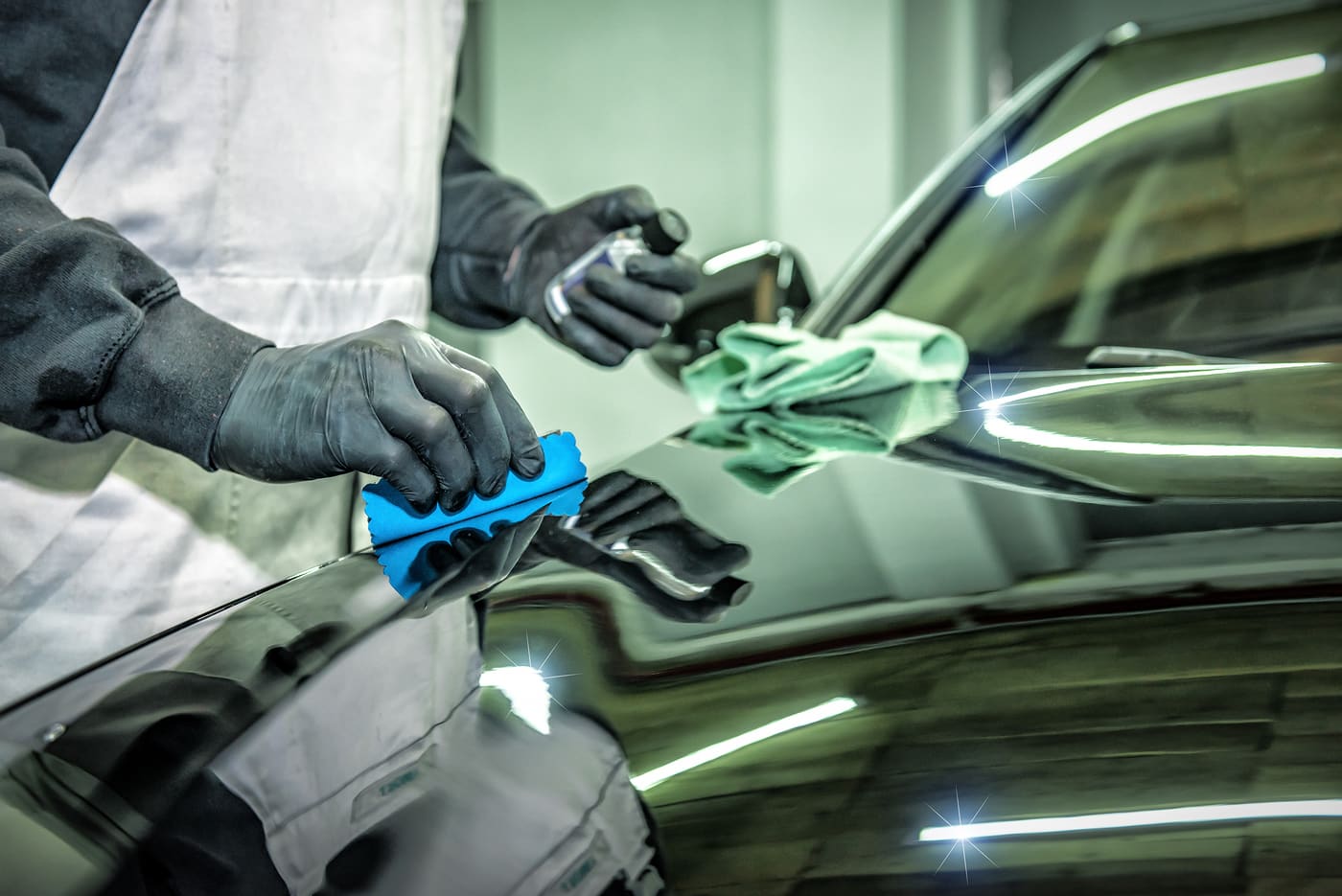
Because a coating doesn’t fix anything; it preserves. It cures into a clear, glossy layer over the paint in whatever state it’s in, so any swirl, haze or water spot that’s there on coating day is still there afterwards, now under a shinier surface.
Coating makers write the preparation into their own instructions. Gtechniq’s directions for its Crystal Serum Light coating begin: “Wash and decontaminate your paintwork thoroughly prior to application,” and then, “If required, polish your paintwork, either by machine or hand, to remove any imperfections” (Gtechniq). Note the “if required”: a coating will bond to clean paint that hasn’t been polished. The question is whether you want to keep what’s in that paint for as long as the coating lasts.
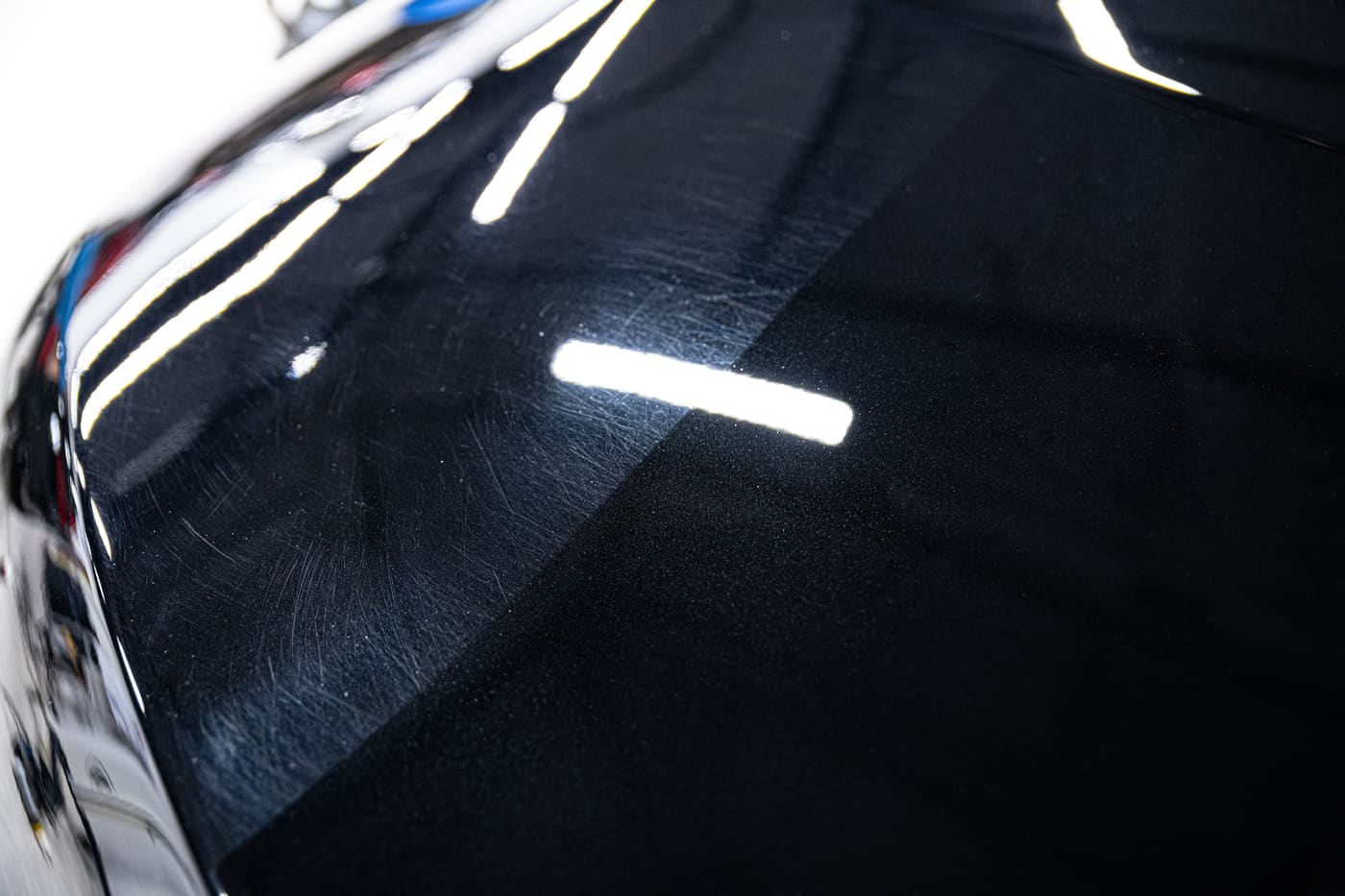
For most owners the answer is no. Paint that looks fine in the shade can still show fine swirls under a single bright light, and the coating’s gloss makes them more obvious, not less.
How much correction comes with each coating package?
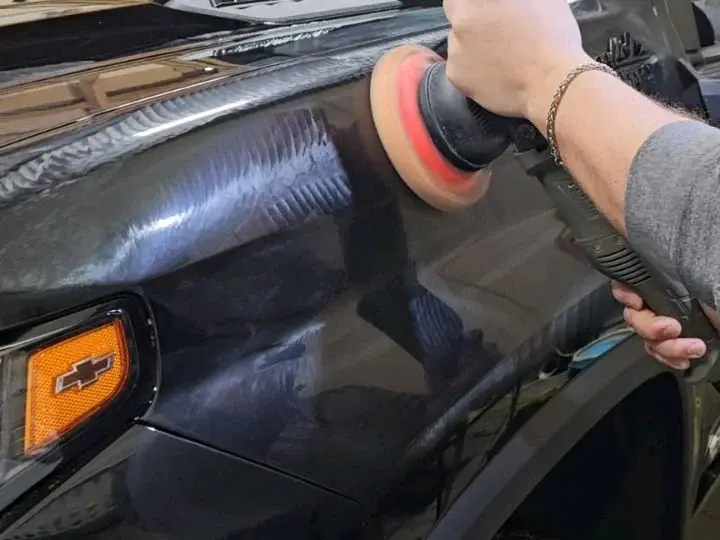
Every package includes prep: a decontamination wash, a clay bar, and machine polishing. The level of polishing rises with the package.
| Coating package | Layers | Correction underneath |
|---|---|---|
| Essential | 1 | At least one polishing stage |
| Performance | 2 | Two-stage correction |
| Signature | 4 | Full correction |
The shop also sells correction as a stand-alone service, in three levels:
| Correction level | What it does | Published defect removal | Time |
|---|---|---|---|
| Enhancement polish | One stage with a fine polish; light swirls and haze | 60 to 80% | About a day |
| Two-stage correction | Cutting compound, then finishing polish; deeper swirls, wash marring, water spots, most light scratches | 85 to 95% | 1–2 days |
| Multi-stage restoration | Wet sanding where safe, heavy compounding, refining | Quoted after inspection | 3+ days |
The single-stage polish is the standard prep for a coating on a newer car, and it’s described on one-step paint correction. Paint with heavier wash marring or water spotting needs the cut-and-finish approach on two-step paint correction. Paint that needs more than the package includes is quoted after inspection, like any multi-stage job.
Does a brand-new car need correction before it’s coated?
Usually a light one, yes. The shop’s own correction FAQ points out that prep at the dealer and time in transport can put more swirls on a brand-new car than a carefully kept older one carries, and they’re easiest to see under strong light.
On new paint the work is normally the one-stage enhancement polish: enough to clear handling marks without removing more clear coat than necessary. How that fits into a new-car appointment is covered on new car ceramic coating. Whether your particular car needs it is a question for an inspection, covered in do new cars need paint correction.
What happens if you coat over paint that hasn’t been corrected?
The defects get sealed in, and fixing them later costs you the coating. Polishing a coated panel cuts through the coating before it reaches the scratches.
Gtechniq warns owners against polishing its coatings at all, because it “can harm the integrity of the coating”, and says that if that happens “you’d therefore need to have the ceramic coating reapplied” (Gtechniq). So the order is fixed by cost as much as by quality: correcting first means paying for the polishing once. Correcting afterwards means paying for the polishing and then the coating a second time.
There’s one case where coating with only a light polish makes sense: paint that’s too thin to correct further. If the thickness readings say the clear coat can’t safely give up more, you’ll be told, and the coating goes over the cleanest finish the paint can safely give.
How much clear coat does pre-coating correction use?
A small amount, which is why it’s measured first. Polishing works by levelling the clear coat until the scratches are gone, a few microns at a time, so every stage spends some of a finite layer.
That’s the reason paint thickness is read on every panel before polishing starts, and the reason the shop uses the least aggressive stage that gets the result. The coating that follows then takes the day-to-day wear on top of the corrected clear coat, which helps it keep its finish longer. The detail on thickness, and how much a car can spare, is in how much clear coat correction uses.
Where does PPF fit if you’re also getting film?
Between the correction and the coating. The paint is corrected once, the film goes on, and then one coating session covers the film and the uncovered paint.
LLumar’s PPF FAQ doesn’t recommend wax “or any other coatings” under its film, because they can keep the film from bonding properly. So a car getting both is never coated first. The full sequence, tint included, is in the right order for film, coating and tint.
How long do correction and coating take together, and how do you book?
One to three days in the shop for most coating packages, with correction making up most of that time. A car that needs multi-stage restoration first takes longer and is quoted after inspection.
Send your year, make, model and colour through the coating quote form, plus a daylight photo of the paint if you have one, and mention it if you’re also considering film. The paint is measured and inspected at drop-off, the correction level is confirmed, and the coating goes on once the paint is right. The stages are described in full on paint correction, and the packages on ceramic coating. After pickup, the car stays out of the rain for a day.