Why does a coating suit black paint?
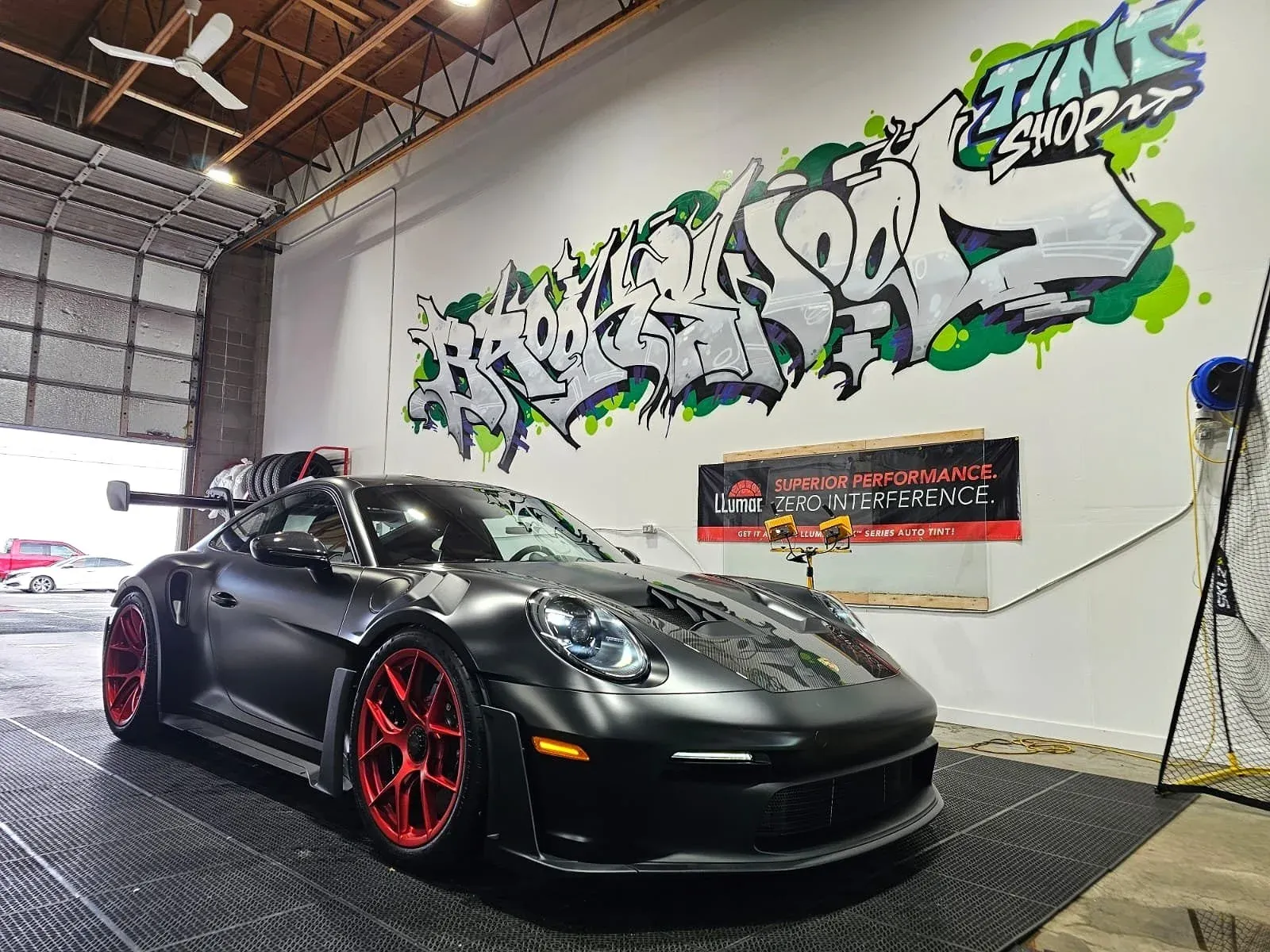
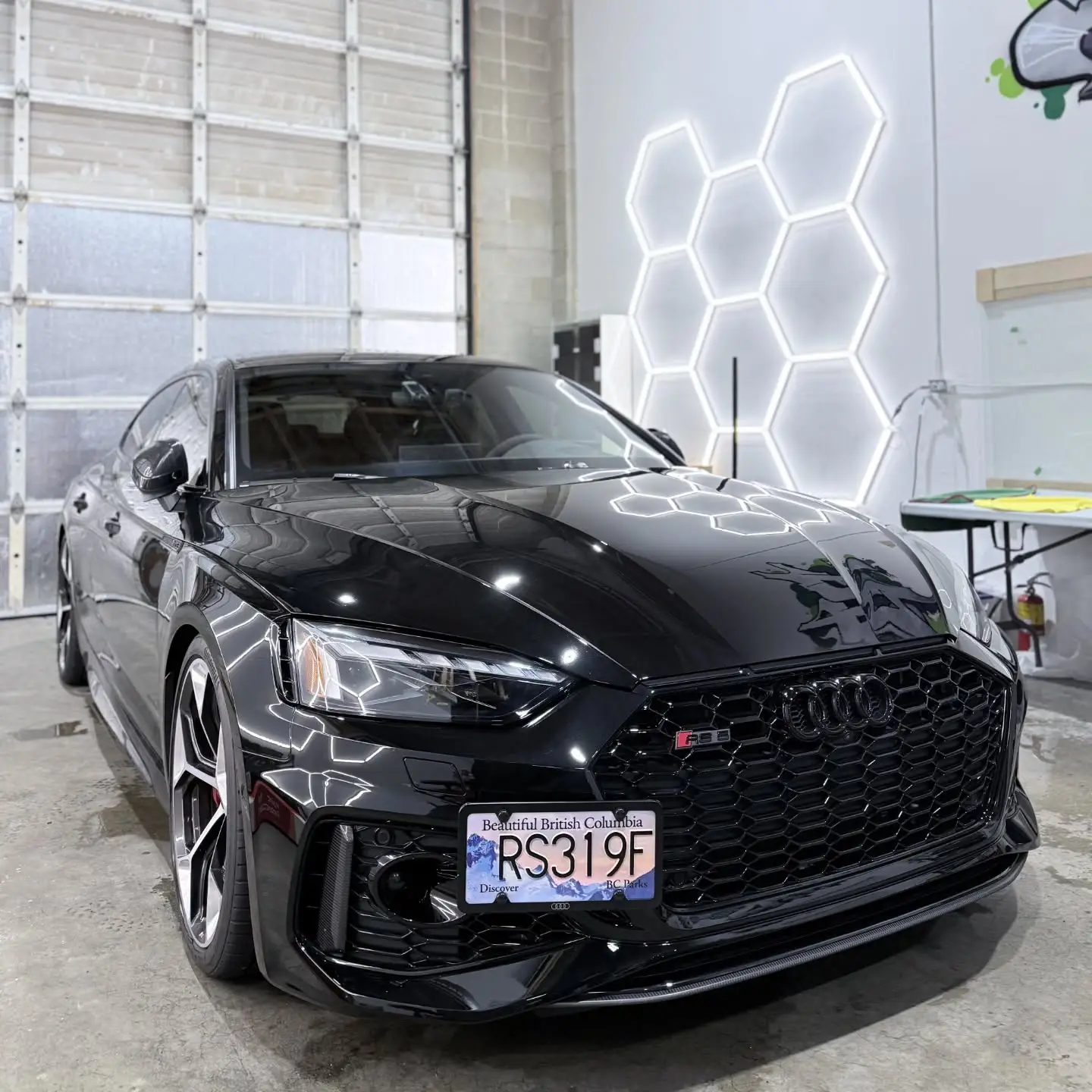
Because black is the colour where gloss, and the lack of it, is easiest to see. A coating sharpens reflections and makes the surface slick, so the car looks deeper and stays cleaner between washes.
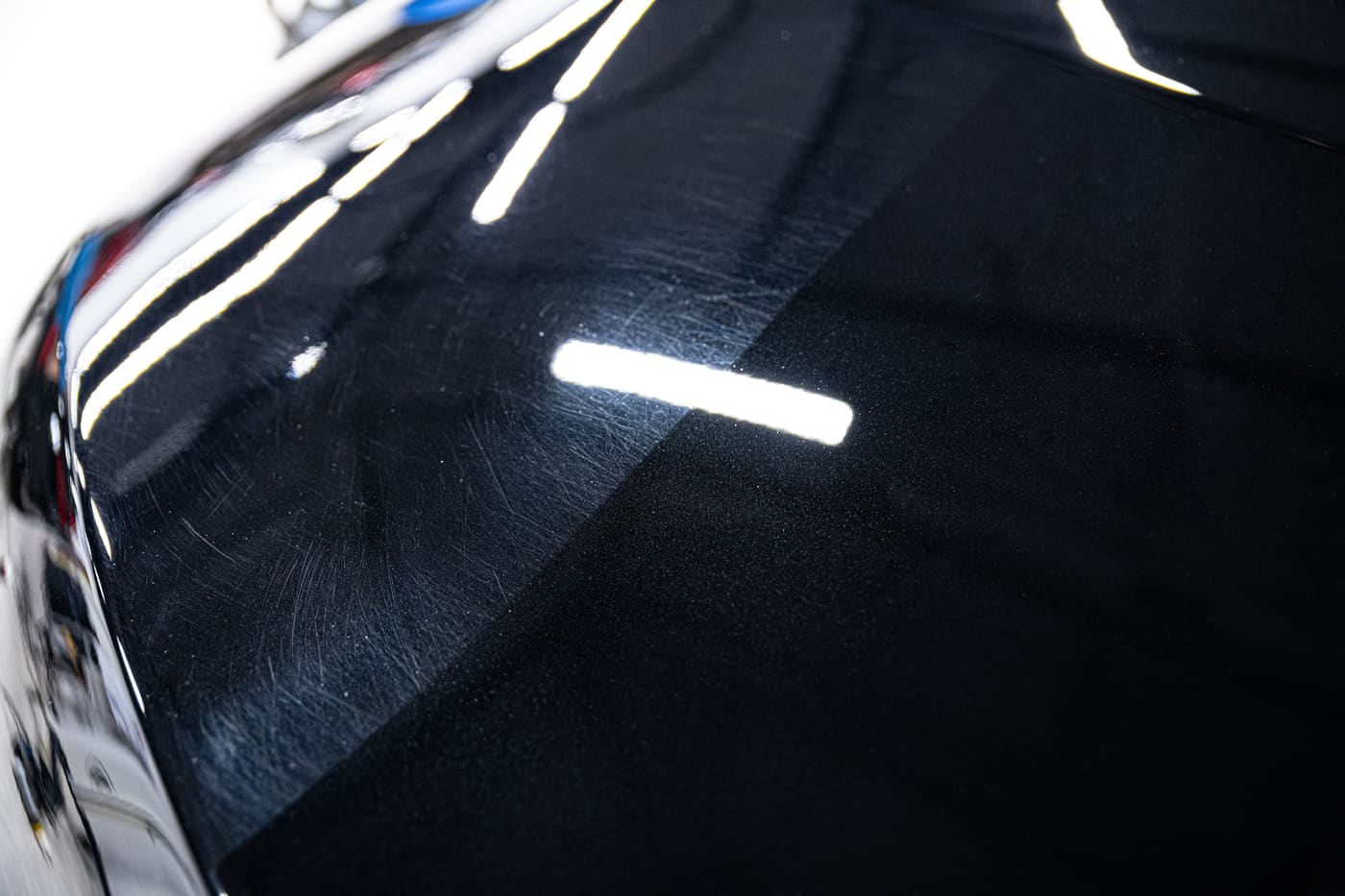
The bigger benefit is what it does to washing. Most of the fine scratches on a black car come from contact: mitts, towels and brushes dragging grit across the paint. A coated panel releases grime with a rinse, so there’s less to wipe off and fewer chances to put new marks in. On silver or white those marks would barely show; on black they’re the first thing you see in the sun.
Why does preparation matter more on a black car?
Because a coating seals in the paint exactly as it is, and black paint shows everything. Mazda’s Canadian owner’s manual says it in one line: “Scratches are more noticeable on vehicles with darker paint finishes” (Mazda Canada).
That means the correction before the coating does most of the visual work. The shop measures paint thickness first, then polishes only as far as the paint requires:
| Correction level | What it suits on black paint | Time |
|---|---|---|
| Enhancement polish | A newer car with light swirls and haze | About a day |
| Two-stage correction | Wash marring, water spots, most light scratches | 1–2 days |
| Multi-stage restoration | Neglected or oxidized paint with clear coat to work with | 3+ days, quoted after inspection |
By the shop’s published figures a single stage removes 60 to 80% of defects, and on black the rest are easier to spot, which is why the two-stage correction under the Performance package, or the full correction under Signature, is often the better fit. How prep and coating fit together is explained in why correction comes before a coating.
Application conditions matter more on dark paint too. The shop applies coatings in a controlled environment, and coating makers set limits of their own: Gtechniq’s instructions for one of its coatings say “do not apply in direct sunlight” and to apply it only between 5 °C and 25 °C (Gtechniq).
Does a ceramic coating keep a black car cooler?
No. A coating is clear, so it doesn’t change how much sunlight black paint absorbs, and black absorbs a lot of it.
Lawrence Berkeley National Laboratory tested two near-identical Honda Civics in a Sacramento parking lot, one black and one silver. The black car’s shell had a solar reflectance of 0.05 against 0.58 for the silver, and the silver car’s roof ran “as much as 25°C (45°F) cooler” at peak, with cabin air about 5 to 6 °C cooler (LBNL). Sun is less constant here than in Sacramento, but the Abbotsford A climate normals still log 1,886.7 sunshine hours annually, with 8.7 days topping 30 °C.
Two practical points follow. Wash a black car in the shade or early in the day, because a hot panel dries shampoo and water before you can rinse and towel them off. And if cabin heat is the real complaint, window film does what paint coatings can’t: LLumar’s spec sheet, measured on clear glass, puts IRX ceramic film at 50 to 62% total solar energy rejected. Under BC’s MVAR s. 7.05(8), tint film may go on windows behind the driver, on the back window of a car with an outside mirror on each side, and no further than 75 mm down the windshield. No film of any shade is legal on the front door glass, and Mission RCMP says a tint ticket typically carries a $109 fine and can come with an order to remove the film and have the car inspected; the front-window tint rules cover the rest. The legal options are on ceramic window tint.
What won’t a coating fix on black paint?
Chips, deep scratches and etching that’s already there. A coating improves how good paint looks and behaves; it doesn’t repair damaged paint.
- Rock chips. A chip in black paint shows up as a bright fleck where the lighter layers underneath are exposed, and a coating has no impact resistance. Film is what stops chips, as set out in PPF vs ceramic coating.
- Scratches through the clear coat. If a fingernail catches, polishing won’t remove it, and neither will a coating.
- Swirls left in before coating. These are sealed under the gloss. Their usual causes are in what causes swirl marks.
- Brush-wash marring after coating. Automatic brushes mark coated black paint as readily as bare paint.
How should you wash a coated black car?
Gently, in the shade, and with a towel ready. The coating makes black easier to keep clean, but black still punishes careless washing more than any other colour.
Rinse loose grit off before any mitt touches the car, use two buckets and a pH-neutral shampoo, rinse each section before it dries, and dry straight away with a clean, plush towel. Keep the car out of brush washes; a touchless wash is the fallback. If marring does build up over time, it’s polished out the same way as on any car, described on swirl mark removal.
Which coating package suits a black car?
Usually Performance or Signature, because of the correction that comes with them. Performance puts two layers on top of two-stage correction and covers the wheel faces and glass too; Signature lays four over full correction and adds film and trim to the list.
Essential, a single layer over at least one polishing stage, can suit a new black car whose paint inspects well. The car stays one to three days, mostly in correction, and should stay dry for a day after pickup. Pricing is per car. Tell us the model, its colour and how the paint looks now on the coating quote form, or read about all three packages on ceramic coating.