Does the time of year change how window tint is installed?
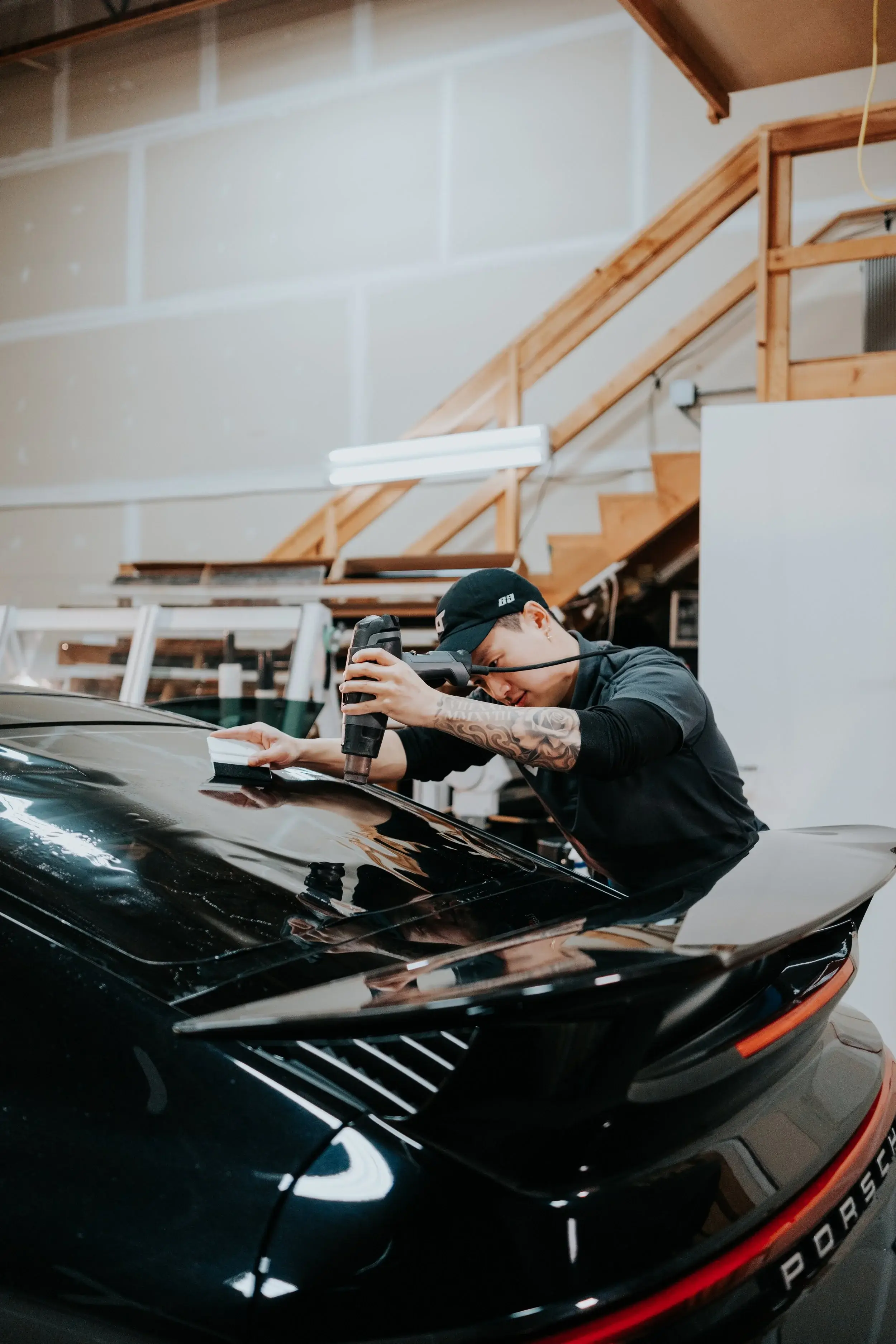
No. Each piece is plotter-cut to your year, make and model and fitted inside the shop, so the steps are the same on a frosty morning and a hot afternoon. What the calendar changes is what happens next: how fast the film dries after you drive away, and how soon it starts saving you from heat and glare.
Winter installs are covered on their own page, can you tint car windows in winter. The question here is which part of the year gives you the most from the appointment.
When does window film start earning its keep in Langley?
From the first warm days of May to the middle of September. Environment and Climate Change Canada’s daily records for its Langley Regional station, at the Langley airport, show the warm season’s edges for the last three summers:
| Langley Regional station | 2024 | 2025 | 2026 |
|---|---|---|---|
| First day at 25 °C or more | May 9 | May 28 | May 2 |
| First day at 30 °C or more | July 7 | June 8 | June 14 |
| Days at 30 °C or more | 6 | 11 | 8 |
| Last day at 30 °C or more | September 6 | September 16 | August 25 |
Heat can also come early. The worst of the 2021 heat wave fell in June: on June 28 that year, the Fort Langley Telegraph Trail station logged 41.5 °C. A car tinted in May was ready for it; a car booked for July wasn’t.
UV follows the same calendar. Health Canada says UV intensity is highest during the spring and summer months, and that the UV Index in Canada can reach 3 or higher between 11 a.m. and 3 p.m. Every ATC, IRX and AIR shade on the LLumar performance data sheet is rated above 99% UV rejection, so a spring install is in place for most of the high-UV months.
Which months dry new tint the fastest?
July and August. Film is laid on wet, and the cure is that moisture drying out, which happens fastest in warm, sunny, dry weeks. Abbotsford Airport’s 1981–2010 climate normals show how the drying weather improves through the warm half of the year:
| Abbotsford A normals | Apr | May | Jun | Jul | Aug | Sep |
|---|---|---|---|---|---|---|
| Average daily high | 14.7 °C | 18.1 °C | 20.8 °C | 24.0 °C | 24.4 °C | 21.3 °C |
| Days with precipitation | 16.3 | 14.4 | 13.0 | 7.3 | 7.1 | 9.6 |
| Hours of bright sunshine | 172 | 209 | 214 | 277 | 263 | 202 |
The pickup rule is the same every month: the tinted glass stays rolled up for 3–5 days. The season decides where you land in that range and how quickly any first-week haze clears. In July you’re often at the short end; the haze explainer and the roll-down timeline cover the details.
Why do late April and May beat midsummer for most drivers?
Because they get the cure out of the way before you need the film. A May appointment pairs reasonable drying weather with a few weeks of margin before the first 30 °C day, which landed in the second week of June in both 2025 and 2026.
Three practical reasons tip it:
- The cure is done before the heat. Any haze has cleared and the film is fully settled by the time the cabin starts to bake.
- Five closed-window days are easier in May. Keeping the tinted windows up is no hardship on an 18 °C day. In a July heat wave it’s harder if your habit is driving with the windows down.
- You catch the summer UV peak. Film fitted by May is in place through the summer months, which Health Canada counts, with spring, as the strongest for UV.
Is fall or winter a bad time to tint?
No, just slower to cure. Film blocks UV, adds privacy and cuts glare the day it goes on, whatever the month. The trade-off from November to March is a drying period that runs to the full five days, and a haze that can outlast those five days in grey, damp weather. If you bought the car in the fall, tinting it then means it’s long cured before spring.
Does the season change what BC allows?
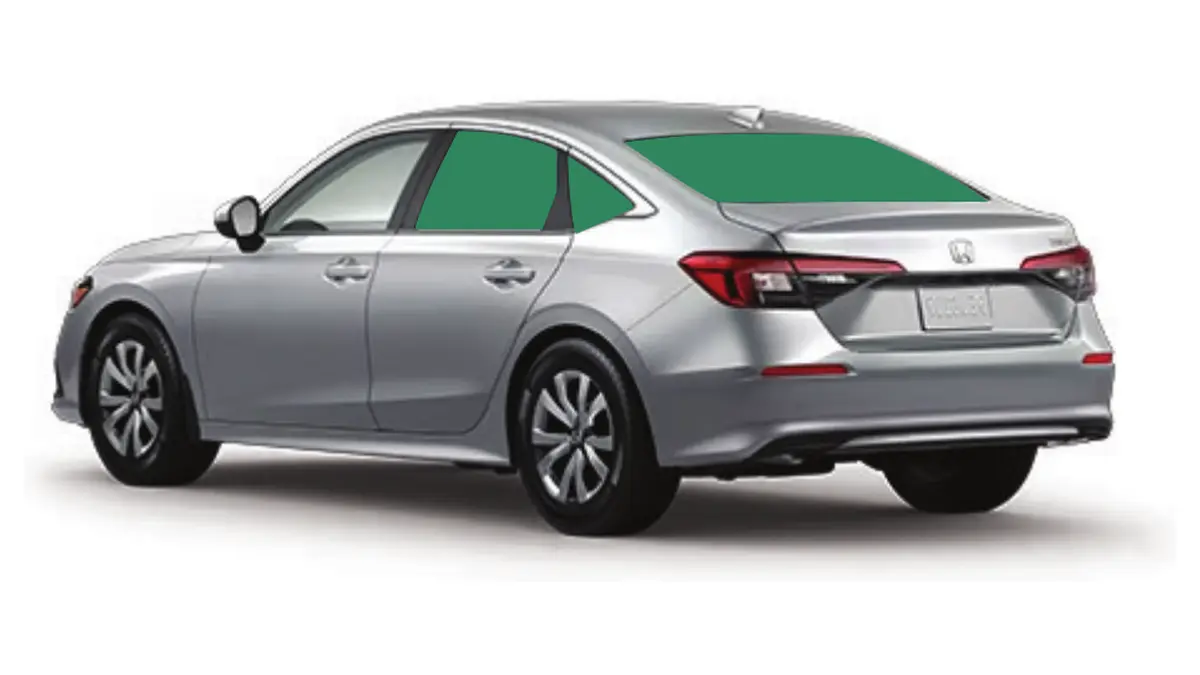
No. MVAR s. 7.05(8) applies all year: any shade at all on the side glass behind the driver, back-window film on any car with left and right outside mirrors, and on the windshield nothing beyond a 75 mm strip along the top edge. The front side windows can’t legally carry any film at all, clear AIR film included.
The shop does install windshield and front-door film when a customer asks for it, and it explains the risk first: in BC, that film can’t legally be on a car you drive, in any month. The usual tint ticket, Mission RCMP says, is $109; an officer can also write a Notice & Order requiring the film off and the car inspected. Everything about that rule is on the front-window page.
How do you book a spring tint appointment?
Choose a week in late April or May when the car can keep its tinted windows closed for five days, then book. A whole sedan or SUV takes somewhere between two and four hours, and most cars are ready to drive home that day.
Rear-glass starting prices in LLumar ATC run from $220 (sports coupe) through $240 (sedan, pickup) to $260 (full-size SUV, wagon). If summer heat is the reason you’re tinting, ask for IRX too: LLumar’s sheet has it turning away 50–62% of the sun’s total energy where ATC manages 28–44%, and it’s quoted per package. Every package is on window tint prices, and the heat side of the decision is in the summer cooling plan. Ring 604 534 6433 or request a tint booking.